Federal Reserve July Meeting Minutes: Inflation Risks Remain, Plans to Reduce Policy Meeting Frequency
2026-08-20 09:30:59
At 2:00 AM Beijing time on August 20th, the Federal Reserve released the minutes of the July 28-29 Federal Open Market Committee (FOMC) meeting. The document revealed deepening concerns within the Fed about the sustainability of inflation, indicating that even after removing some short-term disturbances, core price pressures remain significant. Fed Chairman Kevin Warsh also proposed a reform plan to reduce the number of annual FOMC meetings starting in 2027. While the meeting maintained interest rates, significant internal disagreements led to gold prices fluctuating at high levels after the minutes were released. These minutes provide important guidance for future monetary policy direction.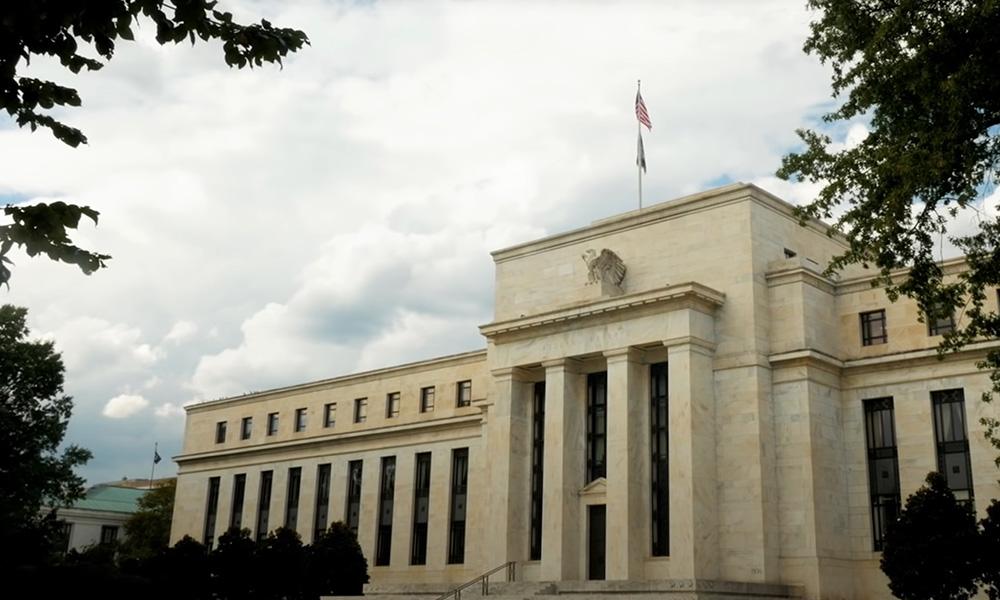
Economic assessment: Upside risks to inflation are prominent, but economic growth remains resilient.
The minutes provided a comprehensive review of the financial markets and macroeconomy. The staff noted that market movements were affected by the Middle East conflict between the two meetings, but rising oil prices did not significantly boost inflation compensation. The increase in nominal interest rates mainly stemmed from market expectations of rate hikes, the stock market saw a slight decline, and the US dollar strengthened moderately. Short-term inflation compensation declined significantly after the June meeting, reflecting market confidence in the Fed's determination to stabilize prices. Long-term inflation compensation remains anchored to the 2% policy target. The staff's forecast indicates that with falling gasoline prices and a gradual cooling of core inflation, overall inflation is expected to decline in the second half of 2026. As the impact of tariffs and the Middle East conflict gradually subsides, inflation will continue to decline next year, with inflation projected to approach 2% by 2028. On the economic front, investment in artificial intelligence and the financial environment will support a slight overshoot of potential real GDP growth next year, with the unemployment rate remaining stable in the short term. However, the staff also cautioned that employment and economic growth face downside risks, while inflation faces upside risks, and prices may be more stubborn than expected.Divergent opinions among committee members spark fierce debate over whether or not to raise interest rates.
Several FOMC members stated during the discussion that inflation remains high, with price increases affecting a wide range of goods and services. Some members noted that even excluding directly impacted categories like tariffs and energy, underlying inflationary pressures remain high. Most members expect inflation to gradually decline this year, but many are wary of the risk of persistently high inflation. The labor market remains generally balanced, with stable supply and demand, and the unemployment rate hovering near its long-term equilibrium level. Investment in artificial intelligence and household consumption are the two pillars of economic growth. On monetary policy, disagreements among members widened further. Many members stated that if inflation does not decline as expected, further tightening measures will be necessary. Some members believe that the current financial environment is not tightening enough to bring inflation back to 2%. Other members observed that the market has already tightened spontaneously during the interim period, stemming from economic resilience and market anticipation of future interest rate hikes. A minority of members supported a direct 25 basis point rate hike, arguing that raising rates in advance can avoid being forced into more forceful and costly continuous tightening in the future. The vote results showed that nine members, including Warsh, supported keeping the interest rate unchanged, while three members, Hammack, Kashkari, and Logan, voted against it, advocating for a 25 basis point increase.Proposals for meeting system reform and market response
Warsh proposed a restructuring plan, suggesting reducing FOMC meetings to six times a year, roughly every two months, starting in 2027. He stated that longer intervals would allow for the accumulation of more economic data, facilitating policy teams' research into medium- to long-term monetary policy issues. However, this proposal has not yet been finalized, and the meeting schedule for the remainder of 2026 remains unchanged. Following the release of the meeting minutes, gold prices fluctuated within a high range, with the market continuing to digest previous gains.Conclusion
In summary, these meeting minutes clearly demonstrate the Federal Reserve's dilemma: while the economy remains resilient, the persistent threat of inflation has not been eliminated, and there is a clear division in policy stances among the committee members. Meanwhile, the proposed reforms to the frequency of meetings have also attracted market attention. It is unlikely that the current policy pace will change in the short term, and subsequent inflation data will continue to be the core benchmark for the Fed's policy decisions.- Risk Warning and Disclaimer
- The market involves risk, and trading may not be suitable for all investors. This article is for reference only and does not constitute personal investment advice, nor does it take into account certain users’ specific investment objectives, financial situation, or other needs. Any investment decisions made based on this information are at your own risk.