The scandal surrounding the secret phone call continues to escalate, with four Democratic senators questioning the Federal Reserve Chairman.
2026-08-20 13:48:59
The current trajectory of US monetary policy is already volatile. Outdated hawkish minutes from the Federal Open Market Committee and the Treasury's bond repurchase intervention have led to divergent market opinions on interest rate trends. Furthermore, the ongoing controversy surrounding private communications between the Fed Chairman and the White House has added new uncertainty to the already uncertain interest rate outlook. Market concerns that the Fed's monetary policy is no longer entirely based on economic data but is subject to White House administrative intervention could fundamentally undermine the Fed's policy credibility and profoundly impact the timing of future interest rate hikes and the trajectory of global financial markets.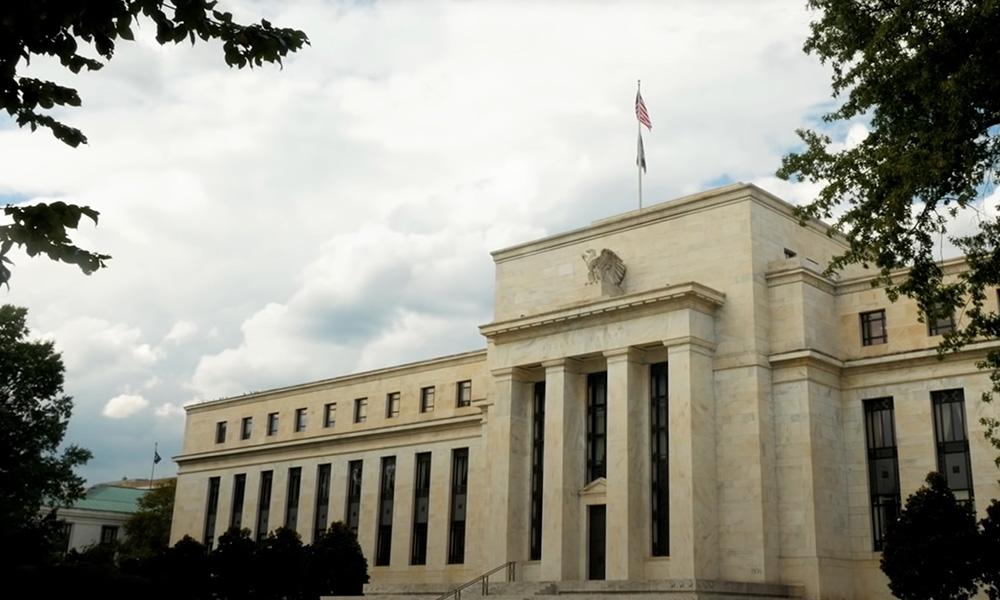
Controversy erupts over alleged collusion with the White House; Congress formally questions Federal Reserve Chairman.
On Wednesday (August 19) local time, four Democratic senators, led by Maryland Senator Chris Van Hollen, formally sent a public letter of inquiry to Federal Reserve Chairman Kevin Warsh. This follows media reports that Warsh, since taking office as Fed chairman in May, has had numerous private communications with US President Trump, but his publicly available work schedule contains no records of these calls, indicating a significant gap in disclosure. The senators stated that undisclosed private contacts could easily create a negative market perception, leading to the perception that the White House is deeply involved in shaping US monetary policy, seriously undermining the Fed's core principle of independent decision-making. Van Hollen questioned Warsh about this issue directly at a congressional hearing last month, but Warsh did not provide a direct response. The senators now have two demands: either Warsh provides written confirmation that he has never had private contact with Trump since taking office, or he immediately revises his publicly available schedule to include all undisclosed call records.The stark contrast in the performance styles of the former and current leaders has further amplified the controversy.
The White House had previously responded to the controversy surrounding the phone call. Kevin Hassett, director of the White House National Economic Council, stated in early August that Warsh and Trump had a close personal relationship and regularly discussed economic topics, but Trump had never pressured or interfered with Warsh's interest rate decisions. Trump himself also defended himself, claiming that he had only had one brief exchange with Warsh, not the numerous communications reported by the media.Historical Origins and Market Impact of the Controversy Over the Independence of the Federal Reserve
While informal communication between the president and the Federal Reserve chairman has historical precedent, it has become extremely rare in recent decades. Industry research shows that the Nixon administration strongly pressured then-Federal Reserve Chairman Arthur Burns in the last century, directly triggering the surge in US inflation in the 1970s. Since then, a market consensus has formed to strictly uphold the independence of the Federal Reserve. Since the 1980s, official communication between the White House and the Federal Reserve has been uniformly handled through the Secretary of the Treasury to avoid suspicion of direct intervention in monetary policy. From a market perspective, this turmoil is unlikely to cause significant short-term market fluctuations, but it confirms the current trend of the US administration continuously testing and pushing the boundaries of the independence of economic institutions. Compared to immediate market volatility, the negative impact of damaged credibility of the Federal Reserve is more profound. The market will typically react first by raising long-term inflation expectations and pushing up bond term premiums, creating upward pressure on long-term US interest rates.Summarize
In summary, the Warsh secret call controversy is not an isolated incident, but rather a concentrated manifestation of the challenges facing the independence of US monetary policy. Against the backdrop of hawkish policy disagreements within the Federal Reserve and the Treasury's proactive intervention in the bond market, the emergence of administrative intervention risks has further disrupted the logic of interest rate pricing. The market may maintain a volatile pattern in the short term, but as long as the controversy over the Fed's independence persists, long-term inflationary and interest rate pressures in the US will be difficult to alleviate, and global capital markets will continue to face uncertainties.- Risk Warning and Disclaimer
- The market involves risk, and trading may not be suitable for all investors. This article is for reference only and does not constitute personal investment advice, nor does it take into account certain users’ specific investment objectives, financial situation, or other needs. Any investment decisions made based on this information are at your own risk.