Geopolitical factors boosted oil prices, while the dollar weakened, causing the USD/CAD exchange rate to fall below 1.3800.
2026-08-20 14:30:58
On Thursday (August 20) during Asian trading hours, the US dollar fell against the Canadian dollar for the second consecutive trading day, hitting a new low since June 2 at 1.3792, a drop of about 0.1%. Crude oil prices strengthened, driven by escalating geopolitical tensions, providing support for the Canadian dollar. US-Iran negotiations remain deadlocked, with the standoff extending to the crucial Strait of Hormuz. While Trump stated that oil shipments are still passing through the channel, he also left room for future negotiations with Tehran. On the dollar side, the probability of a Fed rate hike in September has fallen from 47% a month earlier to about 33%, putting downward pressure on the dollar. 
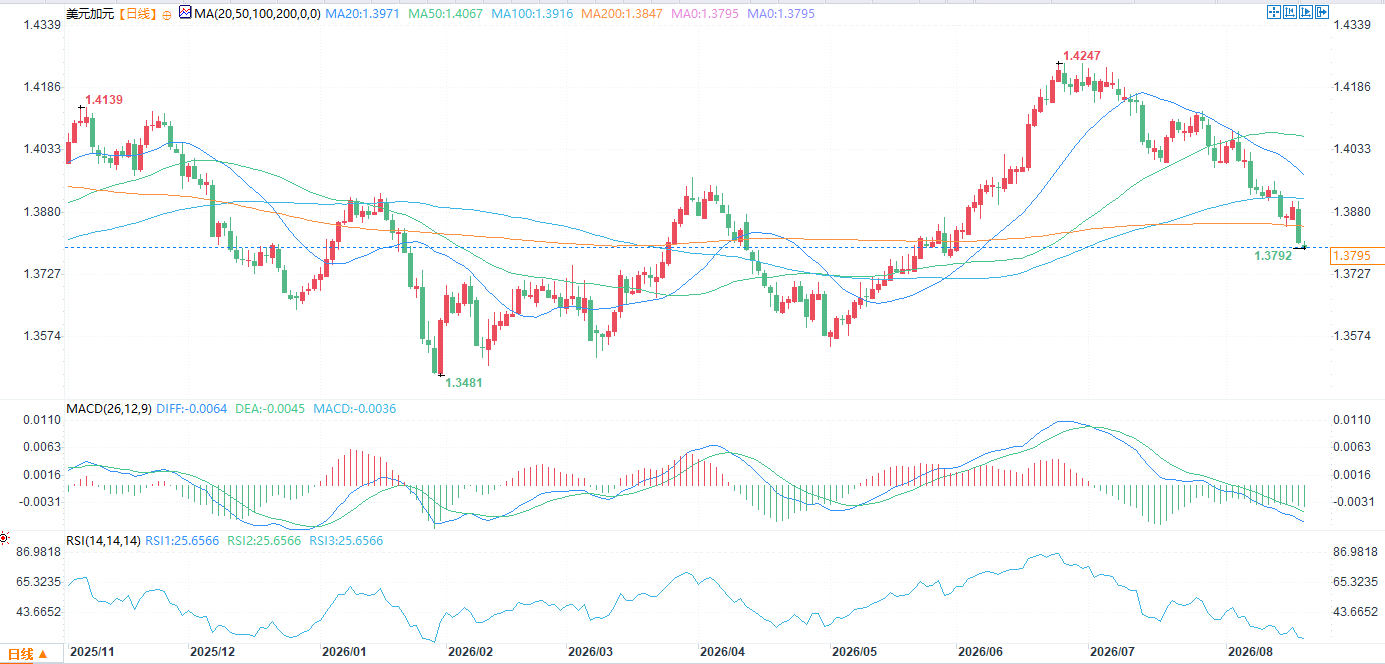 (USD/CAD daily chart, source: EasyForex) At 14:27 Beijing time on August 20, the USD/CAD exchange rate was 1.3793/94.
Geopolitical factors drive up oil prices, benefiting the Canadian dollar and causing it to strengthen.
Crude oil prices strengthened amid escalating tensions between the US and Iran. Negotiations remain deadlocked, and the standoff has extended to the Strait of Hormuz—the world's most important oil shipping chokepoint. While Trump stated that oil shipments are still passing through the strait, he also left room for future negotiations with Tehran. The UAE announced a suspension of all trade with Iran after being attacked by two ballistic missiles; Iran denied launching the missiles, further escalating regional tensions. TD Securities noted that the geopolitical context remains a key driver for crude oil prices, warning of the "risk of further escalation in the Iranian conflict." Given the current high regional risks and the possibility of supply disruptions, TD Securities believes that the geopolitical risk premium for Brent crude will likely remain high, with market participants continuing to factor in the possibility of further instability. Stronger oil prices directly benefit the commodity currency, the Canadian dollar, pushing the USD/CAD exchange rate lower.The dollar is under pressure due to cooling expectations of interest rate hikes coupled with the impact of repurchase agreements.
On the dollar front, the minutes of the Fed's July meeting showed that officials favored raising interest rates as soon as possible if inflation did not cool down, but recent monthly data indicated moderate price pressures, weakening the case for aggressive tightening. The CME FedWatch tool showed that the probability of a 25 basis point rate hike in September had fallen from 47% the previous month to 32.7%. Meanwhile, the US Treasury announced an expansion of its long-term Treasury repurchase program (doubling it from $2 billion to $4 billion) to curb a sharp rise in borrowing costs. Coupled with market concerns that US Treasury debt would surpass $40 trillion, the dollar weakened under pressure. Weak economic data and the repricing of policy expectations have caused the dollar to lose its previous "relative interest rate hike advantage."Institutional Views
State Street Global Advisors, in its research report on August 14th, pointed out that while Canada has experienced negative factors such as a technical recession, policy rates as low as 2.25%, the threat of US tariffs, and core inflation below target, there are signs of improving growth and high oil prices providing support. Meanwhile, US growth is healthy but will gradually slow, and declining inflation helps limit expectations of Fed tightening, narrowing the USD/CAD interest rate differential. Overall, the expected conditions are gradually improving, and USD/CAD is expected to fall to the mid-to-high range of 1.30 by the end of 2026 or early 2027. ING holds a bearish view on USD/CAD, expecting the Canadian dollar to gradually strengthen. The logic is that the resilience of the Canadian job market has allowed the Canadian dollar curve to partially reflect the Fed's hawkish expectations, with the market pricing in a Bank of Canada rate hike of about 15 basis points before the end of the year, but ING expects no rate hike before mid-2027; core inflation is below target, and the second-round effect of rising energy prices is limited, with inflation peaking at about 2.7%. The bank expects a dovish repricing by the Federal Reserve (no rate hike), which historically has been unfavorable for the Canadian dollar relative to other G10 currencies, but a broader weakening of the US dollar could still push USD/CAD below 1.38 by the end of the year.Summarize
The US dollar fell for the second consecutive trading day against the Canadian dollar, currently below 1.3800. Oil prices strengthened, driven by escalating geopolitical tensions, providing support for the Canadian dollar. The ongoing US-Iran standoff, with the risk of further escalation of the Iranian conflict, is expected to keep the geopolitical risk premium for Brent crude oil high. On the dollar side, weak economic data has reduced the probability of a September rate hike to approximately 33%, coupled with the Treasury's expansion of long-term bond repurchase programs, putting downward pressure on the dollar. (USD/CAD daily chart, source: EasyForex) At 14:27 Beijing time on August 20, the USD/CAD exchange rate was 1.3793/94.
- Risk Warning and Disclaimer
- The market involves risk, and trading may not be suitable for all investors. This article is for reference only and does not constitute personal investment advice, nor does it take into account certain users’ specific investment objectives, financial situation, or other needs. Any investment decisions made based on this information are at your own risk.