August 25th Financial Breakfast: Three major positive factors propel gold prices towards the $4700 mark; US expands sanctions against Iran, intensifying the supply and demand dynamics in the oil market.
2026-08-25 07:28:59
Gold prices continued their upward trend in early Asian trading on Tuesday (August 25, Beijing time), with spot gold trading at $4,670 per ounce. Benefiting from technical buying, a weaker dollar, and the US Treasury's buyback program, gold may target the $4,700 per ounce level during the day. US crude oil traded around $85.15 per barrel. Despite the US expanding secondary sanctions against Iran, the market ignored the move, and profit-taking by some investors limited the rise in oil prices. 
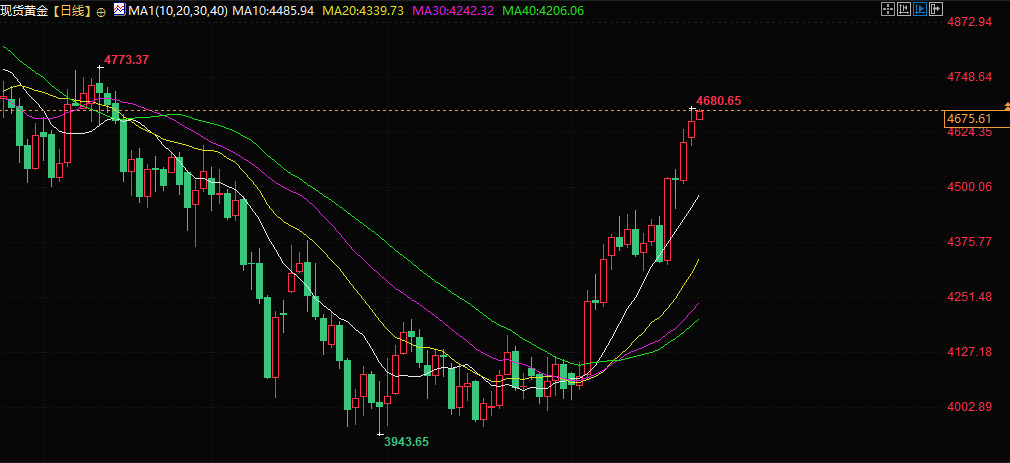 Gold prices broke through the 200-day moving average last week, and global gold ETFs recorded their largest weekly inflow in 10 months (46.7 tons, approximately $6.4 billion), led by North American and European listed funds. Geopolitically, the Trump administration announced expanded secondary sanctions against entities doing business with Iran, increasing safe-haven demand. Market focus shifted to Wednesday's release of the Federal Reserve's preferred inflation gauge, the PCE price index, and Fed Chairman Warsh's first speech at the Jackson Hole Global Central Bank Symposium on Friday to assess the interest rate outlook. In other precious metals, spot silver fell 0.04% to $68.594 per ounce, platinum fell 0.3%, and palladium also weakened.
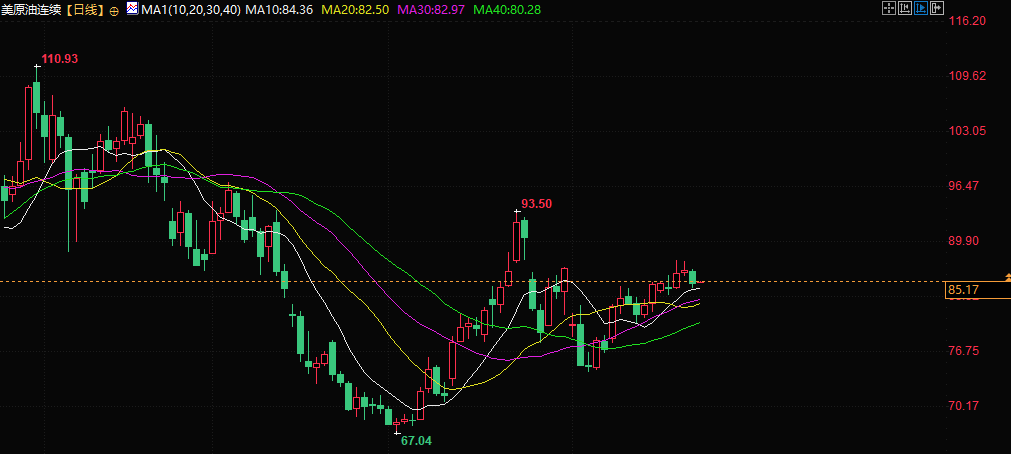 US Treasury Secretary Bessant announced expanded sanctions against entities and countries worldwide that do business with Iran, but analysts point out that the substantive new measures are limited, and unless major Asian powers significantly reduce their purchases, the additional impact on Iran's oil revenues will be relatively limited. The Iranian president has called for a diplomatic solution, while oil transport through the Strait of Hormuz remains restricted (fewer than 20 ships passed through last weekend). Morgan Stanley raised its Brent crude oil price forecast, expecting it to reach $100 per barrel in the fourth quarter; the head of the International Energy Agency stated that there is currently no discussion about releasing strategic petroleum reserves again.
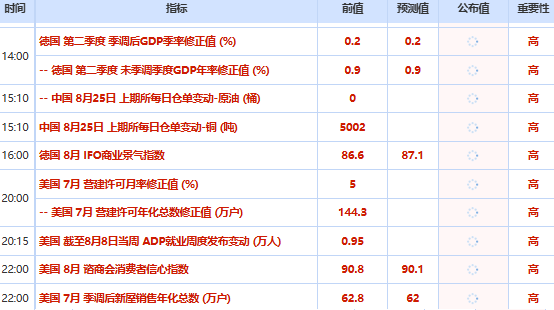
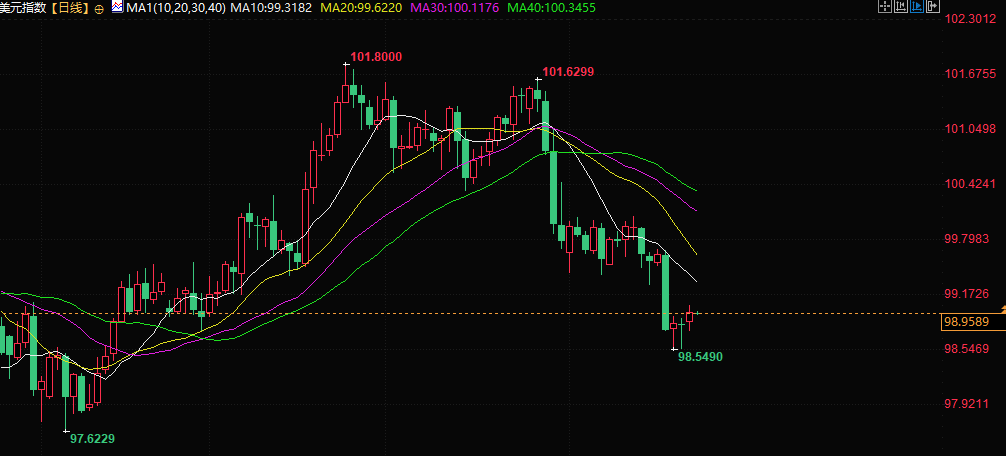 The euro fell 0.14% to $1.1663, the pound dipped 0.06% to $1.3632, and the yen weakened 0.13% to 159.13. However, after CNBC reported that Bessant might use nearly $1 trillion from the Treasury's general account (rather than issuing short-term debt) to fund bond buybacks, the dollar briefly gave up some of its gains, and long-term Treasury yields subsequently fell. Analysts warned that this move would not solve the debt problem and could even worsen it. This week, the market is focused on the US PCE price index, consumer confidence, and the revised Q2 GDP figure, as well as Fed Chairman Warsh's first speech in Jackson Hole. However, both UBS and Morgan Stanley expect Warsh to likely not provide specific guidance on the interest rate outlook.
Key Focus Today
stock market
U.S. stocks closed mixed on Monday. The Dow Jones Industrial Average rose 0.26% to 53,417.16, supported by the financial sector (led by JPMorgan Chase and Visa), but the S&P 500 and Nasdaq Composite fell 0.28% and 0.76%, respectively, dragged down by a decline in technology stocks—chip stocks such as Nvidia, Micron, and Broadcom were sold off, putting pressure on the Philadelphia Semiconductor Index. This was mainly due to investors assessing the economic pressure of the Trump administration potentially expanding secondary sanctions against Iran, while political opposition to AI data centers intensified (the governor of Texas ordered a halt to approvals for new data center connections, and Wells Fargo strategists warned that a hardening of political rhetoric on AI could be a major risk before the midterm elections). The market is focused on Nvidia's earnings this week to gauge AI investment sentiment, and the Fed's preferred inflation gauge, the PCE price index, to be released on Wednesday. Traders expect the Fed to raise interest rates only once (25 basis points) before the end of 2026. Furthermore, reports that U.S. Treasury Secretary Bessenter might use nearly $1 trillion in funds from the Treasury's general account to repurchase bonds failed to calm the bond market, with the 30-year Treasury yield remaining above 5%, as investors awaited Federal Reserve Chairman Warsh's speech at the Jackson Hole Economic Symposium. On the trade front, Trump's threat to raise tariffs on Canadian autos and auto parts to 50% starting January 1st put downward pressure on stocks such as Ford, General Motors, and freight forwarder JB Hunt.Gold Market
Spot gold rose on Monday, hitting a high of $4,680.65 per ounce, its highest level since May 14, boosted by technical buying, a weaker dollar, and the U.S. Treasury's buyback program. Stabilized or even slightly lower U.S. Treasury yields also provided support for gold prices. Gold prices broke through the 200-day moving average last week, and global gold ETFs recorded their largest weekly inflow in 10 months (46.7 tons, approximately $6.4 billion), led by North American and European listed funds. Geopolitically, the Trump administration announced expanded secondary sanctions against entities doing business with Iran, increasing safe-haven demand. Market focus shifted to Wednesday's release of the Federal Reserve's preferred inflation gauge, the PCE price index, and Fed Chairman Warsh's first speech at the Jackson Hole Global Central Bank Symposium on Friday to assess the interest rate outlook. In other precious metals, spot silver fell 0.04% to $68.594 per ounce, platinum fell 0.3%, and palladium also weakened.oil market
Oil prices saw profit-taking on Monday, with Brent crude falling 2.02% to settle at $91.96 a barrel and WTI crude dropping 1.92% to settle at $84.98 a barrel, as investors disregarded news of Washington expanding secondary sanctions against Iran. US Treasury Secretary Bessant announced expanded sanctions against entities and countries worldwide that do business with Iran, but analysts point out that the substantive new measures are limited, and unless major Asian powers significantly reduce their purchases, the additional impact on Iran's oil revenues will be relatively limited. The Iranian president has called for a diplomatic solution, while oil transport through the Strait of Hormuz remains restricted (fewer than 20 ships passed through last weekend). Morgan Stanley raised its Brent crude oil price forecast, expecting it to reach $100 per barrel in the fourth quarter; the head of the International Energy Agency stated that there is currently no discussion about releasing strategic petroleum reserves again.Foreign exchange market
The dollar index rose 0.15% to 98.98 on Monday, recovering from last week's losses, mainly due to the Trump administration's announcement of expanded secondary sanctions against Iran (Finance Secretary Bessant said aimed at cutting off Iran's economic lifeline) and a separate 50% tariff on Canadian goods (covering cars, trucks, auto parts, and steel from January 1, 2027). The Canadian dollar fell 0.61% against the dollar, its biggest drop since June 17, to 1.385, as Canada pledged a one-for-one retaliation. The euro fell 0.14% to $1.1663, the pound dipped 0.06% to $1.3632, and the yen weakened 0.13% to 159.13. However, after CNBC reported that Bessant might use nearly $1 trillion from the Treasury's general account (rather than issuing short-term debt) to fund bond buybacks, the dollar briefly gave up some of its gains, and long-term Treasury yields subsequently fell. Analysts warned that this move would not solve the debt problem and could even worsen it. This week, the market is focused on the US PCE price index, consumer confidence, and the revised Q2 GDP figure, as well as Fed Chairman Warsh's first speech in Jackson Hole. However, both UBS and Morgan Stanley expect Warsh to likely not provide specific guidance on the interest rate outlook.International News
The US announced multiple economic sanctions against Iran. On the afternoon of August 24 local time (early morning of August 25 Beijing time), US Treasury Secretary Bessenter announced multiple economic sanctions against Iran to further increase pressure on the country. The Trump administration announced an expansion of secondary sanctions, targeting entities and countries worldwide that still maintain business ties with Iran. At a press conference, Bessenter launched what he called Operation Economic Normandy. Bessenter stated, "We are launching an economic offensive against Iran's global financial network. Our goal is to cut off every economic lifeline that sustains this regime until Tehran is isolated." The US Treasury Department stated that it has "identified the networks, intermediaries, and financial channels used by Iran for oil smuggling and sanctions evasion," and indicated it will work with partners to combat any source of "illicit income" from Iran. The US Treasury Department stated that it has issued sanctions decisions targeting five key areas used by the Iranian regime to support its economy—digital assets, technology, gold, aviation, and shipping. The US Treasury Department also imposed sanctions on nearly 60 entities, individuals, and vessels. (CCTV International News) US Treasury Secretary: Any Entity Laundering Money for Iran Will Be Removed from the Dollar System US Treasury Secretary Bessant stated at a press conference on the 24th that any entity laundering money for Iran will be removed from the dollar system. (Xinhua) Iran Warns of Consequences for Cooperating with US Aggression According to the Islamic Republic News Agency (IRNA), Iranian Foreign Ministry spokesman Bagaei said on the 24th that any action cooperating with US aggression against Iran will face consequences. Iran will continue to adjust its diplomatic approach according to changes in the regional and international situation to safeguard its national interests and security. (Xinhua) Houthi Rebels in Yemen Claim to Have Attacked Multiple Targets Including Saudi Oil Tanker The Houthi rebels issued a statement on August 24th claiming to have attacked the Saudi oil tanker "Anzan." The statement said the target was located in the northern Red Sea, near the coast of Yanbu, Saudi Arabia. The Houthi rebels used ballistic missiles to strike and hit the target, causing the ship to catch fire. Other nearby ships fled the attack area. The statement said the operation was against hostile acts by Saudi Arabia, and was a "blockade against blockade" action. The statement also claimed that the Houthi rebels in Yemen carried out two other military operations. One operation used ballistic missiles and drones to attack a Saudi-backed military assembly point in the Wadiah region, targeting a large convoy carrying military equipment, and claiming that more than ten trucks carrying weapons were burned or destroyed. The other operation targeted a Saudi-backed military assembly point in the Kanas region; the Houthis claimed that missile and drone attacks caused dozens of deaths and injuries, including commanders and officers, and destroyed and burned several weapons depots. (CCTV News) Trump announced that tariffs on Canadian cars and steel will be raised to 50%. US President Trump posted on his social media platform "Real Social" on August 24th, stating that Canada has been "taking advantage of the US" for years by imposing high tariffs on American farmers and agricultural products, and that the long-standing $60 billion trade deficit between the two countries is "unsustainable and will not continue." Trump announced that starting January 1, 2027, the US will raise tariffs on all Canadian cars, trucks, auto parts, and steel to 50%. He also stated that products manufactured in the US will be subject to "zero tariffs." Trump also stated that the US "doesn't need Canada, Canada needs the US," and claimed that 95% of Canadian business is related to the US, while the US situation is "quite the opposite." (CCTV International News) The US is about to launch the largest-ever mass visa revocation operation, potentially affecting up to 200,000 foreign nationals. The Trump administration is preparing to revoke the business and tourist visas of up to 200,000 foreign nationals who have already submitted or are applying for asylum in the US. If implemented, this would be the largest single-phase visa revocation operation in US history, and the move is likely to face legal challenges. According to US State Department documents and two US officials, unless faced with legal challenges or policy changes, the State Department is expected to announce the revocation of a batch of B1 and B2 visas in the coming weeks. These visas were issued between 2016 and 2026, and the visa holders have previously applied for asylum or are currently applying for asylum. This operation will be carried out in coordination with the US Department of Homeland Security. U.S. State Department spokesman Tommy Pigott stated, "We are working with the Department of Homeland Security to screen and revoke the nonimmigrant visas of some foreign nationals who entered the United States on short-term visitor status and subsequently filed asylum applications seeking long-term residency." He did not comment on the number of visas that might be revoked, stating that "the work is still ongoing, and the specific number of revocations is dynamic and will be processed in batches." Officials indicated that visa revocation does not mean the individual will be immediately deported. Most asylum applications still under review will have their status reclassified, but will lose their business or tourist visitor status. (Xinhua) Iranian Minister of Economy and Finance: Fully Prepared for U.S. Sanctions On the evening of the 24th local time, Iranian Minister of Economy and Finance Madanizadeh stated that the Iranian government has long been planning to respond to U.S. sanctions and is fully prepared to deal with new sanctions. He stated that the world's financial and economic lifelines are not so simple, and the United States cannot "completely sever Iran's financial and trade ties." Madanizadeh said that if the United States dares to take any action, it should expect a retaliation from Iran. (CCTV News) Bessant Makes No Further Signals Regarding US Debt Measures; Previous Reports Suggest Treasury May Use Cash to Repurchase Bonds US Treasury Secretary Scott Bessant made no further signals on Monday regarding adjustments to the way the US manages its debt. Earlier reports indicated that the US Treasury might use some of its cash reserves to fund the repurchase of high-yielding existing Treasury bonds. When asked at a press conference on Monday whether the repurchase program would be expanded soon, Bessant said, "We haven't even bought a single bond." After long-term US Treasury yields rose to multi-year highs, Bessant announced an expanded Treasury bond repurchase program last week. When asked on Monday whether he was also considering reducing the size of Treasury bond auctions, he said the Treasury would "continue with its regular issuance program." He indicated that no adjustments would be made before the next so-called quarterly refinancing announcement in early November. The probability of a Fed rate hike in September is 41.4%, and the probability of at least a 25 basis point rate hike this year is 74.8%. According to CME's "FedWatch," the probability of the Fed maintaining interest rates unchanged by September is 58.6%, and the probability of a cumulative 25 basis point rate hike is 36.2%. The probability of the Federal Reserve keeping interest rates unchanged by October is 43%, the probability of a cumulative rate hike of 25 basis points is 46%, and the probability of a cumulative rate hike of 50 basis points is 11%. The probability of the Federal Reserve keeping interest rates unchanged by December is 25.2%, and the probability of a rate hike of at least 25 basis points is 74.8%.Domestic News
In the first half of 2026, over 98% of mobile phone shipments in China supported BeiDou positioning. According to the Ministry of Industry and Information Technology on the 24th, BeiDou has made significant progress in the application of mobile phones in the mass consumer market. In the first half of 2026, the total mobile phone shipments in the Chinese domestic market reached 133 million units, with over 98% supporting BeiDou positioning. As of the first half of the year, over 14 million shared two-wheeled vehicles had implemented BeiDou independent positioning, accounting for over 90% of the domestic market share. (Xinhua News Agency) As of the end of July 2026, the total funds in the futures market reached 2.64 trillion yuan . Data released by the China Futures Market Monitoring Center shows that in recent years, the funds in the futures market have steadily increased. As of the end of July 2026, the total funds in the futures market reached 2.64 trillion yuan, an increase of 23% compared to the end of 2025; the total equity of futures company clients reached 2.49 trillion yuan, an increase of 24% compared to the end of 2025, of which the equity of general units and special legal persons increased by 29% and 28% respectively. At the same time, the client structure of futures companies has continued to optimize. As of the end of July 2026, institutional clients accounted for 73% of equity, showing a continuous upward trend since 2024.- Risk Warning and Disclaimer
- The market involves risk, and trading may not be suitable for all investors. This article is for reference only and does not constitute personal investment advice, nor does it take into account certain users’ specific investment objectives, financial situation, or other needs. Any investment decisions made based on this information are at your own risk.