The trade war supports the dollar, while fiscal concerns weigh on it. Which side is the balance of power tipping in for the Canadian dollar?
2026-08-25 09:21:01
On Tuesday (August 25) during Asian trading hours, the US dollar rose slightly against the Canadian dollar, currently trading around 1.3845, continuing its rebound from a three-month low. The escalating trade war is providing new drivers for the exchange rate, with the market digesting the potential impact of reciprocal tariffs on both economies. Following the breakdown of US-Canada trade negotiations, the US imposed a 50% tariff on approximately $20 billion worth of Canadian imports last Saturday, covering a wide range of categories including wine, hockey sticks, cement, paper, textiles, and electronics. Canadian Prime Minister Carney announced retaliatory tariffs to be implemented from September 8, targeting steel, dairy products, household appliances, and agricultural equipment. Trump escalated his threats, stating that a further 50% tariff would be imposed on Canadian steel, automobiles, and auto parts starting January 1. The breakdown in negotiations stemmed from new terms proposed by the US in the final stages—involving automobile classification, Canada's rights in trade agreements with other countries, and cultural and sovereignty issues, which Carney called "uneconomically inefficient and unfair." Trump's invocation of Section 338 of the Trade Act of 1930, which has never been used as a legal basis for imposing tariffs before, may face legal challenges. 
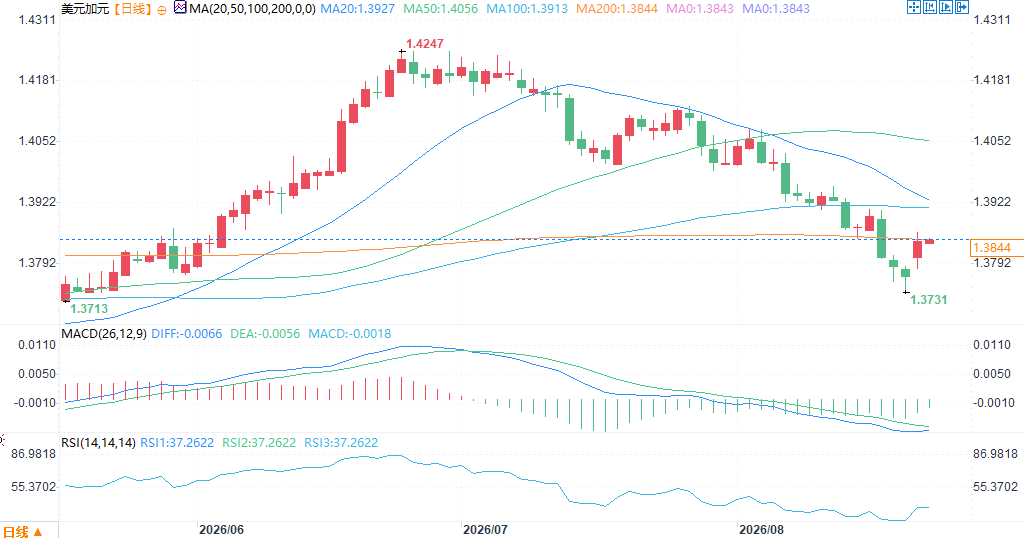 (USD/CAD daily chart, source: EasyForex) At 9:18 AM Beijing time on August 25, the USD/CAD exchange rate was 1.3844/45.
Which goods will be affected by the new tariffs?
The new tariffs, announced at the end of July, impose a 50% import tax on a wide range of Canadian goods, including wine, hockey sticks, cement, natural honey, essential oils, candles, paper, textiles, and electronics. Exemptions are granted to certain sectors, such as energy, potash, and fish. However, unlike previous tariffs, this round does not exempt exports that comply with the USMCA (United States-Mexico-Canada Agreement). The approximately $20 billion worth of Canadian imports affected represent about 5% of total U.S. imports from Canada (totaling $383 billion in 2025). The White House stated that products already subject to tariffs due to national security measures, such as steel, aluminum, auto parts, and lumber, are not affected by the new round of tariffs. Trump also announced that a 50% tariff would be imposed on Canadian steel, automobiles, and auto parts starting January 1st.Why did the negotiations break down?
Negotiations between the two countries had previously progressed smoothly, with Trump even postponing the tariffs' effective date. However, U.S. Trade Representative Greer stated that negotiations broke down on Friday night, despite the U.S. government's willingness to offer Canada "the most favorable treatment." Canadian Prime Minister Carney stated that the U.S. proposed new terms in the final days that rendered an agreement impossible—involving the classification of automobiles, restrictions on Canada's ability to enter into trade agreements with other countries, and even touching upon Canadian culture and sovereignty. Carney called these terms "uneconomically inefficient, unfair," and "raises doubts about the reliability of any agreement." The White House did not respond to requests for comment.How should Canada respond?
Carney announced retaliatory tariffs against the United States and offered support to affected Canadian workers. The tariffs will primarily affect U.S. goods in sectors such as steel, dairy products, home appliances, agricultural equipment, paper, and electronics. Specific details will be released in the coming days, and the tariffs will take effect on September 8. When asked if Canada was being drawn into a trade war, Carney responded, "When you are attacked, you are at war. And we are attacked."Legal basis for tariffs
Trump's invocation of Section 338 of the Trade Act of 1930—a little-known provision that has never been used as a legal basis for imposing tariffs before—may face legal challenges. The provision is broadly worded, granting the president considerable discretion, and some trade lawyers believe it has a higher chance of success than the comprehensive global tariffs previously overturned by the Supreme Court. Nevertheless, the legal challenges could still plunge businesses and consumers into months of uncertainty.USD/CAD: Escalating trade war boosts exchange rate, but weaker dollar limits upside potential.
The escalating US-Canada trade war is driving the US dollar stronger against the Canadian dollar. The spiraling trade friction is having a greater impact on Canada's export-oriented economy, putting fundamental pressure on the Canadian dollar as a commodity currency. On Tuesday in Asian trading, the USD/CAD pair continued its gains, trading around 1.3845, extending its rebound from a three-month low. However, further upside potential is limited by the weakness in the US dollar's own fundamentals. The US Treasury's expansion of long-term Treasury bond buybacks has triggered market concerns about fiscal discipline, causing the US dollar index to hover near a three-month low. Scotiabank points out that the US dollar is bearing the "negative burden" of US fiscal concerns, and efforts to suppress long-term yields are weakening the dollar's relative attractiveness. Meanwhile, oil prices remain high amid the US-Iran standoff, providing hedging support for the Canadian dollar as a commodity currency. In the short term, the USD/CAD pair is caught in a tug-of-war between "trade war benefits the dollar" and "fiscal concerns harm the dollar." If the trade war escalates further (such as the implementation of tariffs on steel and automobiles threatened by Trump), the USD/CAD exchange rate could move towards 1.3950-1.4000; however, if market concerns about US fiscal policy continue to fester, the upside potential for the dollar will be limited. Fed Chairman Warsh's speech at the Jackson Hole conference will be a key variable in breaking this deadlock. Until then, the exchange rate is expected to fluctuate within the 1.3800-1.3900 range, awaiting a new catalyst. (USD/CAD daily chart, source: EasyForex) At 9:18 AM Beijing time on August 25, the USD/CAD exchange rate was 1.3844/45.
- Risk Warning and Disclaimer
- The market involves risk, and trading may not be suitable for all investors. This article is for reference only and does not constitute personal investment advice, nor does it take into account certain users’ specific investment objectives, financial situation, or other needs. Any investment decisions made based on this information are at your own risk.