September 2nd Financial Breakfast: Gold mired in interest rate hike turmoil, barely holding above 4300; Middle East situation changes overnight; US airstrikes ignite a bullish rally in crude oil.
2026-09-02 07:32:03
On Wednesday (September 2, Beijing time) in early Asian trading, spot gold was trading around $4,330 per ounce. Gold prices fell sharply on Tuesday, hitting a two-week low and barely holding the $4,300 per ounce level, as US Treasury yields rose and expectations of interest rate hikes increased, while technical selling also contributed to the decline. Oil prices surged 5% on Tuesday after the US and Iran exchanged missiles, with the US launching a new round of strikes against Iran lasting six and a half hours, accelerating geopolitical tensions. US crude oil is currently trading around $90.80 per barrel. 
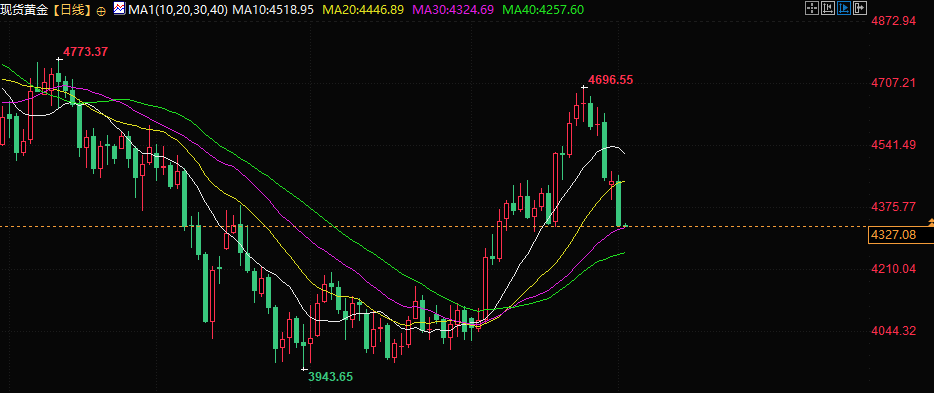 Analysts point out that the gold and silver markets may maintain a volatile or weak trend in the short term, with investors focusing on Wednesday's US ADP private sector employment report and Friday's non-farm payroll data for policy clues. Other precious metals also declined across the board, with spot silver falling 3.7% to $64.09 per ounce, platinum down 1.9%, and palladium down 3.2%.
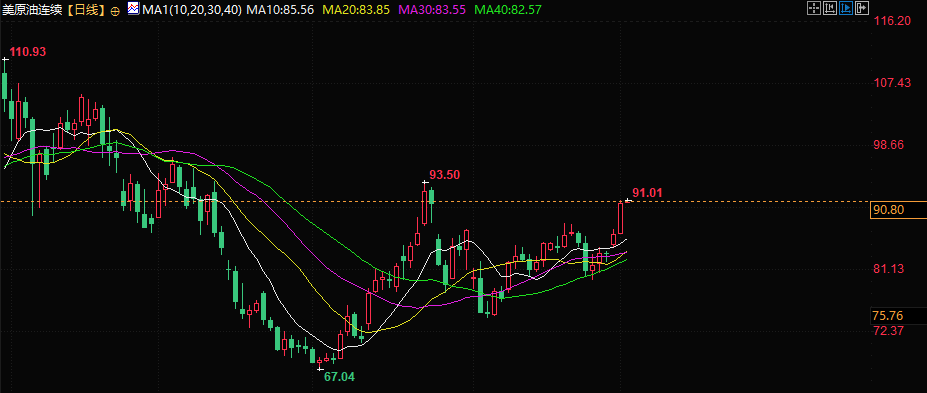 The US launched a new round of airstrikes against Iranian targets, and two oil tankers were attacked near the Strait of Hormuz. Meanwhile, Iran warned it would block Gulf oil exports, and the US Treasury Secretary threatened further sanctions, exacerbating market concerns about supply disruptions in the Middle East. Saxo Bank analysts pointed out that the renewed conflict has raised concerns about long-term disruptions to energy flows through the Strait of Hormuz. Furthermore, production disruptions at global refineries (especially in the Middle East and Russia) have pushed up refined product prices. US diesel futures surged to a 52-month high, rising approximately 51% over the past 10 weeks, with crack spreads reaching a record high of around $107 per barrel.
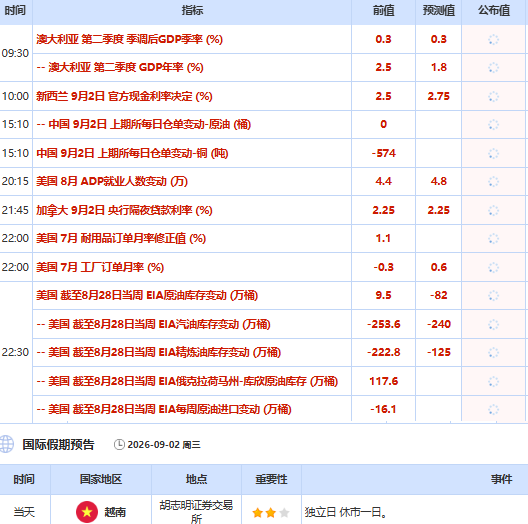
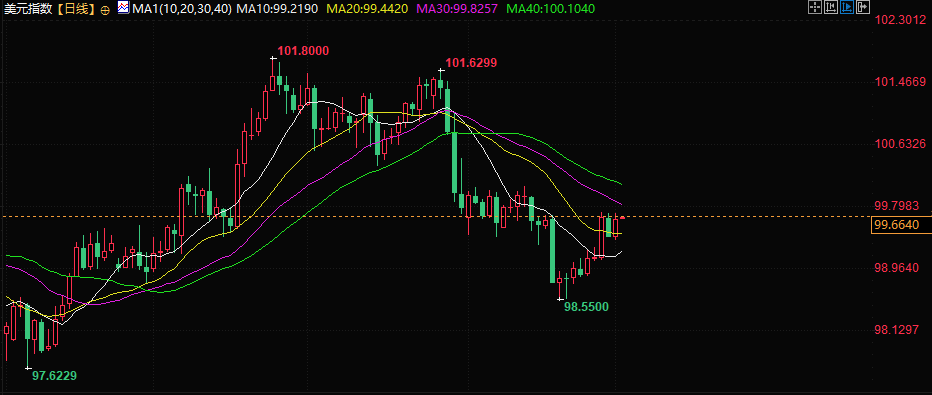 Meanwhile, market expectations for a Fed rate hike in September rose to 68% (up from 35% a week earlier), further boosting the dollar through safe-haven buying; the euro fell 0.23% against the dollar to 1.1589, and the pound fell 0.26% against the dollar to 1.3511. The dollar rose 0.27% against the yen to 160.16, despite US Treasury Secretary Bessant urging Japan to stabilize inflation expectations and avoid excessive yen volatility, the large interest rate differential between the US and Japan continued to weigh on the yen; Fed Governor Barr stated that interest rates should be raised if inflation does not cool rapidly, while Bessant said that Treasury yields reflect accelerating economic growth and stable inflation expectations. The market is awaiting Friday's US August non-farm payrolls report (expected to show an increase of 56,000) and subsequent inflation data to determine the policy direction in September.
Key Focus Today
stock market
U.S. stocks closed lower across the board on Tuesday: the Dow Jones Industrial Average fell 0.79% to 52,766.93, the S&P 500 dropped 0.71% to 7,631.47, and the Nasdaq Composite declined 1.03% to 26,099.77. The decline was primarily driven by a global bond sell-off pushing up government yields, escalating geopolitical tensions in the Middle East (with renewed U.S. airstrikes on Iranian targets and Iran threatening to cut off Gulf oil exports) leading to a surge in oil prices, and rising market expectations for a September rate hike by the Federal Reserve (the probability increased from 39.6% a week ago to 68.2%). Tuesday's July JOLTS job openings data came in below expectations, and PMI and residential construction spending also indicated a slowdown in economic momentum. Historically, seasonal factors (September is the worst month for average U.S. stock returns) and political anxiety ahead of the midterm elections further dampened investor sentiment. Of the eleven sectors in the S&P 500, only the energy sector benefited from rising oil prices and closed higher. Consumer discretionary stocks saw the largest declines, with the Dow Jones Transportation Index and the Philadelphia Semiconductor Index falling 2.5% and 2.1%, respectively. The ratio of declining to advancing stocks on the NYSE and Nasdaq was 2.8 to 1, with a trading volume of 14.38 billion shares, slightly below the average level of the past 20 days.Gold Market
Gold prices fell sharply by 2.69% on Tuesday, hitting a two-week low. Spot gold closed at $4,328.89 per ounce, mainly due to the rise in the yield on the 10-year U.S. Treasury note to its highest level since January 2025, a stronger dollar, and technical selling triggered by gold prices falling below the 200-day moving average (around $4,528 per ounce). Further pressure came from rising market expectations of a Federal Reserve rate hike this month (CME FedWatch indicated a probability of approximately 68.2%). Analysts point out that the gold and silver markets may maintain a volatile or weak trend in the short term, with investors focusing on Wednesday's US ADP private sector employment report and Friday's non-farm payroll data for policy clues. Other precious metals also declined across the board, with spot silver falling 3.7% to $64.09 per ounce, platinum down 1.9%, and palladium down 3.2%.oil market
Oil prices surged on Tuesday, with Brent crude rising 5.06% to settle at $90.68 a barrel and U.S. crude climbing 5.2% to $90.22, both hitting five-week highs, primarily due to the renewed escalation of tensions between the U.S. and Iran. The US launched a new round of airstrikes against Iranian targets, and two oil tankers were attacked near the Strait of Hormuz. Meanwhile, Iran warned it would block Gulf oil exports, and the US Treasury Secretary threatened further sanctions, exacerbating market concerns about supply disruptions in the Middle East. Saxo Bank analysts pointed out that the renewed conflict has raised concerns about long-term disruptions to energy flows through the Strait of Hormuz. Furthermore, production disruptions at global refineries (especially in the Middle East and Russia) have pushed up refined product prices. US diesel futures surged to a 52-month high, rising approximately 51% over the past 10 weeks, with crack spreads reaching a record high of around $107 per barrel.Foreign exchange market
The dollar index rose 0.25% on Tuesday to close at 99.64, mainly due to renewed escalation of the US-Iran conflict pushing up oil prices and rising global government bond yields (the US 10-year yield hit its highest level since January 2025, and the Japanese 30-year government bond yield broke through 3% for the first time in 30 years), which exacerbated inflation concerns. Meanwhile, market expectations for a Fed rate hike in September rose to 68% (up from 35% a week earlier), further boosting the dollar through safe-haven buying; the euro fell 0.23% against the dollar to 1.1589, and the pound fell 0.26% against the dollar to 1.3511. The dollar rose 0.27% against the yen to 160.16, despite US Treasury Secretary Bessant urging Japan to stabilize inflation expectations and avoid excessive yen volatility, the large interest rate differential between the US and Japan continued to weigh on the yen; Fed Governor Barr stated that interest rates should be raised if inflation does not cool rapidly, while Bessant said that Treasury yields reflect accelerating economic growth and stable inflation expectations. The market is awaiting Friday's US August non-farm payrolls report (expected to show an increase of 56,000) and subsequent inflation data to determine the policy direction in September.International News
US Attack Leaves Two Dead and Several Injured in Hormozgan Province, Iran The Deputy Governor for Political and Security Affairs of Hormozgan Province, Iran, stated that an attack on a wedding ceremony in Sirik city on the evening of September 1st local time resulted in two deaths and multiple injuries. Multiple explosions were also heard on Qeshm Island and the Strait of Hormuz in southern Iran on the evening of September 1st. The US Central Command stated that at 12:00 PM Eastern Time on September 1st, US forces began striking targets belonging to the Islamic Revolutionary Guard Corps (IRGC) within Iran. Later, the IRGC issued a statement saying that several hours earlier, the US had bombed multiple locations along Iran's southern coast, including several civilian sites. The statement also said that the IRGC had begun retaliating against the aggressors, and in its first operation, used a new air defense system to shoot down an MQ-9 drone that had intruded into US airspace. (CCTV News) US House Passes Temporary Funding Bill to Avoid Government Shutdown On September 1st local time , the US House of Representatives passed a temporary federal funding bill to avoid a government shutdown on October 1st and sent the bill to President Trump for his signature. The current federal budget expires on September 30th. On August 8, the U.S. Senate passed a temporary federal funding bill by a vote of 90 to 6, allowing most federal government agencies to operate at current funding levels until December 11. (CCTV News) Trump: If Iran retaliates, they will be struck again U.S. President Trump posted on the Truth social media platform that the U.S. is currently striking Iranian targets near the Strait of Hormuz. This large-scale and powerful strike is retaliation for two Iranian actions: first, Iran attempted to lay mines in the Strait of Hormuz, but the operation failed, and the strait is now free of mines (all mines have been cleared or detonated!); second, Iran launched eight missiles at U.S. military bases in Jordan, all of which were successfully intercepted. If the weakened Iranian state retaliates against this perfectly justified attack, Iran will suffer a more severe and higher-level second strike. However, this is not the heaviest blow yet; the strongest strike is poised to be launched; once this strike is over, Iran will be almost wiped out! Iranian Armed Forces Will Make the US Pay a Heavy Price On the evening of September 1st local time, the General Staff of the Iranian Armed Forces issued a statement saying that in response to the US military's attacks on multiple locations in Iran's Sistan-Baluchistan and Hormozgan provinces, the Iranian Armed Forces will launch a devastating strike against America's enemies. The more rampant the US military's aggression in the region, the heavier the losses it will suffer; Iran will make America's enemies pay a heavy price. (CCTV International News) US Military's New Round of Strikes Against Iran Lasts 6.5 Hours The US Central Command issued a new statement today (September 2nd) stating that it has completed a round of strikes against Iranian military targets. In the operation, which lasted approximately 6.5 hours, the US military "strikes targets of the Iranian Islamic Revolutionary Guard Corps, including air defense positions, radar systems, maritime assets and facilities, mine-laying capabilities, and communication sites." The statement said, "This strike was carried out after the recent attempts by the Iranian Islamic Revolutionary Guard Corps to attack commercial shipping in the Strait of Hormuz and U.S. military personnel. Currently, more than 50,000 U.S. military personnel are deployed throughout the Middle East, maintaining high vigilance, possessing lethal strike capabilities, and ready to continue executing operational orders issued by President Trump." (CCTV) Iran: Will Not Allow U.S. Ships to Pass Through the Southern Route of the Strait of Hormuz Iranian Parliament Speaker Ghalibaf stated that Iran will not allow the U.S. to violate the memorandum of understanding by allowing ships to pass through the southern route of the Strait of Hormuz. Ghalibaf stated that before the conflict, at least 120 ships passed through the Strait of Hormuz daily; current traffic is far less than before the war, and the Strait of Hormuz is entirely controlled by the Iranian military. The U.S. attempted to allow several ships to pass through the strait, but was met with Iranian resistance. Ghalibaf said, "If the U.S. holds control of the strait, why do they continue to attack Iranian islands? The Americans lie, claiming that ships can pass, but these ships are attacked." Ghalibaf emphasized that Iran has control of the battlefield and has made the enemy realize that they cannot stop Iranian missiles. In the next phase, Iran will hold an absolute advantage in both quality and quantity. (CCTV News) Putin: Ukraine Negotiations are Frozen On the morning of September 2nd local time, Russian President Vladimir Putin held a press conference before concluding his visit to Kyrgyzstan. Regarding the current negotiation process on the Ukraine issue , Putin pointed out that any negotiations should have substantive content, and that the current negotiation process is frozen. Putin also stated that US Presidential Envoy Witkov and his son-in-law Kushner are always welcome in Russia, and Russia is happy to cooperate with them. Referring to the situation on the front lines, Putin pointed out that the Russian army has received instructions to prepare for a large-scale strike on Ukrainian energy facilities. He said, "They will strike our factories, and there will be a response." Commenting on the recent visit of the CIA director to Moscow, Putin stated that contact between Russian and US intelligence agencies has always existed and was never interrupted even during the most difficult period of the Cold War. Iran Claims Ample Foreign Exchange Reserves The Governor of the Central Bank of Iran, Abdel Nasser Hemmati, stated on September 1st that despite US sanctions, Iran's foreign exchange reserves remain ample. Iran's Tasnim News Agency, citing Hemati, reported that the Central Bank of Iran is prepared to inject $2 billion into the foreign exchange market to stabilize recent fluctuations. Iran will let the United States know that it not only has foreign exchange reserves, but also ample reserves. Hemati said that despite the difficulties Iran is facing, its economy has never collapsed and will not collapse in the future. (Xinhua) US Treasury Secretary Bessenter: Interest Rates Will Be Lowered After the Current Inflation Cycle Ends US Treasury Secretary Bessenter stated that interest rates will be lowered after the current inflation cycle ends. Capital expenditures will translate into productivity, playing a strong role in combating inflation. Investment in AI will have a long-term effect in curbing inflation.Domestic News
Premier Li Qiang Meets with Delegation from the US-China Business Council Board of Directors On the afternoon of September 1, Premier Li Qiang met with a delegation led by John McCain, Chairman of the Board of Directors of the US-China Business Council, at the Great Hall of the People in Beijing. Li Qiang stated that the US-China Business Council has long been committed to promoting Sino-US relations and economic and trade cooperation, playing an important role. With the joint efforts of both sides, the current bilateral relationship remains generally stable. (Xinhua News Agency) [Announcement Regarding the Release of the SSE STAR Market Artificial Intelligence Application Selection Index] The Shanghai Stock Exchange and China Securities Index Co., Ltd. will officially release the SSE STAR Market Artificial Intelligence Application Selection Index on September 2, 2026, providing the market with richer investment targets. The SSE STAR Market Artificial Intelligence Application Selection Index selects securities of listed companies whose businesses involve AI application software and hardware from the STAR Market as index samples to reflect the overall performance of listed companies in the AI application field on the STAR Market. (SSE)- Risk Warning and Disclaimer
- The market involves risk, and trading may not be suitable for all investors. This article is for reference only and does not constitute personal investment advice, nor does it take into account certain users’ specific investment objectives, financial situation, or other needs. Any investment decisions made based on this information are at your own risk.