UBS strategist: This round of gold price increases is not over yet.
2026-09-04 18:18:04
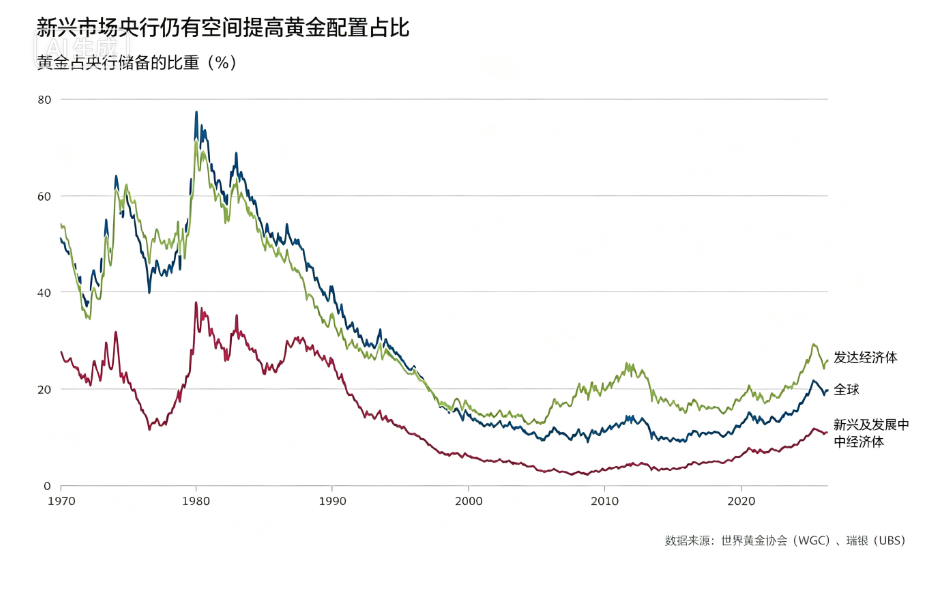
From 1834 to 1971, the value of the US dollar was fixed—the amount of gold one dollar could buy was determined by the government. After the dollar ceased to be convertible to gold in 1971 (the collapse of the Bretton Woods system), the price of gold floated freely, experiencing three major bull markets in history: 1971 to 1980, 1999 to 2011, and the current one that began in 2018.  The three bull markets, each with its own distinct pattern, saw the most dramatic rise. The first, in the 1970s, was the most intense: an annualized increase of 46% over eight and a half years, one of the most dramatic revaluations of any major asset in modern history. The reasons were specific: the post-war monetary order collapsed, savings couldn't keep up with inflation (real interest rates were deeply negative), geopolitical instability led to ever-increasing government fiscal deficits. The second bull market was fueled by the financialization of gold, which rose along with Chinese demand and other commodities, coupled with exceptionally loose US monetary policy, resulting in an annualized increase of nearly 18%. While not as rapid as the first, the rise was longer and more stable. The current bull market, which began in 2018, has yielded an annualized return of 19% to date. Initially, the driving forces were the same old ones—declining real interest rates and quantitative easing during the pandemic—but halfway through, the situation fundamentally changed. In February 2022, the relationship between gold prices and interest rates broke down . In the first two decades of this century, for every percentage point increase in US real interest rates, gold prices typically fell by about 14%, a pattern that held true for a long time. But it failed in February 2022: Western countries froze Russia's foreign exchange reserves, forcing global money managers to confront a simple question—$630 billion held in US, German, British, and other bonds was suddenly inaccessible. So what truly constituted money? Their answer was gold. Since then, emerging market central banks and sovereign wealth funds have increased the proportion of their reserves held in gold from 5% to 7% in 2022 to 11% today, but this is still significantly lower than the 26% held by their developed-country counterparts. Data can be used to examine this shift: From March 2022 to October 2023, the US five-year real yield rose by more than 4 percentage points. Historically, gold prices should have fallen by about 55%, but instead rose by 7%. In the following two years, real yields fell by less than 1 percentage point, yet gold prices rose by 110%. Today, gold prices are more sensitive to declines in real interest rates but much less sensitive to increases. This asymmetry renders most valuation models obsolete—many models have declared gold prices severely overvalued since $2,500 per ounce, omitting two other key variables. The first support: Bonds fail to hedge against stock market declines. During the past five years of inflation, bonds have often failed to hedge against the risk of stock market declines, with both frequently falling together. In contrast, gold provides better diversification for portfolios heavily weighted towards stocks. According to the World Gold Council, only 3% of financial assets held by individual and institutional investors are currently in gold, leaving significant room for growth. Once inflation and its volatility eventually subside, the correlation between bonds and stocks may turn negative again, at which point investors might switch to bonds for risk diversification (after all, gold doesn't generate returns), but we haven't reached that stage yet. The second support: Loss of confidence in US fiscal policy.
  This is more structural. Market confidence in US public finances is gradually eroding, which UBS models capture using term premiums—the higher yields investors demand for holding long-term Treasury bonds relative to short-term bonds. This is becoming an increasingly important determinant of gold prices. US public debt has reached $32 trillion and may increase by that much in the next decade, but the US is showing strong resistance to the most natural consequence—rising long-term yields. With a fiscal deficit still at 6% of GDP under full employment conditions, how can long-term yields be suppressed? One possible approach is to persuade the Federal Reserve to implement substantial and prolonged interest rate cuts, even if it means slightly raising rates first to align with market expectations of two rate hikes. Both declining real interest rates and rising term premiums are beneficial for gold prices. Fiscal Dominance: Gold is the most direct outlet for this theme. Early signs of "fiscal dominance" are already appearing in the US—in layman's terms, fiscal pressure is beginning to influence monetary policy. This phenomenon has long existed in Japan, for which the yen has paid a heavy price; the fiscal prospects of countries like France and Italy are also unstable. As the market assesses how these debts will ultimately be repaid, it has already begun to add a moderate but systemic premium to the currencies of countries with more stable fiscal situations (Switzerland, Australia, and Canada). And among all assets, gold is where this theme is most clearly manifested and most readily accessible.
The three bull markets, each with its own distinct pattern, saw the most dramatic rise. The first, in the 1970s, was the most intense: an annualized increase of 46% over eight and a half years, one of the most dramatic revaluations of any major asset in modern history. The reasons were specific: the post-war monetary order collapsed, savings couldn't keep up with inflation (real interest rates were deeply negative), geopolitical instability led to ever-increasing government fiscal deficits. The second bull market was fueled by the financialization of gold, which rose along with Chinese demand and other commodities, coupled with exceptionally loose US monetary policy, resulting in an annualized increase of nearly 18%. While not as rapid as the first, the rise was longer and more stable. The current bull market, which began in 2018, has yielded an annualized return of 19% to date. Initially, the driving forces were the same old ones—declining real interest rates and quantitative easing during the pandemic—but halfway through, the situation fundamentally changed. In February 2022, the relationship between gold prices and interest rates broke down . In the first two decades of this century, for every percentage point increase in US real interest rates, gold prices typically fell by about 14%, a pattern that held true for a long time. But it failed in February 2022: Western countries froze Russia's foreign exchange reserves, forcing global money managers to confront a simple question—$630 billion held in US, German, British, and other bonds was suddenly inaccessible. So what truly constituted money? Their answer was gold. Since then, emerging market central banks and sovereign wealth funds have increased the proportion of their reserves held in gold from 5% to 7% in 2022 to 11% today, but this is still significantly lower than the 26% held by their developed-country counterparts. Data can be used to examine this shift: From March 2022 to October 2023, the US five-year real yield rose by more than 4 percentage points. Historically, gold prices should have fallen by about 55%, but instead rose by 7%. In the following two years, real yields fell by less than 1 percentage point, yet gold prices rose by 110%. Today, gold prices are more sensitive to declines in real interest rates but much less sensitive to increases. This asymmetry renders most valuation models obsolete—many models have declared gold prices severely overvalued since $2,500 per ounce, omitting two other key variables. The first support: Bonds fail to hedge against stock market declines. During the past five years of inflation, bonds have often failed to hedge against the risk of stock market declines, with both frequently falling together. In contrast, gold provides better diversification for portfolios heavily weighted towards stocks. According to the World Gold Council, only 3% of financial assets held by individual and institutional investors are currently in gold, leaving significant room for growth. Once inflation and its volatility eventually subside, the correlation between bonds and stocks may turn negative again, at which point investors might switch to bonds for risk diversification (after all, gold doesn't generate returns), but we haven't reached that stage yet. The second support: Loss of confidence in US fiscal policy. This is more structural. Market confidence in US public finances is gradually eroding, which UBS models capture using term premiums—the higher yields investors demand for holding long-term Treasury bonds relative to short-term bonds. This is becoming an increasingly important determinant of gold prices. US public debt has reached $32 trillion and may increase by that much in the next decade, but the US is showing strong resistance to the most natural consequence—rising long-term yields. With a fiscal deficit still at 6% of GDP under full employment conditions, how can long-term yields be suppressed? One possible approach is to persuade the Federal Reserve to implement substantial and prolonged interest rate cuts, even if it means slightly raising rates first to align with market expectations of two rate hikes. Both declining real interest rates and rising term premiums are beneficial for gold prices. Fiscal Dominance: Gold is the most direct outlet for this theme. Early signs of "fiscal dominance" are already appearing in the US—in layman's terms, fiscal pressure is beginning to influence monetary policy. This phenomenon has long existed in Japan, for which the yen has paid a heavy price; the fiscal prospects of countries like France and Italy are also unstable. As the market assesses how these debts will ultimately be repaid, it has already begun to add a moderate but systemic premium to the currencies of countries with more stable fiscal situations (Switzerland, Australia, and Canada). And among all assets, gold is where this theme is most clearly manifested and most readily accessible.
- Risk Warning and Disclaimer
- The market involves risk, and trading may not be suitable for all investors. This article is for reference only and does not constitute personal investment advice, nor does it take into account certain users’ specific investment objectives, financial situation, or other needs. Any investment decisions made based on this information are at your own risk.