The US jobs report exceeded expectations across the board, increasing the probability of a September rate hike.
2026-09-05 01:06:04
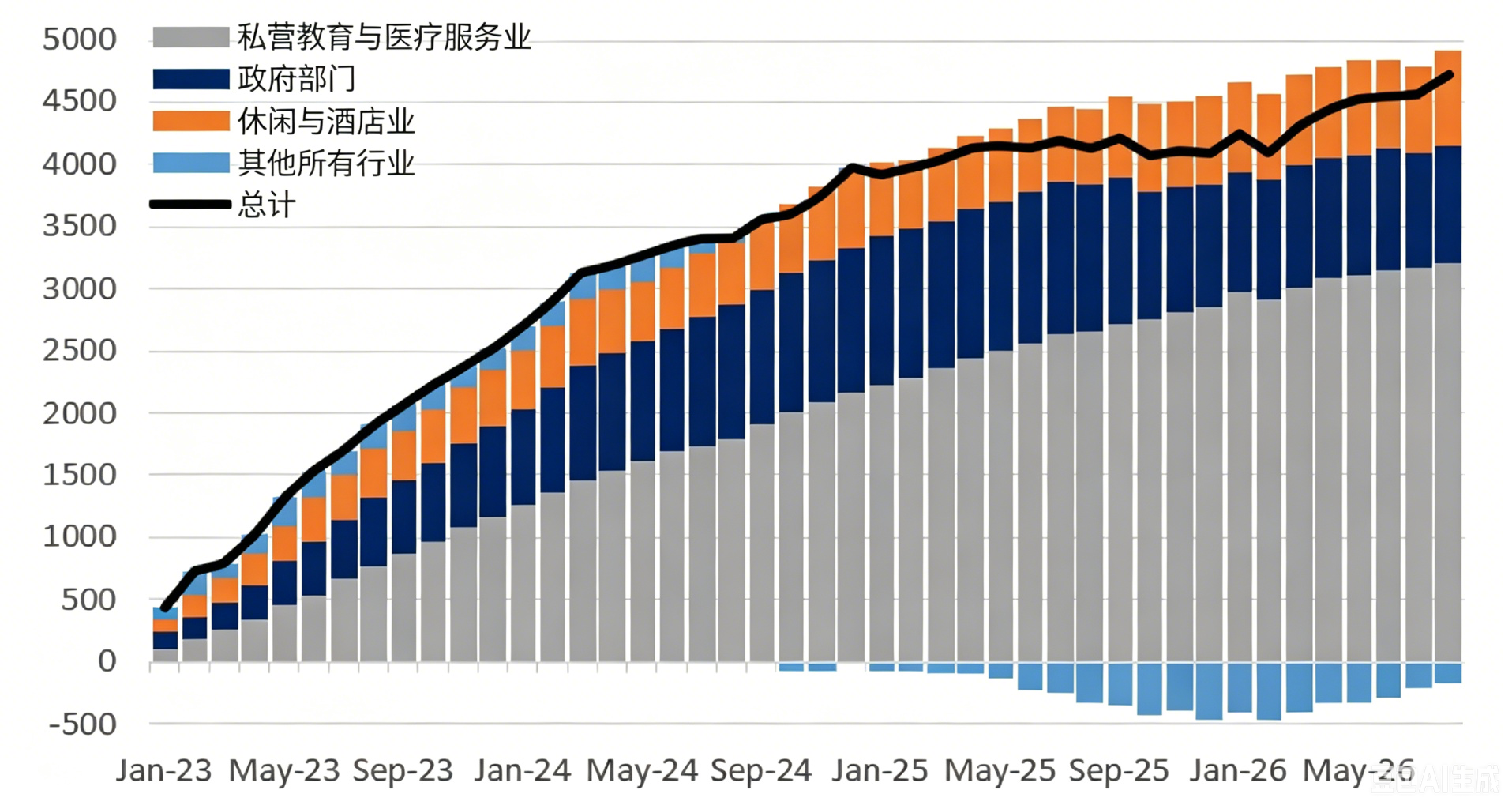
U.S. nonfarm payrolls increased by 162,000 in August, far exceeding market expectations of 55,000, with the combined figure for the first two months revised upwards by 55,000. The unemployment rate remained unchanged at 4.1%, the labor force participation rate rose slightly to 61.6%, and wage growth was moderate year-on-year (3.1%). Structurally, job growth was highly concentrated in the private education, healthcare, government, and leisure and hospitality sectors, while other sectors have experienced a net job loss since the end of 2022, suggesting that productivity and corporate profits remain resilient. As a result, the market's pricing for a 25 basis point rate hike by the Federal Reserve in September rose from 12.5 basis points to 16 basis points; however, the final decision still depends on the CPI data to be released next Friday—given that Fed Chairman Warsh believes the U.S. is at full employment, if inflation is not as moderate as expected, a September rate hike is almost a certainty.  Solid Job Growth, Low Unemployment Rate Today's strong U.S. jobs report for August slightly increased the likelihood of a Federal Reserve rate hike in September. Non-farm payrolls (NFPs) increased by 162,000, with the combined figures for the previous two months revised upwards by 55,000, while the market had previously expected a total increase of only 55,000. Despite an improved labor force participation rate, the unemployment rate remained flat at 4.1%. Wage growth was moderate, rising 3.1% year-over-year. Looking at the breakdown, the private sector contributed 127,000 of the 162,000 new jobs: leisure and hospitality rebounded by 62,000 after two consecutive months of decline, private education and healthcare services added 29,000, construction added 22,000, and manufacturing added 16,000. The government sector also performed strongly—although federal and state government employment declined slightly, local government education departments added 42,000 jobs, becoming the main driver of growth. This result was somewhat surprising given recent media reports of declining enrollment and layoffs in the sector. Job growth is highly concentrated in three sectors Job growth continues to be dominated by three sectors—private education and healthcare services, government, and leisure and hospitality. This concentration is particularly evident in the cumulative data: since the end of 2022, all other sectors of the economy have experienced a net loss of jobs. Given the strength of US GDP growth during the same period, this is quite remarkable, suggesting significant productivity gains and reinforcing the narrative of strong US corporate profitability. Cumulative job growth since December 2022 (in thousands)
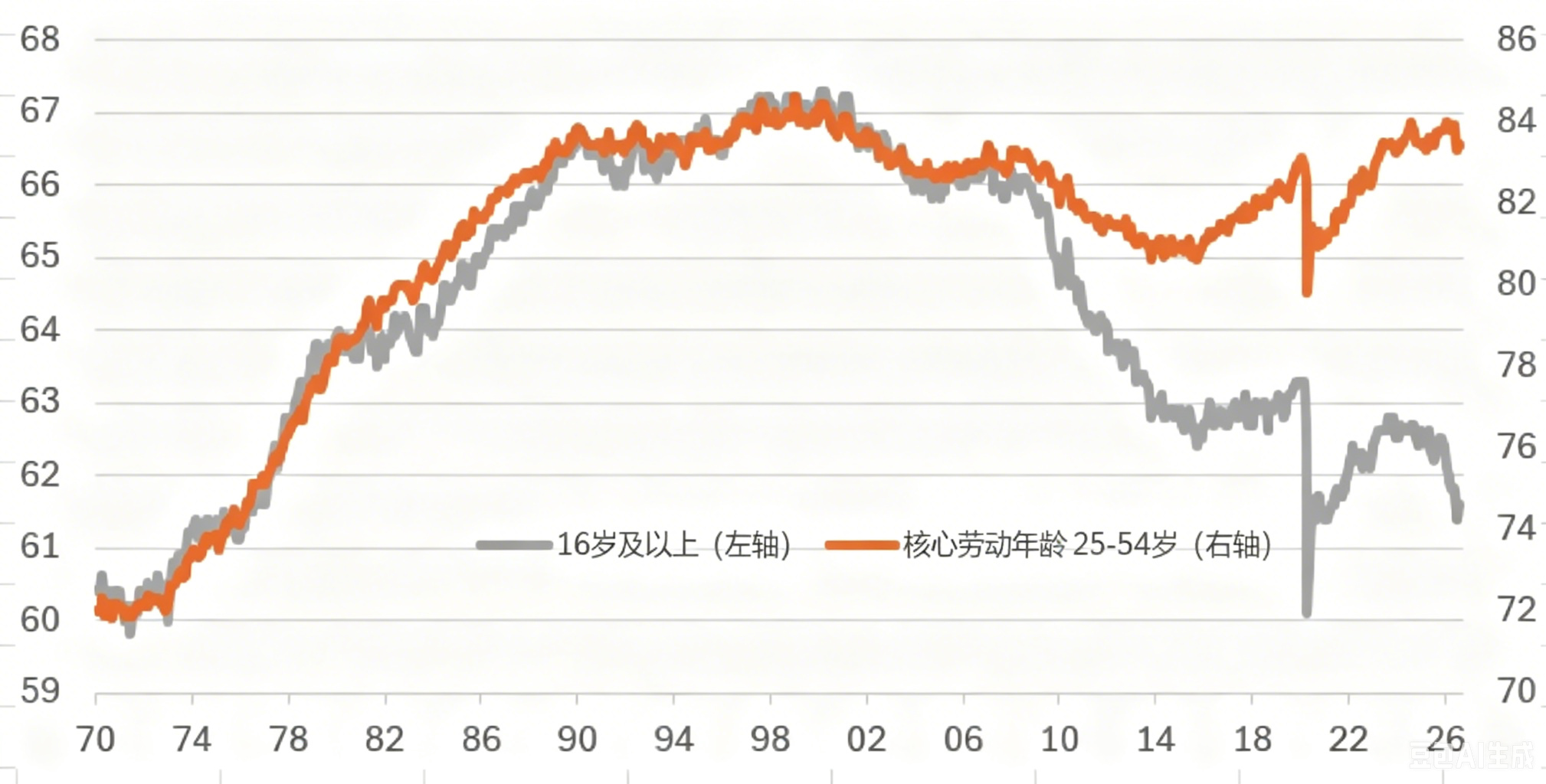
  The labor force participation rate remains worryingly weak. In the household survey used to calculate the unemployment rate, the number of employed people increased by 569,000, while the number of unemployed people increased by 115,000, and the total civilian labor force increased by 683,000 during the same period. This has somewhat corrected the previously alarming trend of people continuously withdrawing from the labor market. Ten months ago, the labor force participation rate was as high as 62.6%, it fell to 61.4% in July, and has now rebounded to 61.6%. Labor Force Participation Rate (%)
  If inflation data is moderate, the Fed may remain on hold . As expected, the market has priced in a 25 basis point rate hike in September, rising from 12.5 basis points yesterday (influenced by relatively dovish comments from Fed Governor Waller) to 16 basis points. Waller previously hinted that he might vote to keep policy unchanged if inflation data is moderate. Next Friday's CPI report will be the final deciding factor. We and the market consensus predict a 0.4% month-on-month increase in overall inflation and a 0.2% month-on-month increase in core inflation (excluding food and energy)—data that may not be moderate enough to prevent Warsh from pushing other FOMC members to raise rates.
Solid Job Growth, Low Unemployment Rate Today's strong U.S. jobs report for August slightly increased the likelihood of a Federal Reserve rate hike in September. Non-farm payrolls (NFPs) increased by 162,000, with the combined figures for the previous two months revised upwards by 55,000, while the market had previously expected a total increase of only 55,000. Despite an improved labor force participation rate, the unemployment rate remained flat at 4.1%. Wage growth was moderate, rising 3.1% year-over-year. Looking at the breakdown, the private sector contributed 127,000 of the 162,000 new jobs: leisure and hospitality rebounded by 62,000 after two consecutive months of decline, private education and healthcare services added 29,000, construction added 22,000, and manufacturing added 16,000. The government sector also performed strongly—although federal and state government employment declined slightly, local government education departments added 42,000 jobs, becoming the main driver of growth. This result was somewhat surprising given recent media reports of declining enrollment and layoffs in the sector. Job growth is highly concentrated in three sectors Job growth continues to be dominated by three sectors—private education and healthcare services, government, and leisure and hospitality. This concentration is particularly evident in the cumulative data: since the end of 2022, all other sectors of the economy have experienced a net loss of jobs. Given the strength of US GDP growth during the same period, this is quite remarkable, suggesting significant productivity gains and reinforcing the narrative of strong US corporate profitability. Cumulative job growth since December 2022 (in thousands) The labor force participation rate remains worryingly weak. In the household survey used to calculate the unemployment rate, the number of employed people increased by 569,000, while the number of unemployed people increased by 115,000, and the total civilian labor force increased by 683,000 during the same period. This has somewhat corrected the previously alarming trend of people continuously withdrawing from the labor market. Ten months ago, the labor force participation rate was as high as 62.6%, it fell to 61.4% in July, and has now rebounded to 61.6%. Labor Force Participation Rate (%) If inflation data is moderate, the Fed may remain on hold . As expected, the market has priced in a 25 basis point rate hike in September, rising from 12.5 basis points yesterday (influenced by relatively dovish comments from Fed Governor Waller) to 16 basis points. Waller previously hinted that he might vote to keep policy unchanged if inflation data is moderate. Next Friday's CPI report will be the final deciding factor. We and the market consensus predict a 0.4% month-on-month increase in overall inflation and a 0.2% month-on-month increase in core inflation (excluding food and energy)—data that may not be moderate enough to prevent Warsh from pushing other FOMC members to raise rates.
- Risk Warning and Disclaimer
- The market involves risk, and trading may not be suitable for all investors. This article is for reference only and does not constitute personal investment advice, nor does it take into account certain users’ specific investment objectives, financial situation, or other needs. Any investment decisions made based on this information are at your own risk.