Oil prices surged to a six-week high, with Goldman Sachs predicting Brent crude could test $120.
2026-09-08 11:20:07
On Tuesday (September 8) during Asian trading hours, oil prices fluctuated near six-week highs. As of 11:18, Brent crude futures rose to $97.47 per barrel, after hitting a high of $98.03 per barrel overnight, the highest since July 24. WTI crude rose about 1.3% overnight to $93.29 per barrel. The Iranian parliament speaker warned, "Attack our assets, and you will be attacked." The US and Iran exchanged attacks on oil tankers and warships over the weekend. Maritime intelligence agencies stated that merchant ships are being deliberately used as tools of economic pressure, and the lines between military and commercial objectives are increasingly blurred. 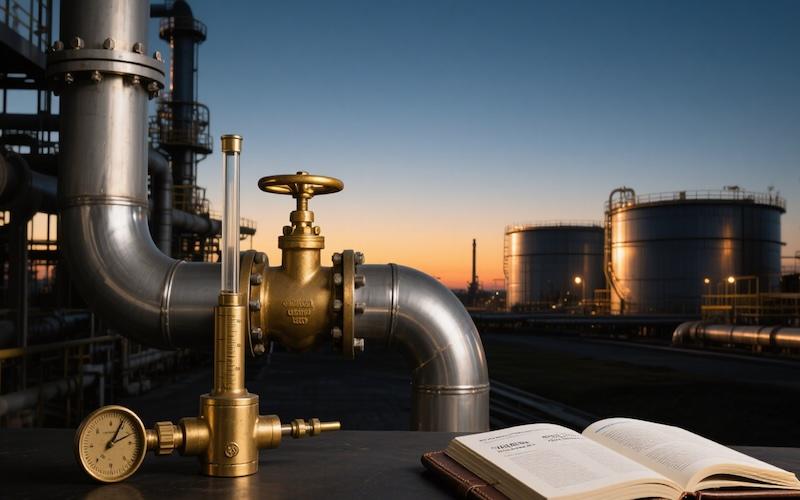
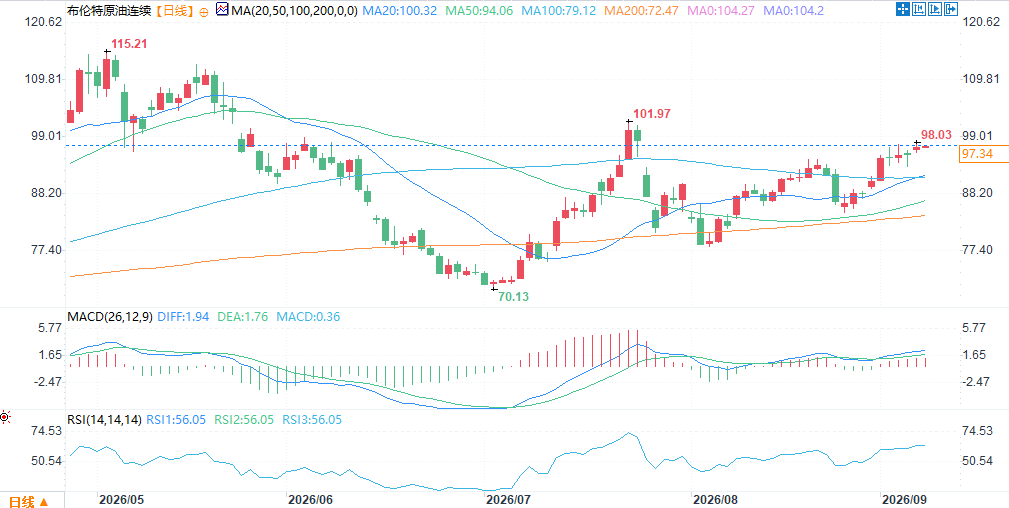 (Brent crude oil futures daily chart, source: EasyTrade) At 11:18 Beijing time, Brent crude oil futures were trading at $97.41 per barrel.
The conflict between the United States and Iran continues to escalate.
The core factor driving oil prices upward is the continued escalation of the conflict between the US and Iran. The Iranian parliament speaker issued a strong warning, stating, "Attack our assets, and you will be attacked." Last weekend, both sides attacked each other's oil tankers and warships. Maritime intelligence agencies pointed out that merchant ships are being deliberately used as tools to exert economic pressure, and the line between military objectives and commercial shipping is increasingly blurred. Brent crude oil rose by about 8% last week, while WTI crude oil rose by nearly 10%. Meanwhile, US gasoline and distillate fuel inventories are far below the same period last year and the five-year seasonal average, further narrowing the supply buffer and exacerbating market concerns about supply disruptions. With these multiple factors combined, the risk premium in the oil market has increased significantly, and short-term price momentum remains strong.The conflict has spread to Saudi Arabia and Lebanon, and traffic in the Hormuz region has dropped to its lowest level in May.
Geopolitical conflict has escalated further, with Israeli attacks in southern Lebanon killing at least 12 people and attacks on Saudi Aramco's refinery in Jizan, indicating that the fighting has spread to more critical energy facilities and regions. Shipping traffic in the Strait of Hormuz has plummeted, with an average of only about 10 merchant ships passing through daily over the past 10 days, the lowest level since May. Goldman Sachs warned that if attacks on shipping continue to rise, Brent crude oil prices could climb to $120 per barrel. The market also anticipates Iran declaring a new restricted zone outside the Strait of Hormuz, while the UAE is accelerating the construction of alternative export routes to mitigate risks. OPEC+ maintained its October production policy. Brent crude oil still has room for further upside in the short term. If the conflict spreads to more energy infrastructure, oil prices could break through $100 and advance towards $110-$120; if the situation shows signs of easing, prices may fall back to the $90-$95 range. Investors need to closely monitor actual traffic flow in the Strait of Hormuz, the extent of damage to Saudi refineries, and Goldman Sachs' $120 risk scenario.Demand from major Asian countries is expected to rebound, making a shortfall of 5-6 million barrels per day "unsustainable."
Vitol CEO Hardy stated that oil import demand from a major Asian nation is expected to rebound. He pointed out that there is a significant gap of 5-6 million barrels per day between current and 2025/2026 crude oil import volumes, a gap that is "unsustainable," suggesting that the country will gradually accelerate its import pace from its current low purchasing levels. This assessment is particularly prominent against the backdrop of a projected global crude oil demand decline of approximately 1.5 million barrels per day, highlighting the importance of a rebound in Asian demand to offset global weakness. As the world's largest crude oil importer, the purchasing behavior of this major Asian nation directly impacts the global oil market's supply and demand balance. An accelerated import pace is expected to alleviate oversupply pressures and support international oil prices. The market will closely monitor subsequent purchasing data and policy signals to verify the extent to which this expectation materializes.Summarize
Oil prices rose to a six-week high as the US-Iran conflict continued to escalate, with Hormuz flow falling to its lowest level since May. Goldman Sachs warned that Brent crude prices could rise to $120 per barrel. Investors need to pay attention to the risk of the conflict spreading to Saudi energy infrastructure. If Saudi refineries are damaged or shipping attacks increase, oil prices could break through $100; if the conflict eases, they may fall back to the $90-95 range. New restricted zones in Iran and alternative routes in the UAE are medium-term variables. Current supply buffers are almost exhausted, and any new risks could trigger significant price volatility. (Brent crude oil futures daily chart, source: EasyTrade) At 11:18 Beijing time, Brent crude oil futures were trading at $97.41 per barrel.
- Risk Warning and Disclaimer
- The market involves risk, and trading may not be suitable for all investors. This article is for reference only and does not constitute personal investment advice, nor does it take into account certain users’ specific investment objectives, financial situation, or other needs. Any investment decisions made based on this information are at your own risk.