September 9th Financial Breakfast: Gold prices are pressured at $4350 due to a double whammy of geopolitical risks and inflation, while crude oil surges to a more than six-week high.
2026-09-09 07:30:06
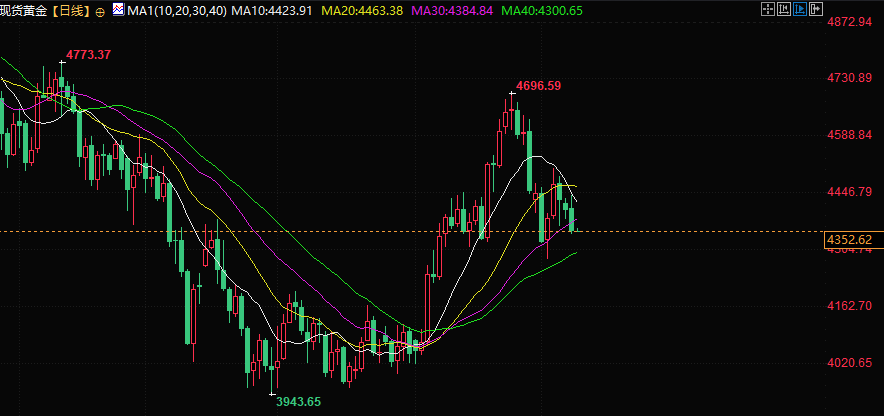
On Wednesday (September 9, Beijing time) in early Asian trading, spot gold was trading around $4,354 per ounce, pressured ahead of US CPI data releases as rising oil prices exacerbated inflation concerns and increased expectations of a Fed rate hike in September. US crude oil rose, trading around $94.33 per barrel, after climbing to a six-week high on Tuesday following attacks by Houthi rebels in Yemen that ignited oil facilities in four southern Saudi cities, raising concerns about a potential escalation of the Middle East conflict. 
 The Houthi attacks on Saudi energy facilities in Yemen and Iran's threat of an "economic war" against the US, coupled with a stronger-than-expected US August jobs report and a stable unemployment rate of 4.1%, prompted traders to raise their bets on an interest rate hike at the September policy meeting from about 50% before the data release to about 60% (according to the CME FedWatch tool), thus limiting the appeal of gold. The market is currently awaiting Thursday's PPI and Friday's CPI data for more clues about monetary policy. Stone X strategists pointed out that the increased probability of a rate hike has kept gold prices range-bound, and Zaner Metals analysts also said that oil prices support expectations of a rate hike. Spot silver fell 0.62% to $65.73 per ounce, platinum rose 1.1% to $1843.99, while palladium fell 2.5% to $1354.15.
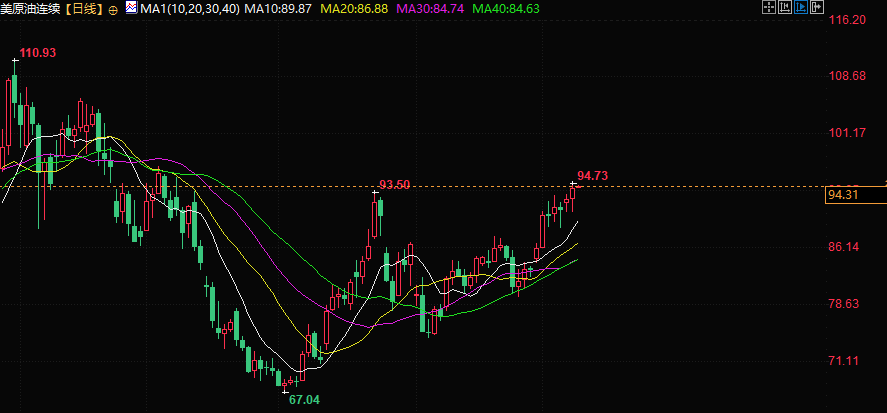 Since the US-Israel joint strike on Iran at the end of February, Gulf oil exports have been severely impacted. This attack on Saudi Arabia bypasses the Strait of Hormuz blockade and directly threatens energy supplies from the Red Sea, exacerbating the risk of a global economic shock. Goldman Sachs, HSBC, and other banks have therefore raised their oil price forecasts for the remainder of 2026 and 2027. Meanwhile, shipping data shows that only seven commodity ships passed through the Strait of Hormuz on Monday, a further decrease from the eight the previous day. Approximately 20% of global oil supply has passed through this strait. Rising oil prices, coupled with comments from Federal Reserve Governor Waller and a strong US jobs report, have increased traders' bets on an interest rate hike at the September 15-16 policy meeting to around 60%, up from 50% before the data release. However, some of the gains were reversed during the session due to a phone call between Trump and Putin. The Kremlin stated that Trump wants a swift end to the war in Ukraine, a sentiment Putin expressed support for, and that an end to the conflict could allow Russia to resume more energy exports.
 The yen hovered near a seven-month high on Tuesday, with the dollar falling 0.24% against the yen to close at 153.97. The dollar had earlier fallen as low as 152.88 yen, surpassing levels seen during Japan's intervention in July and hitting a new low since February. This was driven by market expectations that the Bank of Japan would raise interest rates by 25 basis points to 1.25% at its September 17-18 meeting, coupled with expectations of a reallocation of Japanese public pension fund assets, large-scale unwinding of carry trades, and pressure from Washington. Meanwhile, Japanese Finance Minister Satsuki Katayama stated that Japan and the US maintained a consistent stance on foreign exchange and were in close communication. Bannockburn Global Forex strategists noted that there were no signs of official intervention, and the market was largely adjusting its short-covering. At the same time, the euro hovered near a nine-month low of 178.83 yen against the yen. The euro was largely stable against the dollar around 1.1623, with the market widely expecting the European Central Bank to raise rates on Thursday. The Canadian dollar rose 0.23% against the dollar to 1.378, as retaliatory tariffs imposed by Canada on the US took effect at midnight on Tuesday, further escalating the 18-month trade war.
Key Focus Today
stock market
U.S. stocks closed lower on Tuesday, with the S&P 500 down 0.58% to 7673.52, the Dow Jones Industrial Average down 1.18% to 52786.07, and the Nasdaq Composite down 0.32% to 26421.41. Software stocks were the main drag, with Salesforce, Intuit, and ServiceNow all falling about 4% to 5%, as OpenAI's latest GPT-6 Astra model reignited concerns about artificial intelligence disrupting professional software services. The S&P 500 Software & Services index fell 1.4% for the second consecutive day. Meanwhile, Intel surged 9% and Qualcomm rose 3.2%, as both companies partnered with Amazon to develop custom AI chips, continuing the trend of semiconductor stocks benefiting from data center capital expenditures. Market sentiment was also weighed down by escalating tensions in the Middle East, with Houthi attacks on Saudi energy facilities in Yemen pushing oil prices to a six-week high, and Iran threatening further U.S. strikes, exacerbating geopolitical risks. Regarding monetary policy, last week's strong August non-farm payroll data increased traders' bets on a Federal Reserve rate hike. The CME Group's FedWatch tool showed a 60% probability of a rate hike at the September 15-16 meeting. This week's PPI and CPI data are considered key references before the decision. Apple fell 1.2%, with the market focused on Wednesday's launch of the first smartphone under the new CEO. In terms of valuation, the S&P 500 is projected to rise approximately 12% by 2026, but is still about 1% lower than its August high. The forward P/E ratio has fallen from 21 in early June to 19, reflecting upward revisions in earnings expectations; however, high US Treasury yields have diminished the attractiveness of stocks.Gold Market
Gold prices fell on Tuesday, with spot gold down 1.15% to $4,355.41 an ounce, mainly due to rising oil prices exacerbating inflation concerns and increasing expectations of a Federal Reserve rate hike in September. The Houthi attacks on Saudi energy facilities in Yemen and Iran's threat of an "economic war" against the US, coupled with a stronger-than-expected US August jobs report and a stable unemployment rate of 4.1%, prompted traders to raise their bets on an interest rate hike at the September policy meeting from about 50% before the data release to about 60% (according to the CME FedWatch tool), thus limiting the appeal of gold. The market is currently awaiting Thursday's PPI and Friday's CPI data for more clues about monetary policy. Stone X strategists pointed out that the increased probability of a rate hike has kept gold prices range-bound, and Zaner Metals analysts also said that oil prices support expectations of a rate hike. Spot silver fell 0.62% to $65.73 per ounce, platinum rose 1.1% to $1843.99, while palladium fell 2.5% to $1354.15.oil market
Oil prices climbed to a six-week high on Tuesday, with Brent crude rising 2.14% to settle at $99.31 a barrel and WTI crude rising 1.67% to $94.25 a barrel, both marking their highest closing prices since late July. This was primarily driven by concerns that the six-month-long Middle East conflict could escalate significantly after Iranian-backed Houthi attacks on four southern Saudi cities injured more than 70 people and set fire to oil facilities. Since the US-Israel joint strike on Iran at the end of February, Gulf oil exports have been severely impacted. This attack on Saudi Arabia bypasses the Strait of Hormuz blockade and directly threatens energy supplies from the Red Sea, exacerbating the risk of a global economic shock. Goldman Sachs, HSBC, and other banks have therefore raised their oil price forecasts for the remainder of 2026 and 2027. Meanwhile, shipping data shows that only seven commodity ships passed through the Strait of Hormuz on Monday, a further decrease from the eight the previous day. Approximately 20% of global oil supply has passed through this strait. Rising oil prices, coupled with comments from Federal Reserve Governor Waller and a strong US jobs report, have increased traders' bets on an interest rate hike at the September 15-16 policy meeting to around 60%, up from 50% before the data release. However, some of the gains were reversed during the session due to a phone call between Trump and Putin. The Kremlin stated that Trump wants a swift end to the war in Ukraine, a sentiment Putin expressed support for, and that an end to the conflict could allow Russia to resume more energy exports.Foreign exchange market
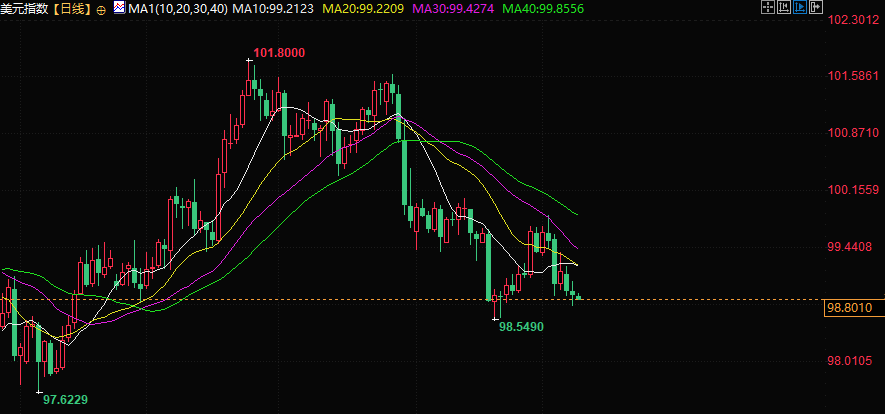
The US dollar index held steady around 98.86, oil prices hovered near a six-week high, the yield on the 10-year US Treasury note rose to 4.804%, and traders' bets on a rate hike at the Federal Reserve's September 15-16 meeting rose to about 60% after Friday's strong non-farm payroll report, all keeping investors cautious. The market is awaiting this week's US PPI and CPI data for clearer policy clues. The yen hovered near a seven-month high on Tuesday, with the dollar falling 0.24% against the yen to close at 153.97. The dollar had earlier fallen as low as 152.88 yen, surpassing levels seen during Japan's intervention in July and hitting a new low since February. This was driven by market expectations that the Bank of Japan would raise interest rates by 25 basis points to 1.25% at its September 17-18 meeting, coupled with expectations of a reallocation of Japanese public pension fund assets, large-scale unwinding of carry trades, and pressure from Washington. Meanwhile, Japanese Finance Minister Satsuki Katayama stated that Japan and the US maintained a consistent stance on foreign exchange and were in close communication. Bannockburn Global Forex strategists noted that there were no signs of official intervention, and the market was largely adjusting its short-covering. At the same time, the euro hovered near a nine-month low of 178.83 yen against the yen. The euro was largely stable against the dollar around 1.1623, with the market widely expecting the European Central Bank to raise rates on Thursday. The Canadian dollar rose 0.23% against the dollar to 1.378, as retaliatory tariffs imposed by Canada on the US took effect at midnight on Tuesday, further escalating the 18-month trade war.International News
Iranian Military Warns: Tanker Crews Must Evacuate Immediately Following Attacks on Kuwaiti and Bahrain Ports On the evening of March 8th local time, the Iranian Islamic Revolutionary Guard Corps issued an urgent warning regarding the US attacks on Iranian oil tankers. The Revolutionary Guard warned that, given the US's heinous acts of attacking multiple Iranian oil tankers, all crew members of oil tankers anchored in Kuwait and Bahrain ports should evacuate immediately, as these ports have harbored US troops, regardless of whether the tankers are at anchor or in port, as they will become targets of attacks. (CCTV News) US Treasury Imposes New Sanctions on Iranian Aviation Industry On March 8th local time, the US Treasury Department announced a new round of sanctions against Iran, targeting 36 entities, primarily focusing on the Iranian aviation industry and related companies. This move is part of the US's further increase in economic pressure on Iran. The US Treasury Department stated that this action aims to further restrict the operations of Mahan Air and expand the scope of sanctions to other Iranian airlines. The sanctions also involve several shell companies, foreign intermediaries, and transshipment networks allegedly providing support to Iran. The US claims that Iran obtains US-made aircraft and sensitive technology through these channels. (CCTV News) Global Copper Rush Unfolds Ahead of Schedule, with Large Amounts Flowing to the US Three-month copper futures prices on the London Metal Exchange hit a record high on the 7th. During Asian trading hours on the 8th, copper prices continued their upward trend, reaching a high of $14,617 per ton. Analysts point out that the market's widespread bets on the US imposing a 15% tariff on refined copper starting in January 2027 have prompted US traders to stockpile before the new policy takes effect. Large amounts of copper are flowing from London Metal Exchange warehouses in Asia and Europe to the US, triggering a trans-Pacific and transatlantic "copper rush" ahead of schedule. Chile, the world's largest copper producer, saw its August copper exports fall to a more than one-year low due to extreme weather and mine operation disruptions. Meanwhile, artificial intelligence, data center construction, and the popularization of new energy vehicles are also important drivers of current copper demand growth. The copper recycling market is also booming. Scrap copper purchase prices have increased by more than 20% year-on-year, with market merchants saying, "Copper prices are rising every day, hitting new highs daily, and there's no worry about selling." Electrolytic copper spot inventories have hit a new low for the year, and smelting companies are operating at full capacity. (CCTV Finance) Iranian Military Claims to Have Captured a US Unmanned Submarine On the 8th local time, the Iranian Islamic Revolutionary Guard Corps Navy issued a statement saying that its forces successfully captured a US military's most advanced intelligent unmanned submarine at dawn that day at the entrance to the Strait of Hormuz through a complex intelligence and combat operation. (CCTV News) Putin and Trump Discuss Ukraine Crisis and Other Issues Russian President Vladimir Putin and US President Donald Trump spoke by phone that day, lasting for an hour, and discussed issues such as the Ukraine crisis. (Xinhua News Agency) World's Largest Sovereign Wealth Fund Plans Significant Reduction in US Treasury Holdings The Norwegian Sovereign Wealth Fund, the world's largest sovereign wealth fund, has reportedly received a letter from its management institution, Norwegian Bank Investment Management Fund, to the Norwegian Ministry of Finance, offering suggestions on the fund's next investment direction. One key suggestion is to reduce the proportion of government bonds in the fund's bond portfolio from the current 70% to 50%, with US Treasury bonds becoming one of the main targets for reduction. Reports indicate that the Norwegian Sovereign Wealth Fund currently holds approximately $215 billion in US Treasury bonds. The Norwegian Bank Investment Management Fund plans to drastically reduce its holdings of US Treasury bonds by nearly $80 billion, lowering its allocation from 34.1% to 21.9%. The Norwegian sovereign wealth fund currently manages approximately $2.34 trillion in assets. As a significant long-term, stable overseas investor in US Treasury bonds, the Norwegian sovereign wealth fund's plan for a large-scale reduction sends a significant signal. (CCTV News) The White House announced details of the implementation of tariffs on Canadian goods; goods imported before September 29 will still be subject to a 50% tariff rate. The White House issued a statement that US President Trump has signed an executive order adjusting the scope of goods subject to additional tariffs on Canadian motor vehicle-related products. The White House also provided further clarification on the previously announced details of the 50% ad valorem tariff. The statement clarifies that all products included in the import ban that entered the US before September 29, 2026, but have not yet completed domestic sales declarations or been retrieved from bonded warehouses for domestic sale, will still be subject to a 50% tariff rate. This means that even inventory goods, if not cleared through customs before the deadline, cannot avoid the higher tariff rate. On the same day, the White House also announced a ban on the import of certain Canadian automobiles and some Canadian alcoholic beverages, effective September 29, further escalating the US-Canada trade dispute. US Central Command announced the destruction of five Iranian oil tankers . On September 8, US Central Command issued a statement saying its forces destroyed five Iranian oil tankers that day. The US stated that this action was a direct response to the Iranian Revolutionary Guard's two ballistic missile attacks on a US Navy warship over the past two days. According to Central Command, the attacked US warship successfully evaded the Iranian missile attacks, and there were no US casualties. The warship continued patrolling in the relevant waters after evading the attacks. The US did not disclose further details about the specific area where the incident occurred or the destroyed vessels.Domestic News
Nationwide Pork Prices Rise for Fourth Consecutive Week; Reasons for Price Increase Found Recent visits to wholesale markets in Beijing revealed that pork prices have moderately rebounded, driven by increased demand. Data shows that on September 8th, the average wholesale price of pork carcasses at Beijing's Xinfadi Market was 14 yuan per kilogram, a 12% increase compared to August 1st. It is reported that the price increase is due to two main factors: the gradually cooling weather leading to increased meat consumption, and the decline in the number of breeding sows also contributing to expectations of higher prices. Liu Tong, an analyst at Beijing's Xinfadi Market, predicts that the overall rebound is relatively moderate. Because the number of live pigs remains relatively abundant, the price increase is not expected to be significant in the future. Nationwide, both pork and live pig prices are showing an upward trend. According to monitoring by the Ministry of Agriculture and Rural Affairs, in the first week of September, the national live pig price was 11.59 yuan per kilogram, a 0.3% increase compared to the previous week, while the pork price was 21.23 yuan per kilogram, a 0.2% increase compared to the previous week. Both live pig and pork prices have risen for four consecutive weeks. (CCTV Finance)- Risk Warning and Disclaimer
- The market involves risk, and trading may not be suitable for all investors. This article is for reference only and does not constitute personal investment advice, nor does it take into account certain users’ specific investment objectives, financial situation, or other needs. Any investment decisions made based on this information are at your own risk.