Oil prices continued to rise, while the USD/CAD exchange rate fluctuated at low levels, awaiting a stress test.
2026-09-10 13:32:07
The USD/CAD pair remained range-bound in Asian trading on Thursday, hovering above the 1.3800 level and failing to sustain the slight rebound of the previous session. Market participants were cautious ahead of key US inflation data releases and were reluctant to establish new directional positions, causing USD/CAD to consolidate near recent lows.  The US PPI will be released on Thursday, and the CPI on Friday. These two inflation figures will be crucial for the market to judge the Fed's future policy path and will directly affect dollar demand and the short-term direction of USD/CAD. If inflationary pressures continue to exceed expectations, the market may further increase its pricing of a Fed rate hike, thus driving a dollar rebound; if the data falls short of expectations, the dollar may come under renewed pressure, and USD/CAD may continue its recent downward trend. Recent relatively strong US employment data has already increased market expectations for a Fed rate hike at its September 15-16 policy meeting. Meanwhile, persistently high international energy prices may further increase inflationary pressures, creating a more complex policy environment for the Fed. For the dollar, both higher interest rate expectations and the inflationary risks from energy prices can provide some support. At the same time, geopolitical tensions continue to strengthen the dollar's safe-haven appeal. Escalating tensions between the US and Iran have increased shipping risks near the Strait of Hormuz, and market concerns about continued disruptions to oil supply have significantly intensified. Recent attacks have affected energy transportation, causing international oil prices to rise rapidly to a three-month high, and the market is reassessing the duration of Middle East supply disruptions. Rising oil prices have had a complex impact on the USD/CAD exchange rate. On the one hand, higher energy prices may support the US dollar through inflation expectations and risk aversion. On the other hand, Canada is a major energy exporter, and rising oil prices typically improve Canada's terms of trade and enhance the Canadian dollar's attractiveness as a commodity currency. Therefore, in the current environment of rapidly rising oil prices, the support for the Canadian dollar may partially offset the safe-haven advantage of the US dollar. This is one of the key reasons why USD/CAD has not followed the US dollar's significant rebound recently. Although the US dollar is supported by expectations of US interest rate hikes and safe-haven demand, rising oil prices have also improved the fundamentals of the Canadian dollar, limiting the upside potential of USD/CAD. If international oil prices continue to be strong, the Canadian dollar may remain relatively resilient and limit the rebound of USD/CAD. US Treasury yields are also worth noting. Recently, US Treasury yields have remained relatively high, and investors have not reacted positively to the US Treasury's announcement of expanding the scale of long-term Treasury repurchase agreements. High yields are beneficial to the US dollar, but if subsequent US inflation data is lower than expected, yields may fall back, and the US dollar's interest rate advantage will be weakened. Therefore, USD/CAD is currently in an environment of multiple intertwined factors. US inflation data determines the Federal Reserve's policy expectations, geopolitical risks determine the safe-haven demand for the US dollar, and oil prices affect the Canadian dollar's performance through Canadian energy exports. Changes in these three factors will determine whether USD/CAD can break free from its recent low-level consolidation. From a daily chart perspective, USD/CAD remains bearish in the short term. The exchange rate is currently trading below the 100-day simple moving average at 1.3926, indicating that the recent rebound is still a correction and has not yet changed the downward trend formed over the past two months. As long as the price cannot recover to around 1.3900, the overall technical structure remains bearish. The first resistance level to watch is around 1.3850, followed by the psychological level of 1.3900, and further upside potential is the 100-day moving average area around 1.3926. If the exchange rate can effectively break through 1.3900 and hold above the 100-day moving average, it means that the previous downward structure is being challenged, and further upside potential may be unlocked. The first key level to watch is the 1.3800 psychological barrier. A break below this level would likely lead to a retest of the 1.3770-1.3765 area. This area represents crucial short-term support; a sustained break below this level would confirm a renewed bearish dominance and potentially push USD/CAD into a continuation of its two-month downtrend. A break below 1.3765 would target support around 1.3700; further downside to 1.3650 would be a potential next support level. Conversely, a significant buying opportunity around 1.3770 could push the price back above 1.3800, potentially triggering a short-term technical rebound and a retest of 1.3850 and 1.3900. On the 4-hour chart, USD/CAD is currently consolidating at lower levels, with 1.3800 being a key psychological level contested by both bulls and bears. If the exchange rate can continue to trade above 1.3800, a short-term rebound towards 1.3850 is possible; however, if the rebound is consistently capped by 1.3850, the overall weak structure remains intact. If the price breaks below the 1.3770-1.3765 area again, the downtrend may accelerate. Special attention should be paid to the dollar's volatility following the release of US PPI and CPI data. If inflation data drives a rapid rise in US Treasury yields, USD/CAD may break through 1.3850 and test 1.3900; if the data is weak while crude oil continues to be strong, the Canadian dollar may receive double support, increasing the probability of USD/CAD breaking below 1.3770.
 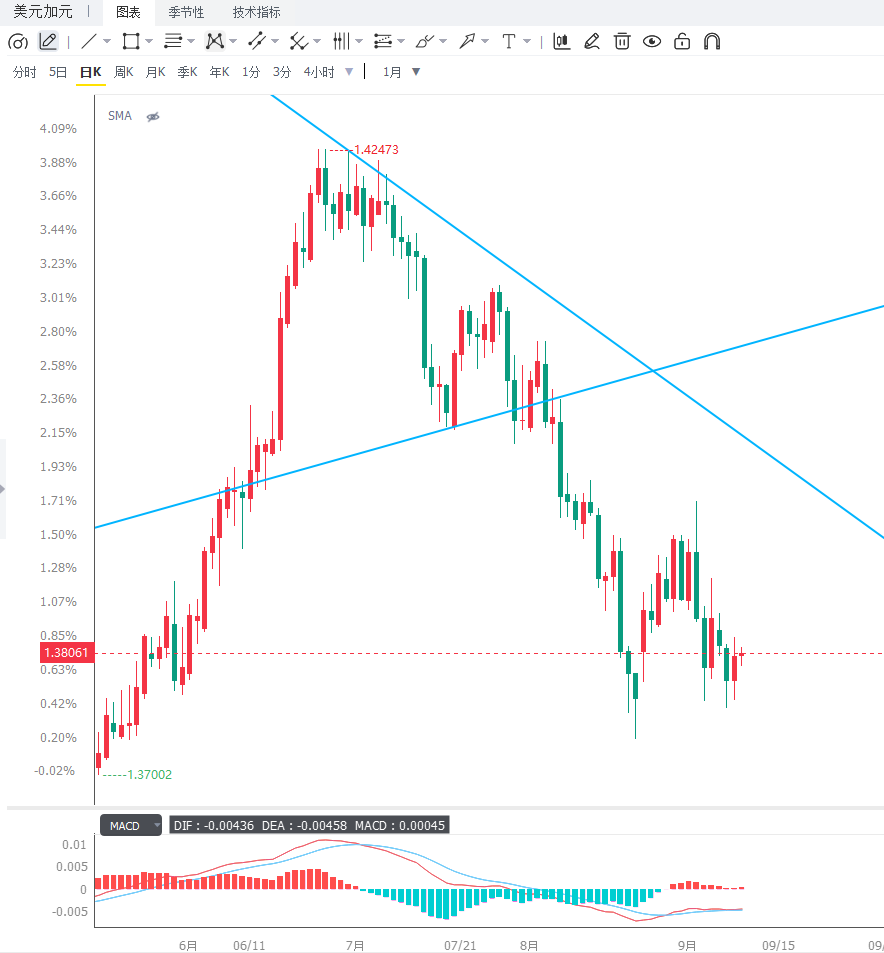 In summary , USD/CAD is currently consolidating above 1.3800. The US dollar is supported by expectations of a Fed rate hike and geopolitical risks, but rising oil prices have strengthened the Canadian dollar's commodity currency characteristics, limiting its upside potential. US PPI and CPI will be key data points determining the direction of the US dollar and USD/CAD in the near term.
The US PPI will be released on Thursday, and the CPI on Friday. These two inflation figures will be crucial for the market to judge the Fed's future policy path and will directly affect dollar demand and the short-term direction of USD/CAD. If inflationary pressures continue to exceed expectations, the market may further increase its pricing of a Fed rate hike, thus driving a dollar rebound; if the data falls short of expectations, the dollar may come under renewed pressure, and USD/CAD may continue its recent downward trend. Recent relatively strong US employment data has already increased market expectations for a Fed rate hike at its September 15-16 policy meeting. Meanwhile, persistently high international energy prices may further increase inflationary pressures, creating a more complex policy environment for the Fed. For the dollar, both higher interest rate expectations and the inflationary risks from energy prices can provide some support. At the same time, geopolitical tensions continue to strengthen the dollar's safe-haven appeal. Escalating tensions between the US and Iran have increased shipping risks near the Strait of Hormuz, and market concerns about continued disruptions to oil supply have significantly intensified. Recent attacks have affected energy transportation, causing international oil prices to rise rapidly to a three-month high, and the market is reassessing the duration of Middle East supply disruptions. Rising oil prices have had a complex impact on the USD/CAD exchange rate. On the one hand, higher energy prices may support the US dollar through inflation expectations and risk aversion. On the other hand, Canada is a major energy exporter, and rising oil prices typically improve Canada's terms of trade and enhance the Canadian dollar's attractiveness as a commodity currency. Therefore, in the current environment of rapidly rising oil prices, the support for the Canadian dollar may partially offset the safe-haven advantage of the US dollar. This is one of the key reasons why USD/CAD has not followed the US dollar's significant rebound recently. Although the US dollar is supported by expectations of US interest rate hikes and safe-haven demand, rising oil prices have also improved the fundamentals of the Canadian dollar, limiting the upside potential of USD/CAD. If international oil prices continue to be strong, the Canadian dollar may remain relatively resilient and limit the rebound of USD/CAD. US Treasury yields are also worth noting. Recently, US Treasury yields have remained relatively high, and investors have not reacted positively to the US Treasury's announcement of expanding the scale of long-term Treasury repurchase agreements. High yields are beneficial to the US dollar, but if subsequent US inflation data is lower than expected, yields may fall back, and the US dollar's interest rate advantage will be weakened. Therefore, USD/CAD is currently in an environment of multiple intertwined factors. US inflation data determines the Federal Reserve's policy expectations, geopolitical risks determine the safe-haven demand for the US dollar, and oil prices affect the Canadian dollar's performance through Canadian energy exports. Changes in these three factors will determine whether USD/CAD can break free from its recent low-level consolidation. From a daily chart perspective, USD/CAD remains bearish in the short term. The exchange rate is currently trading below the 100-day simple moving average at 1.3926, indicating that the recent rebound is still a correction and has not yet changed the downward trend formed over the past two months. As long as the price cannot recover to around 1.3900, the overall technical structure remains bearish. The first resistance level to watch is around 1.3850, followed by the psychological level of 1.3900, and further upside potential is the 100-day moving average area around 1.3926. If the exchange rate can effectively break through 1.3900 and hold above the 100-day moving average, it means that the previous downward structure is being challenged, and further upside potential may be unlocked. The first key level to watch is the 1.3800 psychological barrier. A break below this level would likely lead to a retest of the 1.3770-1.3765 area. This area represents crucial short-term support; a sustained break below this level would confirm a renewed bearish dominance and potentially push USD/CAD into a continuation of its two-month downtrend. A break below 1.3765 would target support around 1.3700; further downside to 1.3650 would be a potential next support level. Conversely, a significant buying opportunity around 1.3770 could push the price back above 1.3800, potentially triggering a short-term technical rebound and a retest of 1.3850 and 1.3900. On the 4-hour chart, USD/CAD is currently consolidating at lower levels, with 1.3800 being a key psychological level contested by both bulls and bears. If the exchange rate can continue to trade above 1.3800, a short-term rebound towards 1.3850 is possible; however, if the rebound is consistently capped by 1.3850, the overall weak structure remains intact. If the price breaks below the 1.3770-1.3765 area again, the downtrend may accelerate. Special attention should be paid to the dollar's volatility following the release of US PPI and CPI data. If inflation data drives a rapid rise in US Treasury yields, USD/CAD may break through 1.3850 and test 1.3900; if the data is weak while crude oil continues to be strong, the Canadian dollar may receive double support, increasing the probability of USD/CAD breaking below 1.3770. In summary , USD/CAD is currently consolidating above 1.3800. The US dollar is supported by expectations of a Fed rate hike and geopolitical risks, but rising oil prices have strengthened the Canadian dollar's commodity currency characteristics, limiting its upside potential. US PPI and CPI will be key data points determining the direction of the US dollar and USD/CAD in the near term.- Risk Warning and Disclaimer
- The market involves risk, and trading may not be suitable for all investors. This article is for reference only and does not constitute personal investment advice, nor does it take into account certain users’ specific investment objectives, financial situation, or other needs. Any investment decisions made based on this information are at your own risk.