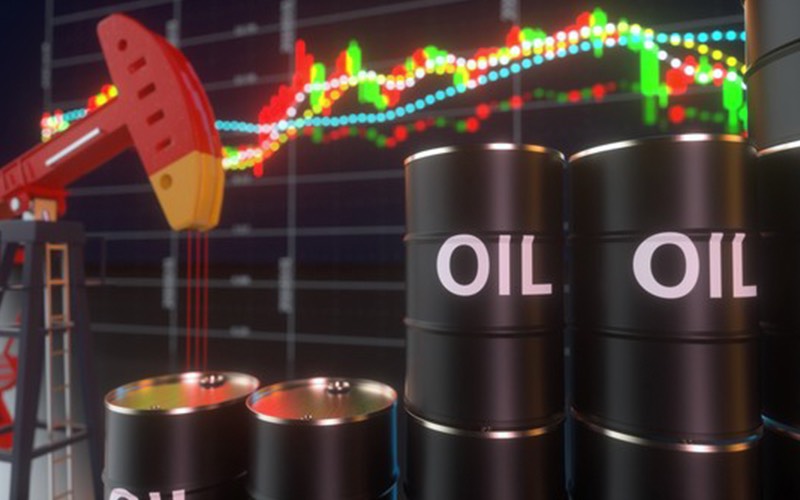
WTI crude oil breaks $100 again, with dual-track risks and multiple supply shocks reshaping the oil market.
2026-09-11 01:22:06
In early September 2026, the conflict between the US, Israel, and Iran escalated again, causing significant volatility in the global oil market. Market concerns about a protracted conflict in the Middle East and continued pressure on key shipping routes pushed WTI crude oil back above $100, its first such price since May, while Brent crude simultaneously surged above $105. This price increase was not driven by a single event, but rather by the combined effects of risks to two major energy shipping routes in the Middle East, escalating regional military confrontation, and damage to external refining capacity. Geopolitical risk premiums have become the dominant factor in current oil pricing.  I. Oil Prices Surge: Conflict Escalates Again, Both Benchmarks Break $100 Mark International crude oil prices surged this week as the conflict between Washington and Tehran resumed in September. WTI West Texas Intermediate crude reached a high of $102.60 per barrel, while Brent crude reached a high of $107.52 per barrel, a new high since May. Brent crude rose 5.43% to $107.11 per barrel, while WTI crude rose 5.66% to $101.71 per barrel. Since its low in early August, Brent crude has risen by more than 30%, with a nearly 16% increase in September alone. The core logic behind this surge is a fundamental reversal in market expectations. Previously, the market had anticipated a quick resolution to the conflict after the November midterm elections, but internal White House assessment documents disclosed to the Wall Street Journal revealed that senior U.S. officials have discussed the possibility of the war continuing into January 2029, after the new president's inauguration. This assessment clearly contradicts Trump's public statements: Trump claimed the war would end immediately after the midterm elections, leading to a drop in oil and gasoline prices; however, in reality, the intensity of the fighting continues to escalate, gasoline prices have rebounded to their post-Labour Day highs, and the market expects diesel prices to break through $6 per gallon in the short term. II. Shipping Chokepoint Risk Spreads: Beyond the Strait of Hormuz, the Bab el-Mandeb Strait Becomes a New Focus of the Game Since the outbreak of the US-Israel-Iran conflict on February 28, the Strait of Hormuz, which handles approximately 20% of global oil and gas transportation, has been under long-term restrictions, obstructing the traditional route for Gulf crude oil exports. The market's focus was initially on Persian Gulf exports, but recent Houthi actions have extended the risk to the Red Sea-Bab el-Mandeb Strait, creating a situation of "dual-channel pressure." The Houthis recently announced control of the port of Mocha in Yemen, expanding their control over the Bab el-Mandeb Strait. The Bab el-Mandeb Strait is a strategic waterway connecting the Red Sea and the Indian Ocean, and an alternative route for Saudi oil to bypass the Strait of Hormuz. Large quantities of Gulf crude oil, refined petroleum products, and Russian crude oil are transported to Europe and Asia via the Suez Canal and the Bab el-Mandeb Strait. If this passage is continuously disrupted, tankers will be forced to round the Cape of Good Hope in Africa, lengthening shipping times, increasing freight and insurance costs, and further tightening the supply of physical oil products. The Houthi rebels have intensified their attacks on Saudi energy facilities and urban targets, injuring more than 70 civilians and prompting multiple emergency alerts in southwestern Saudi cities. Pakistan, acting as a mediator, has conveyed Saudi Arabia's warning to Iran, hoping Tehran will restrain the Houthis. However, Iranian officials responded that they cannot fully control the Houthis. This means that attacks along the Red Sea route have the potential to evolve independently, and the risk of conflict is no longer limited to Iran and the Strait of Hormuz; the entire Middle East energy export corridor is exposed to the threat of attack. III. Multiple Supply-Side Impacts: Regional Shipping Attacks Coupled with Damage to Russian Refining Capacity In addition to geopolitical disturbances in the Middle East, this round of oil price increases is also impacted by another supply shock: a drone attack on the Ryazan refinery in Russia has exacerbated the global refined product market shortage. The refinery's two core distillation units, CDU-4 and CDU-6, were forced to shut down. These two units have a combined annual crude oil processing capacity of 12 million tons, corresponding to a daily processing capacity of approximately 240,000 barrels, accounting for nearly half of the refinery's total capacity. Ukraine's continued attacks on Russian energy infrastructure, aimed at weakening Russia's fiscal base, and the damage to refining facilities directly impacts global diesel supply. Francisco Branch of Bank of America points out that the most pressing issue in the current oil market is not crude oil itself, but the diesel market. The impact of refined product shortages is transmitted more quickly, directly affecting road freight and industrial production, pushing up global inflationary pressures. Dan Struvevin, co-head of global commodities research at Goldman Sachs, warned in an interview that with increasingly frequent shipping attacks, the risk of oil prices rising to $120 per barrel is increasing. TradeNation analysts also believe that if shipping traffic shrinks further and energy infrastructure suffers larger-scale damage, the physical crude oil market will tighten further, and the potential for oil price increases will continue to open up. IV. The Divergence Between Political Expectations and Market Pricing: A Game of War Duration The biggest contradiction in the current market lies in the disconnect between the US's public political narrative and its internal war assessment. Trump has released expectations of a "ceasefire after the election and lower oil prices," attempting to ease domestic voters' dissatisfaction with high energy costs; however, projections by the White House advisory team indicate that a prolonged conflict is a possibility. Trump has also warned that the US has the option to strike "Gazelle Hill" near Iran's Natanz uranium enrichment facility, meaning the option of military escalation is not closed. Iran, on the other hand, accuses the US of using the conflict as a core pretext for war, specifically the Iranian nuclear issue. Trump claims that Iran is trying to influence the US midterm elections through conflict, hoping to support a more moderate faction to come to power, thereby gaining space to continue its nuclear program. After a brief ceasefire in August, the two sides resumed confrontation in September, with Iran repeatedly attacking US warships. Since Saturday, the US has destroyed at least eight Iranian oil tankers, and the maritime confrontation continues to escalate. V. Market Outlook: High Risk Premiums, Key Variables Remain on Shipping Lane Security and Ceasefire Negotiations The current crude oil market is essentially driven by geopolitical risk premiums. As long as a stable and permanent ceasefire agreement is not reached, the uncertainty surrounding the two major energy corridors—the Strait of Hormuz and the Bab el-Mandeb Strait—will continue to support the central oil price. The risk has spread from a single strait to all oil export routes, production bases, and energy infrastructure in the region, requiring the market to reprice the entire Middle East energy supply chain. Three key indicators to watch in the future are: 1) the volume of tanker traffic through the Strait of Hormuz; 2) the frequency of Houthi attacks in the Red Sea and the Bab el-Mandeb Strait; and 3) whether a viable ceasefire negotiation occurs between the US and Iran. If both chokepoints are simultaneously under heavy-duty blockade, the global crude oil supply gap will widen dramatically, significantly increasing the risk of rising oil prices. Conversely, if both sides resume effective diplomatic negotiations, the risk premium will quickly decline, leaving room for a price correction. For the global economy, persistently high oil prices will push up manufacturing, logistics, and residential travel costs, exacerbating inflationary pressures and posing additional challenges to the monetary policies and economic recovery of many countries.
I. Oil Prices Surge: Conflict Escalates Again, Both Benchmarks Break $100 Mark International crude oil prices surged this week as the conflict between Washington and Tehran resumed in September. WTI West Texas Intermediate crude reached a high of $102.60 per barrel, while Brent crude reached a high of $107.52 per barrel, a new high since May. Brent crude rose 5.43% to $107.11 per barrel, while WTI crude rose 5.66% to $101.71 per barrel. Since its low in early August, Brent crude has risen by more than 30%, with a nearly 16% increase in September alone. The core logic behind this surge is a fundamental reversal in market expectations. Previously, the market had anticipated a quick resolution to the conflict after the November midterm elections, but internal White House assessment documents disclosed to the Wall Street Journal revealed that senior U.S. officials have discussed the possibility of the war continuing into January 2029, after the new president's inauguration. This assessment clearly contradicts Trump's public statements: Trump claimed the war would end immediately after the midterm elections, leading to a drop in oil and gasoline prices; however, in reality, the intensity of the fighting continues to escalate, gasoline prices have rebounded to their post-Labour Day highs, and the market expects diesel prices to break through $6 per gallon in the short term. II. Shipping Chokepoint Risk Spreads: Beyond the Strait of Hormuz, the Bab el-Mandeb Strait Becomes a New Focus of the Game Since the outbreak of the US-Israel-Iran conflict on February 28, the Strait of Hormuz, which handles approximately 20% of global oil and gas transportation, has been under long-term restrictions, obstructing the traditional route for Gulf crude oil exports. The market's focus was initially on Persian Gulf exports, but recent Houthi actions have extended the risk to the Red Sea-Bab el-Mandeb Strait, creating a situation of "dual-channel pressure." The Houthis recently announced control of the port of Mocha in Yemen, expanding their control over the Bab el-Mandeb Strait. The Bab el-Mandeb Strait is a strategic waterway connecting the Red Sea and the Indian Ocean, and an alternative route for Saudi oil to bypass the Strait of Hormuz. Large quantities of Gulf crude oil, refined petroleum products, and Russian crude oil are transported to Europe and Asia via the Suez Canal and the Bab el-Mandeb Strait. If this passage is continuously disrupted, tankers will be forced to round the Cape of Good Hope in Africa, lengthening shipping times, increasing freight and insurance costs, and further tightening the supply of physical oil products. The Houthi rebels have intensified their attacks on Saudi energy facilities and urban targets, injuring more than 70 civilians and prompting multiple emergency alerts in southwestern Saudi cities. Pakistan, acting as a mediator, has conveyed Saudi Arabia's warning to Iran, hoping Tehran will restrain the Houthis. However, Iranian officials responded that they cannot fully control the Houthis. This means that attacks along the Red Sea route have the potential to evolve independently, and the risk of conflict is no longer limited to Iran and the Strait of Hormuz; the entire Middle East energy export corridor is exposed to the threat of attack. III. Multiple Supply-Side Impacts: Regional Shipping Attacks Coupled with Damage to Russian Refining Capacity In addition to geopolitical disturbances in the Middle East, this round of oil price increases is also impacted by another supply shock: a drone attack on the Ryazan refinery in Russia has exacerbated the global refined product market shortage. The refinery's two core distillation units, CDU-4 and CDU-6, were forced to shut down. These two units have a combined annual crude oil processing capacity of 12 million tons, corresponding to a daily processing capacity of approximately 240,000 barrels, accounting for nearly half of the refinery's total capacity. Ukraine's continued attacks on Russian energy infrastructure, aimed at weakening Russia's fiscal base, and the damage to refining facilities directly impacts global diesel supply. Francisco Branch of Bank of America points out that the most pressing issue in the current oil market is not crude oil itself, but the diesel market. The impact of refined product shortages is transmitted more quickly, directly affecting road freight and industrial production, pushing up global inflationary pressures. Dan Struvevin, co-head of global commodities research at Goldman Sachs, warned in an interview that with increasingly frequent shipping attacks, the risk of oil prices rising to $120 per barrel is increasing. TradeNation analysts also believe that if shipping traffic shrinks further and energy infrastructure suffers larger-scale damage, the physical crude oil market will tighten further, and the potential for oil price increases will continue to open up. IV. The Divergence Between Political Expectations and Market Pricing: A Game of War Duration The biggest contradiction in the current market lies in the disconnect between the US's public political narrative and its internal war assessment. Trump has released expectations of a "ceasefire after the election and lower oil prices," attempting to ease domestic voters' dissatisfaction with high energy costs; however, projections by the White House advisory team indicate that a prolonged conflict is a possibility. Trump has also warned that the US has the option to strike "Gazelle Hill" near Iran's Natanz uranium enrichment facility, meaning the option of military escalation is not closed. Iran, on the other hand, accuses the US of using the conflict as a core pretext for war, specifically the Iranian nuclear issue. Trump claims that Iran is trying to influence the US midterm elections through conflict, hoping to support a more moderate faction to come to power, thereby gaining space to continue its nuclear program. After a brief ceasefire in August, the two sides resumed confrontation in September, with Iran repeatedly attacking US warships. Since Saturday, the US has destroyed at least eight Iranian oil tankers, and the maritime confrontation continues to escalate. V. Market Outlook: High Risk Premiums, Key Variables Remain on Shipping Lane Security and Ceasefire Negotiations The current crude oil market is essentially driven by geopolitical risk premiums. As long as a stable and permanent ceasefire agreement is not reached, the uncertainty surrounding the two major energy corridors—the Strait of Hormuz and the Bab el-Mandeb Strait—will continue to support the central oil price. The risk has spread from a single strait to all oil export routes, production bases, and energy infrastructure in the region, requiring the market to reprice the entire Middle East energy supply chain. Three key indicators to watch in the future are: 1) the volume of tanker traffic through the Strait of Hormuz; 2) the frequency of Houthi attacks in the Red Sea and the Bab el-Mandeb Strait; and 3) whether a viable ceasefire negotiation occurs between the US and Iran. If both chokepoints are simultaneously under heavy-duty blockade, the global crude oil supply gap will widen dramatically, significantly increasing the risk of rising oil prices. Conversely, if both sides resume effective diplomatic negotiations, the risk premium will quickly decline, leaving room for a price correction. For the global economy, persistently high oil prices will push up manufacturing, logistics, and residential travel costs, exacerbating inflationary pressures and posing additional challenges to the monetary policies and economic recovery of many countries.
- Risk Warning and Disclaimer
- The market involves risk, and trading may not be suitable for all investors. This article is for reference only and does not constitute personal investment advice, nor does it take into account certain users’ specific investment objectives, financial situation, or other needs. Any investment decisions made based on this information are at your own risk.