The ECB's December rate hike has been described as a "temporary move," and is the 2.75% rate truly untenable?
2026-09-18 22:00:12
On Friday, September 18th, just one week after the European Central Bank's September policy meeting, the deposit facility rate remained at 2.50%, the main refinancing rate at 2.65%, and the marginal lending rate at 2.90%. The final reading of the Eurozone's Harmonized Index of Consumer Prices (HICP) for August came in at 3.2%, lower than the preliminary reading of 3.3%, but the energy component still rose by 14.3% year-on-year. Core inflation, excluding energy and food, was 2.4%, while services inflation fell to 3.0%. Brent crude oil fluctuated around $104 per barrel, and Dutch TTF natural gas prices remained above €70 per megawatt-hour. Based on this, Rabobank strategists Bas van Heffin and Erwin de Geroth raised their energy price assumptions, including a 25 basis point increase in the ECB's December rate, pushing the deposit facility rate to 2.75%, in their baseline path, clarifying that this is not a move towards stronger tightening. 
Energy shocks come first, followed by activity, which will determine the December path.
Van Heffin and de Geroth's core assessment is that the current energy shock will hit inflation faster and more severely than it will hit real activity. The ECB's September staff forecasts have projected average overall inflation of 3.0% in 2026, 2.5% in 2027, and 2.1% in 2028; core inflation is projected at 2.5%, 2.6%, and 2.3%. Growth forecasts are 0.9% in 2026, 1.4% in 2027, and 1.5% in 2028. Eurozone GDP grew 0.6% quarter-on-quarter and 1.2% year-on-year in the second quarter; the unemployment rate remained at 6.4% in July. Wage and salary growth slowed to 3.0% year-on-year in the second quarter. The fact that activity has not collapsed simultaneously means that the Governing Council may still need a limited follow-up if it wants to anchor expectations and suppress secondary effects. They emphasized, "This is not a shift to a stronger policy response." If energy prices fall from March 2027 onwards, the pace of interest rate hikes will not need to be accelerated. The December meeting will also release a new round of employee forecasts, and revisions to energy assumptions will directly impact the inflation path. This is the technical reason why institutions are targeting a rate hike in December rather than October. European Central Bank President Christine Lagarde stated at a press conference on September 10th, "The Middle East conflict continues to create inflationary pressures, and inflation will remain significantly above target for an extended period." She also pointed out that the economy remained resilient in the second quarter despite the energy shock, and the near-month growth outlook improved due to private consumption and public spending. This coexistence of growth resilience and energy inflation is precisely why the market views the upcoming meeting as a "data-driven meeting."The secondary effects have not yet been confirmed; the management committee is focusing on diffusion rather than the peak effect.
European energy inflation rose 14.3% year-on-year in August, the main driver of overall price increases. However, services inflation fell from 3.3% to 3.0%, and core inflation dropped from 2.5% to 2.4%, indicating that the impact is currently highly concentrated in the energy sector and has not yet fully rewritten the domestic price formation mechanism. Lagarde cautioned at the same event that the longer energy prices remain high, the more likely they are to push up broader inflation through indirect and secondary effects. She also provided constraints: short-term inflation expectations remain high, and most long-term expectations are still close to 2%. Van Heffin and de Geroth applied this framework to the operational level: as long as data and surveys do not show secondary effects forming, the ECB does not need to respond more aggressively. The slowdown in wage growth and the cooling of services inflation are the microeconomic basis for their judgment that "only one more measure is needed, and no further action is required in March 2027." The risk lies in the duration of high energy prices. If the Middle East conflict drags on, winter gas storage is low, or supply is disrupted again, natural gas prices may rise again, increasing the probability of further spread. The current logic remains: use limited interest rate hikes to hedge against expectation drift, rather than recalibrating the terminal interest rate based on each round of fluctuations in the energy spot market.Policy lag and "temporary interest rate hikes": 2.50% or higher is considered a reversible range.
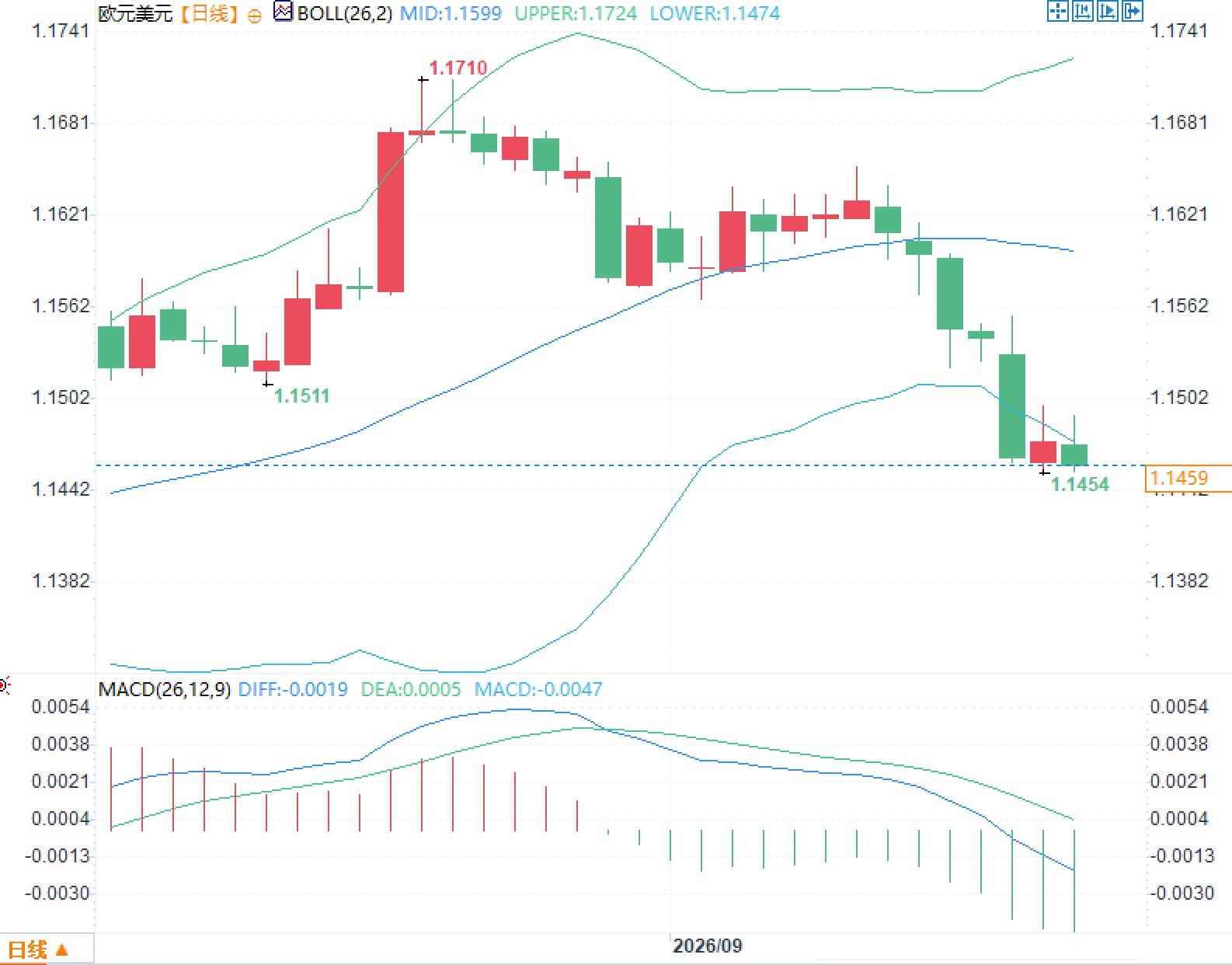
Both Lagarde and Christine Lagarde defined the portion of the deposit facility rate above the current 2.50% as temporary and predicted that the ECB might reverse this rate hike in the second half of 2027. Their reasoning stems directly from the long and variable time lag of monetary policy: by March 2027, the Governing Council will be observing the tail end of the energy inflation pulse, not the pulse itself. If energy prices moderate from March onwards as they assume, and this is followed by another rate hike, the policy effects will be concentrated in the second half of 2027, and further easing could easily suppress demand beyond the necessary level. This framework aligns with the ECB's September statement of "data-driven, meeting-by-meeting, no pre-defined path." Lagarde stated that the outlook is highly uncertain, with inflation risks skewed to the upside and growth risks to the downside. The October 28-29 meeting did not release complete forecasts; the December 16-17 meeting will update energy and price assumptions. The institutions' focus on the December rate hike aligns forecast revisions with interest rate decisions, rather than steepening the tightening slope. The euro's recent trading below 1.15 against the dollar reflects both interest rate path repricing and energy premiums, and should not be interpreted in isolation as a policy shift signal. For interest rate derivatives and the bond market, the key variables remain whether the energy component will become a drag after the first quarter of 2027, and whether wage and service inflation will rebound.Frequently Asked Questions
Question 1: Why did Rabobank schedule the rate hike for December instead of October? Answer: The October meeting didn't release complete staff forecasts, making it difficult to rewrite energy assumptions systematically. The December meeting will simultaneously update price and growth paths, making it easier for the energy shock's early transmission to inflation to be included in official forecasts. The institution believes the shock will first impact inflation, then activity; a 25 basis point increase is sufficient to anchor expectations, so there's no need to accelerate the pace. Question 2: Why is a rate hike above 2.50% considered temporary? Answer: Its energy assumption points to a decline in energy inflation after March 2027. Monetary policy has a long and variable time lag; by March 2027, the Governing Council will be observing the tail end of the pulse more closely. If the secondary effect isn't confirmed by data, the portion above 2.50% is more like a transitional arrangement to hedge against the energy pulse, potentially reversing in the second half of 2027. Question 3: Why discuss another rate hike when the secondary effect hasn't yet appeared? Answer: In August, European energy inflation was 14.3% year-on-year, while overall inflation was 3.2%, with core and service components not accelerating in tandem. However, a prolonged period of high energy prices could still reshape wages and service pricing. The additional 25 basis points are aimed at anchoring expectations and mitigating the risk of secondary effects, rather than confirming that a secondary effect has already occurred.- Risk Warning and Disclaimer
- The market involves risk, and trading may not be suitable for all investors. This article is for reference only and does not constitute personal investment advice, nor does it take into account certain users’ specific investment objectives, financial situation, or other needs. Any investment decisions made based on this information are at your own risk.