Oil price declines coupled with a widening interest rate differential between the US dollar and the Canadian dollar have caused the USD/CAD pair to fluctuate around 1.4000, awaiting a directional move.
2026-09-21 13:40:10
The USD/CAD pair regained buying support during Asian trading hours on Monday, stabilizing somewhat after retreating from above 1.4000 on Friday. The pair had previously touched 1.4001, its highest level since August 7th. The current market environment remains relatively favorable for USD/CAD bulls, with weakening oil prices, widening interest rate differentials between the US and Canada, and trade concerns collectively weighing on the Canadian dollar's performance. 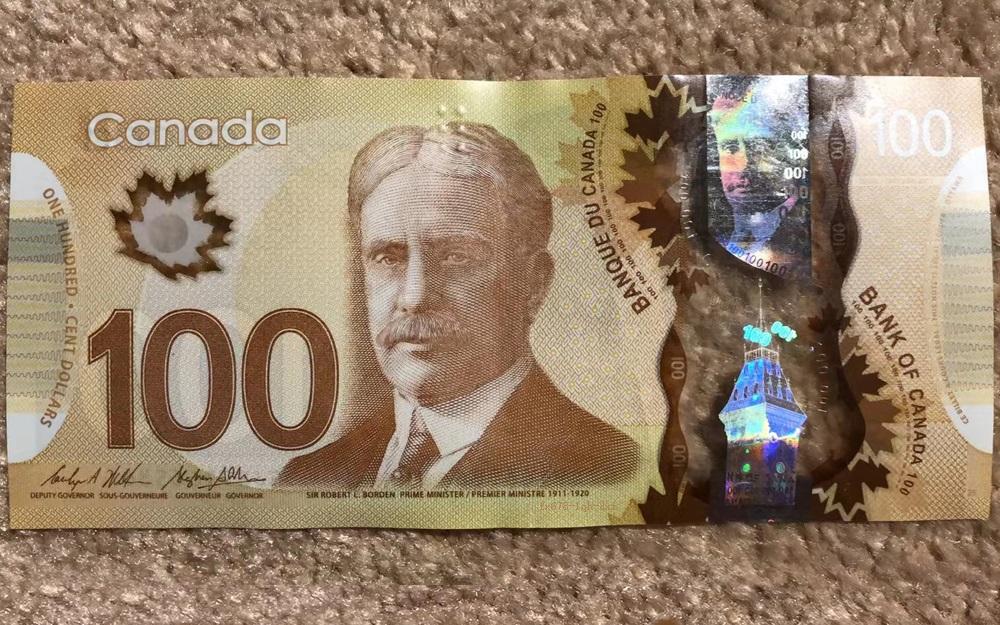 The recent decline in oil prices is a significant factor contributing to the pressure on the Canadian dollar. US WTI crude oil fell to around $93.60 on Monday, marking its fourth consecutive day of decline, primarily due to rising market expectations of a recovery in Middle Eastern energy supplies and progress in diplomatic efforts. Meanwhile, the resumption of Saudi energy shipments has eased previous concerns about supply tightness. For Canada, which is highly dependent on energy exports, falling oil prices typically weaken external support for the Canadian dollar. Currently, market assessments of Middle Eastern energy supplies are shifting. Oil and liquefied natural gas shipments through the Strait of Hormuz have risen to their highest level in six months over the past two weeks, indicating improved regional energy flows. If the supply recovery continues, the geopolitical risk premium in oil prices could further compress, thus further reducing support for the Canadian dollar. At the same time, the policy rate differential between the Federal Reserve and the Bank of Canada is widening. The Bank of Canada kept its policy rate at 2.25% this month, while the Federal Reserve raised rates by 25 basis points last week to 3.75% to 4.00%, further widening the interest rate differential between the US dollar and the Canadian dollar. The market is currently assessing the Federal Reserve's future policy path, and hawkish signals from Fed officials have significantly increased expectations for another rate hike in October. The US interest rate advantage has already had a noticeable impact on the USD/CAD pair. The Canadian dollar previously fell to around 1.4001 against the US dollar, its lowest level since August 7th, with the market generally viewing the widening US-Canada interest rate differential as a key factor driving the USD/CAD rise. Besides the interest rate differential, uncertainty surrounding trade policies between Canada and the US continues to affect the Canadian dollar's risk premium. Previous tariffs imposed by both the US and Canada have kept bilateral trade relations highly uncertain. For the Canadian economy, the US is its most important trading partner; therefore, changes in the trade environment will not only affect export expectations but may also influence the Bank of Canada's future policy decisions through economic growth and business investment expectations. Looking at the US dollar itself, the dollar index is currently maintaining strength around 100.30. Hawkish expectations from the Fed, the resilience of the US economy, and safe-haven demand are all providing support for the dollar. If the dollar index can continue to remain above 99.70 to 99.85, the USD/CAD pair will also receive some external support. However, the USD/CAD pair is not without short-term adjustment risks. Oil prices have fallen continuously, and if Middle Eastern energy supplies recover further, oil prices may remain under pressure, continuing to benefit USD/CAD. However, if oil prices stabilize around $93, and the market begins to refocus on Canadian economic data or changes in Bank of Canada policy, the selling pressure on the Canadian dollar may ease. Furthermore, profit-taking by some long positions as USD/CAD approaches the 1.4000 level could increase short-term volatility. Therefore, the current logic mainly focuses on three variables: first, whether WTI can continue to test the $90 level; second, whether the interest rate differential between the Federal Reserve and the Bank of Canada will widen further; and third, whether the US dollar index can continue to operate above the 100 level. If these three factors continue to favor the US dollar, USD/CAD may maintain a relatively strong short-term structure. The USD/CAD daily chart currently holds above the 100-day EMA at 1.3924 and the 38.2% Fibonacci retracement level at 1.3932, indicating that the upward structure formed over the past two weeks has not been broken. After the exchange rate recovered the 50% Fibonacci retracement level of 1.3992, the bulls still maintain short-term control. The first resistance level to watch is the 61.8% Fibonacci retracement level around 1.4052. A decisive break above this area would target the 78.6% retracement level around 1.4137, with further upside potential at the previous swing high of 1.4246. The 1.4000 level is currently both a psychological resistance and a crucial area of contention between bulls and bears. A stable hold above this level could open up further upside potential. On the downside, the first support level to watch is 1.3992. A break below this level would require monitoring the support zone formed by 1.3932 and 1.3924. Since this area is close to both the 38.2% retracement level and the 100-day EMA, a significant breach would challenge the short-term uptrend. Further downside target is 1.3858. A break below this level could lead to further support around 1.3738. On the 4-hour chart, USD/CAD remains in a bullish phase after consolidating at higher levels. As long as the exchange rate stays above 1.3930, short-term pullbacks can be considered corrections within the uptrend. A break above 1.4052 could lead to a further test of 1.4137; conversely, if the price fails to break above 1.4000 multiple times and falls below 1.3930, the short-term correction could widen.
 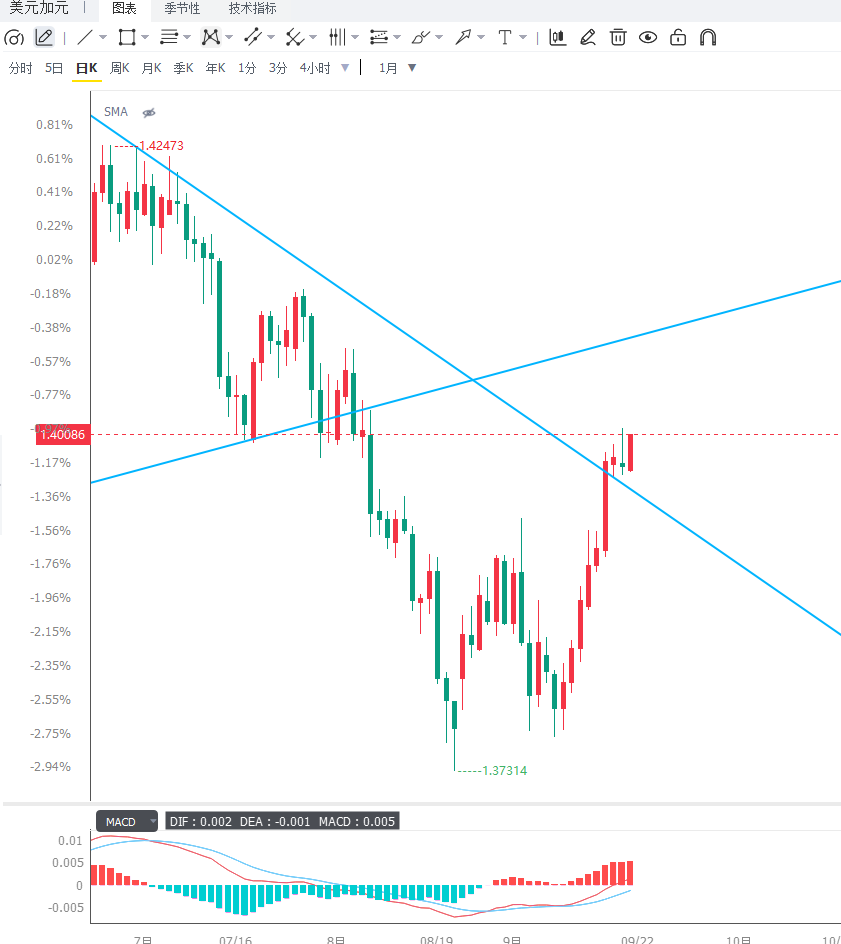 Editor's Summary: The USD/CAD pair is currently supported by three factors: falling oil prices, widening interest rate differentials between the US and Canada, and a stronger US dollar. The 1.4000 level is a key short-term support level. As long as the 1.3930-1.3924 support zone holds, the pair remains in a bullish structure; a break above 1.4052 would open up further upside potential. Conversely, if oil prices stabilize and rebound, or if the US dollar's interest rate advantage cools, pushing the pair below 1.3924, the previous upward trend may enter a more pronounced correction phase.
The recent decline in oil prices is a significant factor contributing to the pressure on the Canadian dollar. US WTI crude oil fell to around $93.60 on Monday, marking its fourth consecutive day of decline, primarily due to rising market expectations of a recovery in Middle Eastern energy supplies and progress in diplomatic efforts. Meanwhile, the resumption of Saudi energy shipments has eased previous concerns about supply tightness. For Canada, which is highly dependent on energy exports, falling oil prices typically weaken external support for the Canadian dollar. Currently, market assessments of Middle Eastern energy supplies are shifting. Oil and liquefied natural gas shipments through the Strait of Hormuz have risen to their highest level in six months over the past two weeks, indicating improved regional energy flows. If the supply recovery continues, the geopolitical risk premium in oil prices could further compress, thus further reducing support for the Canadian dollar. At the same time, the policy rate differential between the Federal Reserve and the Bank of Canada is widening. The Bank of Canada kept its policy rate at 2.25% this month, while the Federal Reserve raised rates by 25 basis points last week to 3.75% to 4.00%, further widening the interest rate differential between the US dollar and the Canadian dollar. The market is currently assessing the Federal Reserve's future policy path, and hawkish signals from Fed officials have significantly increased expectations for another rate hike in October. The US interest rate advantage has already had a noticeable impact on the USD/CAD pair. The Canadian dollar previously fell to around 1.4001 against the US dollar, its lowest level since August 7th, with the market generally viewing the widening US-Canada interest rate differential as a key factor driving the USD/CAD rise. Besides the interest rate differential, uncertainty surrounding trade policies between Canada and the US continues to affect the Canadian dollar's risk premium. Previous tariffs imposed by both the US and Canada have kept bilateral trade relations highly uncertain. For the Canadian economy, the US is its most important trading partner; therefore, changes in the trade environment will not only affect export expectations but may also influence the Bank of Canada's future policy decisions through economic growth and business investment expectations. Looking at the US dollar itself, the dollar index is currently maintaining strength around 100.30. Hawkish expectations from the Fed, the resilience of the US economy, and safe-haven demand are all providing support for the dollar. If the dollar index can continue to remain above 99.70 to 99.85, the USD/CAD pair will also receive some external support. However, the USD/CAD pair is not without short-term adjustment risks. Oil prices have fallen continuously, and if Middle Eastern energy supplies recover further, oil prices may remain under pressure, continuing to benefit USD/CAD. However, if oil prices stabilize around $93, and the market begins to refocus on Canadian economic data or changes in Bank of Canada policy, the selling pressure on the Canadian dollar may ease. Furthermore, profit-taking by some long positions as USD/CAD approaches the 1.4000 level could increase short-term volatility. Therefore, the current logic mainly focuses on three variables: first, whether WTI can continue to test the $90 level; second, whether the interest rate differential between the Federal Reserve and the Bank of Canada will widen further; and third, whether the US dollar index can continue to operate above the 100 level. If these three factors continue to favor the US dollar, USD/CAD may maintain a relatively strong short-term structure. The USD/CAD daily chart currently holds above the 100-day EMA at 1.3924 and the 38.2% Fibonacci retracement level at 1.3932, indicating that the upward structure formed over the past two weeks has not been broken. After the exchange rate recovered the 50% Fibonacci retracement level of 1.3992, the bulls still maintain short-term control. The first resistance level to watch is the 61.8% Fibonacci retracement level around 1.4052. A decisive break above this area would target the 78.6% retracement level around 1.4137, with further upside potential at the previous swing high of 1.4246. The 1.4000 level is currently both a psychological resistance and a crucial area of contention between bulls and bears. A stable hold above this level could open up further upside potential. On the downside, the first support level to watch is 1.3992. A break below this level would require monitoring the support zone formed by 1.3932 and 1.3924. Since this area is close to both the 38.2% retracement level and the 100-day EMA, a significant breach would challenge the short-term uptrend. Further downside target is 1.3858. A break below this level could lead to further support around 1.3738. On the 4-hour chart, USD/CAD remains in a bullish phase after consolidating at higher levels. As long as the exchange rate stays above 1.3930, short-term pullbacks can be considered corrections within the uptrend. A break above 1.4052 could lead to a further test of 1.4137; conversely, if the price fails to break above 1.4000 multiple times and falls below 1.3930, the short-term correction could widen. Editor's Summary: The USD/CAD pair is currently supported by three factors: falling oil prices, widening interest rate differentials between the US and Canada, and a stronger US dollar. The 1.4000 level is a key short-term support level. As long as the 1.3930-1.3924 support zone holds, the pair remains in a bullish structure; a break above 1.4052 would open up further upside potential. Conversely, if oil prices stabilize and rebound, or if the US dollar's interest rate advantage cools, pushing the pair below 1.3924, the previous upward trend may enter a more pronounced correction phase.
- Risk Warning and Disclaimer
- The market involves risk, and trading may not be suitable for all investors. This article is for reference only and does not constitute personal investment advice, nor does it take into account certain users’ specific investment objectives, financial situation, or other needs. Any investment decisions made based on this information are at your own risk.