Senior fund manager: Despite the Federal Reserve restarting its tightening cycle, gold is still worth allocating to.
2026-09-22 10:24:15
The Federal Reserve has begun a new round of monetary tightening, and the market is generally concerned that the Fed's stricter policy discipline may continue to suppress the upside potential of gold. However, a well-known fund manager has offered a different perspective: even if the Fed's monetary policy returns to rationality and its credibility continues to recover, it will be difficult to reverse the long-term trend of the continued deterioration of the US fiscal situation. This means that the long-term allocation value of gold will not disappear due to the Fed's tightening policy. In an interview, Axel Merk, founder of Merk Investments, provided an in-depth analysis of the underlying logic of monetary policy, fiscal deficits, and gold, offering market investors a fresh perspective.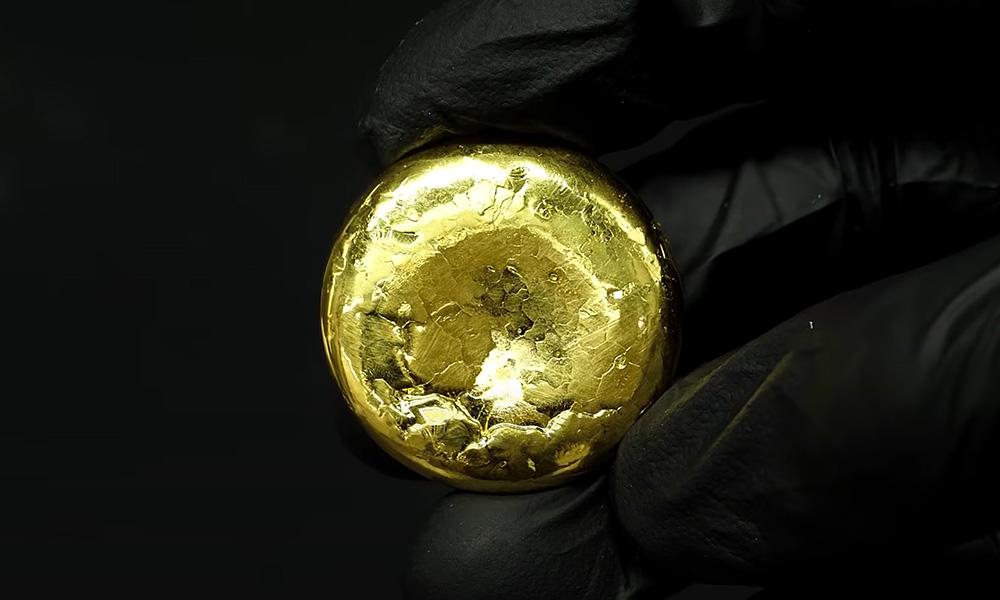
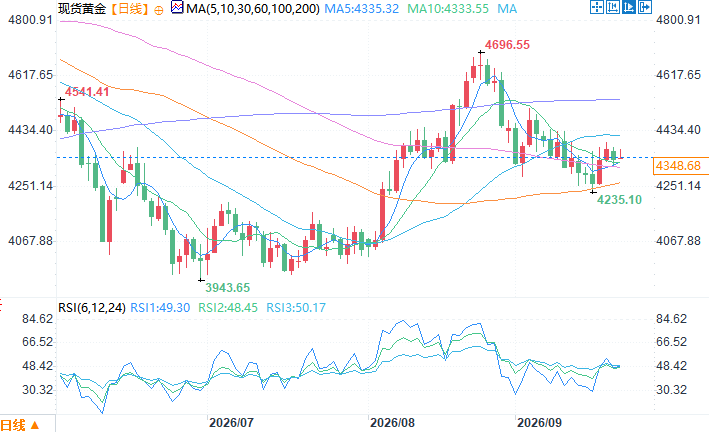 Spot gold daily chart source: FX678. At 10:22 AM Beijing time on September 22, spot gold was trading at $4347.68 per ounce.
Monetary policy has yielded significant results in restoring order, but it alone cannot stem the fiscal predicament.
Axel Merkle stated that Federal Reserve Chairman Kevin Warsh has made significant progress in reshaping the Fed's policy discipline. However, he also emphasized that even the best monetary policy has a clear ceiling if the US government continues to lack fiscal restraint. Merkle pointed out, "If fiscal policy itself is seriously flawed, even the best monetary policy will have very limited regulatory effect. Once an inappropriately loose monetary policy is combined with an out-of-control fiscal policy, the overall economic situation will deteriorate sharply." This logical distinction is particularly crucial for gold investors. In his view, even if the Fed's current policy direction is in line with expectations and is adjusting in the right direction, it cannot dispel his concerns about the US fiscal situation. Kevin Warsh has been pushing the Fed to break free from political interference and refocus the central bank on traditional monetary policy objectives such as stabilizing prices, ensuring credit supply, and adjusting credit costs. At the same time, Warsh has kept his promise to push inflation back to the Fed's 2% target level. Last week, the Fed announced a 25 basis point rate hike, a move that further solidified the Fed's policy credibility. Warsh had previously signaled that policymakers would take action if inflation data did not improve. Merck stated, "The time was ripe for a rate hike, and he decisively implemented it." He added that Warsh's disciplined approach also helped him gradually build trust within the Federal Open Market Committee.Monetary stabilization does not equate to economic recovery; fiscal policy remains the dominant long-term variable.
However, according to Axel Merk, the stabilization of monetary policy does not mean that the structural problems of the US economy have been resolved. He stated that ultimately, fiscal policy is the core force determining the long-term trend , and a poor monetary policy will only make the situation worse. In the context of gold assets, this means that a more credible and disciplined Federal Reserve may not necessarily weaken the long-term investment appeal of precious metals. Merk has always been concerned about the US government's persistent fiscal deficit and its long-term fiscal development path. He believes that the high-interest-rate environment may force members of Congress to restrain fiscal spending in the future, but he does not believe that simply relying on rising bond yields will force Washington to take concrete measures to control government spending. After the global financial crisis, prolonged ultra-low interest rates lowered debt costs, indirectly fueling unrestrained government borrowing and spending. Kevin Warsh focuses on the normalization of monetary policy, which at least weakens the incentive for excessive borrowing and brings the issue of fiscal deficits back into the public eye. Merkel said, "The push to normalize monetary policy is itself contributing to this discussion. The increasing discussion about deficits in the market and among the public is a good thing, given that most voters were initially reluctant to confront the issue directly." Warsh's approach is to stabilize the national debt burden by relying on stronger economic growth and productivity improvements to outpace government debt expansion. However, Merkel believes there is still significant uncertainty about whether this ideal scenario can be realized.The AI boom harbors hidden debt risks; gold remains a high-quality diversification tool.
Axel Merk also mentioned that the US technology-driven economic expansion could be another potential driver of gold prices. A large portion of the current booming artificial intelligence investment is financed by debt. Once this boom ends, the market is likely to enter a period of interest rate cuts to mitigate the impact of debt defaults. He explained, "When a boom fueled by debt collapses, interest rates often decline to mitigate the chain reaction caused by existing debt." Against this backdrop of multiple uncertainties, gold remains an important tool for investors to diversify their assets. He said, "The US fiscal situation is in chaos. How should investors diversify their assets? Gold can certainly play a role in this. Even with Warsh at the helm of the Fed, I remain bullish on gold." His views are reflected in his own investment portfolio. He revealed that last year, when the market anticipated that Kevin Warsh would likely succeed Powell as Fed Chairman, he slightly reduced his gold holdings, but the adjustment was very limited. In addition, he remains optimistic about gold mining stocks and still has a significant allocation to mining-related assets. At the current gold price level, the profit margins of mining companies are quite attractive.Conclusion
The market often views Federal Reserve rate hikes as a bearish signal for gold, but Axel Merck's analysis breaks this simplistic logic. While short-term monetary policy can disrupt gold price fluctuations, the persistent US fiscal deficit and debt pressures, along with the debt cycle risks lurking behind the AI investment boom, all provide long-term support for gold. The Fed's tightening policy may cause temporary volatility, but as long as the structural problems at the fiscal level remain unresolved, gold's value as a hedge against uncertainty will not be easily erased. This provides all precious metal investors with a valuable long-term reference point for consideration. Spot gold daily chart source: FX678. At 10:22 AM Beijing time on September 22, spot gold was trading at $4347.68 per ounce.
- Risk Warning and Disclaimer
- The market involves risk, and trading may not be suitable for all investors. This article is for reference only and does not constitute personal investment advice, nor does it take into account certain users’ specific investment objectives, financial situation, or other needs. Any investment decisions made based on this information are at your own risk.