Iran may briefly open the Strait of Hormuz; double-top interest rates could present a chance for a gold price reversal.
2026-09-22 17:06:16
On Tuesday (September 22), spot gold prices rebounded after hitting a low, currently trading around $4331. According to Japan's Kyodo News, Iran released a significant signal of diplomatic easing, with a senior Iranian official revealing that it has formally informed the Trump administration that Iran can fully open the Strait of Hormuz within seven days if the US lifts its military blockade of Iranian ports and ceases military operations around the Strait of Hormuz. Iran plans to use the opportunity of the UN General Assembly in New York to conduct formal consultations with mediating countries based on this proposal. Previously, Rezaei, Secretary General of Iran's Supreme National Security Council, also clearly stated that the US needs to meet seven conditions to restart negotiations, including core demands such as lifting the port blockade and unfreezing Iranian overseas assets. Stimulated by expectations of a significant easing of tensions between the US and Iran, the market's geopolitical risks cooled, and inflation concerns temporarily subsided, driving a rapid short-term rebound in gold prices. 
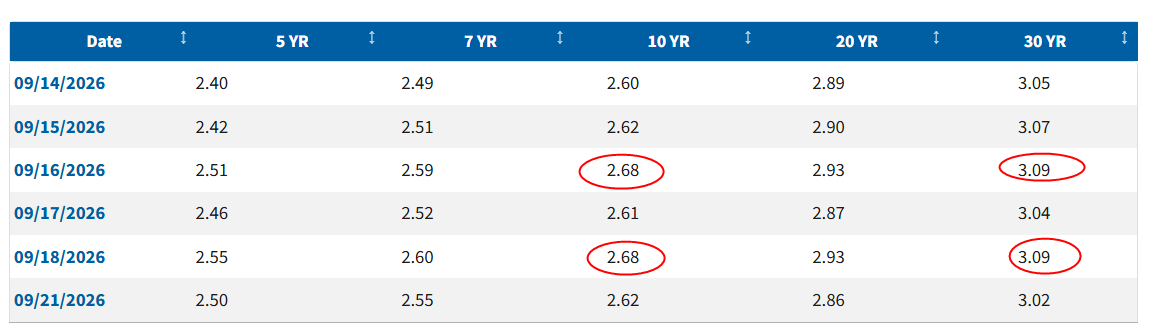 (TIPS interest rate overview, source: Federal Reserve)
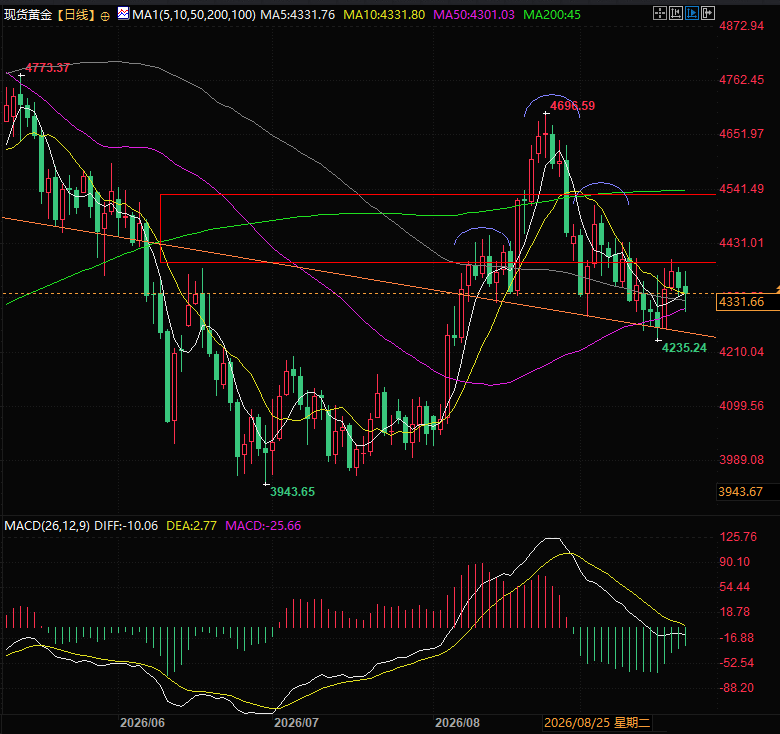 (Spot gold daily chart, source: EasyTrade) At 17:02 Beijing time, spot gold is currently trading at $4323 per ounce.
Renewed inflation concerns, fueled by continued record highs in refined oil prices, have pushed gold prices down.
The recent decline in international oil prices, coupled with a similar drop in gold prices, is highly unusual. However, the underlying reason remains oil price-driven inflation, leading central banks to tighten monetary policy and suppress gold prices. This time, it's refined oil prices, rather than crude oil, that have repeatedly hit new highs, indicating strong resilience in end-energy inflation, and overall market concerns about inflation have not subsided. This has caused gold prices to quickly give back short-term gains, weakening in tandem with the energy inflation logic. Currently, the core pricing logic for gold remains tied to oil price-driven inflation expectations. As long as refined oil inflation remains high, gold prices will continue to be suppressed by expectations of interest rate hikes.Equities, the US dollar, and US Treasuries strengthened, and capital outflows continued to put pressure on gold.
The seesaw effect on the asset side is evident, further dragging down gold's performance. Currently, US stocks continue to hit new highs, risk appetite is rising; the US dollar index remains strong, increasing its attractiveness as a safe haven; meanwhile, buying of US Treasuries continues to improve, and returns on fixed-income assets are steadily rising. The strengthening of multiple high-yield assets has led to a continuous outflow of market funds from gold, a non-interest-bearing asset, becoming a significant market factor that has put sustained pressure on gold prices recently.The formation of a double top in US Treasury yields could provide potential support for gold prices to find a bottom.
Amidst persistent negative factors, gold has shown marginal positive signals. Recently, both the nominal yield on US Treasury bonds and the real yield on TIPS have formed a double-top pattern on the daily chart, suggesting a technical probability of a pullback after a surge and continued downward movement. A decline in real interest rates typically directly benefits gold valuations, potentially pushing gold prices to a bottom and limiting further downside, leading to a gradually intensifying battle between bulls and bears in the market. (TIPS interest rate overview, source: Federal Reserve)Institutional View: Gold Prices Remain Under Pressure in the Short Term, Closely Watching Fed Speeches and Oil Prices
Chris Weston, Head of Research at Pepperstone, offers his latest market assessment: With a lack of major US economic data this week, the market's focus is on speeches by Federal Reserve officials and international oil price movements, seeking policy signals regarding a potential interest rate hike in October. He emphasizes that although oil prices have retreated slightly from their highs, a rebound in oil prices, pushing up market inflation expectations, would strengthen the logic of the Fed tightening monetary policy, putting continued downward pressure on gold. The overall short-term outlook is weak.Market Outlook and Medium- to Long-Term Trading Logic
In the short term, three major negative factors—resilient inflation, expectations of interest rate hikes, and capital outflows—dominate the market, making it difficult to change the downward pressure on gold prices. However, in the medium to long term, the decline in real interest rates from their high levels and the marginal peak of inflation will significantly compress the Federal Reserve's room for further interest rate hikes. The market can focus on two core themes going forward: first, the expectation of the government's phased easing policies as the US election approaches; and second, the continued easing of tensions between the US and Iran, leading to a decline in oil prices, cooling inflation, and an improved market liquidity environment. However, whether the market will see a repeat of the early-year surge depends on the concerted efforts of capital. Recent sluggish consumer demand for gold and continuous outflows of ETF funds during periods when gold prices are not clearly bullish are also reasons why gold prices are unlikely to experience a sharp rise. Technically, gold prices have held onto the large bullish candle from last Thursday and are currently showing signs of a rebound, with resistance around 4400, near the lower edge of the trading range. (Spot gold daily chart, source: EasyTrade) At 17:02 Beijing time, spot gold is currently trading at $4323 per ounce.
- Risk Warning and Disclaimer
- The market involves risk, and trading may not be suitable for all investors. This article is for reference only and does not constitute personal investment advice, nor does it take into account certain users’ specific investment objectives, financial situation, or other needs. Any investment decisions made based on this information are at your own risk.