With inflation looming and the election countdown underway, will the Federal Reserve unleash another wave of interest rate hikes in October?
2026-09-24 07:54:11
With just weeks to go before the US midterm elections, inflationary pressures have resurfaced, and economic data has unexpectedly strengthened, rapidly fueling market bets on further interest rate hikes by the Federal Reserve. Traders on Wednesday (September 23) were heavily betting that the Fed would tighten monetary policy for the second consecutive time by the end of October. Meanwhile, oil prices, diesel prices, Treasury yields, mortgage rates, and the US dollar index moved in tandem, pushing tensions between the White House, the Fed, and the markets to new heights. This can be seen as more than just a simple monetary policy game; it's a complex contest affecting the election, people's livelihoods, and global financial markets. 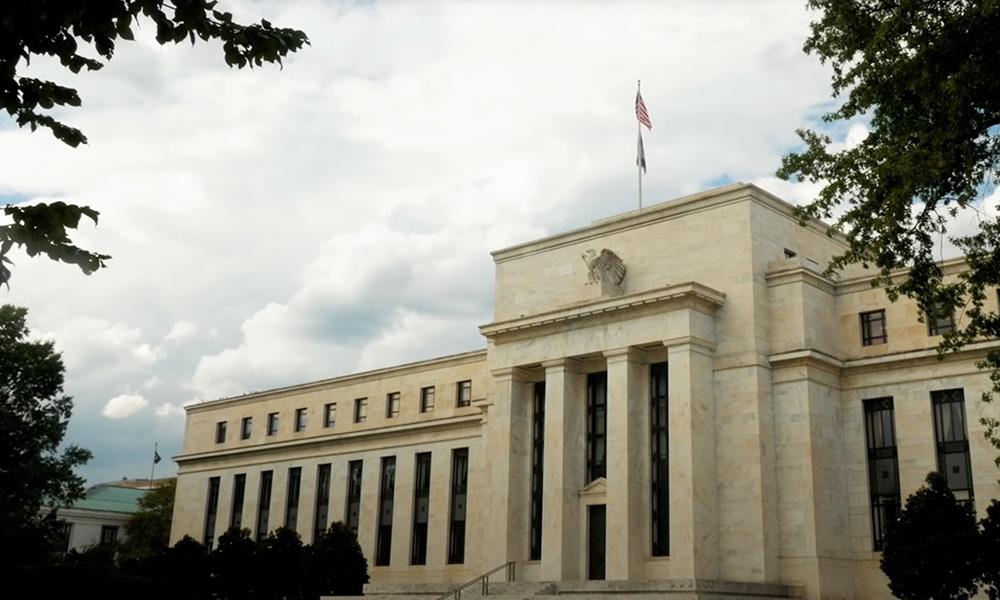
I. Economic data and energy prices work together to raise inflation warnings.
A report released by S&P Global on Wednesday became a significant driver of market sentiment. Its preliminary September U.S. Composite Purchasing Managers' Index (PMI) for output jumped to its highest level since July 2021, indicating continued strong U.S. business activity. More alarming for the market was the rise in a measure of business input costs to its highest level in nearly four years, suggesting that inflationary pressures have not truly subsided and may instead be accumulating again on the cost side for businesses. The energy market further amplified these concerns. Oil prices surged on Wednesday amid volatile trading as the ongoing conflict between the U.S. and Iran continues to disrupt supply, with little prospect of a short-term solution. Brent crude futures rose $3.83, or 3.86%, to settle at $103.08 a barrel; U.S. crude futures rose $1.64, or 1.81%, to settle at $92.16 a barrel. Traders assessed Iranian President Pezechiyan's "no surrender" stance while also paying attention to Trump's previous threats to "completely destroy" Iran. The average price of diesel has exceeded $6.50 per gallon, and since diesel is used in both production and transportation, its diffusion effect on overall price pressure is particularly pronounced.II. A flurry of hawkish pronouncements from Federal Reserve officials signal a renewed shift in policy path.
Federal Reserve Governor Barr said Wednesday that the Fed may need to raise interest rates further amid rising inflation risks and a strong economy. Speaking at a housing affordability conference hosted by the Chicago Fed, he noted that the risks to achieving the inflation target have increased, while the risks to the labor market have diminished. Barr explicitly stated that in his baseline scenario, further adjustments to monetary policy may be needed to ensure inflation falls back to the target level in a timely manner. This is seen as a rare instance of "forward guidance" from a Fed official, suggesting he believes at least two more rate hikes are needed, although he did not specify a timeframe. Last week, Fed policymakers unanimously decided to raise the policy rate range to 3.75% to 4.00%, with 16 of the 18 policymakers suggesting at least one more rate hike may be needed before the end of the year. Chairman Warsh stated that the Fed is removing "some degree of easing" but declined to say whether he believes further action is necessary. Chicago Fed President Goolsby also stated in an interview released Wednesday that for major negative supply shocks, it is best to assume from the outset that they will have a fairly lasting impact on inflation—as has been the case with the COVID-19 pandemic, tariffs, and perhaps the oil shock. He therefore emphasized that "we'd better be cautious," a view that implies he may also believe further rate hikes are needed.III. Markets vote with their feet, causing shocks across the bond, foreign exchange, and mortgage markets.
Following the data release, U.S. Treasury yields jumped, with the benchmark 10-year Treasury yield returning above 5%, reaching its highest level since 2007. Exceptionally weak demand at Wednesday's auction of five-year Treasury notes also pushed the yield to a 19-year high. Short-term interest rate futures markets indicated a roughly 70% probability of another rate hike by the Federal Reserve at its October 27-28 meeting, up from about 55% earlier in the day. This suggests the market has significantly increased its pricing in a second consecutive rate hike. The housing market also felt the pressure. The Mortgage Bankers Association reported on Wednesday that the average interest rate on a 30-year fixed-rate mortgage in the U.S. rose to 7.12% last week, a more than two-year high. Meanwhile, the dollar rose to its highest level in nearly two months on Wednesday, as investors strengthened their expectations for a near-term Fed rate hike. The dollar index rose 0.51% to 101.06, having earlier touched 101.23, its highest level since July 29. Oil prices jumped after Iran expressed doubts about progress in peace talks, further supporting the dollar and inflation concerns.IV. Electoral politics and the costs of people's livelihoods intertwine, and friction between the White House and the Federal Reserve intensifies.
Days after the Federal Reserve's October decision, President Trump's Republican Party will defend its slim majority in both houses of Congress in the November 3 national election. Two consecutive rate hikes could further highlight the cost of living, a concern for voters according to polls, and one that is eroding Trump's approval ratings. Analysts say the inflation the Fed is trying to combat stems largely from the Trump administration's policy decisions, including significantly raising tariffs and going to war with Iran. Trump has fiercely criticized the Fed, calling its decision to raise rates rather than lower them "political," though he has not criticized Warsh personally. He has also made several proposals to alleviate inflation concerns, including ending the war with Iran after the election and banning U.S. diesel exports. These statements demonstrate that inflation and interest rates are deeply embedded in electoral politics, and the Fed's independence faces a more complex public opinion environment.V. Follow-up Attention and Overall Assessment
Next, the market will focus on the fireside chat between Williams, a permanent FOMC voting member and President of the New York Fed, and Charlie Bean, former Deputy Governor of the Bank of England, at the London Macroeconomic Policy Forum; Barkin, a 2027 FOMC voting member and President of the Richmond Fed, at the Economic Club; Hamak, a 2026 FOMC voting member and President of the Cleveland Fed, at a conference; and Paulson, a 2026 FOMC voting member and President of the Philadelphia Fed, at a Fintech conference. These officials' statements may further shape market expectations for the October meeting. Overall, the resilience of the US economy, the energy shock, the impact of tariffs, and electoral politics are collectively pushing up inflation uncertainty. The Fed must suppress inflation while avoiding excessive tightening that could harm growth and employment, and the midterm elections make everything even more sensitive. The meeting at the end of October is likely to be a key window for observing US monetary policy, the political landscape, and the direction of global markets.Frequently Asked Questions
Q: Why has the market suddenly increased its bets on a Fed rate hike in October? A: Because the September composite PMI preliminary reading rose to its highest level since July 2021, and business input cost indicators also rose to their highest level in nearly four years, indicating a strong economy coupled with inflationary pressures. At the same time, soaring oil and diesel prices have raised market concerns that inflation will be harder to curb, thus short-term interest rate futures show a probability of a rate hike in October rising to about 70%. Q: Where does this round of inflationary pressure mainly come from? A: The pressure comes from both energy supply disruptions caused by the US-Iran war and policies such as the Trump administration's significant tariff increases. Diesel prices exceeding $6.50 per gallon will spread throughout the economy through transportation and production costs, while rising business input costs indicate that price pressures are not limited to energy. Q: What is the current attitude of Fed officials? A: Overall hawkish. Barr stated that further policy adjustments may be needed and hinted at at least two more rate hikes; Goolsby believes that the energy shock could lead to persistent inflation, therefore caution is warranted; at last week's meeting, 16 out of 18 policymakers hinted at at least one more rate hike before the end of the year. Chairman Warsh stated that some degree of easing is being withdrawn. Q: How will expectations of interest rate hikes affect the bond market, housing market, and the dollar? A: The 10-year Treasury yield has returned above 5%, reaching its highest level since 2007; the 5-year Treasury yield rose to a 19-year high due to weak auctions; the 30-year fixed mortgage rate rose to 7.12%, increasing the burden on homebuyers; the dollar index rose to its highest level in nearly two months, reflecting investors' bets on the Fed tightening policy. Q: Why is this related to the midterm elections and political controversies? A: The US election will be held on November 3rd, days after the Fed's October meeting. Continuous interest rate hikes will highlight the cost of living issue, which is weakening Trump's approval rating. Trump criticized the Fed's interest rate hikes as "political" and suggested ending the war with Iran and banning diesel exports after the election, further intertwining monetary policy with the election campaign.- Risk Warning and Disclaimer
- The market involves risk, and trading may not be suitable for all investors. This article is for reference only and does not constitute personal investment advice, nor does it take into account certain users’ specific investment objectives, financial situation, or other needs. Any investment decisions made based on this information are at your own risk.