Brent crude oil is above $100, and yields have risen above 5%. What will the market look for next?
2026-09-24 14:00:13
This week, the market revolved around two main questions: Could oil prices hold below $100? Could the 10-year US Treasury yield stay below 5%? On Thursday (September 24), both questions began to be answered, but not in the direction the market hoped. Brent crude oil rose overnight and returned above $102, while the 10-year US Treasury yield broke through 5% to 5.11%, the highest since 2007. The latest shipping data from the Strait of Hormuz provided a timely reminder: the oil market is still a long way from being completely out of the woods. 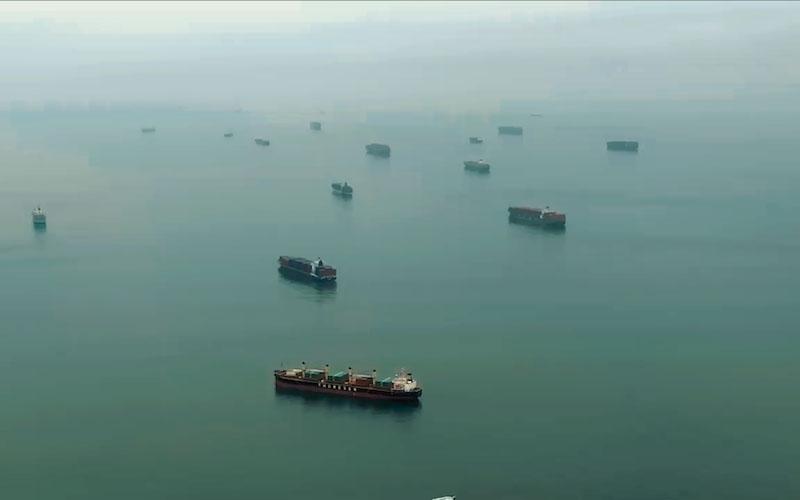
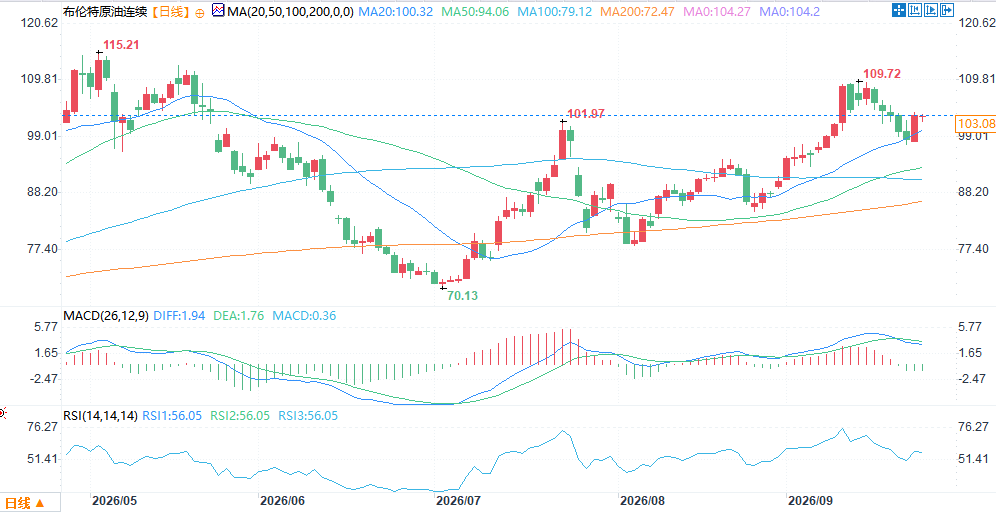 (Brent crude oil futures daily chart, source: EasyTrade) At 13:58 Beijing time, Brent crude oil futures were trading at $103.25 per barrel.
Only 10 ships passed through the Hormuz, far below the 10-day average of 17.
Preliminary shipping data shows that only 10 commodity ships passed through the Strait of Hormuz on Wednesday, up from 7 the previous day, but still well below the 10-day average of about 17. It should be noted that some vessels had their transponders off, meaning the count may not capture the full volume of traffic, but it still provides an indicative feel for the strait's shipping flow. Markets spent most of the week trying to price in the possibility of progress in US-Iran diplomacy. Tehran has stated it remains open to negotiations and has included the reopening of the Strait of Hormuz as part of its proposal. However, the conditions for achieving this appear inconsistent, as they require the US to also take action, first lifting the naval blockade. In any case, ship traffic continues to highlight a narrative: the physical market picture remains fragile.Brent crude oil has rebounded above $102, but why is it difficult for oil prices to stabilize below $100?
Brent crude rose overnight, returning above $102. Optimistic diplomatic headlines can help offset some geopolitical premiums in prices, but shipping data still tells us that any true normalization is a long way off. Earlier this week, Brent briefly dipped to around $98 a barrel, largely driven by hopes of US-Iran diplomacy that helped offset some geopolitical premiums. But this optimism now appears much more fragile. There has been little substantial progress between the US and Iran, with Tehran maintaining its position: free passage through the Strait of Hormuz will not be allowed as long as US sanctions and blockades remain in place. Until physical flows through the strait truly improve, the oil market will find it difficult to confidently price in supply risks. This is precisely the type of risk highlighted when Brent first slipped below $100: encouraging headlines can quickly depress geopolitical premiums, but those premiums can return just as quickly when underlying supply issues haven't truly disappeared.US Treasury yields break 5%: No longer just an oil story
The movement of US Treasury yields may be more interesting to the broader market, making it more than just an oil story. Earlier this week, questions arose about what catalyst might ultimately force the 10-year yield to decisively break through 5%, and now it seems the answer has been found. The US September Composite Purchasing Managers' Index (PMI) report was far stronger than expected, with the composite reading jumping from 56.0 to 58.4, the strongest since July 2021. Furthermore, input costs also accelerated to a near four-year high. Subsequently, the $70 billion five-year Treasury auction performed poorly, with a winning yield of 5.033%, a tail of 3.1 basis points, and a bid-to-cover ratio falling to 2.21. Stronger growth, sticky inflation, higher oil prices, and shaky bond demand combine to create a rather uncomfortable combination for US Treasuries.Summarize
With only 10 ships passing through the Strait of Hormuz, far below the 10-day average of 17, the physical market picture remains fragile. This explains why Brent crude oil has struggled to hold below $100, and why geopolitical risk premiums are difficult to dissipate. While optimistic diplomatic headlines can quickly suppress premiums, they can rebound just as quickly if underlying supply issues remain unresolved. Meanwhile, the 10-year US Treasury yield broke through 5% to 5.11%, driven by stronger-than-expected September PMI data, input costs accelerating to a near four-year high, and weak five-year auctions. The simultaneous occurrence of Brent crude oil above $100 and 10-year yields above 5% is noteworthy. Going forward, attention should be paid to whether actual passage through the Strait of Hormuz improves, whether US-Iran negotiations make substantial progress, US Treasury auction demand, and inflation data. These factors will determine whether the oil price risk premium truly subsides and whether US Treasury yields will rise further. (Brent crude oil futures daily chart, source: EasyTrade) At 13:58 Beijing time, Brent crude oil futures were trading at $103.25 per barrel.
- Risk Warning and Disclaimer
- The market involves risk, and trading may not be suitable for all investors. This article is for reference only and does not constitute personal investment advice, nor does it take into account certain users’ specific investment objectives, financial situation, or other needs. Any investment decisions made based on this information are at your own risk.