The pound traded in a narrow range against the dollar, with expectations of interest rate hikes in the UK and the US and this week's US data becoming key variables.
2026-09-28 14:38:13
The pound continued its rebound against the dollar in Asian trading on Monday, trading around 1.3230, marking its second consecutive day of gains. A temporary pullback in the dollar provided some support for the pound, but continued hawkish signals from Federal Reserve officials limited the dollar's downside. The market is now focusing on this week's US jobs data and the Fed's preferred inflation indicators, which could reshape expectations for October monetary policy.  In the US, several Federal Reserve officials have recently continued to emphasize inflation risks. Cleveland Fed President Beth Hammack stated that it's necessary to prevent the public from gradually accepting high prices as the norm; Philadelphia Fed President Anna Paulson indicated that moderately further tightening of monetary policy may be necessary. Against this backdrop, market pricing for another Fed rate hike in October has risen to 65.9%, significantly higher than 57.6% a week ago. US yields are also a significant external pressure on the pound. Previously, the yield on 10-year US Treasury bonds rose to a multi-year high of approximately 5.15%, and the dollar index also rose to around 101.30, indicating that the interest rate market's expectations for further Fed tightening still have a strong influence. If this week's non-farm payrolls and PCE data continue to be strong, US Treasury yields and the dollar may regain support, thus limiting the upside potential of GBP/USD. In the UK, the pound's support mainly comes from changes in Bank of England policy expectations. Bank of England Governor Bailey warned that if energy prices remain high, the central bank will face greater difficulties in maintaining current interest rate levels. Deputy Governors Breeden and Lombardelli also stated that the longer the energy price shock lasts, the higher the likelihood of a policy response. The Bank of England kept interest rates unchanged at 3.75% at its September meeting, but the vote was 6-3, with three members supporting a rate hike to 4%. The recent statements from the two deputy governors suggest that if energy prices continue to push up inflation, discussions within the Bank of England regarding further rate hikes may intensify. However, the performance of UK economic growth and the labor market remain important constraints influencing subsequent policy decisions. Energy prices thus become a dual variable in the pound's exchange rate. On the one hand, rising oil prices may push up UK inflation, putting greater pressure on the Bank of England to tighten policy, thus providing some support for the pound; on the other hand, rising energy costs may also compress real household income and increase business costs, putting pressure on UK economic growth. Therefore, the market needs to observe whether the energy shock ultimately manifests as higher interest rate expectations or more pronounced growth concerns. Meanwhile, the situation in the Middle East remains a significant risk factor for the foreign exchange market. The situation in the Strait of Hormuz continues to affect energy prices and global inflation expectations, and progress in US-Iran negotiations may also alter safe-haven flows. If oil prices continue to remain high, policy expectations for both the Federal Reserve and the Bank of England may be affected, potentially widening the volatility of GBP/USD. GBP/USD previously experienced a rapid decline to around 1.3210 before a technical rebound, returning to around 1.3230 on Monday. However, the overall structure remains under pressure from major moving averages. Previous daily data showed the exchange rate consistently trading below the 100-day and 200-day moving averages, indicating significant technical resistance in the medium term. In the short term, the first resistance level to watch is around 1.3273, a technical reference point formed by the July low; a further break above this level would target the 1.3295-1.3330 area. Previous market technical analysis considered 1.3295 a crucial level for assessing whether short-term downward pressure had eased, while the area around 1.3329 corresponds to recent trendline resistance. On the downside, the first key level to watch is the psychological level around 1.3200; a break below this level would bring the June low around 1.3140 to the next important support level. Previously, UOB analysis pointed out that GBP/USD was oversold after its rapid decline, but if it fails to regain 1.3295, the market still needs to pay attention to the risk of a pullback to the 1.3140 area.
 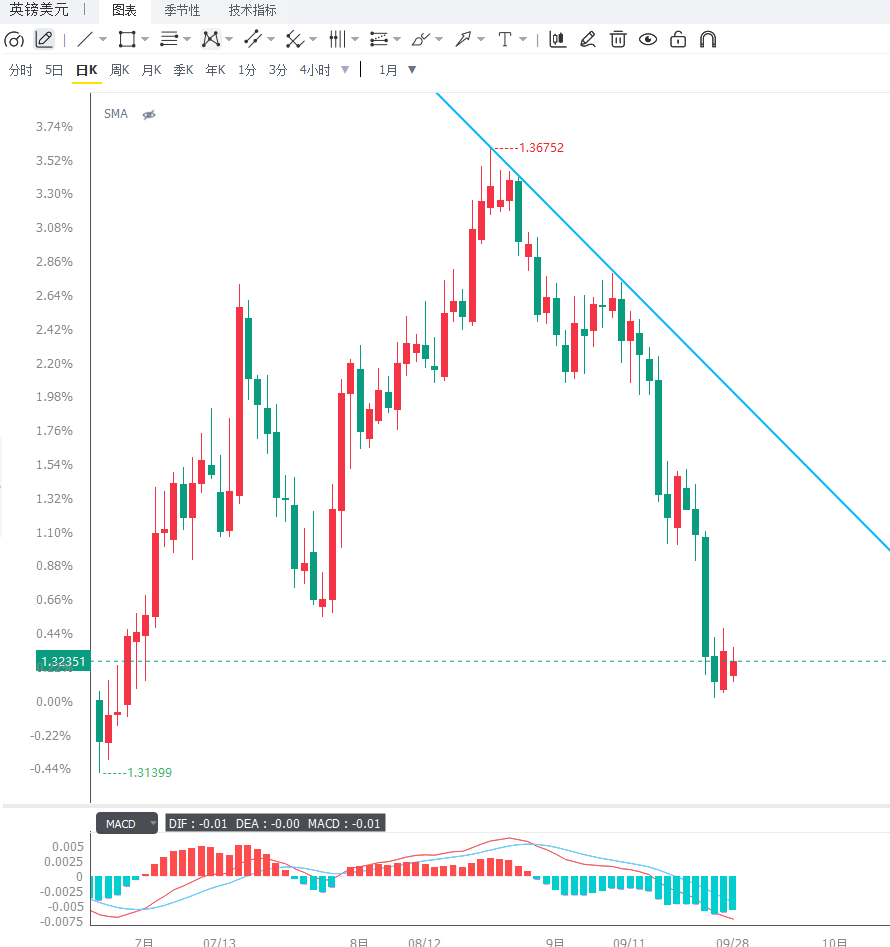 The editor summarizes that GBP/USD is currently in a phase of both technical rebound and fundamental pressure. The short-term pullback in the US dollar is providing support for the pound, while the Bank of England's focus on energy inflation risks has increased market expectations for further policy adjustments. Meanwhile, the expectation of a Fed rate hike in October and high US Treasury yields remain important support for the dollar. This week's US non-farm payrolls, PCE, and other employment data will be the core factors influencing the GBP/USD interest rate differential and exchange rate volatility. Technically, the area around 1.3200 is a key short-term support level, while 1.3273, 1.3295, and 1.3330 form a progressively stronger resistance zone.
In the US, several Federal Reserve officials have recently continued to emphasize inflation risks. Cleveland Fed President Beth Hammack stated that it's necessary to prevent the public from gradually accepting high prices as the norm; Philadelphia Fed President Anna Paulson indicated that moderately further tightening of monetary policy may be necessary. Against this backdrop, market pricing for another Fed rate hike in October has risen to 65.9%, significantly higher than 57.6% a week ago. US yields are also a significant external pressure on the pound. Previously, the yield on 10-year US Treasury bonds rose to a multi-year high of approximately 5.15%, and the dollar index also rose to around 101.30, indicating that the interest rate market's expectations for further Fed tightening still have a strong influence. If this week's non-farm payrolls and PCE data continue to be strong, US Treasury yields and the dollar may regain support, thus limiting the upside potential of GBP/USD. In the UK, the pound's support mainly comes from changes in Bank of England policy expectations. Bank of England Governor Bailey warned that if energy prices remain high, the central bank will face greater difficulties in maintaining current interest rate levels. Deputy Governors Breeden and Lombardelli also stated that the longer the energy price shock lasts, the higher the likelihood of a policy response. The Bank of England kept interest rates unchanged at 3.75% at its September meeting, but the vote was 6-3, with three members supporting a rate hike to 4%. The recent statements from the two deputy governors suggest that if energy prices continue to push up inflation, discussions within the Bank of England regarding further rate hikes may intensify. However, the performance of UK economic growth and the labor market remain important constraints influencing subsequent policy decisions. Energy prices thus become a dual variable in the pound's exchange rate. On the one hand, rising oil prices may push up UK inflation, putting greater pressure on the Bank of England to tighten policy, thus providing some support for the pound; on the other hand, rising energy costs may also compress real household income and increase business costs, putting pressure on UK economic growth. Therefore, the market needs to observe whether the energy shock ultimately manifests as higher interest rate expectations or more pronounced growth concerns. Meanwhile, the situation in the Middle East remains a significant risk factor for the foreign exchange market. The situation in the Strait of Hormuz continues to affect energy prices and global inflation expectations, and progress in US-Iran negotiations may also alter safe-haven flows. If oil prices continue to remain high, policy expectations for both the Federal Reserve and the Bank of England may be affected, potentially widening the volatility of GBP/USD. GBP/USD previously experienced a rapid decline to around 1.3210 before a technical rebound, returning to around 1.3230 on Monday. However, the overall structure remains under pressure from major moving averages. Previous daily data showed the exchange rate consistently trading below the 100-day and 200-day moving averages, indicating significant technical resistance in the medium term. In the short term, the first resistance level to watch is around 1.3273, a technical reference point formed by the July low; a further break above this level would target the 1.3295-1.3330 area. Previous market technical analysis considered 1.3295 a crucial level for assessing whether short-term downward pressure had eased, while the area around 1.3329 corresponds to recent trendline resistance. On the downside, the first key level to watch is the psychological level around 1.3200; a break below this level would bring the June low around 1.3140 to the next important support level. Previously, UOB analysis pointed out that GBP/USD was oversold after its rapid decline, but if it fails to regain 1.3295, the market still needs to pay attention to the risk of a pullback to the 1.3140 area. The editor summarizes that GBP/USD is currently in a phase of both technical rebound and fundamental pressure. The short-term pullback in the US dollar is providing support for the pound, while the Bank of England's focus on energy inflation risks has increased market expectations for further policy adjustments. Meanwhile, the expectation of a Fed rate hike in October and high US Treasury yields remain important support for the dollar. This week's US non-farm payrolls, PCE, and other employment data will be the core factors influencing the GBP/USD interest rate differential and exchange rate volatility. Technically, the area around 1.3200 is a key short-term support level, while 1.3273, 1.3295, and 1.3330 form a progressively stronger resistance zone.
- Risk Warning and Disclaimer
- The market involves risk, and trading may not be suitable for all investors. This article is for reference only and does not constitute personal investment advice, nor does it take into account certain users’ specific investment objectives, financial situation, or other needs. Any investment decisions made based on this information are at your own risk.