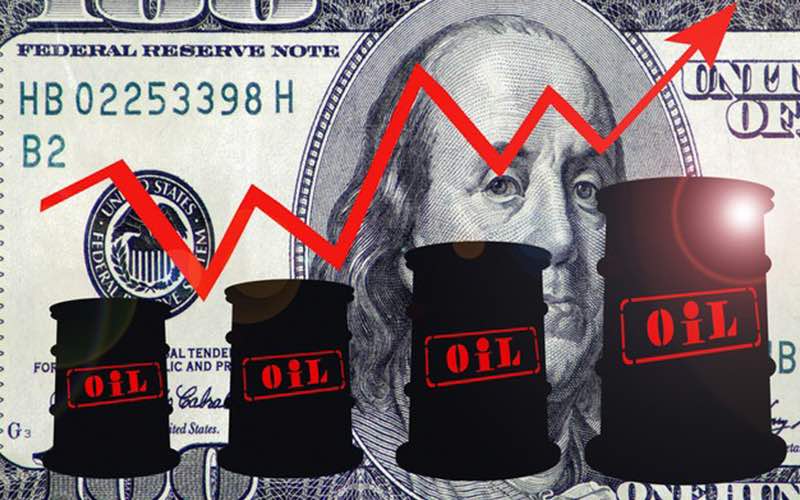
Euro fails to hold 1.14 against the dollar: US Treasury yields are rewriting short-term pricing.
2026-09-28 16:20:13
On Monday, September 28, the euro hovered below 1.14 against the US dollar. Last week, the preliminary readings of the US September manufacturing and services purchasing managers' indices were significantly higher than the market median. Coupled with a renewed rise in US Treasury yields and Brent crude oil prices fluctuating around $100 per barrel, interest rate differentials and risk premiums simultaneously reshaped the euro's pricing weight. The European Central Bank raised its deposit facility rate by 25 basis points to 2.50% on September 10, but President Lagarde explicitly refused to include the October policy meeting as a predetermined path. Meanwhile, the diplomatic window for the Middle East conflict did not open despite the weekend's proposal for passage through the Strait of Hormuz; the market refocused its attention on inflation stickiness and the next meetings of the two central banks. 
 This week's focus remains on Middle East diplomatic developments, US inflation data, and Friday's preliminary Eurozone price readings. The two central banks' policy meetings at the end of October are scheduled almost simultaneously, and a reassessment of the probability of either meeting will immediately reshape interest rate spreads.
Interest rate spread repricing: Rising US Treasury yields alter short-term pricing weights
On September 16, the Federal Reserve raised the target range for the federal funds rate by 25 basis points to 3.75% to 4.00%, marking a directional adjustment in this policy cycle. Federal funds futures indicate that the market roughly estimates a 60% probability of another 25 basis point rate hike at the October 28 meeting, with the possibility of further tightening still factored in for a December path. The yield on the 10-year US Treasury note rose to around 5.17% in late September, widening the interest rate differential with shorter-term policy rates, making the relative return of dollar assets a primary variable in foreign exchange pricing again. The preliminary reading of the US September composite Purchasing Managers' Index (PMI) was 58.4, with the services sector at 58.7 and manufacturing at 57.0, all higher than in August. However, the data itself only indicates faster expansion in the corporate sector and increased input price pressures; it does not automatically equate to improved growth quality. For the euro against the dollar, what truly matters is the re-incorporation of interest rate expectations into the forward curve: when US Treasury yields rise faster than European Treasury yields, the interest rate differential tilts towards the dollar, and the exchange rate often faces downward pressure in tandem. This mechanism has nothing to do with slogans, but only with the discount rate.Middle East Conflicts and Oil Prices: How Energy Shocks Are Reshaping Inflation Paths
In the first half of last week, the market traded on expectations of a cooling conflict, with crude oil prices falling and risk appetite rising. During the UN General Assembly, US President Trump reiterated that he would discuss an agreement with Iran again after the November election, which dampened expectations of a short-term ceasefire. Over the weekend, after Iran proposed a conditional reopening of the Strait of Hormuz within seven days, Trump rejected it, stating that he expected the conflict to escalate again after the midterm elections. This news pulled oil prices back from Friday's pullback, with Brent crude futures returning to fluctuating around $100 per barrel. Energy prices do not directly determine exchange rate fluctuations, but they will rewrite the loss functions of both central banks. High oil prices will push the inflation center upwards for 2026-2027, shortening the window for policy observation. For the Eurozone, the second-round effects of energy shocks are more sensitive because imported energy has a higher weighting and wage negotiations are more concentrated. For the US, the same rise in oil prices will raise inflation expectations, thus keeping interest rate hikes priced in on the curve. If the conflict sees a diplomatic breakthrough, the drop in oil prices could simultaneously weaken the hawkish pricing on both sides; if the conflict drags on, the dollar liquidity premium and the yield on US Treasury bonds often rise together.European Central Bank: Rate hike is done, October is still a conditional statement
The European Central Bank (ECB) lowered its deposit facility rate, main refinancing rate, and marginal lending rate to 2.50%, 2.65%, and 2.90% respectively at its September meeting. Staff forecasts projected harmonized index (HICP) averages of 3.0%, 2.5%, and 2.1% for 2026, 2027, and 2028, with upward revisions to 2027 and 2028 from the June forecast. Growth forecasts were 0.9% in 2026, 1.4% in 2027, and 1.5% in 2028. These upward revisions suggest that the economy is more resilient than previously assumed, thus providing policy space, but do not necessarily imply further policy changes at the next meeting. Lagarde stated at the post-meeting press conference that the Governing Council would adopt a data-driven, meeting-by-meeting approach to determine its appropriate stance and would not pre-commit to any particular interest rate path. On September 18, she reiterated that decisions would consider only three things: the inflation outlook, underlying inflation, and policy transmission, adding that a rate cut was "very unlikely" in the current environment. Following the meeting, officials indicated that if energy prices remain high and inflation risks spread, a further interest rate hike in October is on the table. The Eurozone's preliminary September composite Purchasing Managers' Index (PMI) came in at 53.1, services at 53.0, and manufacturing at 52.7, indicating accelerated expansion. However, the market's pricing in another rate hike in October is still significantly lower than its pricing in a similar move by the Federal Reserve. The preliminary Eurozone Harmonized Index of Consumer Prices (HICP), to be released this Friday, will determine whether this conditional statement can be rewritten as a probabilistic one.Daily indicator status
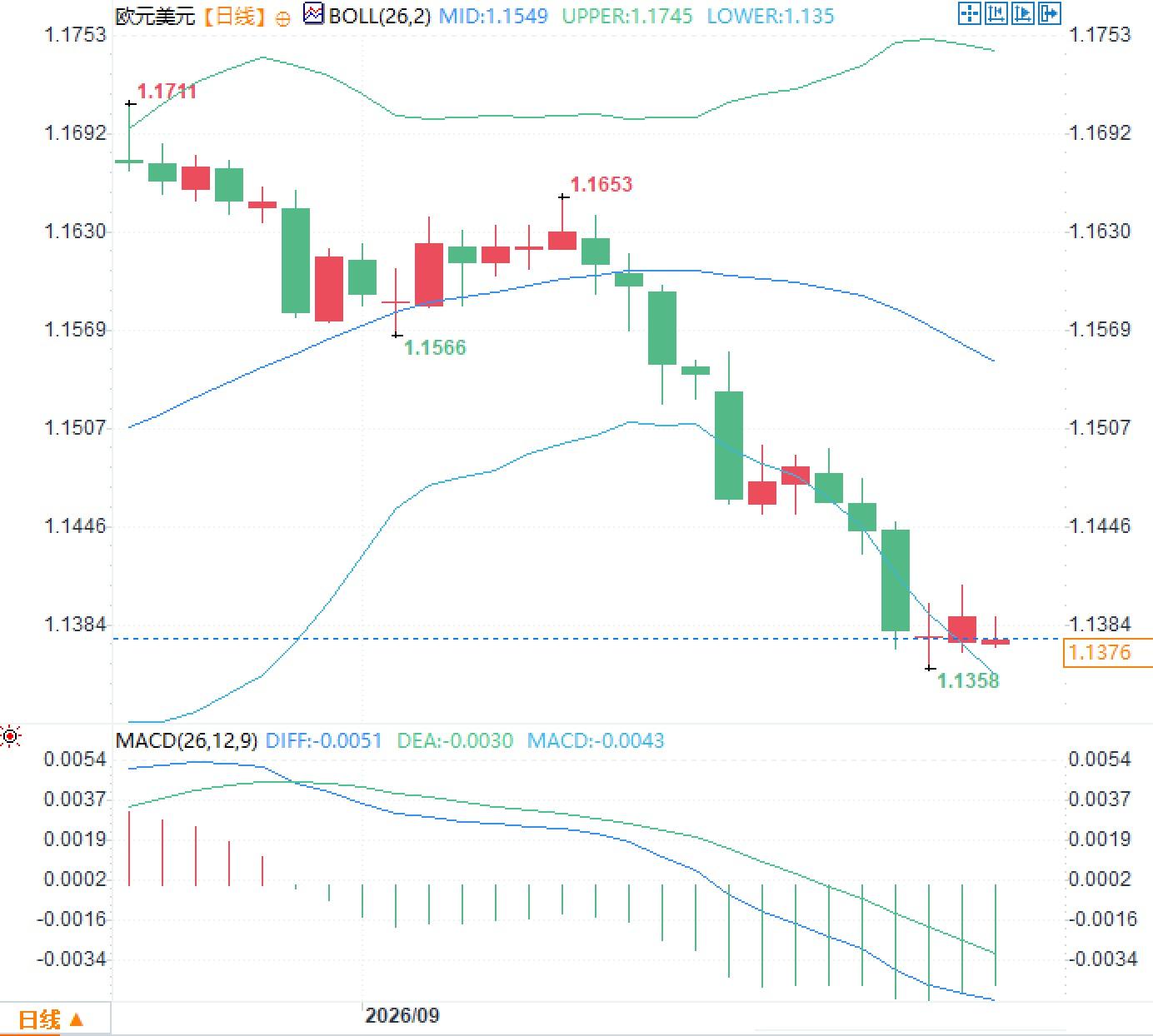
The daily Bollinger Bands have the middle band at approximately 1.1549, the upper band at approximately 1.1745, and the lower band at approximately 1.135. The band initially narrowed and then widened, with the price trading mostly below the middle band since mid-September. Recently, the price has been consolidating near the lower band. The MACD parameters are DIFF at approximately -0.0051, DEA at approximately -0.0030, and the histogram at approximately -0.0043; all three readings are below the zero line. This week's focus remains on Middle East diplomatic developments, US inflation data, and Friday's preliminary Eurozone price readings. The two central banks' policy meetings at the end of October are scheduled almost simultaneously, and a reassessment of the probability of either meeting will immediately reshape interest rate spreads.
- Risk Warning and Disclaimer
- The market involves risk, and trading may not be suitable for all investors. This article is for reference only and does not constitute personal investment advice, nor does it take into account certain users’ specific investment objectives, financial situation, or other needs. Any investment decisions made based on this information are at your own risk.