Federal Reserve Vice Chairman Williams stated that only one rate hike is needed this year, with the probability of action in October plummeting from 70% to 50%.
2026-09-30 09:46:15
On Tuesday (September 29), Williams, the third-ranking official at the Federal Reserve and president of the New York Fed, stated at the University at Buffalo that the Fed "didn't need to rush" after its September rate hike, and that if the economy performs as expected, only one more rate hike might be needed this year. This statement quickly changed market pricing, reducing the probability of an October rate hike from nearly 70% to 50%. On the same day, officials such as Barr and Goolsby spoke out, noting that inflation has remained above target for over five and a half years, with the Middle East conflict and AI investment pushing up price pressures. Consumer confidence fell to a twelve-year low, and economic data was mixed, putting the Fed's policy path to the test. 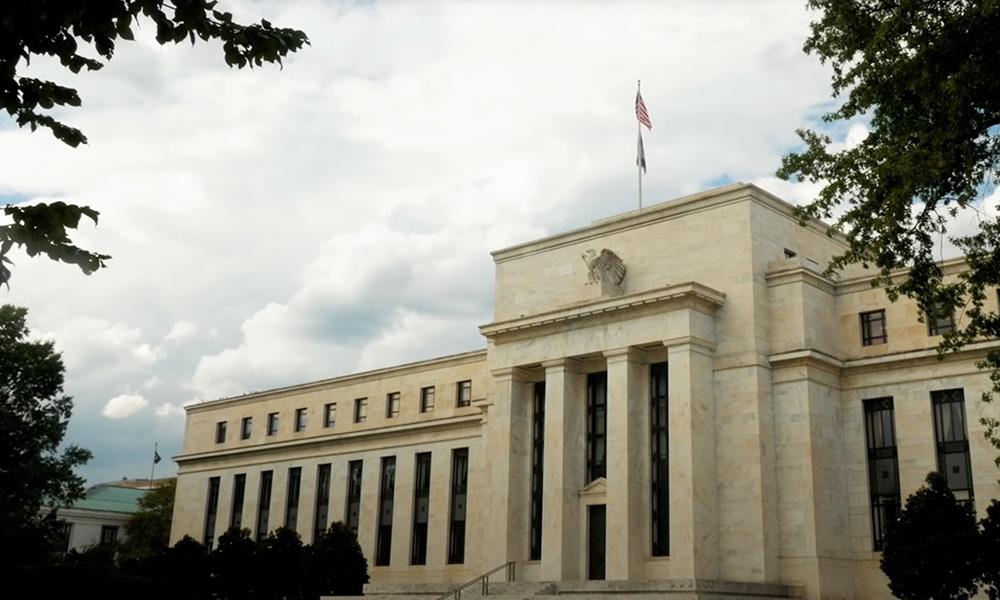
I. New York Fed President sends key signal: No need to rush into action again
John Williams, the third-ranking official at the Federal Reserve and president of the New York Fed, stated clearly in a speech at the University at Buffalo on September 29 that there was "no need to rush" after the Fed's 25-basis-point rate hike in September, and policymakers should wait for subsequent data to more clearly determine the direction of the economy. He also pointed out that if economic development is broadly in line with his expectations, another increase in the target range for the federal funds rate later this year "may be appropriate," which would support a more timely return of inflation to the 2% target level. However, he also emphasized that this was only his personal prediction, and the final decision would depend on future data performance. Williams' remarks attracted significant market attention due to his special position. The president of the New York Fed typically serves as vice chairman of the Federal Open Market Committee, working closely with the Fed chairman to shape the monetary policy stance. This speech essentially responded positively to the market's previously rising expectations of an earlier tightening.II. Rapid Market Revaluation: Probability of October Rate Hike Halved
Financial markets reacted swiftly and sharply to Williams' remarks. According to data from the CME Group's FedWatch tool, the probability of a 25 basis point rate hike at the Fed's October meeting plummeted from nearly 70% the previous day to about 50%. Evercore ISI analysts noted in a report that Williams explicitly refuted the possibility of back-to-back rate hikes in October, and skipping October and acting in December was most consistent with his statements. The two-year Treasury yield, highly sensitive to interest rate changes, fell after Williams' speech, dropping from 4.9596% to 4.889%, a yield that had reached its highest point since May 2024. Meanwhile, the 10-year Treasury yield briefly touched 5.2932%, a new high since mid-June 2007, before retreating, while the 30-year Treasury yield also reached its highest level since 2002, reflecting the intense market struggle between inflation concerns and policy path uncertainty.III. A Resounding Harmony of Hawkish Voices: Inflation Risks Cannot Be Ignored
Williams was not the only official to warn of inflation. On the same day, several Federal Reserve policymakers spoke out in quick succession, creating a distinctly hawkish consensus. Federal Reserve Governor Michael Barr, speaking at the Detroit Economic Club, reiterated that in his baseline scenario, "further policy adjustments may be needed to ensure that inflation falls to the target level in a timely manner." He pointed out that there is currently no clear trend of inflation returning to 2% in a timely manner, and that inflation remains too high with associated risks increasing. Barr specifically emphasized that the Middle East conflict has pushed up global oil prices, while the surge in artificial intelligence infrastructure construction has increased demand for some high-tech goods, factors that have disrupted the process of inflation falling. Chicago Fed President Austan Goolsby issued an even sharper warning. He stated that U.S. inflation has remained above the 2% target for more than five and a half years, and maintaining high inflation levels in the long term is "tantamount to playing with fire." Goolsby further pointed out that factors such as energy prices, AI investment, and fiscal stimulus could all affect the future path of inflation, and that the huge fiscal deficit itself is a stimulus measure that could lead to economic overheating. It's worth noting that Goolsby also stated that he is among the more optimistic Federal Reserve officials regarding future interest rate cuts, but emphasized the need to see more evidence of declining inflation before considering rate cuts. St. Louis Fed President Alberto Musaleem, speaking in London, approached the issue from a communication strategy perspective, emphasizing the importance of central bank policymakers explaining their thinking to the public. He stated that a central bank that doesn't explain how or why it makes policy decisions leaves the public guessing, creating an additional uncertainty premium, ultimately leading to higher interest rates for businesses and households, and increasing the risk of an inflationary or even deflationary spiral.IV. Inflation Persists in Deviation from Target: Multiple Structural Pressures Combined
The severity of the current inflation situation in the United States is evident from several indicators. Economists surveyed estimate that, measured by the Federal Reserve's preferred personal consumption expenditures price index, the annual inflation rate in August will reach 3.7%, nearly double the Fed's 2% target. The Fed's latest economic projections also slightly raised the overall PCE inflation forecast for 2026 from 3.6% to 3.7%, and the core PCE forecast from 3.3% to 3.4%. Williams predicts that the inflation rate will be around 3.5% by the end of this year, and that inflation will return to the target level in 2028 as price pressures ease next year. He specifically mentioned that investment related to artificial intelligence is a "definitely questionable factor" in the current inflation outlook, and expects the impact of energy prices on inflation to be "greater and more persistent." The sources of inflationary pressures are becoming increasingly diversified. The Middle East conflict has lasted for seven months, Brent crude oil prices have remained above $95 per barrel, and prices of refined products such as diesel have risen to historical highs. The transmission effect of energy costs to transportation, goods, and business operating expenses is widening. Meanwhile, the surge in AI investment has been listed by the Federal Reserve for the first time as one of the three major inflation risks, alongside Middle East wars and tariff policies. Federal Reserve Governor Cook pointed out that the continued implementation of trillions of dollars in AI capital expenditures is driving up the prices of upstream inputs such as electricity, water resources, and technology products. Furthermore, the US federal deficit reached $1.8 trillion in the first 10 months of fiscal year 2026, and the national debt exceeded $40 trillion, with interest payments becoming the second largest expenditure item after Social Security. The massive fiscal stimulus during the pandemic pushed up the US inflation rate by about 2.6 percentage points, and the current fiscal expansion has further fueled market concerns about the inflation outlook.V. Mixed Economic Data: Consumer Confidence Falls to a Twelve-Year Low
In contrast to persistently high inflation, the latest economic data presents a complex picture. Data released by the Conference Board shows that the U.S. consumer confidence index fell sharply by 6.7 points to 81.9 in September, the lowest level since April 2014, far below economists' expectations of 89.2. Consumer complaints about prices, the cost of goods and services, especially oil and gas prices have increased significantly. The labor market also shows signs of cooling. Job openings fell to 7.08 million in August, lower than the market expectation of 7.23 million, a decrease of 256,000 that month. The proportion of consumers who believe there are plenty of job opportunities fell to 23.6%, the lowest since February 2021; on average, there are 1.01 job openings per unemployed person, a further decline from 1.06 in July, and far below the level of nearly 2 in 2022. However, the divergence between weak consumer confidence and rising bond yields has caused market confusion. Padhraic Garvey, head of U.S. research at ING, points out that weak consumer confidence is usually good for the bond market because it implies an economic slowdown that could trigger deflation and lead to lower yields, but "that's not the case today." He believes the market is simply testing upside potential because the reasons driving yields higher remain clear—inflation is still at 3.5%, and the Federal Reserve is still on a rate hike path.VI. Divergence Remains Regarding Interest Rate Path: Dot Plot Points to Another Round This Year
According to the latest interest rate projections from the Federal Reserve, most officials believe that further tightening of policy is still necessary. The dot plot shows that among the 18 officials who submitted interest rate projections, 16 expect at least one more rate hike before the end of 2026, with the median corresponding to a year-end rate of 4.1%, implying an expected 25 basis point rate hike this year. However, Wall Street investment banks have differing forecasts. Kay Haigh, head of fixed income at Goldman Sachs Asset Management, believes the Fed has not yet signaled an aggressive rate hike cycle, and his baseline prediction remains another rate hike in December. Morgan Stanley is more hawkish; its chief US economist, Michael Gapen, has adjusted his forecast to a total of three rate hikes, with subsequent 25 basis point hikes in December and March next year, bringing the final rate to 4.25%-4.50%. Morgan Stanley points out that the economy itself has not yet given a clear signal that would force the Fed to stop raising rates, especially given the large scale of AI investment and financing, which is not highly sensitive to short-term interest rate changes. The transmission of monetary policy may fall more on traditional interest rate-sensitive sectors such as mortgages, auto loans, and general corporate financing.Editor's Summary
The Federal Reserve is currently at a critical juncture in its policy decisions. Following the September rate hike, there is a clear division within the policymaking body regarding the need for continued action: the "patient" faction, represented by Williams, advocates waiting for more data, while the "cautious" faction, represented by Barr and Goolsby, emphasizes the persistent risks of inflation. Market pricing has shifted from a strong expectation of an October rate hike to a 50/50 split, reflecting investors' reassessment of the policy pace. However, inflation has remained above target for over five and a half years, and the combined structural pressures of the Middle East conflict driving up energy costs, AI investment boosting upstream demand, and a persistently high fiscal deficit make the path to a decline in inflation more complex than expected. The upcoming final reading of the August PCE data and the September non-farm payroll report will be the next key windows of observation, testing the Fed's balance between "curbing inflation" and "avoiding excessive tightening."- Risk Warning and Disclaimer
- The market involves risk, and trading may not be suitable for all investors. This article is for reference only and does not constitute personal investment advice, nor does it take into account certain users’ specific investment objectives, financial situation, or other needs. Any investment decisions made based on this information are at your own risk.