Expectations of a Fed rate hike and safe-haven demand boosted the dollar, while the pound continued to fluctuate at low levels against the dollar.
2026-09-30 15:12:17
On Wednesday during Asian trading hours, GBP/USD continued its weak and volatile trend, trading around 1.3200, after hitting a two-month low in the previous session. The strong US dollar, coupled with multi-year highs in US Treasury yields, continues to put significant pressure on the pound in the short term. However, ahead of key US macroeconomic data releases, some short sellers are choosing to remain on the sidelines, and the market as a whole is in a wait-and-see mode.  The recent strength of the US dollar has been primarily driven by expectations surrounding the Federal Reserve's monetary policy. The dollar index rose to its highest level since July 28th on Tuesday, as market expectations for another Fed rate hike in October strengthened. With inflationary pressures persisting and US bond yields remaining relatively high, the dollar's interest rate advantage has been further reinforced. For GBP/USD, a stronger dollar means the pound faces greater exchange rate pressure. Especially given the weak economic growth momentum in the UK, market funds are more susceptible to the interest rate differential between Europe and the US. Currently, the core pressure on GBP/USD stems from the widening dollar interest rate advantage, rather than solely from UK economic data. The US Personal Consumption Expenditures (PCE) price index is one of the key focuses for the market this week. As an inflation indicator favored by the Fed, PCE data will directly influence market judgments on future monetary policy. If inflation exceeds expectations, the Fed's rationale for maintaining a tighter policy may strengthen, pushing the dollar and US Treasury yields higher; if the PCE shows a significant cooling, the recent strength of the dollar may face a period of correction. Meanwhile, the final reading of US Q2 GDP will also be released on the same day. The combination of economic growth and inflation data will help the market further assess whether the US economy can withstand higher interest rates. If economic activity remains resilient while inflation remains high, market expectations for the Federal Reserve to maintain a restrictive policy stance may strengthen further. Rising US Treasury yields are also a significant factor suppressing the pound. Higher yields on dollar assets increase the attractiveness of holding them, and regardless of changes in UK monetary policy expectations, the pound will face pressure from rising dollar funding costs. In addition to interest rate factors, geopolitical tensions continue to support the dollar's safe-haven appeal. The recent situation between the US and Iran remains highly uncertain, with limited progress in diplomatic solutions and lingering concerns about the duration of the conflict. In a climate of declining risk appetite, the dollar typically attracts safe-haven inflows, further limiting the upside potential of GBP/USD. Recent diplomatic efforts have not yielded significant breakthroughs, and market expectations for a rapid de-escalation have cooled. The combination of geopolitical risks and the dollar's interest rate advantage means that downward pressure on GBP/USD remains significant in the short term. However, geopolitical developments are highly uncertain, and a rapid decline in risk premiums could weaken some of the dollar's safe-haven support. Currently, market focus is on US economic data. If PCE inflation continues to be strong, and GDP data shows the economy remains resilient, the US dollar may receive further support from policy expectations, and GBP/USD may continue to test key support levels. Conversely, if both inflation and economic data are weaker than expected, the US dollar may experience profit-taking, while the British pound may see a period of recovery. From a daily chart perspective, GBP/USD is currently in a clear downtrend, with the price consistently trading below the 1.3300 level, and short-term moving averages are bearish. 1.3200 is the most immediate technical level to watch; a break below this level could lead to a test of the year's low near 1.3140. If 1.3140 is also breached, the next support level to watch is the psychological level of 1.3100; a break below this level could extend the downtrend of the past month. On the upside, 1.3300 initially acts as short-term resistance. If the price can regain this level, short covering could push the pair towards 1.3400, with further resistance at the 200-day simple moving average around 1.3448. From a 4-hour chart perspective, GBP/USD is currently consolidating weakly at low levels, with the battle between bulls and bears around 1.3200 being crucial. If the price rebound fails to break through the 1.3250-1.3300 area, the short-term trend may remain downward. If 1.3200 is decisively broken, further downside potential could open up, seeking support around 1.3140. Conversely, if weaker-than-expected US data pushes the dollar lower, and GBP/USD re-breaks above 1.3300, a technical correction may occur on the 4-hour chart, with further attention focused on the 1.3350-1.3450 area.
 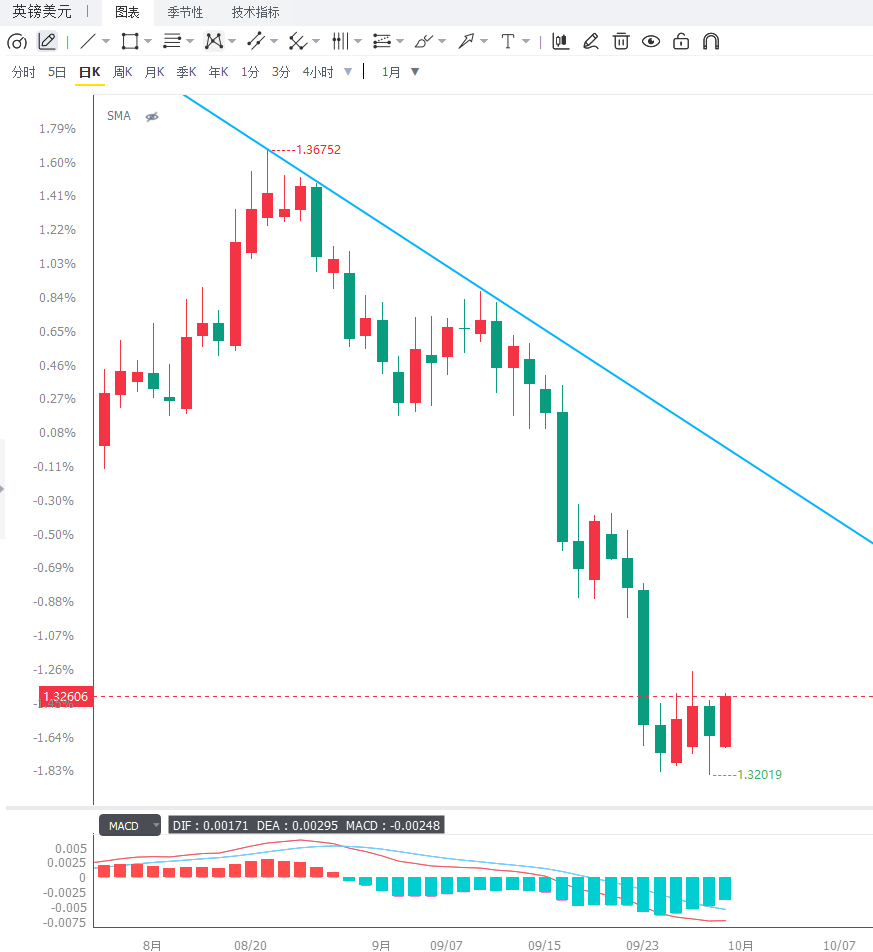 In summary, the GBP/USD pair is currently facing a dual environment of a strong US dollar and pressure on the British pound. Rising expectations of US interest rate hikes, persistently high Treasury yields, and safe-haven demand stemming from geopolitical risks are all supporting the US dollar, thus keeping GBP/USD weak. Short-term direction will heavily depend on US PCE inflation and GDP data. If US inflation remains resilient and economic data is strong, the US dollar's interest rate advantage may further widen, and downward pressure on GBP/USD may continue to ease; if the data falls short of expectations, the US dollar's strength may temporarily cool, and the British pound may have room to rebound. Technically, 1.3200 is the current key support level, while 1.3140 and 1.3100 are important levels to watch. The 1.3300-1.3448 range constitutes the main resistance zone for any rebound.
The recent strength of the US dollar has been primarily driven by expectations surrounding the Federal Reserve's monetary policy. The dollar index rose to its highest level since July 28th on Tuesday, as market expectations for another Fed rate hike in October strengthened. With inflationary pressures persisting and US bond yields remaining relatively high, the dollar's interest rate advantage has been further reinforced. For GBP/USD, a stronger dollar means the pound faces greater exchange rate pressure. Especially given the weak economic growth momentum in the UK, market funds are more susceptible to the interest rate differential between Europe and the US. Currently, the core pressure on GBP/USD stems from the widening dollar interest rate advantage, rather than solely from UK economic data. The US Personal Consumption Expenditures (PCE) price index is one of the key focuses for the market this week. As an inflation indicator favored by the Fed, PCE data will directly influence market judgments on future monetary policy. If inflation exceeds expectations, the Fed's rationale for maintaining a tighter policy may strengthen, pushing the dollar and US Treasury yields higher; if the PCE shows a significant cooling, the recent strength of the dollar may face a period of correction. Meanwhile, the final reading of US Q2 GDP will also be released on the same day. The combination of economic growth and inflation data will help the market further assess whether the US economy can withstand higher interest rates. If economic activity remains resilient while inflation remains high, market expectations for the Federal Reserve to maintain a restrictive policy stance may strengthen further. Rising US Treasury yields are also a significant factor suppressing the pound. Higher yields on dollar assets increase the attractiveness of holding them, and regardless of changes in UK monetary policy expectations, the pound will face pressure from rising dollar funding costs. In addition to interest rate factors, geopolitical tensions continue to support the dollar's safe-haven appeal. The recent situation between the US and Iran remains highly uncertain, with limited progress in diplomatic solutions and lingering concerns about the duration of the conflict. In a climate of declining risk appetite, the dollar typically attracts safe-haven inflows, further limiting the upside potential of GBP/USD. Recent diplomatic efforts have not yielded significant breakthroughs, and market expectations for a rapid de-escalation have cooled. The combination of geopolitical risks and the dollar's interest rate advantage means that downward pressure on GBP/USD remains significant in the short term. However, geopolitical developments are highly uncertain, and a rapid decline in risk premiums could weaken some of the dollar's safe-haven support. Currently, market focus is on US economic data. If PCE inflation continues to be strong, and GDP data shows the economy remains resilient, the US dollar may receive further support from policy expectations, and GBP/USD may continue to test key support levels. Conversely, if both inflation and economic data are weaker than expected, the US dollar may experience profit-taking, while the British pound may see a period of recovery. From a daily chart perspective, GBP/USD is currently in a clear downtrend, with the price consistently trading below the 1.3300 level, and short-term moving averages are bearish. 1.3200 is the most immediate technical level to watch; a break below this level could lead to a test of the year's low near 1.3140. If 1.3140 is also breached, the next support level to watch is the psychological level of 1.3100; a break below this level could extend the downtrend of the past month. On the upside, 1.3300 initially acts as short-term resistance. If the price can regain this level, short covering could push the pair towards 1.3400, with further resistance at the 200-day simple moving average around 1.3448. From a 4-hour chart perspective, GBP/USD is currently consolidating weakly at low levels, with the battle between bulls and bears around 1.3200 being crucial. If the price rebound fails to break through the 1.3250-1.3300 area, the short-term trend may remain downward. If 1.3200 is decisively broken, further downside potential could open up, seeking support around 1.3140. Conversely, if weaker-than-expected US data pushes the dollar lower, and GBP/USD re-breaks above 1.3300, a technical correction may occur on the 4-hour chart, with further attention focused on the 1.3350-1.3450 area. In summary, the GBP/USD pair is currently facing a dual environment of a strong US dollar and pressure on the British pound. Rising expectations of US interest rate hikes, persistently high Treasury yields, and safe-haven demand stemming from geopolitical risks are all supporting the US dollar, thus keeping GBP/USD weak. Short-term direction will heavily depend on US PCE inflation and GDP data. If US inflation remains resilient and economic data is strong, the US dollar's interest rate advantage may further widen, and downward pressure on GBP/USD may continue to ease; if the data falls short of expectations, the US dollar's strength may temporarily cool, and the British pound may have room to rebound. Technically, 1.3200 is the current key support level, while 1.3140 and 1.3100 are important levels to watch. The 1.3300-1.3448 range constitutes the main resistance zone for any rebound.
- Risk Warning and Disclaimer
- The market involves risk, and trading may not be suitable for all investors. This article is for reference only and does not constitute personal investment advice, nor does it take into account certain users’ specific investment objectives, financial situation, or other needs. Any investment decisions made based on this information are at your own risk.