Attacks are no longer driving up oil prices; has the pricing logic of the crude oil market changed?
2026-10-01 15:00:15
Brent crude futures fell as much as 1.3% to $96.54 a barrel during Asian trading hours on Thursday (October 1), before recovering to trade above $98 a barrel. The immediate trigger for this decline came from reports from several prominent institutions indicating that Persian Gulf oil export flows have almost returned to pre-conflict levels. Meanwhile, reports of Iranian attacks on oil tankers in the Strait of Hormuz provided some support for oil prices, with market pricing in supply recovery outweighing geopolitical risk premiums. 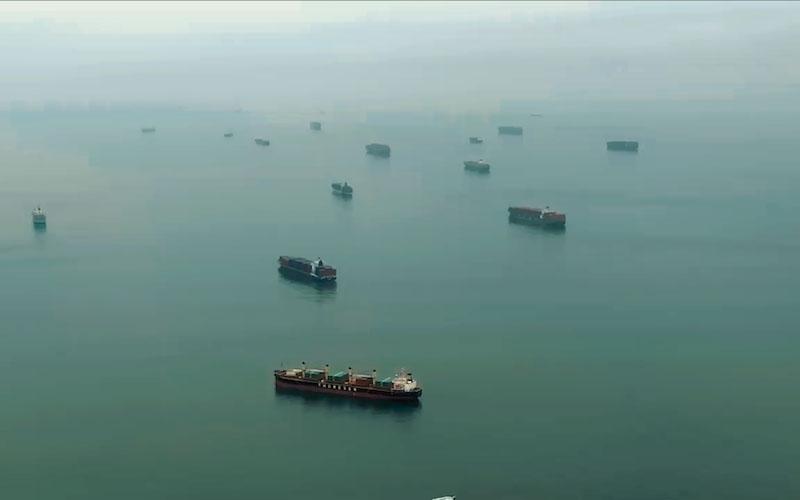
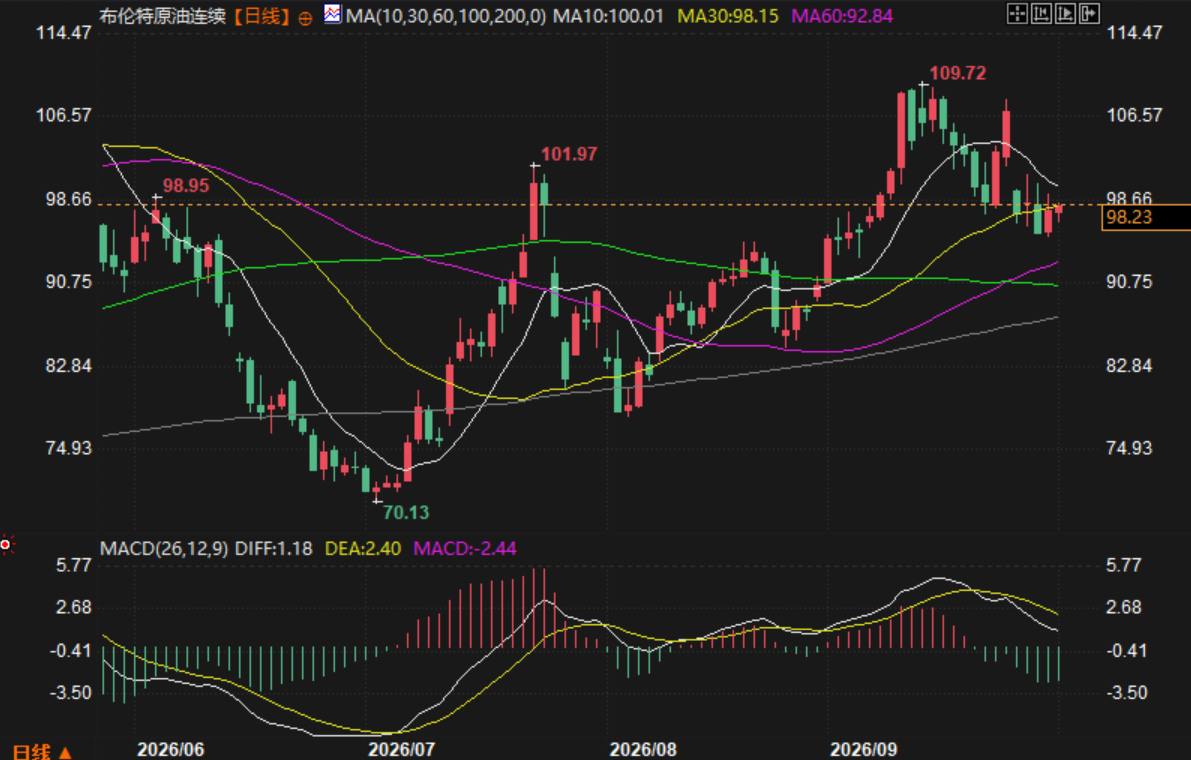 (Brent crude oil futures daily chart, source: EasyTrade) At 14:58 Beijing time, Brent crude oil futures were trading at $98.51 per barrel.
Agency report: Gulf export flows are approaching or even exceeding pre-conflict levels
The core driver of this round of oil price decline comes from assessments of Gulf oil flows by three well-known institutions, with each level of data showing an upward revision. Kpler reports that oil exports through the Strait of Hormuz have reached nearly 80% of pre-conflict levels. JPMorgan estimates that exports through this vital waterway are as high as 98% of pre-conflict levels. Goldman Sachs' assessment is the most optimistic, stating that Middle Eastern oil flows have reached 23.3 million barrels per day, on par with the 2025 average. More notably, Goldman Sachs points out that Saudi Arabia's oil exports in September were actually higher than the same period last year. Goldman Sachs commodities analysts stated, "We note a divergence between the decline in Iranian exports and the rise in exports from other Persian Gulf oil-producing countries. Saudi Arabia's estimated exports more than doubled in September, rising above its 2025 average." This divergence means that although Iranian crude oil cannot be exported due to the blockade, the increased supply from other Gulf oil-producing countries is sufficient to make up the gap, and may even push overall flows back to pre-conflict levels.Reports of Iranian attacks on oil tankers were ignored by the market, and the risk premium quickly disappeared.
In contrast to the recovery of Gulf traffic, reports of Iranian attacks on oil tankers in the Strait of Hormuz failed to impact oil prices. These attacks were initially reported by the UK's Maritime Trade Operations Office—a regular source of information on attacks in the Strait of Hormuz—and subsequently reprinted by shipping and insurance media, but not by any major corporate media outlets. This phenomenon is thought-provoking. Under normal circumstances, attacks on oil tankers in the Strait of Hormuz should be sufficient to drive up the geopolitical risk premium for oil prices. However, the current market is clearly more focused on actual data on supply recovery than on potential geopolitical threats. This shift in pricing logic reflects growing market confidence in the resilience of Gulf supply—that even with Iranian interference, the export capacity of other oil-producing countries and alternative routes are sufficient to maintain overall traffic.Safety costs remain, and alternative routes drive up transportation costs.
While Gulf oil flows have nearly recovered in volume, costs have not fully returned to pre-conflict levels. Port information indicates that even with improved Persian Gulf oil exports due to ship-to-ship transshipment and alternative routes, the word "security" still doesn't apply to the region. This security risk is impacting transportation costs for crude oil shipped out in larger volumes. In other words, flow recovery does not equate to cost recovery. Alternative routes and ship-to-ship transshipment, while bypassing the direct risks of the Strait of Hormuz, have higher unit transportation costs than traditional direct shipping. This cost difference constitutes the residual geopolitical risk premium in current oil prices—it is no longer reflected in the fear of flow disruption, but rather in increased transportation costs.Summarize
Brent crude futures fell to around $96.50 per barrel at one point, primarily driven by reports from institutions that Gulf oil export flows were approaching or even exceeding pre-conflict levels. Data from Kpler, JPMorgan Chase, and Goldman Sachs showed progressively upward revisions, with Goldman Sachs further noting that Saudi Arabia's September exports were higher than the same period last year, and the divergence between declining Iranian exports and rising exports from other Gulf oil-producing countries was sufficient to offset the shortfall. Meanwhile, reports of Iranian attacks on oil tankers provided support for oil prices, indicating that geopolitical risk premiums still exist. Moreover, security costs remain—alternative routes and ship-to-ship transshipment have driven up transportation costs, and this cost difference constitutes a residual risk premium in oil prices. The current core contradiction in the market lies in whether the recovery in supply flows is sustainable, and whether Iran will take more aggressive disruptive actions given increasing fiscal pressure. If the recovery in flows continues, oil prices may face further downward pressure; if the security situation in the Strait of Hormuz deteriorates again, rising transportation costs could push up risk premiums once more. (Brent crude oil futures daily chart, source: EasyTrade) At 14:58 Beijing time, Brent crude oil futures were trading at $98.51 per barrel.
- Risk Warning and Disclaimer
- The market involves risk, and trading may not be suitable for all investors. This article is for reference only and does not constitute personal investment advice, nor does it take into account certain users’ specific investment objectives, financial situation, or other needs. Any investment decisions made based on this information are at your own risk.