October 5th Financial Breakfast: Weak non-farm payrolls boost gold prices; the reopening of the Hormuz trade talks leaves suspense in the oil market; OPEC+ postpones production capacity assessment.
2026-10-05 06:36:17
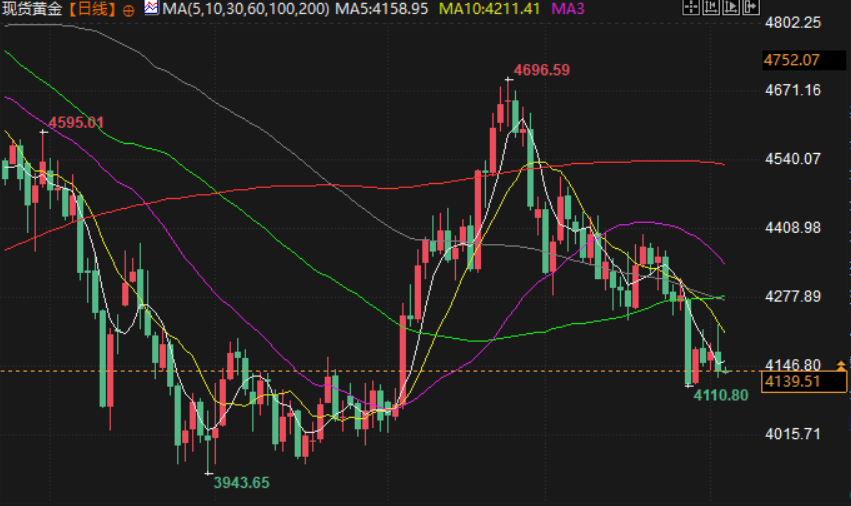
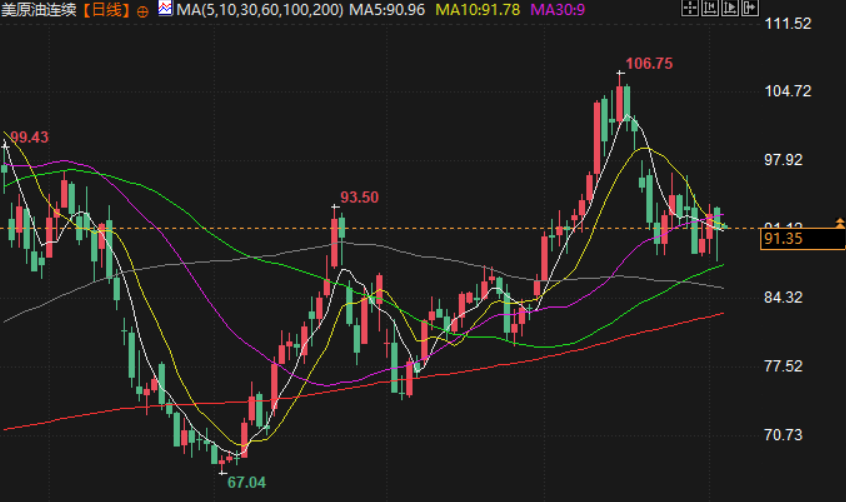
On Monday (October 5th, Beijing time) in early Asian trading, spot gold was trading around $4140 per ounce. Weaker-than-expected US non-farm payrolls in September dampened expectations of a Fed rate hike, boosting gold prices. However, the market was dominated by the US-Iran situation, with attention focused on developments. The Iranian parliament speaker stated over the weekend that the Strait of Hormuz would not reopen until certain conditions were met. Meanwhile, the Iranian conflict disrupted production expansion, and OPEC+ postponed its capacity assessment to mid-November. US crude oil was currently trading at $91.24 per barrel. 
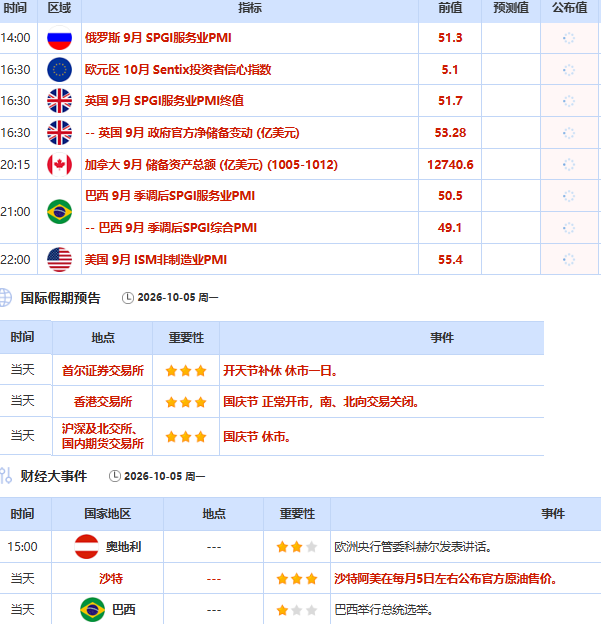
 The U.S. Labor Department reported that nonfarm payrolls increased by 29,000 in September, compared with economists' expectations of 90,000. August's increase was revised down to 133,000 from the previous figure of 162,000. Bybit's chief market analyst, Han Tan, stated that gold bulls may be hesitant to get too excited at the moment, as they know the Federal Reserve remains hawkish. Gold price movements in the coming months will largely depend on the extent to which the Fed is willing to tolerate potential weakness in the labor market while remaining committed to curbing U.S. inflation. The market anticipates that conflict-induced inflation could keep interest rates high for a longer period, putting pressure on gold prices. The latest inflation data was lower than expected, and at least two senior Fed policymakers opposed another rate hike in October, reinforcing investors' bets that the Fed will keep rates unchanged later this month; the CME FedWatch tool shows that traders currently believe there is about a 22% chance of a U.S. rate hike this month.
 A source familiar with the details of the discussions said that EU countries have agreed to France's proposal to release more diesel reserves. Trump tweeted on Truth Social that "Europe agrees to release a large amount of diesel reserves," after previously stating he was considering banning US diesel exports. Three sources said France proposed that European countries release 50 million barrels of diesel, and International Energy Agency member countries release 50 million barrels of crude oil. Two of the sources said Europe would release some of its diesel reserves in batches over 20 days. Ole Hansen, head of commodities strategy at Saxo Bank, said this highlights that with the recovery of Middle Eastern crude oil supplies, the main pressure on the energy market is no longer crude oil supply, but refined product supply. Declining refining capacity and output in the Middle East and Russia are limiting refined product supply. The US-Iran situation continues to dominate oil prices. In response to the US plan proposed by Iran, Iranian Foreign Ministry spokesman Bagae said on the 4th that Iran had explained its position to the mediator Qatar during a brief visit. He said the US proposal was basically consistent with its previous position, mainly concerning the Iranian nuclear issue. Iran has made it clear that the current focus is on the Strait of Hormuz issue. Baga'e stated that ensuring or restoring security to the Strait of Hormuz requires concrete measures from the United States, including ceasing interference with Iranian commercial shipping, halting sanctions, and other interventionist measures. Baga'e said that Iran has reviewed the concerns conveyed by the United States through Qatar, and will conduct necessary investigations into some details, providing supplementary feedback to the U.S.
 U.S. nonfarm payrolls increased by only 29,000 in September, less than a third of economists' expectations of 90,000. August's increase was revised down to 133,000 from the previously reported 162,000; July's figure was revised to a decrease of 10,000, marking the second consecutive month of negative growth this year. The combined job gains in July and August were 60,000 fewer than previously estimated. Over the past three months, jobs have averaged 51,000 per month, compared to 23,000 per month in the same period of 2025. With more people entering the labor market, the unemployment rate rose to 4.2% in September from 4.1% in August. The September jobs report virtually ruled out another Fed rate hike this month. The CME FedWatch tool showed that financial markets initially lowered the probability of a rate hike at the Fed's October 27-28 meeting to 13%, then subsequently raised it to about 23%. Olu Sonola, head of U.S. economics at Fitch Ratings, said that weak job growth, a slightly higher unemployment rate, controlled wages, and previous downward revisions to data left the Fed with little reason to continue considering a rate hike in October. With inflation remaining above the 2% target, economists continue to expect the Federal Reserve to raise interest rates in December. Dominic Bunning, head of G10 FX strategy at Nomura, believes the employment data has a “Goldilocks” characteristic: economic activity remains resilient but has not generated significant inflationary pressure, which is relatively favorable for risk assets and high-beta currencies, and may slightly reduce the tail risk of another Fed rate hike in October. The euro rose against the dollar on Friday, but fell for the fourth consecutive week, its longest losing streak since mid-May 2025. Key support came from the sell-off of European government bonds, high US Treasury yields, and market expectations of a hawkish stance from the Fed. The yield on French 10-year government bonds jumped to its highest level since 2002 on Thursday; the spread between French and German 10-year bond yields widened to over 150 basis points on Friday, the widest since the end of 2011. Bank of America analysts stated that despite persistent market concerns about French risks, the euro's resilience against the Swiss franc was remarkable before last week's sharp sell-off, and the skew premium for risk reversal options had widened to historically extreme levels. The euro fell 0.15% against the Swiss franc to 0.9327 francs; the euro was flat against the yen at 177.67 yen, both down for the week. The dollar fell 0.15% against the yen on Friday to 157.83. Citi strategists said that with the Bank of Japan raising interest rates and Japanese interest rates rising, the long-term trend of the yen may have shifted to appreciation. Strategists believe that the policy stance of the Sanae Takashi government has changed significantly, with its previous pro-inflation policy stance possibly weakening. Citi stated that after Japan escaped deflation under former Prime Minister Shinzo Abe's "Abenomics" policies, the policy shift from supporting a weaker yen to supporting a stronger yen is necessary. The US policy stance has also changed, from previously limiting excessive yen weakness to guiding yen strength.
Key Focus Today
stock market
U.S. stocks closed higher on Friday, with the Dow Jones Industrial Average rising 0.49% to close at 51,176.96 points; the S&P 500 gaining 0.73% to close at 7,722.72 points; and the Nasdaq Composite climbing 1.19% to close at 27,190.86 points. Weaker-than-expected jobs data lowered market expectations for a Federal Reserve rate hike at its policy meeting at the end of October. U.S. nonfarm payrolls increased by only 29,000 in September, with the figures for the previous two months revised sharply downward, far below the expected 90,000. The CME Group's FedWatch tool showed that after the data release, the market's expectation of a Fed rate hike of at least 25 basis points at the end of October fell to 22.7%, down from 24.4% the previous trading day and 64.2% a week earlier. Market expectations for a near-term interest rate hike cooled, boosting interest rate-sensitive stocks. The S&P 500 housing index rose 0.4%, and the small-cap Russell 2000 index rose 0.9%, its biggest one-day gain in a month. Large-cap stocks led the gains, with Nvidia rising 1.3% and Tesla rising 4.7%. Tesla's rise propelled the consumer discretionary sector up 1.4%, the best performing sector among the 11 major sectors of the S&P 500. Recent data showing resilient economic activity and lower-than-expected price increases, along with warnings from two senior policymakers against further rate hikes, prompted investors to lower their expectations for a Fed rate hike in October last week. In individual stocks, Nike fell 3.6%, the worst performer among Dow components, after unexpectedly predicting a sharp decline in annual revenue and announcing layoffs and a restructuring of its global business. Data storage providers Western Digital and Seagate Technology both plunged about 10% after the Nikkei reported that Toshiba plans to double its hard drive capacity for AI data centers by fiscal year 2027.Gold Market
Spot gold fell 0.91% on Friday, closing at $4,139.28 per ounce. Although weaker-than-expected US non-farm payroll data provided support for gold prices, the US-Iran tensions dominated the market, and a stronger dollar and high US Treasury yields put pressure on non-yielding gold. The U.S. Labor Department reported that nonfarm payrolls increased by 29,000 in September, compared with economists' expectations of 90,000. August's increase was revised down to 133,000 from the previous figure of 162,000. Bybit's chief market analyst, Han Tan, stated that gold bulls may be hesitant to get too excited at the moment, as they know the Federal Reserve remains hawkish. Gold price movements in the coming months will largely depend on the extent to which the Fed is willing to tolerate potential weakness in the labor market while remaining committed to curbing U.S. inflation. The market anticipates that conflict-induced inflation could keep interest rates high for a longer period, putting pressure on gold prices. The latest inflation data was lower than expected, and at least two senior Fed policymakers opposed another rate hike in October, reinforcing investors' bets that the Fed will keep rates unchanged later this month; the CME FedWatch tool shows that traders currently believe there is about a 22% chance of a U.S. rate hike this month.oil market
Oil prices closed mixed on Friday. Brent crude rose 0.45% to settle at $102.70 a barrel, up 5.44% for the week; WTI crude fell 1.78% to settle at $91.26 a barrel, down 1.28% for the week. This followed European leaders agreeing to a request from US President Trump to release diesel reserves in an effort to lower oil prices and reduce fuel imports from the United States. A source familiar with the details of the discussions said that EU countries have agreed to France's proposal to release more diesel reserves. Trump tweeted on Truth Social that "Europe agrees to release a large amount of diesel reserves," after previously stating he was considering banning US diesel exports. Three sources said France proposed that European countries release 50 million barrels of diesel, and International Energy Agency member countries release 50 million barrels of crude oil. Two of the sources said Europe would release some of its diesel reserves in batches over 20 days. Ole Hansen, head of commodities strategy at Saxo Bank, said this highlights that with the recovery of Middle Eastern crude oil supplies, the main pressure on the energy market is no longer crude oil supply, but refined product supply. Declining refining capacity and output in the Middle East and Russia are limiting refined product supply. The US-Iran situation continues to dominate oil prices. In response to the US plan proposed by Iran, Iranian Foreign Ministry spokesman Bagae said on the 4th that Iran had explained its position to the mediator Qatar during a brief visit. He said the US proposal was basically consistent with its previous position, mainly concerning the Iranian nuclear issue. Iran has made it clear that the current focus is on the Strait of Hormuz issue. Baga'e stated that ensuring or restoring security to the Strait of Hormuz requires concrete measures from the United States, including ceasing interference with Iranian commercial shipping, halting sanctions, and other interventionist measures. Baga'e said that Iran has reviewed the concerns conveyed by the United States through Qatar, and will conduct necessary investigations into some details, providing supplementary feedback to the U.S.Foreign exchange market
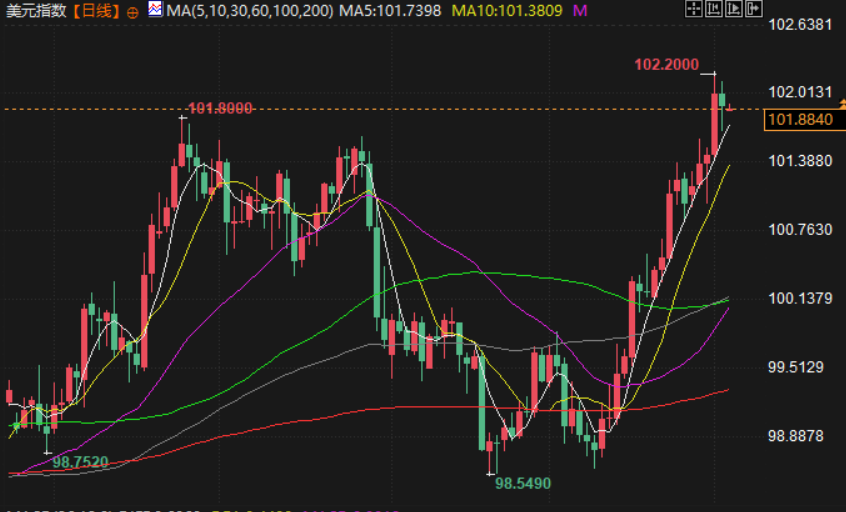
The dollar index closed down at 101.91 on Friday. Although the dollar index hit an 18-month high last week, the weaker-than-expected U.S. job growth in September caused the dollar to give back some of its recent gains on Friday. U.S. nonfarm payrolls increased by only 29,000 in September, less than a third of economists' expectations of 90,000. August's increase was revised down to 133,000 from the previously reported 162,000; July's figure was revised to a decrease of 10,000, marking the second consecutive month of negative growth this year. The combined job gains in July and August were 60,000 fewer than previously estimated. Over the past three months, jobs have averaged 51,000 per month, compared to 23,000 per month in the same period of 2025. With more people entering the labor market, the unemployment rate rose to 4.2% in September from 4.1% in August. The September jobs report virtually ruled out another Fed rate hike this month. The CME FedWatch tool showed that financial markets initially lowered the probability of a rate hike at the Fed's October 27-28 meeting to 13%, then subsequently raised it to about 23%. Olu Sonola, head of U.S. economics at Fitch Ratings, said that weak job growth, a slightly higher unemployment rate, controlled wages, and previous downward revisions to data left the Fed with little reason to continue considering a rate hike in October. With inflation remaining above the 2% target, economists continue to expect the Federal Reserve to raise interest rates in December. Dominic Bunning, head of G10 FX strategy at Nomura, believes the employment data has a “Goldilocks” characteristic: economic activity remains resilient but has not generated significant inflationary pressure, which is relatively favorable for risk assets and high-beta currencies, and may slightly reduce the tail risk of another Fed rate hike in October. The euro rose against the dollar on Friday, but fell for the fourth consecutive week, its longest losing streak since mid-May 2025. Key support came from the sell-off of European government bonds, high US Treasury yields, and market expectations of a hawkish stance from the Fed. The yield on French 10-year government bonds jumped to its highest level since 2002 on Thursday; the spread between French and German 10-year bond yields widened to over 150 basis points on Friday, the widest since the end of 2011. Bank of America analysts stated that despite persistent market concerns about French risks, the euro's resilience against the Swiss franc was remarkable before last week's sharp sell-off, and the skew premium for risk reversal options had widened to historically extreme levels. The euro fell 0.15% against the Swiss franc to 0.9327 francs; the euro was flat against the yen at 177.67 yen, both down for the week. The dollar fell 0.15% against the yen on Friday to 157.83. Citi strategists said that with the Bank of Japan raising interest rates and Japanese interest rates rising, the long-term trend of the yen may have shifted to appreciation. Strategists believe that the policy stance of the Sanae Takashi government has changed significantly, with its previous pro-inflation policy stance possibly weakening. Citi stated that after Japan escaped deflation under former Prime Minister Shinzo Abe's "Abenomics" policies, the policy shift from supporting a weaker yen to supporting a stronger yen is necessary. The US policy stance has also changed, from previously limiting excessive yen weakness to guiding yen strength.International News
Iran Responds to US Proposal: Strait of Hormuz Issue is the Current Focus In response to the US plan proposed by Iran, Iranian Foreign Ministry spokesman Baghae stated on the 4th that Iran had explained its position to Qatar, the mediator, during a brief visit there. He said the US proposal was largely consistent with previous positions, mainly concerning the Iranian nuclear issue. Iran has clearly stated that the current focus is on the Strait of Hormuz issue. Baghae stated that ensuring the security of the Strait of Hormuz or restoring its security requires concrete measures from the US, including ceasing interference with Iranian commercial shipping, halting sanctions, and other interventionist measures. Baghae stated that Iran has reviewed the concerns conveyed by the US through Qatar, and Iran will conduct necessary investigations into some details and will provide supplementary feedback. (CCTV News) Iranian Parliament Speaker: Strait of Hormuz Will Not Reopen Until Conditions Are Met On the 4th local time, Iranian Parliament Speaker Ghalibaf stated that the US is in a desperate situation facing Iran's firm stance and tenacious resistance. Kalibaf stated that although the US has a different narrative, it has recently made some suggestions through intermediaries. The US must realize that the era of imposing unilateral demands through a war of attrition is over. Iran's position is clear and firm: the Strait of Hormuz will not be opened until the seven conditions proposed by Iran based on the Islamabad memorandum of understanding are met. US President Trump stated on the 2nd that the war with Iran will "end soon, and Iran will never have nuclear weapons." (CCTV News) White House Establishes "Super Intelligence Task Force": Clayton Leads The White House has established a new "Super Intelligence Task Force," led by Director of National Intelligence Jay Clayton. The task force will submit a report within 120 days on the risks and opportunities brought by artificial intelligence, as well as the responsibilities of the federal government. Clayton will effectively assume the role of head of artificial intelligence affairs in the Trump administration. He stated that if the US falls behind other countries in the AI competition, it could amplify known and unknown risks from adversaries. Task force members include Vice President Vance, Secretary of Defense Hergsays, Treasury Secretary Bessant, and other senior officials; external advisors include David Sachs and former Secretary of State Rice. The working group will collaborate with AI companies to identify risks, rather than replacing the industry's own security mechanisms; it will also assess existing laws, potential congressional legislation, and government mechanisms for handling data breaches, hacking attacks, and jailbreaks of AI models. Iran Adds Temporary Militia Training Base On October 3rd local time, Iran opened another temporary military training base in Tehran, aimed at training the public to defend against external threats from the US and Israel. Located in Haftar Square, the new training base can conduct air defense drills and obstacle course training. Iran had previously built a similar camp in another square in Tehran, planning to begin training the public in the coming weeks. Ali Koussari, training commander of the Basij militia, emphasized the importance of nationwide civil defense in Iran at a press conference, stating that if the enemy again "misjudges the situation" and launches a new attack, the Iranian people will unite to resist. (CCTV International News) Iraq Ships 2 Million Barrels of Crude Oil Out of the Strait of Hormuz for Delivery The Iraqi Tanker Company confirmed on the 3rd that it had used a large tanker to transport 2 million barrels of crude oil out of the Strait of Hormuz to deliver it to buyers waiting outside the strait. According to company executives, this is the first time in decades that the state-owned company has delivered oil using this method. It is understood that other Gulf oil-producing countries have long adopted ship-to-ship transshipment for delivery outside the strait, and Iraq is "late to the game." Ali Qais Abdul Jabar, president of the Iraqi Tanker Company, said in a statement that ship-to-ship transshipment gives the National Oil Sales Authority more initiative and flexibility in selling and pricing oil. Previously, Iraq mainly delivered oil to buyers from the southern oil port of Basra. Shipping through the Strait of Hormuz was disrupted after the outbreak of the war with Iran. To encourage buyers to "pick up the goods themselves," Iraq offered a discount of more than $20 per barrel. (CCTV News) Trump's Core Cabinet Holds Closed-Door Meeting at Camp David to Discuss Next Steps in the Iran War and Yemen Conflict According to three US officials who spoke to Axios, several core members of President Trump's cabinet held a closed-door meeting for several hours last Friday at Camp David to discuss the next steps in the Iran war and the conflict between Saudi Arabia and the Houthi rebels in Yemen. The Trump administration did not announce the meeting, which is extremely rare. The last similar meeting was held in June 2025, just days before Israel launched its attack on Iran. Officials said the meeting was chaired by Vice President Vance. Other attendees included Secretary of State Rubio, Secretary of Defense Hergsays, White House Special Envoy Witkov, CIA Director Ratcliffe, and Chairman of the Joint Chiefs of Staff General Kane. "Or at least they had in-depth discussions," the White House declined to comment. On Friday afternoon, while advisors were meeting at Camp David, a reporter asked Trump how he would deal with Iran next. Trump replied, "If I told you, you'd have a big story. But you'll have to wait and see. Things are going very well. Iran is in a bad position." " Iranian War Disrupts Production Expansion, OPEC+ Postpones Capacity Assessment to Mid-November The assessment has been postponed due to the disruption of Middle East production expansion projects caused by the Iranian war, creating uncertainty for future capacity estimates. Originally scheduled for completion by the end of September 2026, the assessment is now expected to be completed in mid-November. OPEC+ comprises OPEC and allies including Russia. By the end of 2025, OPEC+ required an assessment of the capacity of all member countries as a basis for determining 2027 quotas; the June meeting reiterated the importance of completing the assessment of the maximum sustainable capacity (MSC) of all member countries. According to the US consulting firm DeGolyer and..." MacNaughton is responsible for the assessment, excluding Russia, Iran, and Venezuela, which are subject to US sanctions. The report is expected to be submitted in mid-November, still within the timeframe for review before the OPEC+ plenary meeting in late November. Russian Deputy Prime Minister Novak stated that OPEC+ countries are still assessing maximum production capacity. The Middle East conflict has delayed some member countries' expansion projects, and not all countries have submitted data, increasing the complexity of the assessment. Production capacity estimates will affect national quotas: those with lower assessments may face pressure to reduce their quotas, while those that have already expanded production may seek higher quotas. OPEC+ maintains its November oil production quotas unchanged, remaining on hold for the second consecutive month. OPEC+ decided at its Sunday meeting to maintain its November oil production quotas unchanged, meaning that the relevant production levels have remained unchanged for the second consecutive month. Representatives from Saudi Arabia, Russia, Iraq, Kuwait, Kazakhstan, Algeria, and Oman held an online meeting that day to assess the current state and prospects of the global oil market. Participating countries reaffirmed their commitment to continue adhering to the relevant production arrangements under the OPEC+ cooperation framework and to assess subsequent production policies monthly based on the international oil market situation. The next meeting will be held on November 1st.Domestic News
Nearly 3 million charging trips for new energy vehicles on highways during the first three days of the National Day holiday, with a charging volume exceeding 71 million kilowatt-hours. Demand for charging new energy vehicles was strong during the first three days of the National Day holiday, and highway charging infrastructure operated smoothly. From 00:00 on October 1st to 24:00 on October 3rd, statistical analysis of 62,700 highway charging facilities (guns) included in the national charging facility monitoring service platform showed that during the first three days of this year's National Day holiday, new energy vehicles were charged a total of 2.9686 million times on national highways, averaging 989,500 times per day, a 48.41% increase compared to the same period last year; the charging volume reached 71.6193 million kilowatt-hours, averaging 23.8731 million kilowatt-hours per day, a 49.39% increase compared to the same period last year. The penetration rate of green travel during the holiday continued to increase, and the trend of people using new energy vehicles for long-distance travel became increasingly apparent. (National Energy Administration) HKEX Chief Executive: International Investors Turn Their Attention to the Chinese Market; HKEX to Launch RMB-Denominated Gold Futures The Hong Kong SAR's 2026 Policy Address proposes deepening Hong Kong's global offshore RMB business and capital market. HKEX Chief Executive Chen Yiting stated on the 2nd that international investors have refocused their attention on the Asian region, particularly the Chinese market, and intend to diversify their asset allocation. Hong Kong needs to build a diversified asset ecosystem, rather than simply expanding and strengthening its stock market. The HKEX will study the launch of RMB-denominated gold futures. (CCTV Finance)- Risk Warning and Disclaimer
- The market involves risk, and trading may not be suitable for all investors. This article is for reference only and does not constitute personal investment advice, nor does it take into account certain users’ specific investment objectives, financial situation, or other needs. Any investment decisions made based on this information are at your own risk.