The high level of the US dollar index is supporting the continued strong fluctuations of the USD/CAD pair.
2026-10-07 10:20:18
The US dollar edged higher against the Canadian dollar in Asian trading on Wednesday, trading around 1.4215, above the 1.4200 level , halting the previous day's pullback—the pair had touched near 1.4255 on Monday, its highest level since April 2025. However, the gains were limited (only about 0.05%), with bullish momentum lacking strength and market signals mixed. Support came from the US dollar: profit-taking on Tuesday attracted bargain hunters, providing support for the USD/CAD pair; while limiting gains was the Canadian dollar: the rebound in international oil prices from a one-month low and improved energy export expectations supported the commodity currency, thus limiting the pair's upside potential. 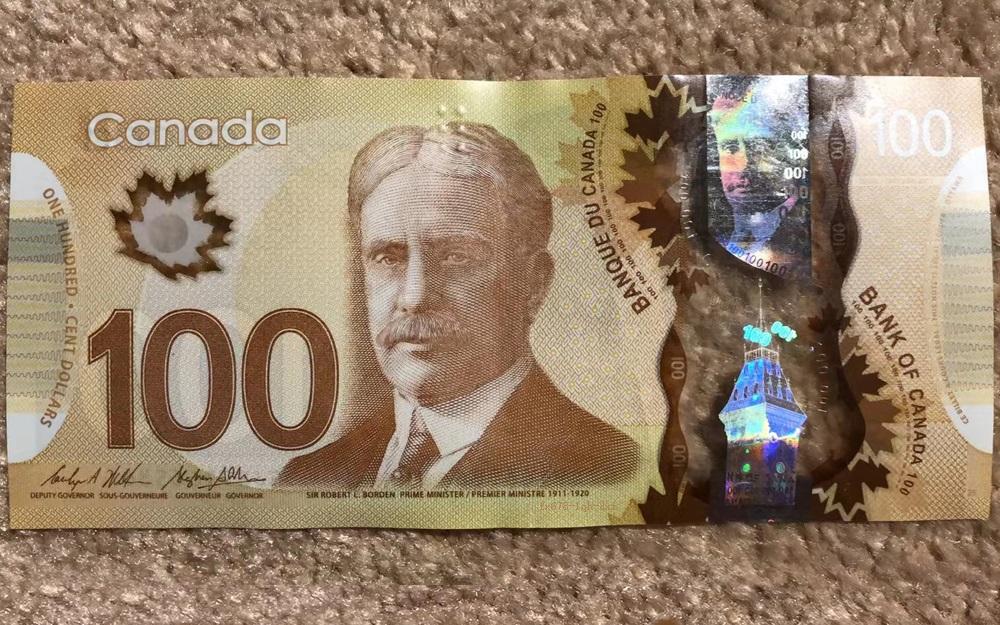 The geopolitical focus is shifting towards the Red Sea. The Yemeni government recently launched a large-scale military operation, claiming to have regained control of several strategic points along the Red Sea coast, including the Zubab region near the Bab el-Mandeb Strait and the port city of Muha . The Iranian-backed Houthi rebels retaliated, attacking several key targets in Saudi Arabia, including Saudi Aramco's refinery facilities in the Riyadh area and the Rabigh refinery . Meanwhile, Iran has significantly accelerated its attacks on oil tankers in the Strait of Hormuz over the past week , with reports from the UK's Office for Maritime Trade Operations continuing to rise. This renewed rise in geopolitical risk premiums has driven a rebound in oil prices from their lows, making "supply concerns" a core variable in oil market trading once again. On the interest rate and policy front, the US dollar has been boosted by the rise in US Treasury yields. A new round of increases in US Treasury yields has reignited demand for the US dollar as a safe haven and for interest rate differentials. Coupled with the diverging policy stances of the Bank of Canada and the Federal Reserve , the USD/CAD exchange rate remains largely driven by a bullish sentiment – a weaker outlook for Canadian economic growth, potentially suppressing broader inflationary pressures, means the Bank of Canada has a significantly lower need to raise interest rates than the Federal Reserve , and the expected USD/CAD interest rate differential continues to tilt towards the US dollar. According to the CME FedWatch Tool, the market is pricing in an approximately 85% probability of another Fed rate hike before the end of the year (approximately 79.5% probability of holding rates steady in October and approximately 84.5% cumulative probability of a rate hike before December). However, dollar bulls may prefer to wait and see before any new policy signals emerge. The FOMC meeting minutes released tonight will dominate the short-term direction of the US dollar and indirectly affect the USD/CAD exchange rate. Since the September meeting implemented the first interest rate hike in three years (25 basis points to 3.75%-4.00%), the wording in the minutes regarding the sustainability of inflation, the slowdown in the job market (September non-farm payrolls increased by only 29,000), and the energy shock will determine market bets on the December meeting and subsequent path: if the minutes' tone leans towards "cautious observation," the US dollar may come under pressure and fall, opening up room for a pullback in USD/CAD; if the minutes emphasize sticky inflation and leave room for further rate hikes, the US dollar will consolidate its strength. Furthermore, the sustainability of the oil price rebound is also an important variable—if the geopolitical actions of the Houthis and Iran escalate further, the support for the Canadian dollar from rising oil prices will strengthen, which in turn will limit the upward slope of USD/CAD. From a global perspective, the USD/CAD trend encapsulates three main themes: the US Treasury yield and the US dollar interest rate differential advantage, the commodity attribute transmission of oil prices to the Canadian dollar, and the geopolitical risks in the Middle East (Hormuz and the Red Sea) . Market sentiment is generally "bullish but cautious," with focus on three key areas: the policy stance outlined in the FOMC minutes, the evolving situation in the Red Sea and the Strait of Hormuz, and whether the oil price rebound can continue . From a technical perspective, the previous day's pullback in USD/CAD on the daily chart should be viewed as a technical correction within an overbought context—the daily RSI was previously at a high level, reflecting strong upward momentum rather than an immediate reversal signal; meanwhile, the exchange rate remains above all visible Fibonacci retracement levels , further validating the short-term bullish technical structure. On the support side, the 23.6% Fibonacci retracement level at 1.4163 is the first support level, with deeper pullbacks expected to find buying support at the 38.2% retracement level at 1.4086 and the 50% retracement level at 1.4024 . On the resistance side, 1.4288 is a structurally key level; a decisive break above this level would open up new highs for this upward cycle. From a 4-hour chart perspective, the exchange rate is consolidating within the 1.4200-1.4255 range. Short-term moving averages are intertwined, and the direction remains uncertain. The RSI, after retreating from its high, is in a neutral-to-strong zone. If the FOMC minutes are hawkish and push the dollar stronger, the exchange rate may retest 1.4255 and challenge the 1.4288 support level. Conversely, if the minutes are dovish or oil prices continue to rise, the exchange rate should look for support in the 1.4163-1.4086 range.
 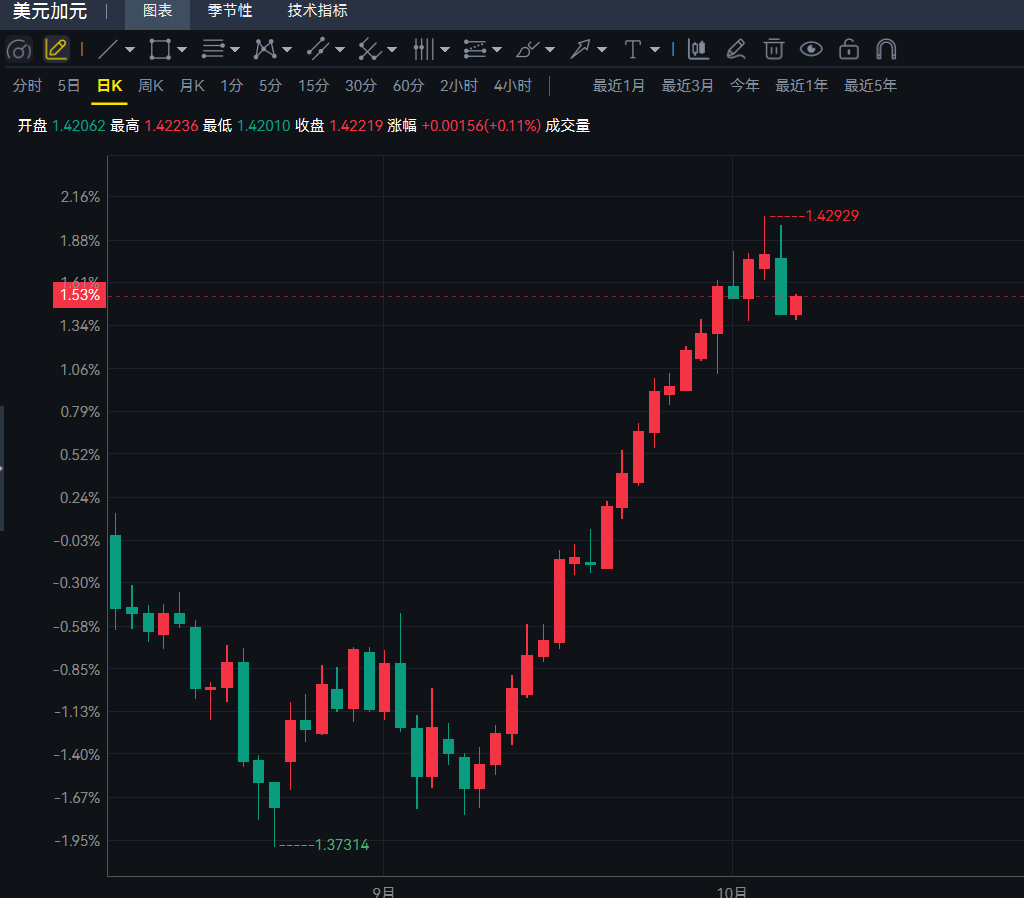 Editor's Summary : Overall, the USD/CAD pair is currently in a tug-of-war between the US dollar and oil prices: the US dollar benefits from rising US Treasury yields, expectations of a Fed rate hike (around 85% by year-end), and policy divergence between the US and Canada; while rebounding oil prices and improved expectations for Canadian export revenue support the Canadian dollar from a commodity perspective. As a result, the exchange rate is fluctuating repeatedly at high levels, lacking unilateral momentum. Looking ahead, tonight's FOMC minutes are a key short-term variable—hawkish rhetoric could push the exchange rate above 1.4255 and challenge the 1.4288 structural level, opening up new highs; dovish rhetoric could trigger a pullback to 1.4163 or even 1.4086. On the risk side, if geopolitical escalation in the Red Sea and the Strait of Hormuz pushes up oil prices too quickly, it will suppress the upward slope of the exchange rate through the Canadian dollar channel.
The geopolitical focus is shifting towards the Red Sea. The Yemeni government recently launched a large-scale military operation, claiming to have regained control of several strategic points along the Red Sea coast, including the Zubab region near the Bab el-Mandeb Strait and the port city of Muha . The Iranian-backed Houthi rebels retaliated, attacking several key targets in Saudi Arabia, including Saudi Aramco's refinery facilities in the Riyadh area and the Rabigh refinery . Meanwhile, Iran has significantly accelerated its attacks on oil tankers in the Strait of Hormuz over the past week , with reports from the UK's Office for Maritime Trade Operations continuing to rise. This renewed rise in geopolitical risk premiums has driven a rebound in oil prices from their lows, making "supply concerns" a core variable in oil market trading once again. On the interest rate and policy front, the US dollar has been boosted by the rise in US Treasury yields. A new round of increases in US Treasury yields has reignited demand for the US dollar as a safe haven and for interest rate differentials. Coupled with the diverging policy stances of the Bank of Canada and the Federal Reserve , the USD/CAD exchange rate remains largely driven by a bullish sentiment – a weaker outlook for Canadian economic growth, potentially suppressing broader inflationary pressures, means the Bank of Canada has a significantly lower need to raise interest rates than the Federal Reserve , and the expected USD/CAD interest rate differential continues to tilt towards the US dollar. According to the CME FedWatch Tool, the market is pricing in an approximately 85% probability of another Fed rate hike before the end of the year (approximately 79.5% probability of holding rates steady in October and approximately 84.5% cumulative probability of a rate hike before December). However, dollar bulls may prefer to wait and see before any new policy signals emerge. The FOMC meeting minutes released tonight will dominate the short-term direction of the US dollar and indirectly affect the USD/CAD exchange rate. Since the September meeting implemented the first interest rate hike in three years (25 basis points to 3.75%-4.00%), the wording in the minutes regarding the sustainability of inflation, the slowdown in the job market (September non-farm payrolls increased by only 29,000), and the energy shock will determine market bets on the December meeting and subsequent path: if the minutes' tone leans towards "cautious observation," the US dollar may come under pressure and fall, opening up room for a pullback in USD/CAD; if the minutes emphasize sticky inflation and leave room for further rate hikes, the US dollar will consolidate its strength. Furthermore, the sustainability of the oil price rebound is also an important variable—if the geopolitical actions of the Houthis and Iran escalate further, the support for the Canadian dollar from rising oil prices will strengthen, which in turn will limit the upward slope of USD/CAD. From a global perspective, the USD/CAD trend encapsulates three main themes: the US Treasury yield and the US dollar interest rate differential advantage, the commodity attribute transmission of oil prices to the Canadian dollar, and the geopolitical risks in the Middle East (Hormuz and the Red Sea) . Market sentiment is generally "bullish but cautious," with focus on three key areas: the policy stance outlined in the FOMC minutes, the evolving situation in the Red Sea and the Strait of Hormuz, and whether the oil price rebound can continue . From a technical perspective, the previous day's pullback in USD/CAD on the daily chart should be viewed as a technical correction within an overbought context—the daily RSI was previously at a high level, reflecting strong upward momentum rather than an immediate reversal signal; meanwhile, the exchange rate remains above all visible Fibonacci retracement levels , further validating the short-term bullish technical structure. On the support side, the 23.6% Fibonacci retracement level at 1.4163 is the first support level, with deeper pullbacks expected to find buying support at the 38.2% retracement level at 1.4086 and the 50% retracement level at 1.4024 . On the resistance side, 1.4288 is a structurally key level; a decisive break above this level would open up new highs for this upward cycle. From a 4-hour chart perspective, the exchange rate is consolidating within the 1.4200-1.4255 range. Short-term moving averages are intertwined, and the direction remains uncertain. The RSI, after retreating from its high, is in a neutral-to-strong zone. If the FOMC minutes are hawkish and push the dollar stronger, the exchange rate may retest 1.4255 and challenge the 1.4288 support level. Conversely, if the minutes are dovish or oil prices continue to rise, the exchange rate should look for support in the 1.4163-1.4086 range. Editor's Summary : Overall, the USD/CAD pair is currently in a tug-of-war between the US dollar and oil prices: the US dollar benefits from rising US Treasury yields, expectations of a Fed rate hike (around 85% by year-end), and policy divergence between the US and Canada; while rebounding oil prices and improved expectations for Canadian export revenue support the Canadian dollar from a commodity perspective. As a result, the exchange rate is fluctuating repeatedly at high levels, lacking unilateral momentum. Looking ahead, tonight's FOMC minutes are a key short-term variable—hawkish rhetoric could push the exchange rate above 1.4255 and challenge the 1.4288 structural level, opening up new highs; dovish rhetoric could trigger a pullback to 1.4163 or even 1.4086. On the risk side, if geopolitical escalation in the Red Sea and the Strait of Hormuz pushes up oil prices too quickly, it will suppress the upward slope of the exchange rate through the Canadian dollar channel.- Risk Warning and Disclaimer
- The market involves risk, and trading may not be suitable for all investors. This article is for reference only and does not constitute personal investment advice, nor does it take into account certain users’ specific investment objectives, financial situation, or other needs. Any investment decisions made based on this information are at your own risk.