Judging from Vance's remarks, how will the geopolitical premium of Brent crude oil be reassessed in the trajectory of the US-Iran conflict?
2026-10-07 11:22:18
Brent crude oil rose slightly in Asian trading on Wednesday (October 7), currently trading around $101.50 per barrel. Meanwhile, new signals from the US-Iran negotiations are providing new basis for pricing geopolitical risks in the oil market. US Vice President JD Vance recently stated in a media interview that Iran must make "meaningful" reductions in its nuclear enrichment capacity to meet US demands and end the seven-month-long conflict. This conflict has impacted global energy markets and become a political burden for President Trump and Republicans ahead of the November midterm elections. Vance stated that any agreement would require Iran to reduce its nuclear enrichment capacity, rather than simply providing guarantees of future reductions in nuclear materials. He also stated that the US is uncertain about Tehran's decision-making process, which adds complexity to the negotiations. 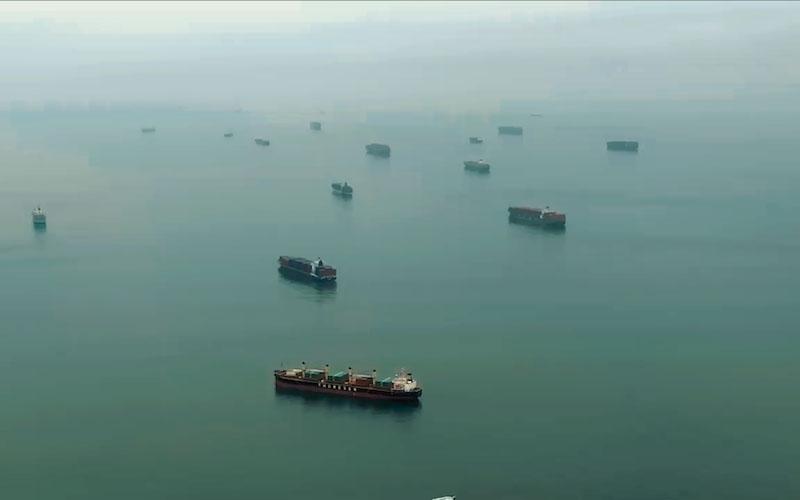
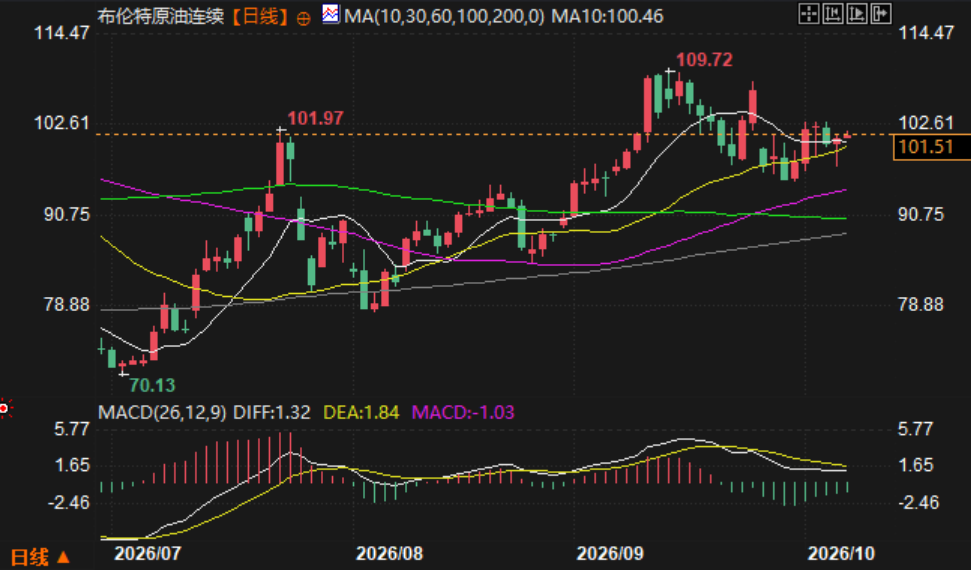 (Brent crude oil futures daily chart, source: EasyTrade) At 11:15 Beijing time, Brent crude oil futures were trading at $101.50 per barrel.
Key demand: Iran must "meaningfully" reduce its nuclear enrichment capabilities.
Vance made it clear that any agreement would require Iran to reduce its nuclear enrichment capacity, not just offer guarantees of future reductions in nuclear materials. He said, "If you don't want nuclear weapons, why do you need 60% enriched fuel? If you want to demonstrate a commitment not to build nuclear weapons, then don't build highly enriched fuel. It's a very basic threshold issue." Vance added, "I think if they want to demonstrate a commitment not to build nuclear weapons, they will do something meaningful with their enrichment capacity." This statement clarifies the core demand of the United States: Iran must make substantial reductions in its nuclear enrichment capacity, not just offer verbal guarantees or future commitments. Vance emphasized, "We will not exchange words for actions."Negotiation Progress: US-Iran Swap Deal, Trump Rejects Latest Proposal
Iran and the United States have exchanged proposals in recent weeks aimed at ending the conflict and reopening the Strait of Hormuz, a vital global energy shipping route. Trump rejected Tehran's latest offer and warned that military action could escalate after the midterm elections. Vance stated that the US remains open to reaching an agreement but will demand concrete nuclear concessions from Iran. This "open but tough" stance is key to understanding the US negotiating strategy—the US does not reject negotiations but makes substantial nuclear concessions a prerequisite for any agreement.Decision-making uncertainty: The US is unclear about who is making the decisions in Iran.
Vance stated that Washington's uncertainty about who is making decisions in Tehran adds complexity to the negotiations. He said the U.S. is negotiating with Iranian President Pesashkian and Foreign Minister Araghchi, but it's unclear how much authority they hold within Iran's power structure after the U.S.-Israel joint strikes that killed Supreme Leader Khamenei in the early stages of the conflict. "One thing we've noticed is that it's not entirely clear how their country makes decisions," Vance said. Trump also stated on Tuesday that his "biggest problem" is that nobody knows who is governing Iran. An Iranian Foreign Ministry spokesman stated on Sunday that U.S. officials are very clear about who their Iranian counterparts are and how Iran's decision-making system works; the problem is actually quite the opposite—the contradictory positions and confusing information from U.S. officials.Battlefield assessment: Iran unable to stop energy exports; ammunition shortage concerns downplayed.
Vance told the media that he had held personal conversations with field commanders to assess the battlefield situation. He downplayed concerns about critical ammunition shortages, adding that while Iranian forces are able to periodically strike merchant ships in the Strait of Hormuz, they are essentially unable to stop energy exports through the waterway. This assessment has significant implications for the energy market: if Iran cannot substantially block energy exports from the Strait of Hormuz, the tail risk of supply disruptions is lower than previously feared, putting some downward pressure on oil prices.Geopolitical risk premium faces two-way revaluation
Vance's statement has three implications for the short- and medium-term trend of Brent crude oil futures. First, the US remains open to an agreement but demands substantial nuclear concessions from Iran, meaning the negotiation window remains open. If the US and Iran reach an agreement and the Strait of Hormuz reopens, the geopolitical risk premium previously established due to supply disruptions will quickly dissipate, and Brent crude could rapidly fall back below $100/barrel. Second, Vance explicitly stated that Iran "is essentially unable to stop energy exports through the Strait of Hormuz," a battlefield assessment that directly weakens the market's pricing of tail risks from supply disruptions. If the market accepts this assessment, the bottom support for oil prices will shift lower, and the support level of Brent crude near $100/barrel may be tested. Third, Trump rejected Tehran's latest proposal and warned that military action could escalate after the midterm elections, meaning the risk of a breakdown in negotiations also exists. If the conflict escalates again, oil prices could rebound rapidly. In summary, Vance's statement has weakened both the upward geopolitical risk premium and the downward supply disruption fears. Brent crude oil is more likely to fluctuate around $100/barrel in the short term rather than form a one-sided trend.Summarize
US Vice President Vance made it clear that Iran must "meaningfully" reduce its nuclear enrichment capacity to end the conflict, not just offer guarantees of future reductions. The US and Iran have exchanged proposals in recent weeks, but Trump rejected Tehran's latest offer and warned that military action could escalate after the midterm elections. Vance stated that the US is unclear about who is making the decisions in Iran, adding complexity to the negotiations. In his battlefield assessment, Vance downplayed concerns about ammunition shortages and argued that Iran is essentially unable to block energy exports through the Strait of Hormuz, putting downward pressure on the energy market. For the market, Vance's remarks conveyed two signals: first, the US is open to an agreement but demands substantial nuclear concessions; second, Iran's ability to block energy exports is limited. The combination of these two signals means that geopolitical risk premiums may fluctuate as negotiations progress, but the tail risk of supply disruptions is lower than previously feared. (Brent crude oil futures daily chart, source: EasyTrade) At 11:15 Beijing time, Brent crude oil futures were trading at $101.50 per barrel.- Risk Warning and Disclaimer
- The market involves risk, and trading may not be suitable for all investors. This article is for reference only and does not constitute personal investment advice, nor does it take into account certain users’ specific investment objectives, financial situation, or other needs. Any investment decisions made based on this information are at your own risk.