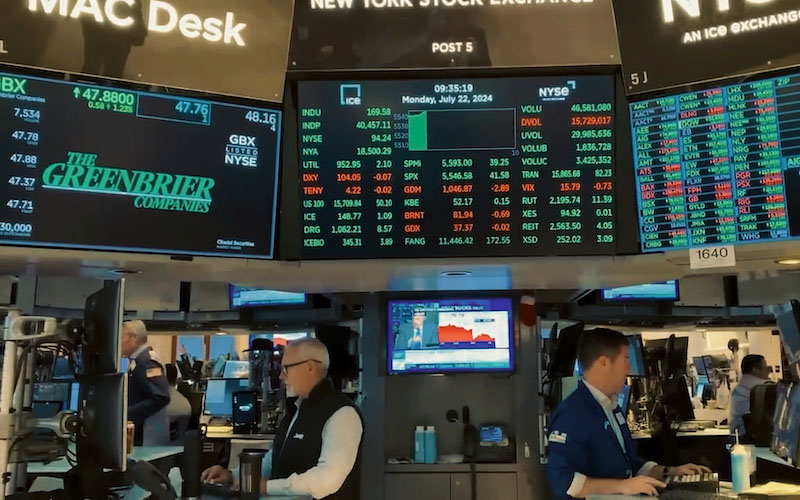
Gold prices are surging as oil prices and real interest rates vie for pricing power.
2026-10-08 17:10:16
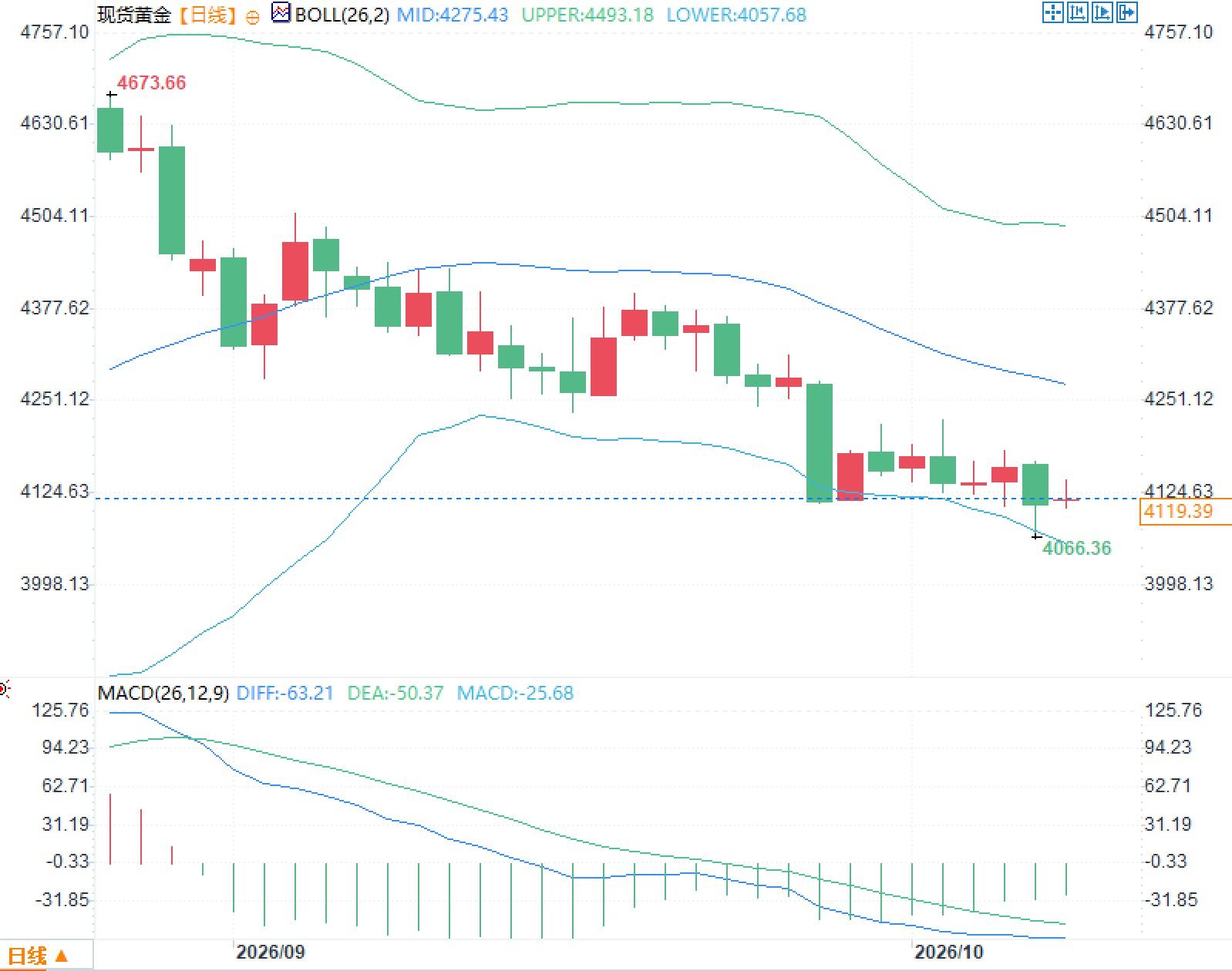
On Thursday, October 8th, spot gold showed signs of stabilizing after hitting a near two-month low in the previous trading session, but the macro pricing environment remains dominated by high yields, rising oil prices, and policy expectations. Spot gold is currently fluctuating around $4120 per ounce, with limited intraday momentum. Meanwhile, Brent crude oil rose above $104 per barrel, and the yield on the 10-year US Treasury note is around 5.30%. The core issue facing the gold market is not simply safe-haven demand, but rather the rebalancing between risk premiums and real interest rates. 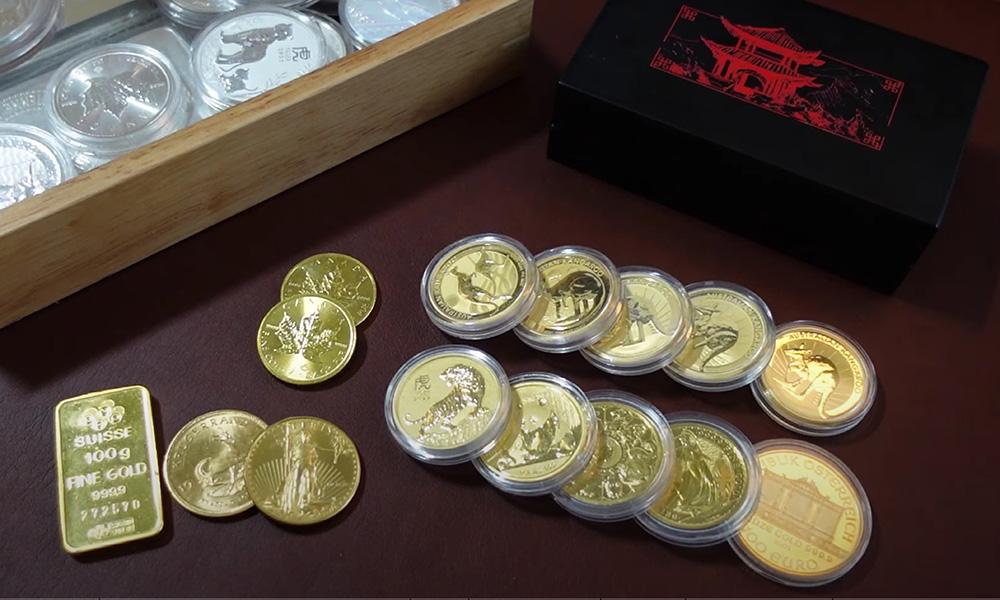
High oil prices are once again increasing interest rate constraints on gold.
The impact of rising oil prices on gold is not linearly bullish. While rising energy prices push up inflation compensation, if the market simultaneously expects the Federal Reserve to maintain tighter financial conditions, nominal and real yields may both remain high. On October 7th, the official yield curve showed the US 10-year Treasury yield at 5.28% and the 10-year real yield at 2.92%, both indicating a high opportunity cost for non-interest-bearing gold. On October 8th, oil prices rose further, with Brent crude reaching $104 per barrel and US crude approaching $92 per barrel. The energy shock thus continued to influence precious metal valuations through inflation and interest rate expectations. It is worth noting that on October 7th, the 2-year US Treasury yield was 4.77%, and the 10-year yield was 5.28%, a term spread of approximately 51 basis points. This shows that long-term pricing is not merely a reflection of the next interest rate meeting; term premiums, inflation compensation, and bond supply also play a role. The difference between the nominal 10-year yield of 5.28% and the real 10-year yield of 2.92% is approximately 2.36 percentage points, indicating that gold is currently facing not only inflation expectations, but also a relatively high real discount rate itself.The Federal Reserve has not provided a single policy path.
The minutes of the September meeting showed that the Federal Reserve raised the target range for the federal funds rate to 3.75% to 4.00%, but subsequent policy discussions still emphasized inflation risks, financial conditions, and data changes. Current market pricing leans towards an 82% probability of no rate adjustment at the October meeting, and an 86% probability of another rate hike in December. Federal Reserve Vice Chairman Philip Jefferson recently stated that future policy adjustments will require a combination of data trends, economic prospects, and risk balance assessments, noting that forming such a judgment may take more time. The key implication of this statement is that the Federal Reserve has not provided the market with a definitive path of continuous rate hikes or a rapid shift to easing; therefore, gold needs to simultaneously digest both high real interest rates and policy uncertainty.The safe-haven premium and interest rate discount are offsetting each other.
Recent conflicts in the Middle East and shipping security risks have increased risk premiums in the energy market, theoretically increasing demand for gold's defensive properties. However, this round of shocks has simultaneously pushed up oil prices and long-term bond yields, causing a significant divergence in the traditional safe-haven logic. For gold, the risk event itself is not the only variable; more important is how the market interprets its macroeconomic consequences. If conflict risks are primarily priced in as supply constraints and inflationary pressures, the discounting effect on interest rates will be more pronounced; if the risks are mainly manifested as concerns about growth and financial stability, gold's safe-haven properties will be more easily re-emphasized. Currently, both pricing chains exist simultaneously, so a rapid dip followed by a recovery during the trading session does not necessarily mean that the macroeconomic contradictions have been resolved. From a microeconomic perspective, the rapid recovery after breaking below the short-term reference area in the previous trading day also conforms to the typical characteristics of concentrated liquidity: when stop-loss orders and algorithmic selling are triggered in close price ranges, short-term trading amplifies price movements; if there is a lack of new macroeconomic catalysts, prices may quickly return to their original fluctuation range.Daily indicators show a coexistence of high volatility and weak momentum.
On the daily chart, the Bollinger Band middle line is around 4275, with the price below the middle line and close to the lower line area, indicating that volatility has remained at a high level recently. As for the MACD, the DIFF is around -63 and the DEA is around -50, with the histogram still in negative territory, reflecting that medium-term momentum has not yet returned to a neutral state; however, the absolute value of the histogram has recently converged compared to the previous period, indicating that short-term unilateral momentum has weakened.Frequently Asked Questions
Question 1: Why is spot gold still under pressure when conflict risks escalate? Answer: Safe-haven demand is only one pricing factor. Currently, rising oil prices are simultaneously reinforcing inflation compensation and high interest rate expectations, keeping real yields high. As a non-interest-bearing asset, the holding cost of gold is increasing, thus safe-haven buying and interest rate pressure may coexist. Question 2: Does the Fed's pause in further interest rate hikes mean the pressure on gold has disappeared? Answer: Not necessarily. The market is more focused on real interest rates, term premiums, and the cost of dollar funding, rather than the outcome of a single meeting. Even if short-term interest rates stabilize temporarily, as long as long-term yields and real yields remain high, gold valuations will still be strongly constrained.- Risk Warning and Disclaimer
- The market involves risk, and trading may not be suitable for all investors. This article is for reference only and does not constitute personal investment advice, nor does it take into account certain users’ specific investment objectives, financial situation, or other needs. Any investment decisions made based on this information are at your own risk.