The Bank of Korea is about to pause interest rate hikes, with semiconductor exports and inflationary pressures supporting further tightening.
2026-10-22 07:38:23
The US dollar traded in a narrow range against the South Korean won during the Asian session on Thursday (October 22), currently hovering around 1326. The exchange rate is at its lowest level since early October 2024. The Bank of Korea's interest rate decision today and its post-meeting statements may provide new policy clues about the medium-term direction of the won. The Bank of Korea is expected to keep interest rates unchanged at today's policy meeting, pausing after two consecutive rate hikes in July and August, but economists say its tightening cycle is not yet over. 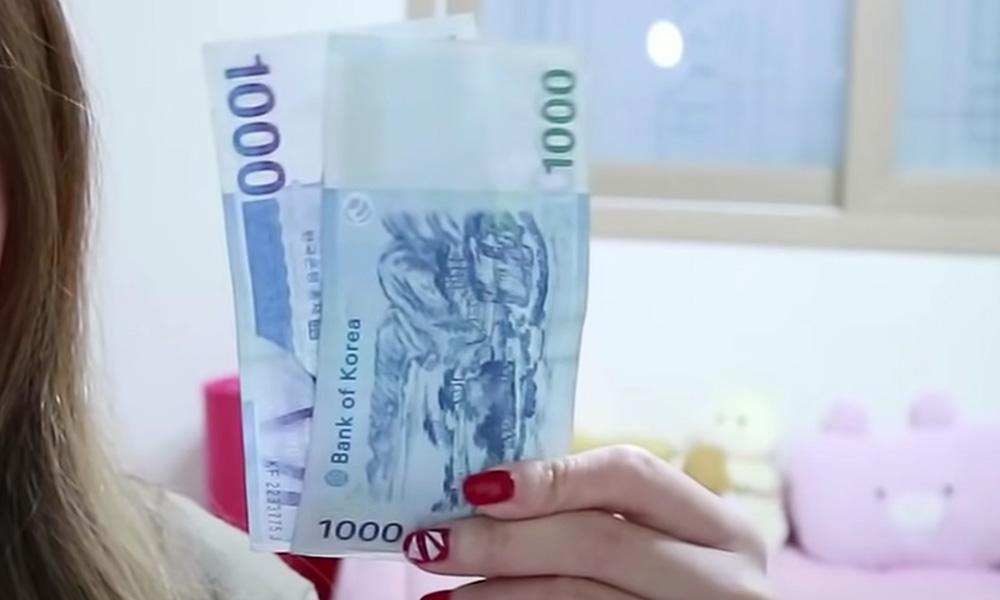
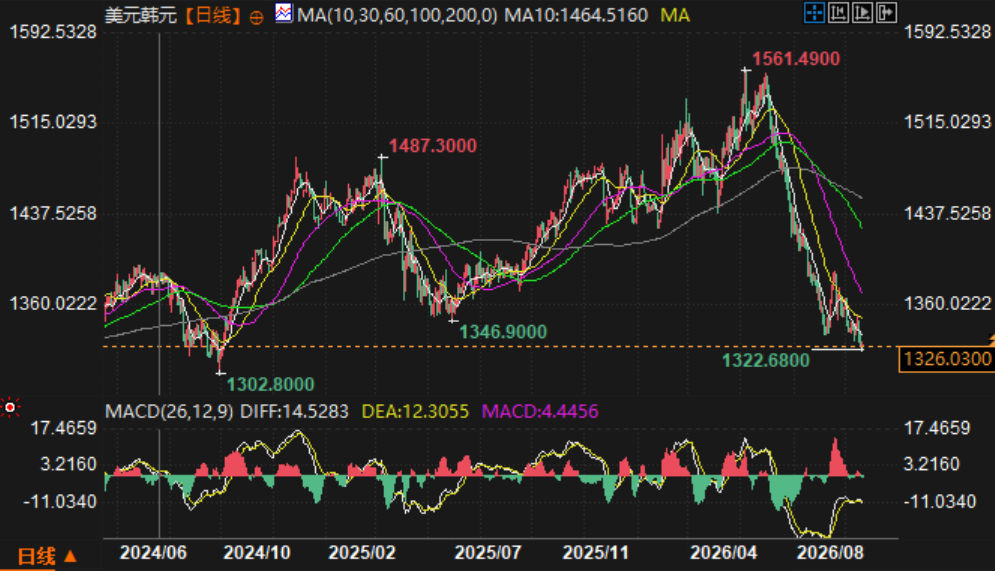 (USD/KRW daily chart, source: EasyForex) At 7:09 Beijing time, the USD/KRW exchange rate was 1326.09/35.
Key Expectation: All six economists predict that rates will remain unchanged.
According to a media survey, all six economists expect the Bank of Korea to keep its benchmark interest rate unchanged, currently at 3.00% following hikes in July and August. Respondents indicated that the Bank of Korea is likely to maintain its tightening policy stance, but believe a pause is more probable than a rare third consecutive rate hike. The key point of this expectation is that a pause by the Bank of Korea would be a pace adjustment rather than a change in direction. Policymakers have gained room to adjust the pace of tightening and determine when further rate hikes are needed, but the overall direction of tightening remains unchanged.Interest rate hike background: Strong semiconductor exports, inflation faces dual pressures from supply and demand.
Economists point out that the backdrop still supports tighter policy. Strong semiconductor exports are driving economic growth, while inflation faces upward pressure from both the supply and demand sides. Taken together, these conditions suggest that the rate hike cycle may continue in the near term. The key point is that strong semiconductor exports support economic growth, allowing the central bank to tighten policy without derailing expansion; while the dual supply and demand pressures of inflation require the central bank to maintain a tightening bias. Together, these factors constitute the rationale for the Bank of Korea to continue tightening.External account: Current account surplus of $279 billion, nearly four times that of the same period last year.
The strength in the export sector is reflected in South Korea's external account. The cumulative current account surplus from January to August reached approximately $279 billion, nearly four times the approximately $70 billion surplus in the same period last year. This surplus highlights the extent to which the economy has benefited from global demand for memory chips and other semiconductor products. Crucially, the current account surplus provides a fundamental support for the won, even as policy expectations drive daily fluctuations. Strong exports and the surplus mean that the won's fundamentals are relatively solid, giving the central bank room to maintain exchange rate stability while tightening monetary policy.Market Implications: The tone of the statement and the timing of the next rate hike are key.
Maintaining the interest rate will signal a shift in pace rather than a change in direction. Markets will likely closely watch the central bank's statement and any guidance on the timing of the next move, looking for signals that policymakers believe further rate hikes are possible in the coming months. The core of this market implication is that, since maintaining the rate is already fully priced in, market reactions will likely depend on the tone of the statement and any signals regarding the timing of the next rate hike. A hawkish rate maintenance—keeping further rate hikes firmly on the table—could support the won and push up short-term South Korean government bond yields; any signs suggesting the cycle is nearing its end could weigh on the won.Summarize
The Bank of Korea is expected to keep its benchmark interest rate unchanged at 3.00% today, pausing after two consecutive rate hikes in July and August, but economists say the tightening cycle is not yet over. All six economists surveyed expect the rate to remain on hold, believing the Bank of Korea is likely to maintain its tightening stance, but a pause is more likely than a rare third consecutive rate hike. Strong semiconductor exports are driving growth, and inflation faces both supply and demand pressures, both supporting the continuation of the rate hike cycle in the short term. The current account surplus of approximately $279 billion from January to August, nearly four times that of the same period last year, provides underlying support for the won. Since maintaining the rate is already fully priced in, market reaction will depend on the tone of the statement and signals regarding the timing of the next rate hike. A hawkish rate maintenance could support the won and push up short-term South Korean government bond yields, while suggestions that the cycle is nearing its end could weigh on the won. (USD/KRW daily chart, source: EasyForex) At 7:09 Beijing time, the USD/KRW exchange rate was 1326.09/35.
- Risk Warning and Disclaimer
- The market involves risk, and trading may not be suitable for all investors. This article is for reference only and does not constitute personal investment advice, nor does it take into account certain users’ specific investment objectives, financial situation, or other needs. Any investment decisions made based on this information are at your own risk.