Why are oil prices still so high despite the fact that Persian Gulf crude oil shipments have rebounded to over 90% of pre-war levels?
2026-10-22 15:02:22
In October, crude oil shipments from the Persian Gulf region had largely recovered to pre-conflict levels, but international oil prices did not decline in tandem. Market traders remained highly cautious about this recovery, with geopolitical tensions, high transportation costs, and tight inventory levels collectively supporting high oil prices. 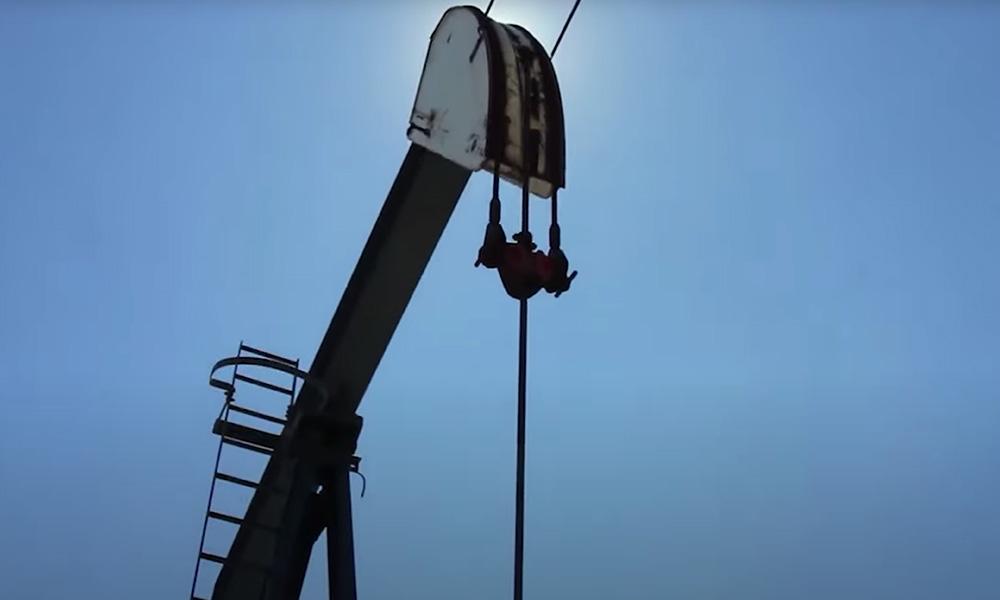
Exports are nearing pre-war levels, with Saudi Arabia's increased shipments making up for the shortfall caused by Iran.
According to data compiled by maritime intelligence firm TankerTrackers, total Persian Gulf crude oil exports, covering Iran, Iraq, Kuwait, Qatar, Saudi Arabia, the UAE, and Oman, have recently rebounded to over 90% of January and February levels. More recent third-party tracking shows that Middle Eastern crude oil shipments even exceeded pre-war averages at one point. Iran exported approximately 1.5 million barrels of crude oil per day before the conflict, but its exports have plummeted to near zero since the US reimposed sanctions in mid-July. Meanwhile, Saudi Arabia, the world's largest oil exporter, has significantly increased its exports, exceeding pre-war averages by about 10%. Saudi Arabia has increased its shipments through alternative routes such as the East-West pipeline, partially offsetting the losses from Iran. Robin Brooks, a senior fellow in economic research at the Brookings Institution, points out that tanker traffic has almost completely returned to normal, naturally raising the question: why haven't oil prices fallen accordingly?The convoluted transportation routes and continuous attacks drive up costs.
Despite the overall recovery in volume, the quality of the supply recovery is incomplete. Ben McMillan, chief investment officer at IDX Advisors, stated that a large portion of crude oil has had to take more circuitous routes, with significant amounts transported via surface pipelines, shuttle tankers, and even "shadow fleets." Shipping has not fully returned to normal, and oil transportation costs remain high, leading to continued premiums in the market. Attacks on ships in the Strait of Hormuz and Saudi Arabia's East-West pipeline continue to occur intermittently, further increasing transportation risks and costs. While US President Donald Trump's pledge not to launch new attacks on Iran before the midterm elections slightly curbed oil price gains earlier this month, concerns about a possible resumption of military action after the November 3rd election keep geopolitical risk premiums high. Michael Lynch, president of Strategic Energy & Economic Research, believes that the threat of attacks on shipping and energy infrastructure is expected to cause fluctuations in daily export volumes. Current global inventory tightness means that even a reduction of 5 to 10 million barrels per week in supply would keep oil prices high.Inventory continues to decline, and prices have performed strongly recently.
The latest data from the U.S. Energy Information Administration shows that U.S. commercial crude oil inventories fell by 3.1 million barrels in the week ending October 16, marking the third consecutive week of declines. Total inventories fell to approximately 412.5 million barrels, about 3% below the five-year average for the same period. This reinforced market expectations of tight supply. Regarding oil prices, both West Texas Intermediate (WTI) and Brent crude have risen nearly 10% so far this month. In the latest trading, Brent crude (December contract) traded around $110 to $111 on October 22, higher than the previous trading day's close; WTI fluctuated around $98. Geopolitical tensions and inventory reductions have jointly supported prices. Tensions in the Middle East continue. Recent reports indicate that the U.S. is planning to evacuate some embassy personnel and their families from the Persian Gulf region, involving Saudi Arabia, the UAE, Jordan, Qatar, and Bahrain. A source from the Saudi Ministry of Energy also stated that air defense systems intercepted a drone attempting to attack Saudi Aramco's Shayba oil field facilities.Market Outlook: Recovery remains fragile, price path highly dependent on geopolitical developments
Michael Hsueh, a commodities analyst at Deutsche Bank Research, believes that if oil supplies via the Strait of Hormuz further normalize, the market will turn into a significant oversupply, and Brent crude prices could eventually fall to $74 per barrel next year. His baseline expectation is a ceasefire achieved through negotiations and broader dialogue, in which case the average Brent price in 2027 would be around $74; if the conflict continues throughout 2027, prices could climb to $130. The currently restored crude oil supply remains fragile, and refining crack spreads are likely to remain high. Crack spreads reflect the price difference between a barrel of crude oil and refined products; their high levels indicate a tight downstream product market.Editor's Summary
The rebound in Persian Gulf crude oil shipments demonstrates strong market adaptability, with Saudi Arabia and other countries partially filling the gap left by Iran through alternative routes and increased exports. However, the circuitous shipping routes, the ongoing risk of attacks, the continuous depletion of US inventories, and geopolitical uncertainties following the midterm elections have collectively prevented a significant decline in oil prices. In the short term, oil prices remain supported by risk premiums and actual transportation costs; the medium- to long-term trend depends heavily on whether passage through the Strait of Hormuz can truly become normalized and whether the conflict can be resolved through a ceasefire. The fragility of supply recovery means that any new disturbance could quickly drive up price volatility.Frequently Asked Questions
Q: Why hasn't oil price fallen significantly despite Persian Gulf crude oil shipments approaching pre-war levels? A: Total volume recovery doesn't equate to cost recovery. Large quantities of crude oil have been forced to use land pipelines, shuttle tankers, or longer shipping routes, resulting in significantly higher transportation costs than the pre-war level of direct transport through the Strait of Hormuz. The threat of attack remains, and insurance and shipping premiums remain high. The market continues to price in risk and additional costs, making it difficult for oil prices to fall. Q: How have Saudi Arabia and other countries filled the supply gap after Iranian exports dropped to zero? A: Saudi Arabia increased its exports to about 10% above pre-war levels and relied more heavily on alternative routes such as the East-West Pipeline to transport crude oil to ports in the Red Sea or the Gulf of Oman for loading. Other Gulf countries also maintained volume by adjusting loading schedules and routes. Third-party data shows that the overall regional shipment volume recently even exceeded pre-war averages, but the routes were more circuitous and less efficient. Q: What impact has the three-week consecutive decline in US crude oil inventories had on oil prices? A: As of the week ending October 16, inventories fell to approximately 412.5 million barrels, marking the third consecutive week of decline and remaining below the five-year average for the same period, indicating strong demand or exports and relatively tight supply. Given the already tight global inventory situation, even a weekly reduction of several million barrels will strengthen bullish sentiment and limit the downside for oil prices. Q: What assumptions underlie Deutsche Bank's two scenarios for oil prices next year? A: The baseline scenario assumes a ceasefire achieved through negotiations and the initiation of broader dialogue, with the Strait of Hormuz gradually becoming normalized, leading to a market surplus and an average Brent price of approximately $74 in 2027. If the conflict continues throughout 2027, with supply remaining constrained and risk premiums high, prices could climb to $130. The core difference between the two scenarios lies in whether geopolitical tensions can be eased. Q: What does the recent US plan to withdraw some embassy personnel from the Gulf signify? A: This move reflects Washington's increasingly cautious assessment of the regional security situation and may be related to the risk of a prolonged conflict or potential escalation. It won't directly change the physical supply of crude oil, but it will intensify market concerns about geopolitical uncertainties, indirectly supporting the risk premium component in oil prices. At 14:58 Beijing time, Brent crude oil was trading at $111.15 per barrel.- Risk Warning and Disclaimer
- The market involves risk, and trading may not be suitable for all investors. This article is for reference only and does not constitute personal investment advice, nor does it take into account certain users’ specific investment objectives, financial situation, or other needs. Any investment decisions made based on this information are at your own risk.