October 26th Financial Breakfast: Gold prices fall below $4,000, awaiting Fed decision; Trump says he could attack Iran again at any time; Middle East geopolitical risks push up oil prices.
2026-10-26 07:26:22
On Monday (October 26, Beijing time) in early Asian trading, spot gold was trading around $3,997 per ounce. Gold prices fell to a three-month low of $3,975.70 per ounce on Friday, the first time it had fallen below the $4,000 mark since mid-July. With the midterm elections approaching, geopolitical risks in the Middle East are rising, inflation concerns are intensifying, and the market is focused on this week's Federal Reserve decision. US crude oil was around $102.37 per barrel. Geopolitical risks in the Middle East have driven oil prices higher. Trump stated that he could strike Iran again at any time. Meanwhile, Iran warned that anyone allowing the US to use its airspace to strike Iran would become a legitimate military target. 
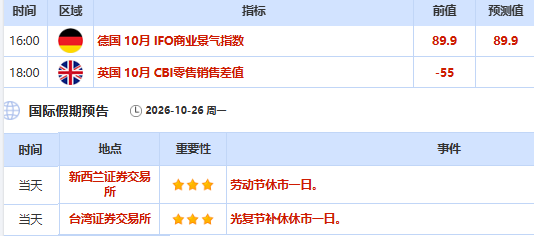
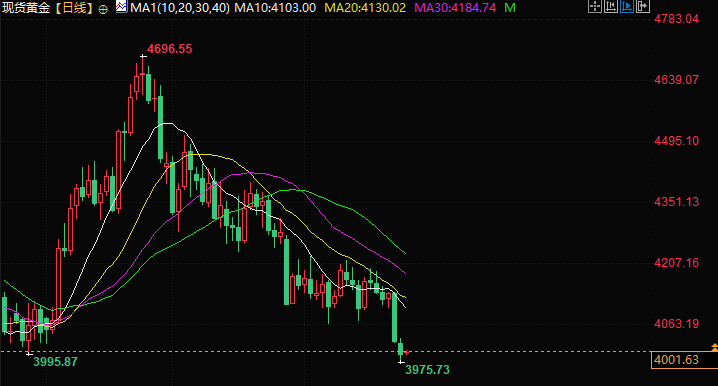 Houthi attacks on Saudi Arabia have triggered further concerns about energy supply disruptions, sending Brent crude oil to a more than five-month high. Jim Wyckoff, an analyst at the U.S. Gold Exchange, stated that rising inflation concerns suggest major central banks may be unable to ease monetary policy at the previously anticipated pace. These factors are currently unfavorable for gold and silver bulls. A sell-off in tech stocks has also led to margin calls for stock traders and investors, prompting them to sell gold and silver positions. The S&P 500 and Nasdaq both hit five-week lows on Friday. Traders generally expect the Federal Reserve to keep interest rates unchanged at its October 27-28 meeting, with the CME Group's FedWatch tool showing a 92% probability and a 78% probability of a rate hike in December. The market will focus on the U.S. PCE price index report to be released on October 29.
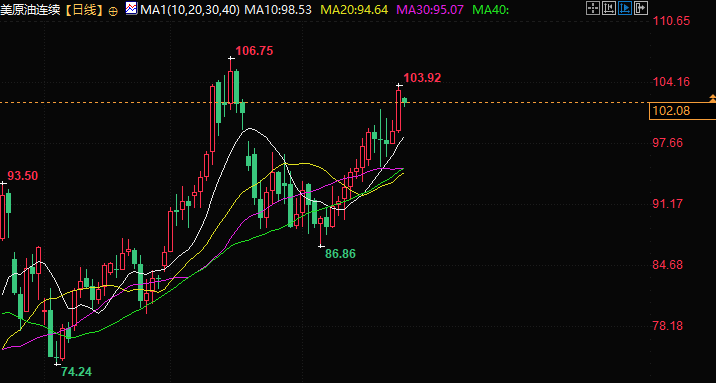 Adam Turnquist, chief cross-asset strategist at LPL Financial, said that a series of attacks launched by the Iranian-backed Houthi rebels across Saudi Arabia, including attacks on energy infrastructure, fueled market concerns about supply disruptions and drove up oil prices. The U.S. Department of Energy announced it had approved the emergency transfer of up to 400,000 barrels of crude oil from the Strategic Petroleum Reserve to address supply disruptions affecting Phillips 66's refinery in Lake Charles, Louisiana; Strategic Petroleum Reserve inventories have now fallen to their lowest level since 1982. Meanwhile, Germany's national petroleum reserve agency, EBV, issued a tender notice to sell diesel, heating oil, and crude oil from its strategic reserves. This marks Germany's first sale of reserve oil since the G7 agreed to release strategic reserves under pressure from Trump in early October. Ship tracking data shows that the first shipment of Russian diesel destined for the U.S. since the export agreement between Moscow and Washington has been completed has been loaded and is en route to New York. Media outlets obtained a memo submitted to U.S. Secretary of State Marco Rubio on October 23. The memo revealed that U.S. intelligence agencies discovered that Iran has significantly increased its plans to attack U.S. diplomats and officials in the Middle East and other regions, with several deadly assassination plots having progressed to advanced stages. U.S. officials said the intelligence was one of the reasons the State Department was withdrawing personnel from multiple U.S. embassies in the Middle East, as the U.S. was concerned about the further escalation of regional conflicts and fears that the Iranian-backed Houthi rebels in Yemen would extend their attacks from Saudi Arabia to other countries in the region.
 The euro fell 0.12% against the dollar on Friday, closing at 1.1200. The core trigger was a sell-off in French government bonds, pushing its debt risk premium to its highest level since the 2011 eurozone sovereign debt crisis. Market concerns extend beyond the budget deficit itself to escalating social unrest and questions about political effectiveness in France. The French Interior Minister's announcement of deploying 70,000 police officers, supported by special forces, indicates that the protests have spilled over from fiscal issues to concerns about social order and policy credibility. Markets are focused on the European Central Bank's (ECB) decision this week. Berenberg economists point out that the ECB cannot avoid the French issue at next week's meeting, and its response should address three aspects: First, the French crisis is impacting the eurozone's growth and inflation prospects, which the ECB must consider, reinforcing the rationale for maintaining interest rates; second, if the crisis worsens, the ECB may hint at having transmission protection tools to prevent the risk from spreading to other countries; third, the ECB will emphasize that it will only support France if Paris returns to a more sustainable fiscal policy path. The US dollar fell 0.73% against the Japanese yen last week, hitting a one-month low of 156.07 on Friday. AI-related stocks were sold off on Thursday, triggering increased safe-haven demand and leading to capital inflows into the yen. The yen's weekly strength stemmed more from declining risk appetite than from a fundamental reversal in the US-Japan interest rate differential. Due to the still high absolute level of the US dollar against the yen, the US-Japan interest rate differential and carry trades continue to limit the yen's appreciation. The probability of a rate hike by the Bank of Japan in December is 61%. These probability figures suggest that "holding steady" does not equate to a policy shift, and the market is still pricing in a tightening path. Bank of Japan Governor Kazuo Ueda will speak at the IMF Central Bank Seminar in Washington on November 6, shortly after the October 30 interest rate decision and before the December meeting. The market will be watching closely for signals regarding the pace of rate hikes this year, the yen's exchange rate, and global carry trades. Therefore, the Bank of Japan must carefully balance monetary policy normalization with financial stability.
Key Focus Today
stock market
U.S. stocks closed lower on Friday, with the Dow Jones Industrial Average falling 1.23% to 52,215.16, the S&P 500 down 0.52% to 7,623.68, and the Nasdaq Composite down 0.21% to 25,955.34, ending a volatile week driven by artificial intelligence trading. Last week, the S&P 500 fell 0.5%, the Nasdaq fell 0.7%, and the Dow rose 0.4%, marking its third consecutive week of gains. The S&P 500 technology sector rose 0.35%, but most sectors declined, with consumer staples, consumer discretionary, and financials all falling more than 1%. Reports that SpaceX is in talks with wireless carriers to enter the market as a fourth operator sent telecom stocks down, with AT&T and T-Mobile both falling nearly 8%, Verizon down 1.2%, SpaceX up 1.9%, Crown Castle up 9%, and American Tower up 4%. The energy sector rose 2.5% to a record high as Houthi attacks on Saudi Arabia in Yemen triggered supply disruption concerns, pushing Brent crude to its highest level since the end of April. In individual stocks, American Express fell 3.7%, dragging down the Dow Jones, after raising its full-year profit forecast and announcing 5% job cuts; SLB rose 7% due to better-than-expected third-quarter profits. University of Michigan data showed U.S. consumer confidence in October was near record lows, with Middle East conflict pushing up prices and weakening household prospects. Investors are turning their attention to the earnings reports of about one-third of the S&P 500 companies this week, including Alphabet, Microsoft, and Amazon, with their AI capital spending guidance being closely watched; the market expects the Federal Reserve to keep interest rates unchanged on Wednesday, but is watching for clues about whether there will be further rate hikes in December, and is increasingly focused on the U.S. midterm elections on November 3.Gold Market
Spot gold fell 3.99% last week, its worst weekly performance since June, to a three-month low of $3,975.70 per ounce, the first time it has fallen below the $4,000 mark since mid-July. Houthi attacks on Saudi Arabia have triggered further concerns about energy supply disruptions, sending Brent crude oil to a more than five-month high. Jim Wyckoff, an analyst at the U.S. Gold Exchange, stated that rising inflation concerns suggest major central banks may be unable to ease monetary policy at the previously anticipated pace. These factors are currently unfavorable for gold and silver bulls. A sell-off in tech stocks has also led to margin calls for stock traders and investors, prompting them to sell gold and silver positions. The S&P 500 and Nasdaq both hit five-week lows on Friday. Traders generally expect the Federal Reserve to keep interest rates unchanged at its October 27-28 meeting, with the CME Group's FedWatch tool showing a 92% probability and a 78% probability of a rate hike in December. The market will focus on the U.S. PCE price index report to be released on October 29.oil market
Oil prices rose last week, with WTI crude oil up 4.44% to close at $103.44 per barrel, a more than one-month high; Brent crude oil rose 6.51% to close at $116.80 per barrel, having reached a seven-month high of $117.40 per barrel last week. The core trigger for this round of oil price increases was the Houthi attacks on Saudi Arabia, particularly attacks on energy infrastructure, which sparked market concerns about further disruptions to energy supplies in the Middle East. Adam Turnquist, chief cross-asset strategist at LPL Financial, said that a series of attacks launched by the Iranian-backed Houthi rebels across Saudi Arabia, including attacks on energy infrastructure, fueled market concerns about supply disruptions and drove up oil prices. The U.S. Department of Energy announced it had approved the emergency transfer of up to 400,000 barrels of crude oil from the Strategic Petroleum Reserve to address supply disruptions affecting Phillips 66's refinery in Lake Charles, Louisiana; Strategic Petroleum Reserve inventories have now fallen to their lowest level since 1982. Meanwhile, Germany's national petroleum reserve agency, EBV, issued a tender notice to sell diesel, heating oil, and crude oil from its strategic reserves. This marks Germany's first sale of reserve oil since the G7 agreed to release strategic reserves under pressure from Trump in early October. Ship tracking data shows that the first shipment of Russian diesel destined for the U.S. since the export agreement between Moscow and Washington has been completed has been loaded and is en route to New York. Media outlets obtained a memo submitted to U.S. Secretary of State Marco Rubio on October 23. The memo revealed that U.S. intelligence agencies discovered that Iran has significantly increased its plans to attack U.S. diplomats and officials in the Middle East and other regions, with several deadly assassination plots having progressed to advanced stages. U.S. officials said the intelligence was one of the reasons the State Department was withdrawing personnel from multiple U.S. embassies in the Middle East, as the U.S. was concerned about the further escalation of regional conflicts and fears that the Iranian-backed Houthi rebels in Yemen would extend their attacks from Saudi Arabia to other countries in the region.Foreign exchange market
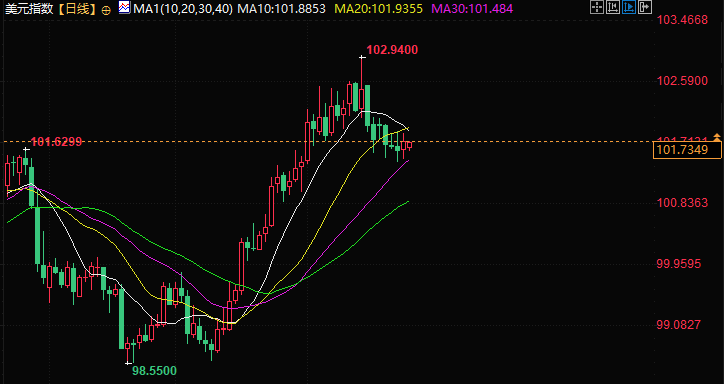
The dollar index rose 0.12% on Friday to close at 101.75. The dollar index remained relatively stable last week. With the midterm elections approaching, the risk of escalating geopolitical tensions in the Middle East has increased, and market concerns about inflation have resurfaced. Bets on a Fed rate hike have weakened, and the market expects the Fed to keep interest rates unchanged this week. Federal funds rate futures traders have reduced their bets on a Fed rate hike in December, but still believe the probability is 81%. The euro fell 0.12% against the dollar on Friday, closing at 1.1200. The core trigger was a sell-off in French government bonds, pushing its debt risk premium to its highest level since the 2011 eurozone sovereign debt crisis. Market concerns extend beyond the budget deficit itself to escalating social unrest and questions about political effectiveness in France. The French Interior Minister's announcement of deploying 70,000 police officers, supported by special forces, indicates that the protests have spilled over from fiscal issues to concerns about social order and policy credibility. Markets are focused on the European Central Bank's (ECB) decision this week. Berenberg economists point out that the ECB cannot avoid the French issue at next week's meeting, and its response should address three aspects: First, the French crisis is impacting the eurozone's growth and inflation prospects, which the ECB must consider, reinforcing the rationale for maintaining interest rates; second, if the crisis worsens, the ECB may hint at having transmission protection tools to prevent the risk from spreading to other countries; third, the ECB will emphasize that it will only support France if Paris returns to a more sustainable fiscal policy path. The US dollar fell 0.73% against the Japanese yen last week, hitting a one-month low of 156.07 on Friday. AI-related stocks were sold off on Thursday, triggering increased safe-haven demand and leading to capital inflows into the yen. The yen's weekly strength stemmed more from declining risk appetite than from a fundamental reversal in the US-Japan interest rate differential. Due to the still high absolute level of the US dollar against the yen, the US-Japan interest rate differential and carry trades continue to limit the yen's appreciation. The probability of a rate hike by the Bank of Japan in December is 61%. These probability figures suggest that "holding steady" does not equate to a policy shift, and the market is still pricing in a tightening path. Bank of Japan Governor Kazuo Ueda will speak at the IMF Central Bank Seminar in Washington on November 6, shortly after the October 30 interest rate decision and before the December meeting. The market will be watching closely for signals regarding the pace of rate hikes this year, the yen's exchange rate, and global carry trades. Therefore, the Bank of Japan must carefully balance monetary policy normalization with financial stability.International News
The probability of the Federal Reserve raising interest rates this week is 10%, and the probability of at least one more rate hike this year is 76.2% . According to CME's "FedWatch," the probability of the Fed keeping interest rates unchanged this week is 90%, and the probability of a cumulative 25 basis point rate hike is 10%. The probability of the Fed keeping interest rates unchanged by December is 23.8%, the probability of a cumulative 25 basis point rate hike is 68.9%, and the probability of a cumulative 50 basis point rate hike is 7.3%. The Russian Deputy Prime Minister stated that Russia is ready to supply any amount of diesel to the United States. According to a report on Sunday by Russia's state television channel "Vesti," Russian Deputy Prime Minister Novak stated that Russia is ready to supply any amount of diesel to the United States. In an interview, he said, "We can supply everything within the total volume of our planned exports, as long as our partners need it." Novak stated last Friday that three tankers carrying Russian diesel were en route to North America. Trump Says Another Attack on Iran Possible On October 24, local time, US President Trump, while voting in the midterm elections in West Palm Beach, Florida, was asked by reporters whether another attack on Iran was possible. Trump responded that he would not disclose such information to the media, but he also stated that the US could take action against Iran at any time, or an agreement could be reached. Trump also said that he could have "settled things and walked away" a year ago with B-2 bombers, but he believes Iran will eventually find a way to develop a nuclear weapon, therefore a permanent agreement with Iran is necessary. (CCTV) Concerns Over Escalating Houthi Attacks in Yemen Lead to US Reduction of Embassy Staff in Four Middle Eastern Countries On October 23, local time, the US State Department announced that due to concerns that the Houthi rebels in Yemen might escalate their rocket, missile, and drone attacks in the Middle East, the US would reduce the staff size of its embassies in Jordan, Lebanon, Qatar, and the United Arab Emirates. The State Department stated that this personnel adjustment does not involve a mandatory evacuation order. The US embassies in these four countries had already entered a state of "restricted operation," with corresponding reductions in staff size; the embassies will remain open after this adjustment. Earlier this week, the United States ordered non-essential diplomatic personnel and their families at its embassy in Saudi Arabia to leave the country. (CCTV News) Zelensky: Ukraine, the US, and Russia plan to hold trilateral technical-level working talks in November On October 25 local time, Ukrainian President Volodymyr Zelensky confirmed that the United States, Russia, and Ukraine plan to hold trilateral technical-level working talks in November. The parties are currently discussing the meeting location, with candidate locations including Abu Dhabi in the UAE, other parts of the Middle East, and European cities. Zelensky stated that this meeting is a working-level consultation aimed at creating conditions for a subsequent higher-level dialogue between the leaders, prioritizing discussions on energy facilities and a ceasefire in the Black Sea region. Russian Presidential Aide Ushakov stated in a television program broadcast on October 25 local time that Russia is willing to resume trilateral negotiations with the United States and Ukraine after November 4. (CCTV News) Netanyahu Claims Iran and its Allies May Attack to Interfere in Israeli Parliament Elections Israeli Prime Minister Benjamin Netanyahu stated on Sunday that intelligence indicates Iran and its armed allies may launch attacks to disrupt the parliamentary elections scheduled for Tuesday. He also warned that Israel would respond with a disproportionate military force. Speaking at an Arrow missile defense site, Netanyahu said the Israel Defense Forces are prepared for both offensive and defensive operations. “Don’t test us, you will suffer a disproportionate blow,” Netanyahu warned. “We are far stronger than you think.” Iranian Parliament Speaker Calls for Reduced Natural Gas Consumption Iranian Parliament Speaker Qassem Ghalibaf called on Sunday for an action to reduce natural gas consumption by at least 10%. Officials anticipate gas shortages as winter approaches. Although Iran is a major natural gas producer, it has long faced shortages—natural gas is a key energy source for heating systems. The conflict between Iran and the United States and Israel since February has further exacerbated this shortage. According to Tehran, during the most intense fighting lasting nearly 40 days, the two countries attacked key Iranian infrastructure, including natural gas refining facilities. Iranian winters often see temperatures drop below freezing, especially in the north. In a video released by Iranian media, Ghalibaf stated, “To get through the coming winter, the entire nation must work together… to reduce natural gas consumption by at least 10%.” He added, “Anyone who saves natural gas—no matter how much—will immediately receive a corresponding financial reward in their bank account, so that everyone can truly feel the impact of this saving on their household budget.” More than 1,300 people were arrested in a new round of demonstrations in France . On October 25th, local time, data released by the French Ministry of the Interior showed that 289 demonstrations were held across France on the 24th, with approximately 410,000 participants, including about 110,000 in Paris. A total of 1,314 people were arrested during the demonstrations, and 53 police officers and gendarmes were injured. According to data released by the French Ministry of the Interior, the number of demonstrators on the 24th decreased from 550,000 to 410,000 compared to the previous round of nationwide demonstrations on the 17th, and the number of arrests decreased from 2,628 to 1,314. (CCTV News) Iranian lawmaker warns: Allowing the US to use its territory and airspace to attack Iran will make it a "legitimate military target ." An Iranian lawmaker stated on Sunday that any country that allows the US to use its territory or airspace to attack Iran will become a "legitimate military target." Ruhollah Mousavi Bidli stated, "The Islamic Republic of Iran is no longer restrained and is showing all parties that its core interests will never be compromised." He warned regional countries not to assist the US and stated that the prerequisite for security in the Persian Gulf region is the withdrawal of the US and Israel from the region, after which regional countries will independently assume their own security and defense responsibilities.- Risk Warning and Disclaimer
- The market involves risk, and trading may not be suitable for all investors. This article is for reference only and does not constitute personal investment advice, nor does it take into account certain users’ specific investment objectives, financial situation, or other needs. Any investment decisions made based on this information are at your own risk.