October 28th Financial Breakfast: Gold prices found support ahead of the Fed meeting, positive signals emerged from Middle East diplomacy, and the risk premium for crude oil partially declined.
2026-10-28 07:32:23
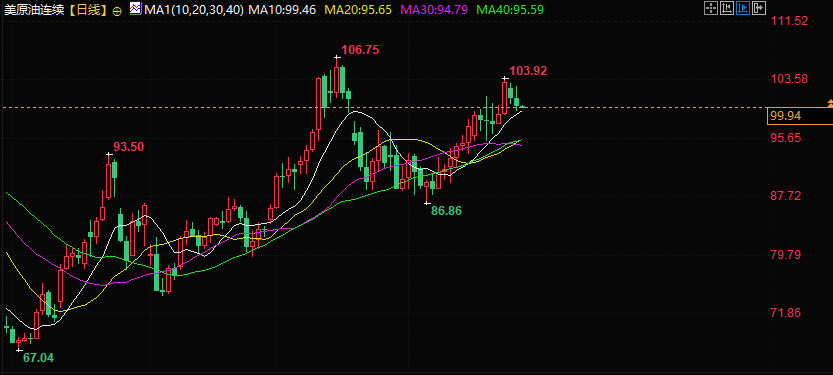
On Wednesday (October 28, Beijing time) in early Asian trading, spot gold was trading around $4,060 per ounce. Weaker oil prices eased inflation concerns and may have softened the Fed's hawkish stance, thus supporting gold. Oil prices fell on Tuesday as positive news in Middle East diplomacy pushed down some risk premiums, but renewed attacks by the Houthis on Saudi Arabia left the peace prospects uncertain. US crude oil is currently trading around $99.95 per barrel. 
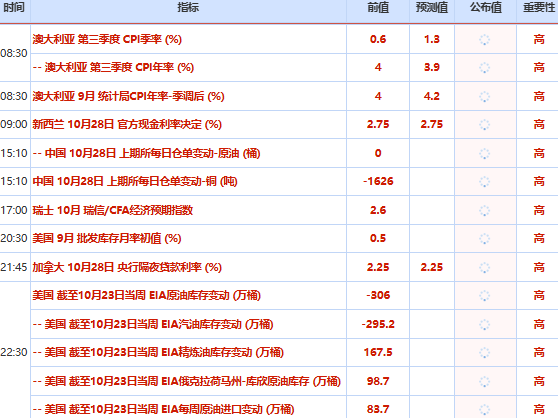
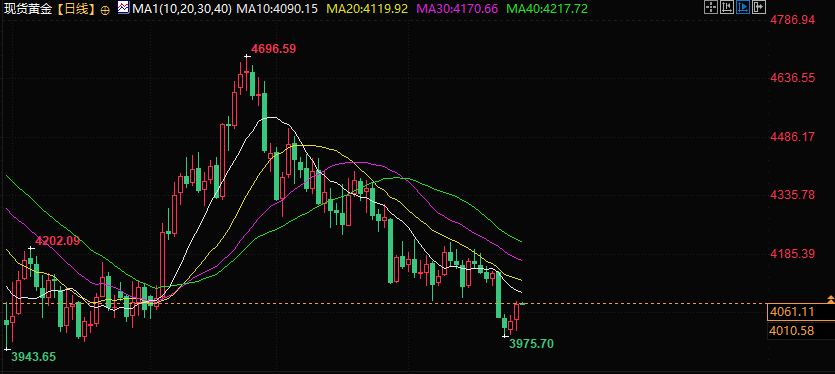 Peter Grant, Vice President and Senior Precious Metals Strategist at Zaner Metals, stated that weaker oil prices eased inflation concerns and could soften the Federal Reserve's hawkish stance, thus supporting gold. Currently, the market is primarily driven by Middle East headlines and trading based on negotiations. The focus has shifted to Middle East peace talks, but escalating conflict between the Houthis and Saudi Arabia, along with the possibility of a new round of attacks by the US and Israel, has kept oil prices hovering near multi-month highs. Jim Wyckoff, an analyst at American Gold Exchange, stated that continued rises in crude oil prices would trigger thorny inflation and force central banks to tighten monetary policy, which would be bearish for gold. Federal Reserve policymakers have hinted that they will not raise short-term borrowing costs again this week, but inflation concerns have led investors to believe that the pause in rate hikes will not last long, and rising interest rates would increase the opportunity cost of holding non-yielding gold. CME FedWatch shows traders expect an 83% probability of a US rate hike in December, and investors are also awaiting the US PCE data to be released on Thursday. Analysts have lowered their 2026 gold price forecasts for the second consecutive quarter, but still expect gold prices to rebound in 2027. Spot silver rose 0.81% on Tuesday to close at $54.38 per ounce, after hitting a near one-year low of $52.64 per ounce during the session. Platinum rose 0.3% to $1,530.75, after falling to its lowest level since the end of November 2025 during the session. Palladium fell sharply by 2.1% to $1,027.67, after falling to its lowest level since June 2025 during the session.
 Iranian National Security Council Chairman Rezaei met with Supreme Leader Khamenei on Tuesday, following talks the previous day with representatives from Saudi Arabia, Turkey, and Pakistan. Iranian state media reported that Khamenei emphasized the need to safeguard Iran's interests and adhere to its conditions for ending the war. The four countries agreed to continue consultations to strengthen peace and security cooperation, but renewed attacks on Saudi Arabia by pro-Iranian Houthi rebels in Yemen leave the peace prospects uncertain. Gelber & Associates stated that while positive diplomatic news has pushed down some risk premiums, continued Houthi attacks on Saudi Arabia and the expanding military presence in the Gulf region continue to pose supply risks. Washington Institute data shows that October was the month with the most attacks on merchant ships in the Strait of Hormuz and surrounding waters; UBS stated that while ship traffic in the Strait of Hormuz has increased, attacks on ships have risen simultaneously, and the risk could further escalate if US naval support weakens. Brent crude rose above $117 per barrel last week, its highest level since April, due to a series of Iranian attacks on oil tankers in the Strait of Hormuz. UBS expects Brent crude to remain around $110 a barrel by the end of the year, higher than its previous forecast of $100. SEB analyst Bjarne Schieldrop said the market generally believes that crude oil prices already include a considerable risk premium, reflecting the risk of a possible attack on Iran by the United States and Israel in the coming weeks.
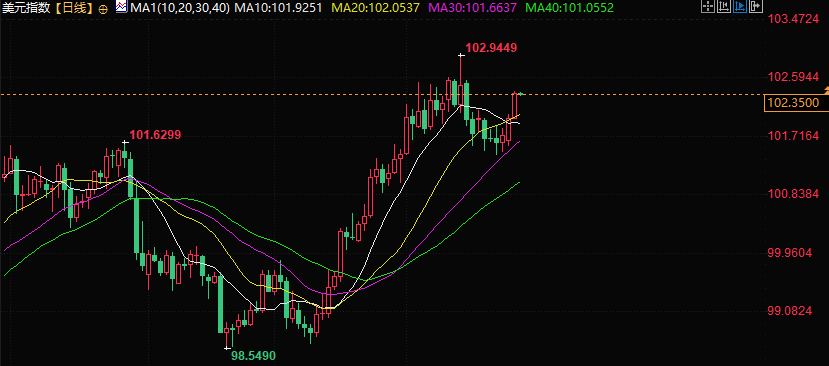 Convera FX and macro strategist Kevin Ford stated that the dollar rebounded ahead of the Fed meeting, and market concerns surrounding the AI sector eased slightly last week. Last week, the dollar was pressured by a spread of stock market sell-offs, high oil prices, and European fiscal concerns stemming from France's fiscal situation. These market movements somewhat reduced the pressure on the Fed to raise interest rates further. The Fed will announce its latest policy decision on Wednesday, with the market expecting it to remain unchanged. Bank of America analyst Mark Cabana stated that the risks to the dollar are skewed to the downside if interest rates remain unchanged. Hawkish rhetoric would have limited impact on the dollar overall, while a dovish stance could lead to a significant weakening of the dollar. The European Central Bank will announce its interest rate decision on Thursday, followed by the Bank of Japan on Friday. The market widely expects all three central banks to maintain their rates, and investors will focus on the signals policymakers will release regarding the future outlook. The euro fell 0.44% against the dollar on Tuesday, closing at 1.1124. Affected by high energy costs, volatility in the French bond market, and market concerns about France's fiscal situation, the euro has fallen 1.70% against the dollar since October, poised to become the worst-performing developed market currency this month. The euro fell slightly after the European Central Bank released its quarterly Bank Loan Survey, which showed that the effects of the ECB's previous interest rate hikes were beginning to emerge. If the trend continues, it could alleviate some of the pressure on the ECB to maintain its tightening stance next year. The dollar rose 0.29% against the yen, closing at 157.94. Japanese Finance Minister Satsuki Katayama stated that the Japanese government is prepared to take decisive action in the foreign exchange market, reiterating its willingness to support the yen. The Reserve Bank of New Zealand and the Bank of Canada will also announce their monetary policy decisions on Wednesday, with the market expecting both central banks to raise interest rates.
Key Focus Today
stock market
U.S. stocks closed higher on Tuesday, with the Dow Jones Industrial Average rising 0.03% to 52,377.57, the S&P 500 gaining 0.60% to 7,722.60, and the Nasdaq Composite climbing 1.18% to 26,477.81. The gains were driven by a rebound in AI-related stocks and generally positive corporate earnings reports, while the Federal Reserve held its penultimate monetary policy meeting of the year. The market widely expects the Fed to keep the target range for the federal funds rate unchanged at 3.75%-4.00%, and anticipates the second rate hike of the year to be postponed to the December meeting. Technology stocks led the gains, with details of Anthropic's upcoming IPO sparking discussion and driving the Philadelphia Semiconductor Index up for the third consecutive trading day. Despite rising borrowing costs putting pressure on AI investment themes and the index falling more than 20% from its record closing high on June 22, it is still up 62.1% year-to-date, outperforming the S&P 500's 12.8%. Meta expanded its largest-ever equity financing plan to $97.5 billion, with its share price falling 1.6%, supported by strong AI spending views fueled by increased new orders for computer and peripheral equipment. Nearly half of the S&P 500 components have reported third-quarter results, with 83% exceeding expectations. Boeing plunged 10.7% due to a larger-than-expected loss, while UPS rose 5.8% after raising its full-year revenue and profit forecasts. Microsoft and Alphabet are expected to report results on Wednesday, and Amazon will release its earnings report on Thursday.Gold Market
Spot gold rose 1.07% on Tuesday to close at $4,060.13 per ounce, as the market awaited the Federal Reserve policy meeting for signals on the future direction of U.S. interest rates. Peter Grant, Vice President and Senior Precious Metals Strategist at Zaner Metals, stated that weaker oil prices eased inflation concerns and could soften the Federal Reserve's hawkish stance, thus supporting gold. Currently, the market is primarily driven by Middle East headlines and trading based on negotiations. The focus has shifted to Middle East peace talks, but escalating conflict between the Houthis and Saudi Arabia, along with the possibility of a new round of attacks by the US and Israel, has kept oil prices hovering near multi-month highs. Jim Wyckoff, an analyst at American Gold Exchange, stated that continued rises in crude oil prices would trigger thorny inflation and force central banks to tighten monetary policy, which would be bearish for gold. Federal Reserve policymakers have hinted that they will not raise short-term borrowing costs again this week, but inflation concerns have led investors to believe that the pause in rate hikes will not last long, and rising interest rates would increase the opportunity cost of holding non-yielding gold. CME FedWatch shows traders expect an 83% probability of a US rate hike in December, and investors are also awaiting the US PCE data to be released on Thursday. Analysts have lowered their 2026 gold price forecasts for the second consecutive quarter, but still expect gold prices to rebound in 2027. Spot silver rose 0.81% on Tuesday to close at $54.38 per ounce, after hitting a near one-year low of $52.64 per ounce during the session. Platinum rose 0.3% to $1,530.75, after falling to its lowest level since the end of November 2025 during the session. Palladium fell sharply by 2.1% to $1,027.67, after falling to its lowest level since June 2025 during the session.oil market
Oil prices fell on Tuesday, with WTI crude down 1.04% to settle at $100.20 a barrel and Brent crude down 0.82% to settle at $114.22 a barrel, but still hovering near six-month highs, as shipping in the Middle East continued to be disrupted and an agreement to end the war with Iran remained a distant prospect. Iranian National Security Council Chairman Rezaei met with Supreme Leader Khamenei on Tuesday, following talks the previous day with representatives from Saudi Arabia, Turkey, and Pakistan. Iranian state media reported that Khamenei emphasized the need to safeguard Iran's interests and adhere to its conditions for ending the war. The four countries agreed to continue consultations to strengthen peace and security cooperation, but renewed attacks on Saudi Arabia by pro-Iranian Houthi rebels in Yemen leave the peace prospects uncertain. Gelber & Associates stated that while positive diplomatic news has pushed down some risk premiums, continued Houthi attacks on Saudi Arabia and the expanding military presence in the Gulf region continue to pose supply risks. Washington Institute data shows that October was the month with the most attacks on merchant ships in the Strait of Hormuz and surrounding waters; UBS stated that while ship traffic in the Strait of Hormuz has increased, attacks on ships have risen simultaneously, and the risk could further escalate if US naval support weakens. Brent crude rose above $117 per barrel last week, its highest level since April, due to a series of Iranian attacks on oil tankers in the Strait of Hormuz. UBS expects Brent crude to remain around $110 a barrel by the end of the year, higher than its previous forecast of $100. SEB analyst Bjarne Schieldrop said the market generally believes that crude oil prices already include a considerable risk premium, reflecting the risk of a possible attack on Iran by the United States and Israel in the coming weeks.Foreign exchange market
The dollar index rose 0.36% on Tuesday to close at 102.37, as markets adjusted positions ahead of policy decisions from several major central banks this week. Investors sought new clues about the economic outlook and interest rate path. The dollar has stabilized after a sell-off in AI stocks last week that put pressure on it. Convera FX and macro strategist Kevin Ford stated that the dollar rebounded ahead of the Fed meeting, and market concerns surrounding the AI sector eased slightly last week. Last week, the dollar was pressured by a spread of stock market sell-offs, high oil prices, and European fiscal concerns stemming from France's fiscal situation. These market movements somewhat reduced the pressure on the Fed to raise interest rates further. The Fed will announce its latest policy decision on Wednesday, with the market expecting it to remain unchanged. Bank of America analyst Mark Cabana stated that the risks to the dollar are skewed to the downside if interest rates remain unchanged. Hawkish rhetoric would have limited impact on the dollar overall, while a dovish stance could lead to a significant weakening of the dollar. The European Central Bank will announce its interest rate decision on Thursday, followed by the Bank of Japan on Friday. The market widely expects all three central banks to maintain their rates, and investors will focus on the signals policymakers will release regarding the future outlook. The euro fell 0.44% against the dollar on Tuesday, closing at 1.1124. Affected by high energy costs, volatility in the French bond market, and market concerns about France's fiscal situation, the euro has fallen 1.70% against the dollar since October, poised to become the worst-performing developed market currency this month. The euro fell slightly after the European Central Bank released its quarterly Bank Loan Survey, which showed that the effects of the ECB's previous interest rate hikes were beginning to emerge. If the trend continues, it could alleviate some of the pressure on the ECB to maintain its tightening stance next year. The dollar rose 0.29% against the yen, closing at 157.94. Japanese Finance Minister Satsuki Katayama stated that the Japanese government is prepared to take decisive action in the foreign exchange market, reiterating its willingness to support the yen. The Reserve Bank of New Zealand and the Bank of Canada will also announce their monetary policy decisions on Wednesday, with the market expecting both central banks to raise interest rates.International News
The Iran war is putting pressure on US President Trump, with some Republicans also expressing concern. A Fox News poll shows Trump's approval rating has dropped from 44% before the war to 36%. 85% of voters are worried about inflation, 83% about gasoline prices, and 75% about the war; Republicans are struggling to retain control of Congress, and pressure continues to rise. Exit polls show Netanyahu's camp failed to secure a majority of seats in parliament . On the evening of the 27th local time, exit polls for the Israeli parliamentary elections showed that Prime Minister Netanyahu's camp failed to secure a majority of seats in parliament. Voting in Israel's 26th parliamentary elections ended at 10 PM that day (4 AM Beijing time on the 28th). According to data released by the Israeli Central Election Commission, as of 8 PM that evening, the voter turnout had reached 74.3%, higher than the 66.3% at the same time in the 2022 general election. The Central Election Commission stated that this is the highest national voter turnout recorded for this period since 1988. The final voter turnout is expected to continue to rise. (CCTV News) Ukrainian Foreign Minister: Ukraine is Ready to Participate in Trilateral Talks with the US and Russia Ukrainian Foreign Minister Sergei Sebiga stated on the 27th that Ukraine is ready to participate in the trilateral talks between Ukraine, the United States, and Russia in the United Arab Emirates and will utilize every opportunity to promote peace. (Xinhua News Agency) US Commodity Futures Trading Commission Plans to Increase "Committee on Commitment of Traders" Report to Twice a Week The US Commodity Futures Trading Commission (CFTC) is working to increase the frequency of its closely watched Commitment of Traders (COT) report to twice a week by the end of this year. Currently released every Friday, the report details buying and selling in the commodity market and distinguishes between hedge funds and other asset management institutions and commercial trading participants. Producers rely on this report to assist in making hedging decisions, while speculative traders use the data to observe changes in market positions and whether related bets have become overly concentrated. CFTC Chairman Michael Seliger stated last week at an agricultural commodities futures conference in Kansas that the plan to increase the report's frequency stems from demand from the agricultural sector. French electricity prices surge to four-year high due to a sharp drop in wind power output Affected by declining wind power output and reduced nuclear power generation, France has been forced to rely more heavily on expensive natural gas power plants, causing electricity prices to soar to their highest level since the worst of the 2022 energy crisis. Auction results from the European electricity exchange Epix Spot showed that the daytime electricity price closed at €253 per megawatt-hour on Wednesday. Data from grid operator RTE predicts that France's average wind power output on Wednesday was less than 3 gigawatts, less than half the average level so far in October. This price surge foreshadows similar high prices that Europe may frequently face this winter when renewable energy generation weakens. The decline in the availability of French nuclear power units, a mainstay of the European power system, further exacerbates the supply shortage. The country's 57 nuclear reactors operated at 64% capacity on Tuesday, significantly lower than the same period last year.Domestic News
China Development Bank (CDB) Completes 365 Billion Yuan Disbursement of New Policy-Based Financial Instruments According to Xinhua News Agency, the China Development Bank (CDB), resolutely implementing the decisions and deployments of the CPC Central Committee and the State Council, and under the guidance of the National Development and Reform Commission, the Ministry of Finance, the People's Bank of China, and the State Financial Regulatory Commission, has solidly improved the quality and efficiency of the disbursement of new policy-based financial instruments. On October 27, it completed the disbursement of 365 billion yuan, all of which was used to supplement project capital, involving a total investment of 5.5 trillion yuan. This effectively played its role as a leading bank, contributing to the sustained and positive development of the economy. Export-Import Bank of China Completes 2026 Disbursement of New Policy-Based Financial Instruments The Export-Import Bank of China (EximBank) resolutely implemented the decisions and deployments of the CPC Central Committee and the State Council, adhered to its policy-based financial function, and completed the 2026 disbursement of new policy-based financial instruments to a high standard and with high quality. This provides strong support for stabilizing investment and expectations in China and promoting new economic drivers and a better economic structure. As of October 27, the EximBank's new policy-based financial instruments have supported over 500 projects, disbursing 120 billion yuan and driving total investment of over 1.7 trillion yuan, demonstrating a significant leverage effect. (Xinhua News Agency)- Risk Warning and Disclaimer
- The market involves risk, and trading may not be suitable for all investors. This article is for reference only and does not constitute personal investment advice, nor does it take into account certain users’ specific investment objectives, financial situation, or other needs. Any investment decisions made based on this information are at your own risk.