Institutions predict that gold prices will test $3,900 by the end of the year, while silver will fall to the $50-$53 range, with both expected to stabilize early next year.
2026-10-29 12:16:23
Spot gold prices are still hovering above the key support level of $4,000 per ounce, but one investment firm predicts that gold prices will go lower by the end of the year as the Federal Reserve maintains its tight policy stance; silver faces greater downside risks, with weakening industrial demand and high interest rates weighing on its outlook.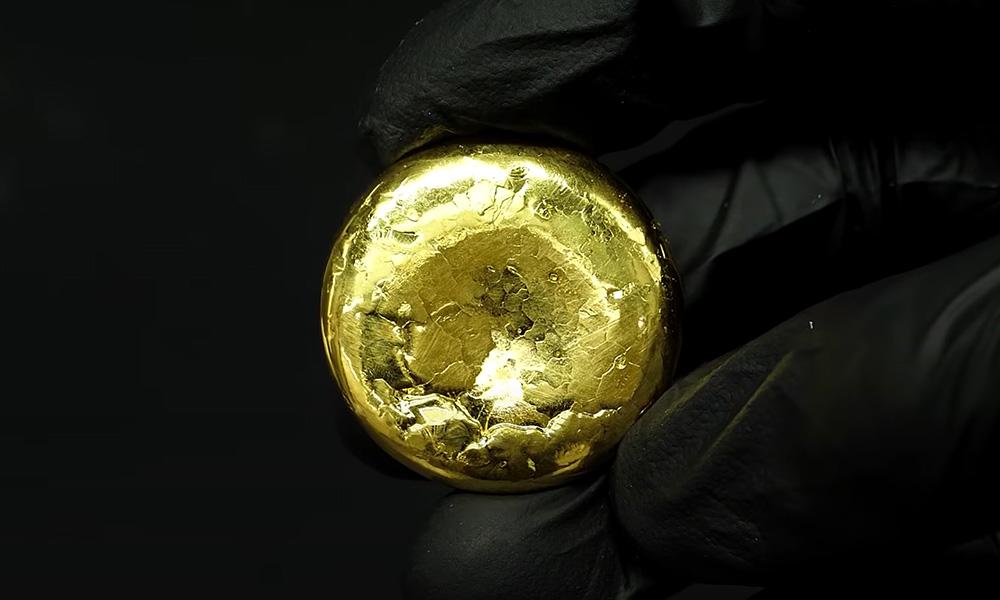
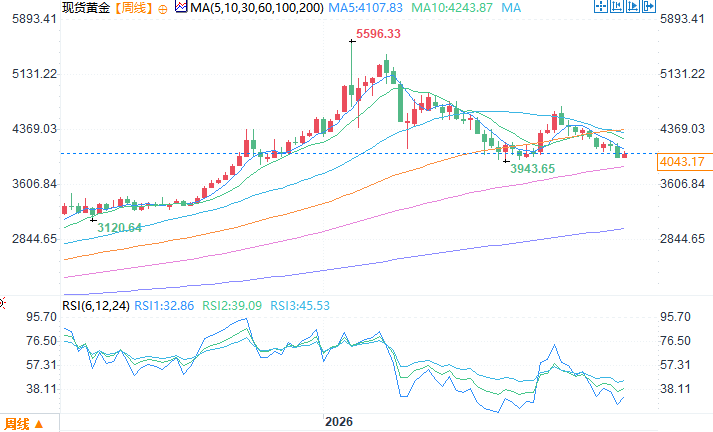 Spot gold weekly chart source: FX678. As of 12:15 PM Beijing time on October 29th, spot gold was trading at $4036.85 per ounce.
Gold prices may fall by the end of the year, putting even more pressure on silver.
In its latest quarterly metals report released Wednesday (October 28), Sucden Financial predicts that gold prices will test support around $3,900 per ounce before the Federal Reserve's December monetary policy meeting. Silver prices, however, are expected to fall to the $50-$53 per ounce range due to continued monetary tightening, with the market viewing a near 80% probability of a Fed rate hike in December. Despite the bearish short-term outlook, Sucden expects both precious metals to stabilize in early 2027, by which time the Fed will be nearing the end of its tightening cycle. Gold prices are expected to rebound to $4,200-$4,300 by mid-January next year, while silver prices may rebound to $57-$60.The conflict in Iran has driven up oil prices, casting a shadow of inflation over precious metals.
Analysts point out that the ongoing conflict in Iran is creating a challenging environment for precious metals, with high energy prices fueling inflationary pressures and keeping US Treasury yields and the dollar high. Gold has not benefited from traditional safe-haven demand; instead, it faces difficulties as investors focus on the inflationary consequences of the Middle East conflict and its impact on US monetary policy. Analysts wrote in a report, "In the last quarter of 2026, commodity markets will again face macroeconomic pressures, with the Iranian conflict pushing up energy costs and further complicating the monetary policy outlook." Sukerton noted that Brent crude oil prices have broken through $110 per barrel, and the inflationary shock from the conflict has become a key factor dominating precious metal price movements. The persistently high energy prices may also force the Federal Reserve to further tighten policy.The coexistence of economic resilience and slowing employment puts precious metals in an awkward position.
This outlook comes as the U.S. economy remains resilient despite initial signs of weakness in the labor market. Sukerton estimates that third-quarter economic growth will be around 3.5%, supported by investment in artificial intelligence and relatively healthy consumer spending. Meanwhile, overall inflation rose to 3.7% in September, with producer prices recording their largest monthly increase since 2022; nonfarm payrolls increased by only 29,000 in September, with hiring momentum stalling, although the unemployment rate remained relatively low at 4.2%. For gold and silver, the coexistence of slowing employment and high inflation creates a challenging environment: while weaker economic activity typically favors expectations of interest rate cuts, energy-driven inflation is limiting the Federal Reserve's ability to ease monetary conditions.Central banks and ETFs continue to buy gold, building a solid bottom.
Despite short-term headwinds, Sukerton stated that gold continues to benefit from relatively strong underlying investment demand, particularly from central banks and exchange-traded funds (ETFs). Analysts pointed out that central banks are estimated to have purchased approximately 289 tons of gold in the second quarter, including unreported transactions, with official sector demand showing a significant increase in recent months. "Official sector demand remains the clearest fundamental bottom for gold." China remains the largest buyer, with the People's Bank of China adding 23 tons of gold in September, bringing its year-to-date increase to 103 tons, extending its gold purchases to 23 months. Poland is also an important source of demand, but its pace of purchases may slow as its reserves approach the 700-ton target. Global gold ETF holdings reached a record 101.55 million ounces in mid-October, remaining around 101 million ounces even as prices retreated. However, speculative investors are becoming increasingly cautious, with managed net long positions falling to a four-month low. Analysts say this divergence indicates that long-term investors continue to increase their holdings during periods of price weakness, while short-term traders are unwilling to establish significant long positions. However, Sukerton cautioned that buying from central banks and ETFs would be insufficient to counter the impact of a renewed hawkish pricing in monetary policy. For gold prices to continue recovering to $4,300, a more significant decline in oil prices, US Treasury yields, and the US dollar is likely required.Weak industrial demand complicates the outlook for silver.
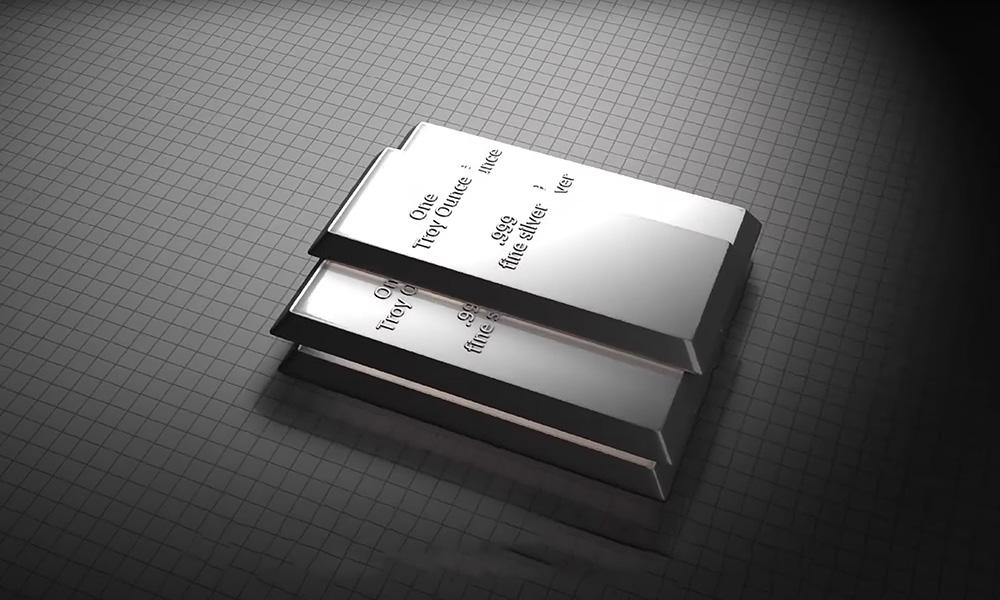
While gold benefits from central bank buying, Sukerton stated that silver faces a more challenging outlook due to its greater sensitivity to interest rates and weakening industrial consumption. Silver prices have fallen sharply from a record high of $121.62 per ounce in January, trading around $54 in the last week of October, about 55% lower than its peak. In the week ending October 23, silver futures fell nearly 6%, while gold fell about 4%, highlighting silver's greater sensitivity to changes in monetary policy expectations, causing the gold-silver ratio to widen to approximately 74. Citing data from the Silver Institute's "2026 World Silver Survey," analysts predict that industrial silver processing demand will decline by 3% this year to 639.6 million ounces, accounting for about 57% of total silver demand. The solar energy sector is expected to see the largest decline, with silver consumption projected to fall by 19% to approximately 151 million ounces as manufacturers reduce silver usage in photovoltaic cells and increasingly adopt copper-based technologies. Although demand from electric vehicles, the power grid, and data centers continues to expand, these sectors are unlikely to fully offset the impact of declining solar energy demand and weaker demand for jewelry and silverware. The global silver market is expected to record its sixth consecutive year of supply deficit, with demand exceeding supply by approximately 46 million ounces. However, this relatively modest deficit is unlikely to offset the short-term impact of restrictive monetary policies. Silver-backed ETFs, after net selling this year, hold approximately 805.8 million ounces, contrasting sharply with the continued increase in gold holdings. Declining COMEX registered inventories and limited freely tradable silver in London may lead to renewed physical tightening in the market. Analysts suggest that relatively light speculative positions may create conditions for short covering and a rebound, but ultimately, similar to gold, a sustained recovery in silver prices depends on whether investors are convinced that central banks have completed this tightening cycle.Conclusion
On one hand, there's the solid floor built by central bank buying sprees; on the other, there's the heavy pressure of energy inflation and high interest rates. Gold prices are hovering around the $4,000 mark, while silver is dragged down even further by the chill in industrial demand. Every dip in precious metals prices at the end of the year is a test of how far the Federal Reserve's tightening path can go. Spot gold weekly chart source: FX678. As of 12:15 PM Beijing time on October 29th, spot gold was trading at $4036.85 per ounce.
- Risk Warning and Disclaimer
- The market involves risk, and trading may not be suitable for all investors. This article is for reference only and does not constitute personal investment advice, nor does it take into account certain users’ specific investment objectives, financial situation, or other needs. Any investment decisions made based on this information are at your own risk.