Why did the Australian dollar weaken after the Reserve Bank of Australia raised interest rates to an 18-year high?
2026-11-03 13:34:27
The Australian dollar edged lower against the US dollar during Asian trading hours on Tuesday (November 3), currently trading around 0.6980, poised for a second consecutive decline. Why did the Australian dollar weaken after the interest rate hike? The answer lies in the voting results and wording adjustments of the policy decision. The Reserve Bank of Australia (RBA) raised the overnight cash rate to its highest level in 18 years on Tuesday, marking its fifth rate hike this year. However, the vote was more close than many expected, with three of the nine members advocating for maintaining the rate. At the close of its November policy meeting, the RBA's Monetary Policy Committee raised the cash rate by 25 basis points to 4.85%, stating it would continue to take measures it deems necessary to bring inflation to its target level. However, the bank removed the statement about "further increases in the cash rate if necessary." As a result, the Australian dollar fell by about 0.3% to US$0.6980, and Australian three-year government bond futures fell 3 points to 95.14. Given the divided vote, the market widely expects the RBA to hold rates steady in December. 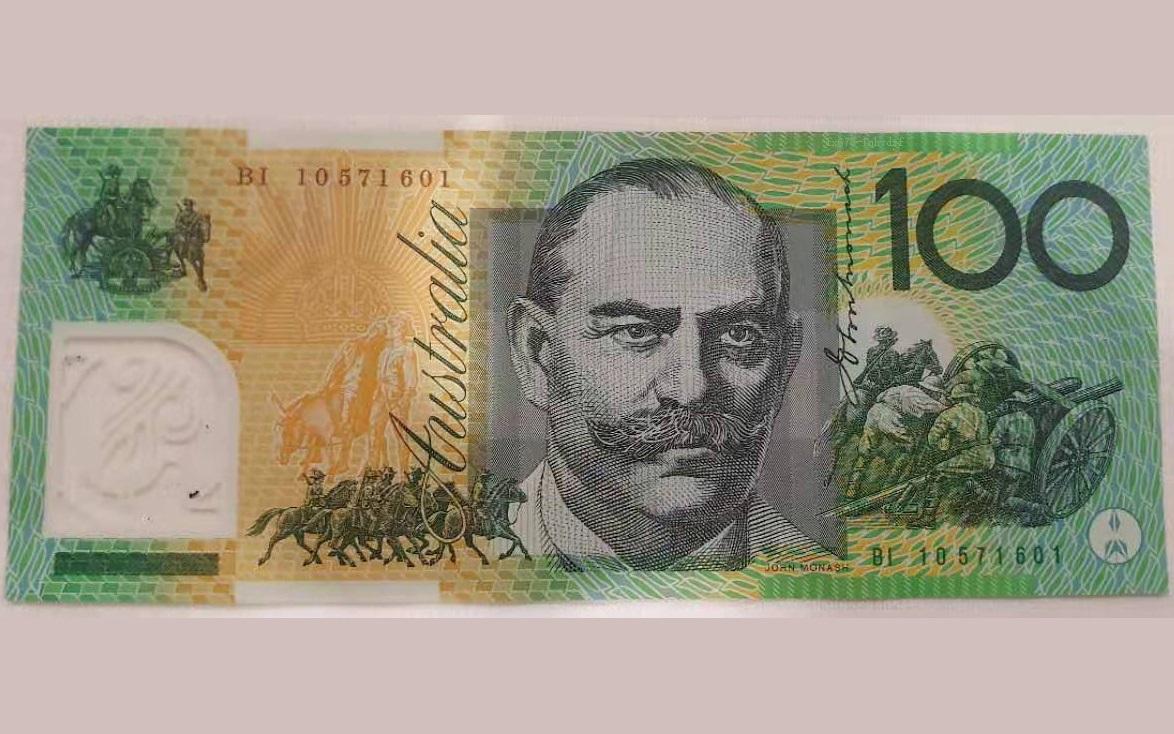
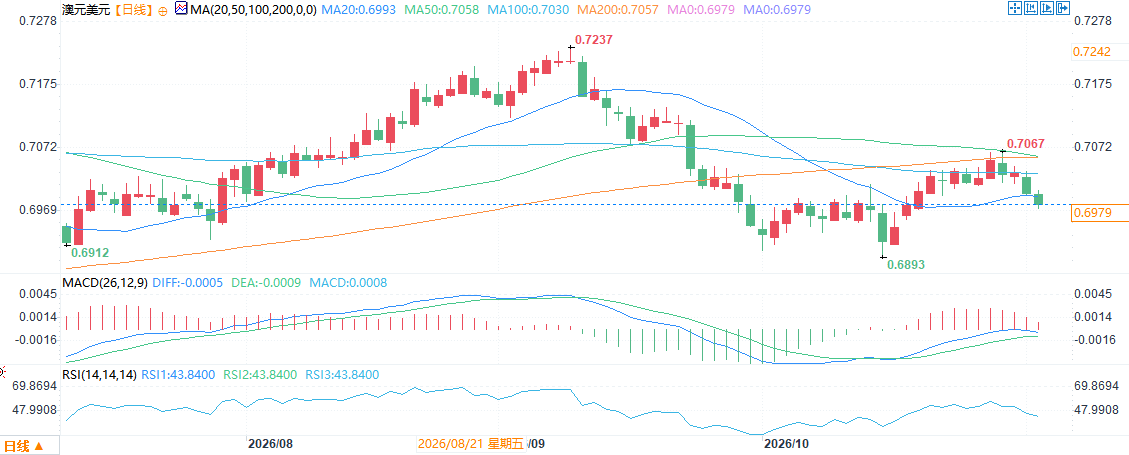 (Australian dollar to US dollar daily chart, source: EasyForex) At 13:32 Beijing time, the Australian dollar to US dollar exchange rate was 0.6977/78.
Voting and wording: A 6-3 split and the removal of interest rate hike guidance
Of the 32 economists surveyed by the media, 30 expected an interest rate hike; influenced by strong third-quarter inflation data and hawkish comments from policymakers that outweighed the rise in unemployment to a five-year high, market pricing indicated an 88% probability of a rate hike. The Monetary Policy Committee stated in its statement: "Given the revised outlook for inflation and the persistent upside risks, the Committee considers it necessary to further tighten financial conditions to support a return to the target level for inflation." "The Committee will continue to take the steps it deems necessary to ensure a sustainable return to the target level for inflation." The change in wording is a key signal of this decision. The removal of the phrase "further tightening if necessary" means the central bank is no longer biased towards tightening, but rather has shifted to a data-dependent wait-and-see approach; the 6-3 vote internally confirms this shift—three members advocated maintaining the current interest rate, indicating a substantial disagreement within the Committee regarding the necessity of further tightening.Policy Stance: A 125 basis point rate hike reverses the easing trend expected in 2025; Australia is in the hawkish camp.
The Reserve Bank of Australia's (RBA) 125 basis point rate hikes so far this year have completely reversed the 75 basis point easing policy planned for 2025, placing Australia in the hawkish camp among developed market central banks. Elsewhere, the Federal Reserve kept rates unchanged this month, while the Reserve Bank of New Zealand surprised the market by narrowly pausing its rate hikes. Katherine Palmer, Head of Fixed Income Strategy for Australia at BlackRock, said, "The challenge for the RBA is that inflation remains stubborn just as economic growth begins to slow." She added, "Given that the full effects of this year's tightening are still gradually manifesting in the economy, we expect the RBA to maintain current interest rates while assessing the latest data and the effects of policy transmission; if inflationary pressures fail to ease, the RBA retains the option to further tighten policy." Marcel Theliant, Head of Asia Pacific at Capital Economics, agreed, stating that the RBA "may have now completed its rate hike cycle, but will likely not ease policy until the end of next year."Inflation Concerns: Core inflation hits a two-year high of 3.7%, with oil prices and expectations posing a hidden risk.
Australian policymakers are concerned that high oil prices could exacerbate overall price pressures in the economy and cause inflation expectations to spiral out of control. Core inflation accelerated to 3.7% in the third quarter, a two-year high, after having remained above the central bank's 2% to 3% target range for more than five consecutive years. This background explains the rationale for the interest rate hike and why the committee, while removing guidance for further rate increases, still emphasized "persistent upside risks."Economic Costs: The housing market experienced its biggest downturn in 40 years, and the unemployment rate rose to a five-year high.
The tightening policies have had the most significant impact on the real estate market, which is facing its biggest downturn in four decades. This slump is expected to dampen household consumption through a negative wealth effect and ripple through all sectors related to property transactions, from real estate agents and title transfer companies to moving companies. The labor market has also weakened, with the unemployment rate rising to 4.7%, a five-year high, although the central bank still considers the labor market slightly tight, a source of inflationary pressure. Rising borrowing costs have slowed Australia's economic growth, but this is not enough to alleviate inflation concerns – the data center investment boom continues to drive demand in a supply-constrained economic environment.in conclusion
The Reserve Bank of Australia (RBA) raised interest rates by 25 basis points to 4.85%, the fifth rate hike this year and the highest in 18 years. However, the 6-3 vote and the removal of the phrase "further increases if necessary" both point to a more cautious policy stance. The market generally bets on no change in December, and institutional views also lean towards "the rate hike cycle may be complete, but easing will not occur until the end of next year." Core inflation at 3.7%, a two-year high and above the target range for over five consecutive years, provided the basis for this rate hike; while the housing market's biggest downturn in 40 years and the unemployment rate rising to a five-year high of 4.7% constrain further tightening. The RBA is caught between "stubborn inflation" and "slowing growth," and its future path will depend on data and the effectiveness of policy transmission. If inflationary pressures fail to ease, the option of further tightening remains open. (Australian dollar to US dollar daily chart, source: EasyForex) At 13:32 Beijing time, the Australian dollar to US dollar exchange rate was 0.6977/78.
- Risk Warning and Disclaimer
- The market involves risk, and trading may not be suitable for all investors. This article is for reference only and does not constitute personal investment advice, nor does it take into account certain users’ specific investment objectives, financial situation, or other needs. Any investment decisions made based on this information are at your own risk.