Looking ahead to December after the Bank of Japan's September minutes: The pace of interest rate hikes and oil price trends will be key.
2026-11-05 08:12:32
On Thursday (November 5) during Asian trading hours, the USD/JPY pair fluctuated narrowly, currently trading around 158.40, almost unchanged for the day. The minutes of the September meeting released on Thursday showed that the committee unanimously agreed that interest rate hikes should continue, with some members suggesting that a faster pace might be needed if prices overshoot, while another stated that hasty action was unnecessary. Oil prices have risen by about 50% since July, and several members warned of the tail risk of physical shortages. Government representatives called for a careful review of the cumulative effects of past rate hikes. The minutes reinforced the assessment that "the debate is about the pace of rate hikes, not the direction," and the market is focused on the December meeting. Bank of Japan policymakers unanimously agreed at the September meeting that the central bank should continue raising interest rates, with some members arguing that a faster pace should be needed if prices face the risk of overshooting. The minutes released on Thursday also showed that the government called for caution regarding the cumulative effects of past rate hikes. At the meeting on September 17-18, the Bank of Japan raised its policy rate by 25 basis points to 1.25% by a 7-2 vote, the highest since 1995. The minutes show that the committee members unanimously agreed that, given that potential inflation was approaching 2% and financial conditions remained loose, it was appropriate to continue raising interest rates and adjust the degree of monetary easing. 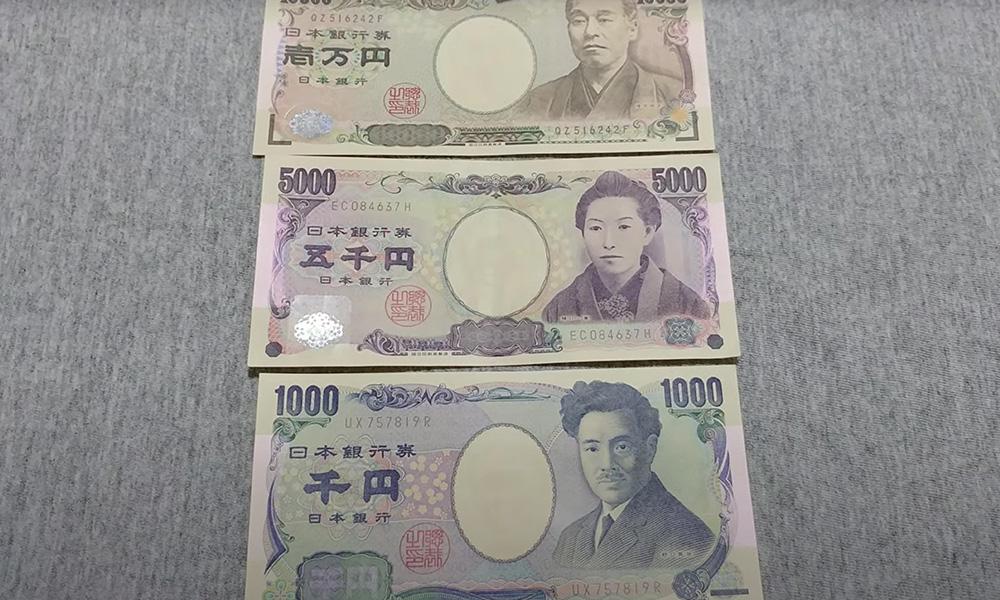
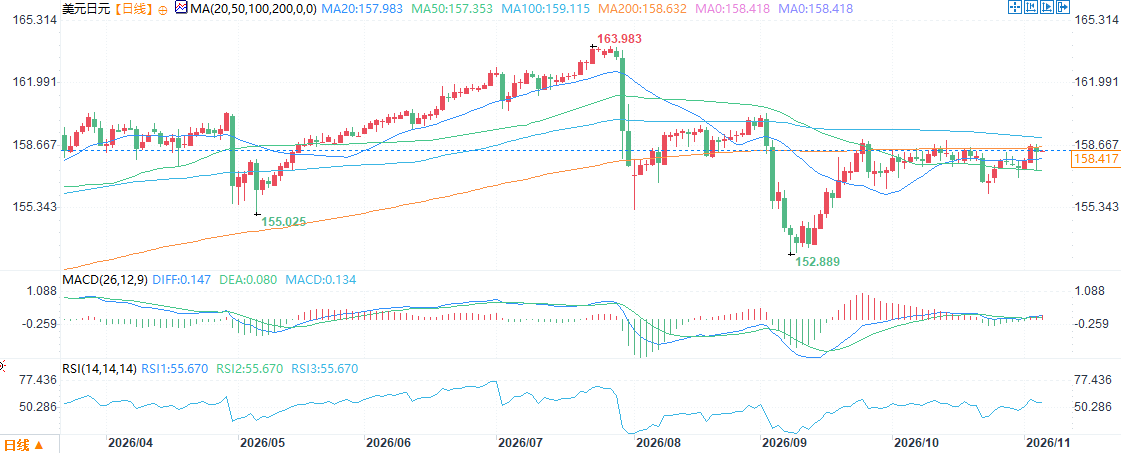 (USD/JPY daily chart, source: EasyForex) At 8:05 Beijing time, USD/JPY was trading at 158.40/41.
Policy phase shift: from pushing up inflation to stabilizing around 2%
Several committee members pointed out that the policy phase has shifted. One member stated that the goal is no longer to push up potential inflation, but rather to stabilize it around 2%. Another member said that the Bank of Japan should demonstrate its determination to prevent price overshooting and respond flexibly to overseas situations. A third member stated that if there are signs of upward price deviation, the central bank will need to accelerate the pace of interest rate hikes; another member advocated for pushing interest rates towards a neutral level relatively quickly to allow room for two-way action. The common thread in these statements is that the policy focus has shifted from "stimulating inflation" to "managing inflation," with "accelerating" and "approaching neutral" becoming new key words.Disagreements and reservations: No need to rush, two dissenters advocate maintaining 1%.
Not everyone was in a rush to act. One committee member argued that the acceleration of underlying inflation was not yet enough to pose a risk of falling behind the curve, so there was no need to act hastily. Two dissenters—Toshiro Asada and Ayano Sato—inclinationd to maintain the 1% target. Asada argued that an economy could not necessarily be considered strong if core inflation was below 2%; Sato, on the other hand, stated that economic and price trends had not accelerated substantially. This divergence indicates that while the committee agreed on the direction, there was a substantial debate about the pace, a debate directly reflected in the 7-2 vote.Oil price shock: Up about 50% since July, physical shortages pose a tail risk
Oil prices occupied a significant position in the discussions. One member pointed out that crude oil prices have risen by about 50% since July, while the yen has appreciated by about 5%. If this trend continues, it will significantly push up consumer prices. Several members highlighted the tail risks of physical oil shortages, not just price increases, citing reasons such as the suspension of Saudi pipeline operations, instability in Red Sea shipping, and declining inventories in the US and China. This detail is noteworthy: the Bank of Japan's focus on oil prices has extended from "price transmission" to "supply availability," meaning that a further deterioration in the Middle East situation could directly alter the Bank of Japan's policy pace.Neutral interest rate and market expectations: The market may have already outpaced the economy.
The committee members also discussed the neutral interest rate. One member pointed out that market expectations for peak interest rates had risen above 2%; another member stated that market expectations for rate hikes seemed to be outpacing the economy. This implies that market pricing may have already largely reflected the rate hike path, and if economic data fails to keep pace, the further upside potential for long-term interest rates may be limited. Meanwhile, government representatives adopted a more cautious tone, with the Cabinet Office stating that the Bank of Japan should carefully examine the cumulative effects of past rate hikes, consider its neutral interest rate estimate, and act appropriately should excessive volatility occur in the economy and markets.in conclusion
The minutes of the September meeting revealed that the Bank of Japan's board debate focused on the pace rather than the direction of interest rate hikes. Most members supported continuing rate increases, with some advocating for a faster pace to approach the neutral rate if inflation overshoots; however, one member argued against haste, and two dissenters advocated maintaining the rate at 1%. Oil prices have risen by about 50% since July, and several members highlighted the tail risks of physical shortages, making the Middle East situation a direct variable influencing expectations for Japanese interest rates. Market expectations for peak interest rates have risen above 2%, but some members believe market expectations are outpacing the economy, potentially limiting further upside for long-term rates. The government called for a review of the cumulative effects, noting that rapid tightening still faces political resistance. The minutes reinforced market focus on the December meeting; the policy direction is set, but the pace remains uncertain. (USD/JPY daily chart, source: EasyForex) At 8:05 Beijing time, USD/JPY was trading at 158.40/41.
- Risk Warning and Disclaimer
- The market involves risk, and trading may not be suitable for all investors. This article is for reference only and does not constitute personal investment advice, nor does it take into account certain users’ specific investment objectives, financial situation, or other needs. Any investment decisions made based on this information are at your own risk.