Will Saudi Arabia's Red Sea export routes become the next target?
2026-11-09 08:36:27
On Monday (November 9) during Asian trading hours, US crude oil futures fluctuated narrowly, currently trading around $90.50 per barrel. The market is digesting a weekend attack: on Saturday, the Houthi movement in Yemen attacked the Aramco building in the heart of Riyadh's financial district and claimed responsibility for separate attacks on the Saudi capital's airport and Aramco oil storage facilities. These attacks highlight how the conflict with Iran is increasingly putting the world's largest oil exporter on the front lines. The Saudi Energy Ministry stated that the skyscraper suffered only minor damage and no casualties. However, footage verified by the media showed more extensive damage, with at least one floor appearing to have been severely hit by missiles or drones, and windows on multiple floors shattered. Saudi Arabia claimed its air defense system intercepted and destroyed several missiles. The Houthi-operated news agency confirmed in a statement that the group attacked Riyadh's business district on Saturday but did not name the building. These attacks are the latest in a series of operations in recent months targeting deep within Saudi territory, which the country has struggled to contain. 
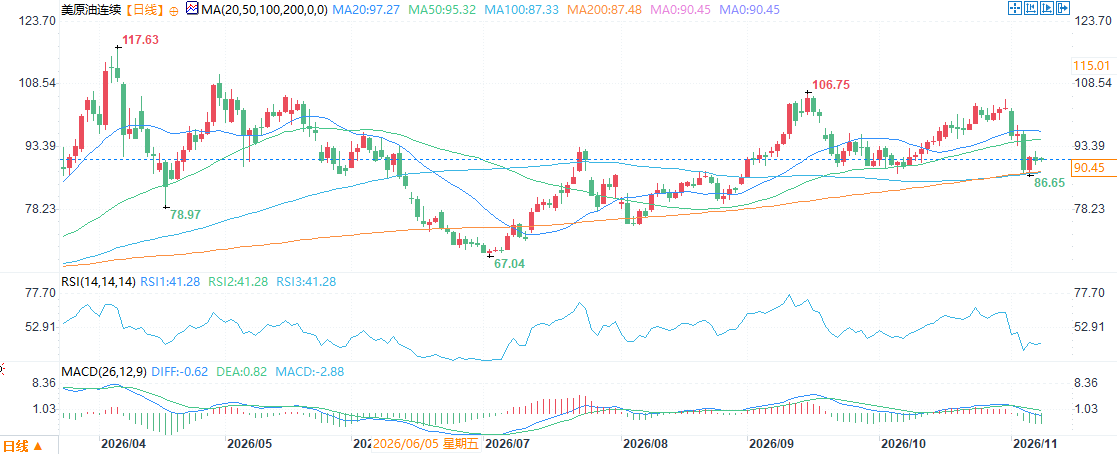 (US crude oil futures daily chart, source: FX678) At 8:32 Beijing time, US crude oil futures were trading at $90.48 per barrel.
Background of the attack: Coalition airstrikes and continued attacks following the breakdown of the ceasefire.
The attack came after the Houthis accused a Saudi-led coalition of bombing a town east of Sana'a, Yemen, killing at least 33 people, including women and children. Saudi Arabia has not yet commented on the accusation. The attack on Aramco storage facilities is a key development for the oil market. The Tehran-backed group has imposed a so-called maritime embargo on Saudi Arabia. Since the informal ceasefire broke down in July, it has attacked airports, oil facilities, and Red Sea tankers. With shipping through the Strait of Hormuz still disrupted, the importance of Saudi Arabia's export routes via the Red Sea has increased, making any threat to these routes all the more significant for global supplies. The conflict in Yemen, which had been largely dormant for years, has intensified again since the outbreak of the conflict with Iran, with large-scale fighting resuming between the Houthis and Saudi-backed government forces.The nature of supply risk: escalation risk rather than confirmed supply loss.
This is an escalation risk to crude oil, not a confirmed supply loss: Saudi Arabia reported only minor damage, interception of multiple missiles, and no production stoppages. The key factor is the direction – Aramco storage facilities are becoming targets, the Houthis have imposed a maritime embargo on Saudi Arabia, and traffic in the Strait of Hormuz is already disrupted. Saudi barrels transported via the Red Sea are more crucial to global supply. Oil prices are priced based on the "direction of risk," not the "scale of loss." As long as attacks expand from airports to storage and export facilities, there is reason for risk premiums to widen, even if actual supply has not yet been disrupted.Regional conflict escalates: Iraqi gas field attacked, US hardens negotiating stance
Overlapping with the Riyadh attack were the shutdown of Iraq's Hormuz gas field on Sunday following a suspected Iranian drone strike, and the US taking a tougher stance on stalled negotiations with Tehran. President Trump said on Sunday that he was "highly unlikely" to order another strike against Iran if progress was made in negotiations on its nuclear program and the reopening of the Strait of Hormuz. "It depends on whether they sign a very strong deal," Trump said. "The answer is probably not." "I would do it if necessary, but we've already hit them hard," he added. Diplomatic efforts have regained attention following last week's US midterm elections, with Qatar, the main mediator between the US and Iran, saying Iran is reviewing proposals regarding its nuclear program. However, Iranian Foreign Minister Araqchi said on Sunday that the mediators had made no progress or taken any action in recent days since the US election. Araqchi said the election results had halted the mediators' efforts, and Tehran must wait for them to restart the diplomatic process. In addition, the Iranian Revolutionary Guard said on Saturday that two oil tankers caught fire after striking mines in or near the Strait of Hormuz.in conclusion
The Houthi attack on the Aramco headquarters in Riyadh, claiming responsibility for Aramco's oil storage facilities, signifies that the conflict with Iran has extended into the world's largest oil exporter. Saudi Arabia claims only minor damage, interception of multiple missiles, and no production stoppage, but verified footage shows at least one floor sustained significant damage. More crucially, the attack's focus has shifted from the airport to storage facilities. With the Houthis having declared a maritime embargo on Saudi Arabia, the disruption of traffic in the Strait of Hormuz and the increased importance of Saudi Arabia's Red Sea export routes amplify the threat to storage and export facilities. Coupled with the attack on Iraq's Hormuz gas field, the hardening of the US stance on negotiations, and the Iranian Foreign Minister's statement that mediation is stalled, the regional conflict shows signs of escalation rather than contraction. For the oil market, this represents an escalation of risk rather than a confirmed supply loss. Traders will focus on any confirmed damage to Saudi production, storage, or Red Sea shipments—risk premiums have reason to widen before confirmation; once confirmed, the price reaction will be more dramatic. (US crude oil futures daily chart, source: FX678) At 8:32 Beijing time, US crude oil futures were trading at $90.48 per barrel.
- Risk Warning and Disclaimer
- The market involves risk, and trading may not be suitable for all investors. This article is for reference only and does not constitute personal investment advice, nor does it take into account certain users’ specific investment objectives, financial situation, or other needs. Any investment decisions made based on this information are at your own risk.