Why is the USD/JPY pair still hovering around 158 despite the Bank of Japan's meeting minutes releasing hawkish signals?
2026-11-10 08:22:30
On Tuesday (November 10) during Asian trading hours, the USD/JPY pair fluctuated slightly higher, currently trading around 158. According to the minutes of the meeting released on Tuesday, Bank of Japan policymakers at their October meeting generally agreed that the next step would be further interest rate hikes. Several members pushed for reaching the neutral interest rate as soon as possible, with one believing it could be "well above 1%." This summary, compiling anonymous opinions from the October 29-30 meeting, shows that the committee judged underlying inflation to be broadly in line with its 2% price target. Following this decision, the debate shifted from "whether to raise interest rates" to "how quickly to raise them." One member described a "new phase"—the central bank needs to accelerate the pace of pushing interest rates towards a neutral level, noting that the effects of past rate hikes have not yet materialized and financial conditions remain loose. Another member stated that the central bank should reach the neutral interest rate as soon as possible, but "haste makes waste," spending several months reviewing financial conditions after each action. A third member called for an institutional shift to push interest rates towards neutral at an early stage, giving the central bank room to maneuver in both directions. 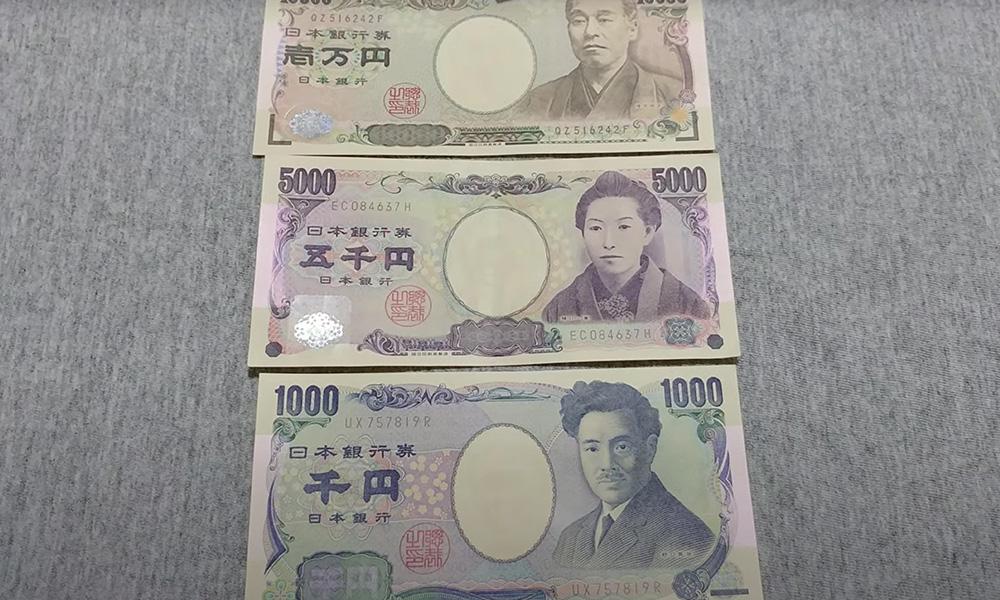
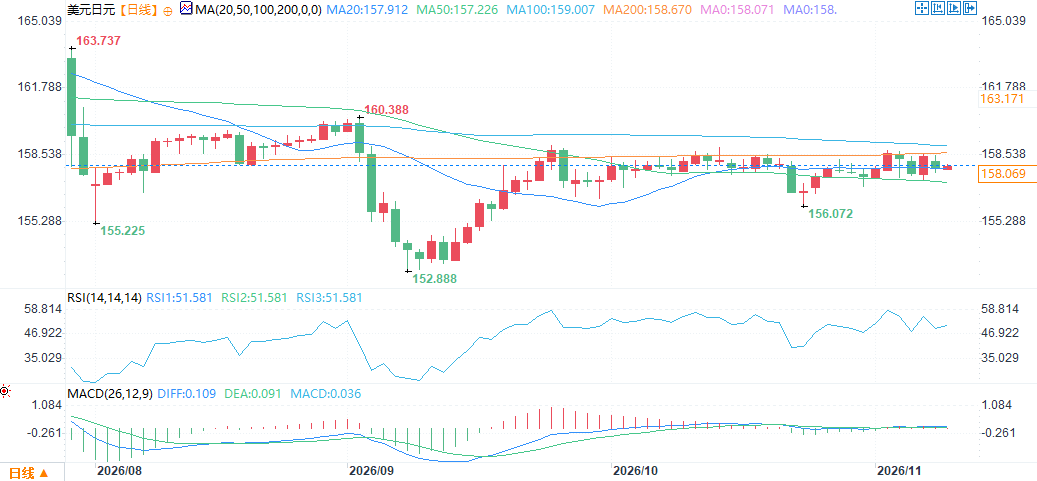 (USD/JPY daily chart, source: EasyForex) At 8:18 Beijing time, USD/JPY was trading at 158.07/08.
The pace of interest rate hikes: from "whether" to "how quickly," with three paths coexisting.
The most crucial information in the meeting minutes lies in the substantial shift in the focus of the policy debate. In previous meetings, the committee had repeatedly weighed whether further interest rate hikes were necessary, but after the October meeting, this premise was essentially established. Committee members generally judged that potential inflation had roughly met the 2% price stability target, and financial conditions remained loose; therefore, the next step clearly pointed to continuing interest rate hikes. The debate thus shifted to "how quickly to proceed." The summary presented three clear proposed paths. The first member emphasized "accelerating the pace," arguing that the cumulative effects of past rate hikes had not yet fully materialized, current financial conditions remained relatively loose, and the central bank needed to more proactively push policy rates towards a neutral level to avoid further upward pressure on inflation expectations. The second member advocated "haste makes waste," emphasizing that after each rate hike, several months should be allowed to observe the feedback from financial conditions and the real economy, especially the transmission of loan interest rates and actual changes in corporate financing costs, to avoid tightening too quickly and suppressing the nascent stabilizing domestic demand. The third committee member proposed an "early-stage approach," arguing that interest rates should be raised to near neutral levels as soon as possible to reserve policy space for potential two-way risks—both to address inflation overshooting and to quickly shift to easing in the event of an unexpected economic slowdown. While the three statements differ in pace, they share a clear common thread: continued interest rate hikes have become a consensus; the only disagreement lies in the speed of implementation and the length of the observation window. This disagreement directly means that a rate hike at the December meeting is no longer the main suspense; the real pricing focus will shift to the subsequent path—whether to maintain a gradual pace of roughly quarterly increases or to implement more frequent adjustments based on data support. The meeting minutes, recorded anonymously, not only showcase the diverse thinking within the committee but also send a clear signal to the market that policy has entered a "new phase."Neutral interest rate: One committee member believes it is "far higher than 1%", providing upward room for final interest rate pricing.
The most hawkish statement in the summary comes from a committee member's assessment of the neutral interest rate. This member explicitly stated that the neutral interest rate could be "significantly higher than 1%", while also mentioning that core CPI is expected to exceed 3% around the end of the fiscal year. This assessment is not isolated but echoes the consensus that potential inflation has largely reached its target, both pointing to room for further increases in policy rates. Currently, the policy rate is around 1.25%. If the neutral interest rate is indeed significantly higher than 1%, it means there is still a considerable distance to go before reaching a truly neutral level. Previously, the market's pricing of the final interest rate was mostly concentrated in the 1.5% to 2% range, with some traders even believing that the rate hike cycle might be nearing its end once it approaches 1.5%. However, the committee member's statement about "significantly higher than 1%" provides a new anchor for upward expectations of the final interest rate. It suggests that even after the next rate hike, the policy rate may still be at the lower end of the neutral range, and further adjustments are still necessary. The policy implication of this view is that it reduces the appeal of the narrative that "rate hikes are nearing their end," instead reinforcing the expectation of a "gradual but continuous" approach. For the bond market, this could push up the pricing center of medium- and long-term yields; for the currency market, it enhances the relative attractiveness of yen assets, especially against the backdrop of divergent policy paths among other major central banks. The minutes specifically recorded this statement, indicating a significant disagreement within the committee regarding the estimate of the neutral interest rate, and the existence of a higher estimate itself is sufficient to exert upward pressure on market expectations for final interest rates.Cautious voice: Policy interest rates are already within the neutral range, and weak consumption momentum is a constraint.
The meeting minutes also fully recorded more cautious voices, which formed an important check on the pace of interest rate hikes. Some members favored holding rates steady at the October meeting, arguing that more time was needed to examine the cumulative effects of past rate hikes and whether potential risks had fully materialized. One member pointed out that potential inflation could be anchored around 2% at the current policy rate, without the need to hastily push rates to a neutral level; another directly warned that since the policy rate was already within a partially estimated neutral range, further rate hikes could dampen economic activity. Consumer spending momentum was a core concern repeatedly emphasized by the cautious camp. One member explicitly stated that private consumption lacked endogenous momentum and was unlikely to be the main driver of economic recovery; another member, while believing there was no need to be overly cautious about the next rate hike, still stressed the need to assess underlying trends in spending, especially the impact of real income and confidence on household spending. This concern was confirmed in the data released after the meeting—household spending in September fell 6.8% year-on-year, significantly weaker than market expectations, indicating the fragility of the recovery in domestic demand. Members also mentioned that the duration of support for the Japanese economy from artificial intelligence-related demand was uncertain, and the sustainability of external demand remained to be observed. The presence of these cautious voices does not negate the overall direction of continued interest rate hikes, but rather sets clear observation conditions for the policy path. They remind the market that even with a high probability of a December rate hike, the subsequent pace will still heavily depend on the actual performance of consumption and credit data. The meeting minutes, which presented both hawkish and cautious views, fully revealed the committee's internal deliberations and also left room for flexibility in policy discussions at subsequent meetings.Interest rate hike expectations are supporting the yen, but weak terminal interest rates and consumption are creating a two-way pull.
There is a clear transmission chain between this meeting summary and the USD/JPY exchange rate movement. The debate shifted from "whether to raise interest rates" to "how quickly to raise interest rates," which weakened a core argument of the yen bears—the uncertainty of policy direction. The expectation of a rate hike to 1.5% at the December 17-18 meeting was supported by the summary, meaning that the USD/JPY interest rate differential would narrow by 25 basis points from the current 2.5 percentage points or more, which is a direct positive for the yen against the dollar. More importantly, the statement that "the neutral interest rate is well above 1%" provides upward room for final interest rate pricing. If the market further revises its end-point expectation for next year from about 2%, the yen's interest rate disadvantage will systematically improve, and the downside potential for USD/JPY will open up. However, the cautious voices in the summary act as a hedge. One member warned that the policy rate is already within the estimated neutral range and further rate hikes could suppress the economy; the data of a 6.8% year-on-year decline in household spending in September was far worse than expected, confirming concerns about weak consumer momentum. This means the market's pricing in a potentially aggressive pace of interest rate hikes—if subsequent data continues to weaken, the probability of a pause after the December rate hike increases, limiting the yen's appreciation potential. The interplay of two forces determines the short-term outlook for USD/JPY: expectations of rate hikes and upward revisions to final interest rates provide downward pressure, while weak consumption and the assessment that policy rates are near neutral provide support. The exchange rate is more likely to fluctuate within a range around 158 rather than move in one direction; a true directional breakout will require confirmation from the actual actions of the December meeting and the outcome of next year's wage negotiations.in conclusion
The minutes of the Bank of Japan's October meeting revealed that members generally believed underlying inflation had reached the 2% target, shifting the debate from "whether to raise interest rates" to "how quickly to raise rates." Several members advocated reaching the neutral interest rate as soon as possible, with one believing the neutral rate was "well above 1%" and core CPI expected to exceed 3% by the end of the fiscal year—this provides upward room for final interest rate pricing, suggesting the market's expectation of a target of around 2% next year may be underestimated. However, caution was also evident: one member warned that the policy rate was already within the estimated neutral range, and further rate hikes could suppress the economy; weak consumer momentum (household spending fell 6.8% year-on-year in September) constrained faster rate hikes; uncertainty regarding the duration of AI demand was also mentioned. Overall, the summary supports market expectations of a rate hike to 1.5% at the December 17-18 meeting, while consumption and wage negotiations next year will be the main variables determining the subsequent pace. For the yen and short-term government bond yields, the debate has shifted from direction to pace, providing support; however, the upside potential for final interest rates and weak consumption will jointly determine the strength of this support. (USD/JPY daily chart, source: EasyForex) At 8:18 Beijing time, USD/JPY was trading at 158.07/08.
- Risk Warning and Disclaimer
- The market involves risk, and trading may not be suitable for all investors. This article is for reference only and does not constitute personal investment advice, nor does it take into account certain users’ specific investment objectives, financial situation, or other needs. Any investment decisions made based on this information are at your own risk.