With inflation accelerating in Japan, will the Bank of Japan remain on hold in December?
2026-11-12 08:28:28
On Thursday (November 12) during Asian trading hours, the USD/JPY pair fluctuated slightly lower, currently trading around 159.55. Japanese wholesale inflation accelerated again in October, with producer prices rising more than expected, increasing market expectations for a December interest rate hike by the Bank of Japan. Data released by the Bank of Japan on Thursday showed that the corporate goods price index rose 7.1% year-on-year, higher than the median forecast of 6.5% and the previous reading of 6.8% in September. Month-on-month, it rose 0.7%, more than double the expected 0.3%, while September's figure was revised downwards to a 0.2% decline. 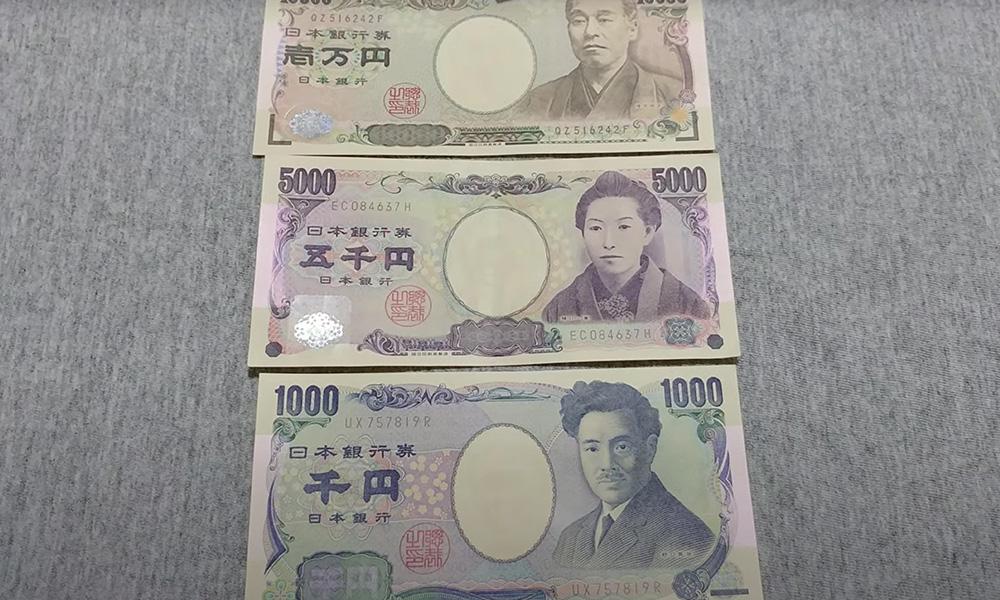
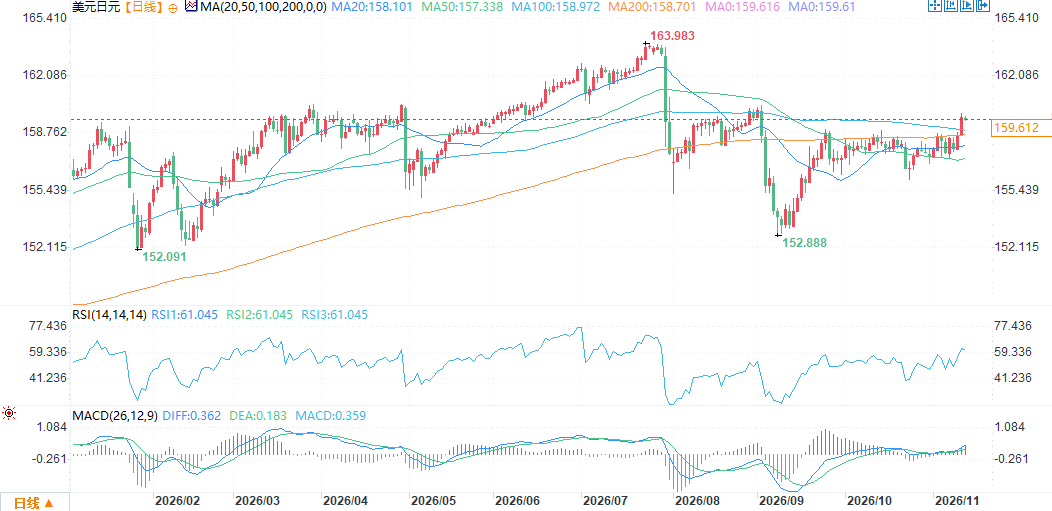 (USD/JPY daily chart, source: FX678) At 8:25 Beijing time, USD/JPY was trading at 159.58/59.
Price structure: Driven by energy and industrial materials, agricultural products were dragged down by falling rice prices.
This rebound ended two consecutive months of slowing annual growth, primarily driven by energy and industrial materials. Month-on-month, oil and coal products rose by about 3%, chemicals by about 2%, steel by 2%, and electricity, gas, and water by about 2.4%; these four categories contributed approximately 0.6 percentage points to the monthly increase. The overall figures would have been stronger without food. Agricultural products fell 6.6% month-on-month and a quarter-year-on-year, as cheap newly harvested rice continued to drag down the index. Excluding this drag, the underlying drivers of manufacturing and energy were close to a 1% monthly increase. This suggests that pipeline pressures are spreading, not receding. The decline in rice prices masked broader price increases—the near 1% increase excluding food indicates a comprehensive transmission from energy and industrial materials, a signal the Bank of Japan cannot ignore.Import costs: Import prices denominated in yen rose nearly 25% year-on-year, while energy imports rose approximately 46% year-on-year.
Import costs remain the primary driver of inflation. The yen-denominated import price index jumped 3.3% in October, nearly 25% higher year-on-year. The majority of the monthly increase came from crude oil and other fuels; yen-denominated energy imports rose approximately 46% year-on-year, as prices remained high during the conflict in Iran. The yen's depreciation of about 1% that month exacerbated the pressure. Imports of memory chips and other electronic products also rose sharply, echoing the strong prices of technology products seen in other regions. The yen's depreciation and high oil prices have created a double burden of imported inflation—the former amplifying yen-denominated import costs, and the latter pushing up energy import prices—making it difficult for Japan's pipeline inflation to subside on its own.Bank of Japan: Data supports December action; October rate unchanged at 8-1; Takata advocates immediate rate hike.
For the Bank of Japan, the data supports its decision to act at its December meeting. The central bank maintained its policy rate at 1.25% in late October by an 8-1 vote, with board member Takada advocating for an immediate rate hike. The central bank also stated that underlying inflation had reached a level broadly consistent with its 2% target. A survey released prior to the meeting showed that 83% of economists expected a rate hike in December. The stronger-than-expected wholesale inflation provides further data support for a December rate hike, and the 83% economist expectation suggests that the market has already largely priced in this move—the marginal effect of the data is to reinforce rather than change this expectation.Policy trade-offs: Producer prices are an upstream indicator, but the yen and oil prices make it difficult to block the transmission.
Producer prices are an upstream indicator, while the Bank of Japan (BOJ) places greater emphasis on consumer inflation and wages. However, against the backdrop of a weak yen and high oil prices, these costs are likely to continue to be passed on to households, making it harder to justify a pause in interest rate hikes. While the BOJ's policy focus remains on consumption and wages, the continued transmission of imported costs means that the cost of "waiting" is rising—if pipeline pressures continue to spread to the consumer end, the rationale for a pause will become increasingly difficult to justify. For the market, this means the probability of a December rate hike has further solidified, providing marginal support for the yen; however, for Japanese government bonds, a stronger inflationary backdrop maintains upward pressure on yields; and for the stock market, rising input costs pose a risk to the profit margins of manufacturers who cannot pass on these costs.in conclusion
Japan's corporate goods price index (CPI) rose 7.1% year-on-year in October, exceeding the expected 6.5%, and rose 0.7% month-on-month, more than double the expected figure, ending two consecutive months of slowing annual growth. The growth was driven by energy and industrial materials—oil, coal, chemicals, steel, and utilities contributed approximately 0.6 percentage points combined. Agricultural products were dragged down by falling rice prices; the bottom-tier increase, excluding food, was close to 1%, indicating that pipeline pressures are spreading rather than receding. Import costs were the main driver: yen-denominated import prices rose nearly 25% year-on-year, energy imports rose about 46% year-on-year, and the yen's depreciation of about 1% in October exacerbated the pressure. The data reinforced expectations of a December rate hike by the Bank of Japan—the October rate was maintained at 1.25% by a vote of 8 to 1, Takada advocated for an immediate rate hike, and a pre-meeting survey showed that 83% of economists expected action in December. Although producer prices are an upstream indicator, with a weak yen and high oil prices, the transmission of costs to households is difficult to stop, making it harder to justify a pause in rate hikes. (USD/JPY daily chart, source: FX678) At 8:25 Beijing time, USD/JPY was trading at 159.58/59.
- Risk Warning and Disclaimer
- The market involves risk, and trading may not be suitable for all investors. This article is for reference only and does not constitute personal investment advice, nor does it take into account certain users’ specific investment objectives, financial situation, or other needs. Any investment decisions made based on this information are at your own risk.