Dollar inflation reinforces interest rate expectations, putting renewed pressure on the euro against the dollar.
2026-11-12 18:00:28
Just days ago, retail traders who were convinced the euro would rise against the dollar have received a stark reminder: market sentiment can shift dramatically at any moment, provided sufficient evidence emerges. While euro/dollar speculators may believe time will prove the pair severely oversold, now is not the time to fight price trends. Instead, opportunities can only be found through careful analysis of the euro/dollar's short-term and near-to-medium-term outlook.  US inflation reinforces market expectations of a December rate hike by the Federal Reserve Earlier this week, US inflation data showed that consumer prices are rising with no signs of a rapid decline. This unexpected inflation data prompted a swift reaction from financial institutions, putting pressure on the euro against the dollar. This is because analysts' expectations of another December federal funds rate hike have been largely "confirmed." Although WTI crude oil prices have indeed shown downward momentum over the past week and a half, the ripple effects of rising energy prices have permeated many aspects of the US economy. Reversing the high inflation trend in the US may be possible in the medium term, but it will be very difficult to lower market expectations of another Fed rate hike. This is why the euro has seen a solid decline against the dollar. The euro's rebound has reversed, with support levels proving unfavorable. On Tuesday morning, the euro rose to near 1.12510 as financial institutions expressed the view that "the euro has fallen too low against the dollar"; subsequently, the stubbornness of the US inflation data delivered a "cold slap" to the foreign exchange market. As of this writing, the euro is trading around 1.10770 against the dollar, having dipped to near 1.10655 this morning. With the influx of orders and increased volume during the European and US trading sessions over the past two days, support levels have proven quite fragile. The euro is currently trading at levels seen since early May 2025. Technically, this is intriguing, as a break below 1.10600 could open up significant downside potential. However, the last time the euro was consistently in lower ranges was after President Trump's re-election, when financial institutions sold off heavily due to nervousness. Current levels are within a range seen in October 2024. Yes, the euro has indeed fallen lower, but speculators are now asking: Has the pair truly entered oversold territory? Can it mount an upward move? Has the worst news been priced in? The accelerating price action is testing the strength of nearby support levels. The speed of the price decline has driven the euro sharply lower against the dollar. Over the past two months, this currency pair has exhibited extremely volatile movements for forex speculators unaccustomed to its sharp swings. Rapid fluctuations are likely to continue in the next two weeks. Traders looking to determine whether support levels are weak or strong will be closely watching these levels. This is precisely why technical trading can only provide "hints" about emerging market sentiment, as market perceptions and emphasis on support (and resistance) levels often prove to be wrong. The euro's downward trend against the dollar over the past two and a half days has been astonishing, hitting a new low this morning. How will North American banks respond to the current price action when they enter the market and trading volume surges again in the coming hours? In particular, how would they react if an upward reversal had occurred beforehand?
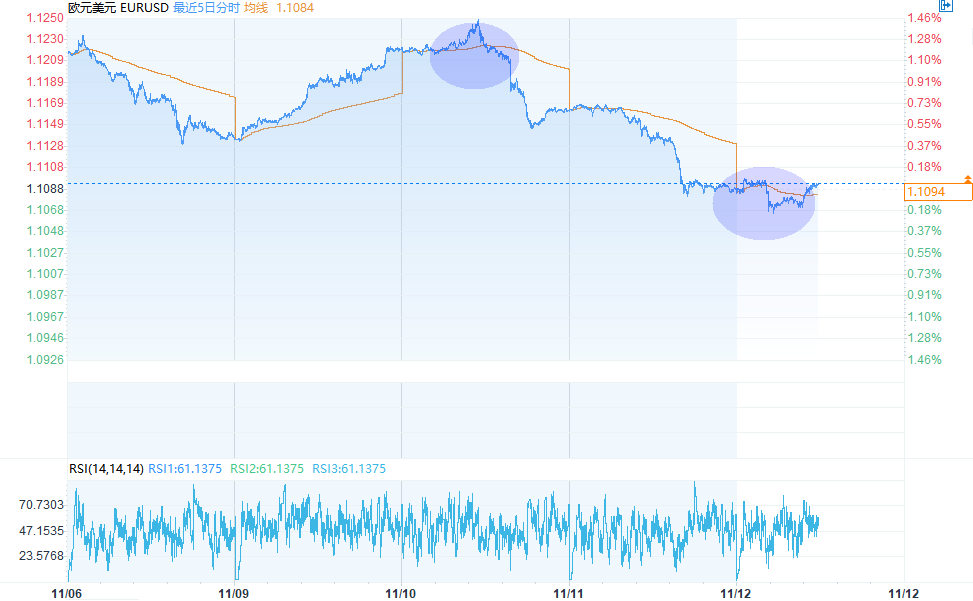 (EUR/USD intraday chart, currently declining) Expectations after December complicate the "recovery" narrative. Those who tend to believe that financial institutions will suddenly "wake up" and start buying should take the EUR/USD downtrend seriously. Prices could fall further. If EUR/USD begins a sustained challenge of 1.11700 and remains below it for several hours, this could be an additional negative signal. The Fed's rate hike expectations have essentially priced in at least one rate hike for EUR/USD, and the market is considering another one after December. Low prices alone do not confirm a turning point. The speed characteristic of EUR/USD is clearly evident. This pair requires a "sell risk" strategy for all bets. This sense of speed is likely to continue into the weekend, and traders need to be prepared for various risks. EUR/USD looks low, but we've seen this depth before. Traders large and small will have their views tested in the coming hours and day. EUR/USD: Key Levels and the Next Sentiment Test Nearby price levels provide a reference point for judging whether the inflation-triggered sell-off is losing momentum or still overwhelming buying interest. The key is to distinguish whether this is a short-lived bounce or a more sustainable change in market behavior. Key Price Levels to Watch Near-term resistance: 1.10785. A sustained trade above this level indicates an initial improvement in buying interest. A brief breakout followed by renewed selling suggests insufficient evidence of easing pressure. Near-term support: 1.10655. Higher reference level: 1.10890. If EUR/USD holds above the near-term resistance and gains momentum, this is a further upside reference level. Lower reference level: 1.10640. This is a downside reference level below the intraday low of 1.10655 mentioned in the report. A sustained trade below this level indicates that selling pressure remains active. The next few trading sessions will test whether this inflation surprise has led to a sufficient correction in EUR/USD, or whether there is still room for further revaluation of interest rate expectations. The focus is on whether the rebound will trigger new selling and whether the recent lows can hold as trading flows from Europe and North America unfold. An unanswered question is whether buyers can build a more sustained response at these price levels, rather than simply providing another brief respite from the decline.
US inflation reinforces market expectations of a December rate hike by the Federal Reserve Earlier this week, US inflation data showed that consumer prices are rising with no signs of a rapid decline. This unexpected inflation data prompted a swift reaction from financial institutions, putting pressure on the euro against the dollar. This is because analysts' expectations of another December federal funds rate hike have been largely "confirmed." Although WTI crude oil prices have indeed shown downward momentum over the past week and a half, the ripple effects of rising energy prices have permeated many aspects of the US economy. Reversing the high inflation trend in the US may be possible in the medium term, but it will be very difficult to lower market expectations of another Fed rate hike. This is why the euro has seen a solid decline against the dollar. The euro's rebound has reversed, with support levels proving unfavorable. On Tuesday morning, the euro rose to near 1.12510 as financial institutions expressed the view that "the euro has fallen too low against the dollar"; subsequently, the stubbornness of the US inflation data delivered a "cold slap" to the foreign exchange market. As of this writing, the euro is trading around 1.10770 against the dollar, having dipped to near 1.10655 this morning. With the influx of orders and increased volume during the European and US trading sessions over the past two days, support levels have proven quite fragile. The euro is currently trading at levels seen since early May 2025. Technically, this is intriguing, as a break below 1.10600 could open up significant downside potential. However, the last time the euro was consistently in lower ranges was after President Trump's re-election, when financial institutions sold off heavily due to nervousness. Current levels are within a range seen in October 2024. Yes, the euro has indeed fallen lower, but speculators are now asking: Has the pair truly entered oversold territory? Can it mount an upward move? Has the worst news been priced in? The accelerating price action is testing the strength of nearby support levels. The speed of the price decline has driven the euro sharply lower against the dollar. Over the past two months, this currency pair has exhibited extremely volatile movements for forex speculators unaccustomed to its sharp swings. Rapid fluctuations are likely to continue in the next two weeks. Traders looking to determine whether support levels are weak or strong will be closely watching these levels. This is precisely why technical trading can only provide "hints" about emerging market sentiment, as market perceptions and emphasis on support (and resistance) levels often prove to be wrong. The euro's downward trend against the dollar over the past two and a half days has been astonishing, hitting a new low this morning. How will North American banks respond to the current price action when they enter the market and trading volume surges again in the coming hours? In particular, how would they react if an upward reversal had occurred beforehand? (EUR/USD intraday chart, currently declining) Expectations after December complicate the "recovery" narrative. Those who tend to believe that financial institutions will suddenly "wake up" and start buying should take the EUR/USD downtrend seriously. Prices could fall further. If EUR/USD begins a sustained challenge of 1.11700 and remains below it for several hours, this could be an additional negative signal. The Fed's rate hike expectations have essentially priced in at least one rate hike for EUR/USD, and the market is considering another one after December. Low prices alone do not confirm a turning point. The speed characteristic of EUR/USD is clearly evident. This pair requires a "sell risk" strategy for all bets. This sense of speed is likely to continue into the weekend, and traders need to be prepared for various risks. EUR/USD looks low, but we've seen this depth before. Traders large and small will have their views tested in the coming hours and day. EUR/USD: Key Levels and the Next Sentiment Test Nearby price levels provide a reference point for judging whether the inflation-triggered sell-off is losing momentum or still overwhelming buying interest. The key is to distinguish whether this is a short-lived bounce or a more sustainable change in market behavior. Key Price Levels to Watch Near-term resistance: 1.10785. A sustained trade above this level indicates an initial improvement in buying interest. A brief breakout followed by renewed selling suggests insufficient evidence of easing pressure. Near-term support: 1.10655. Higher reference level: 1.10890. If EUR/USD holds above the near-term resistance and gains momentum, this is a further upside reference level. Lower reference level: 1.10640. This is a downside reference level below the intraday low of 1.10655 mentioned in the report. A sustained trade below this level indicates that selling pressure remains active. The next few trading sessions will test whether this inflation surprise has led to a sufficient correction in EUR/USD, or whether there is still room for further revaluation of interest rate expectations. The focus is on whether the rebound will trigger new selling and whether the recent lows can hold as trading flows from Europe and North America unfold. An unanswered question is whether buyers can build a more sustained response at these price levels, rather than simply providing another brief respite from the decline.
- Risk Warning and Disclaimer
- The market involves risk, and trading may not be suitable for all investors. This article is for reference only and does not constitute personal investment advice, nor does it take into account certain users’ specific investment objectives, financial situation, or other needs. Any investment decisions made based on this information are at your own risk.