2027 Foreign Exchange Outlook: Seven Core Risks
2026-11-13 23:30:29
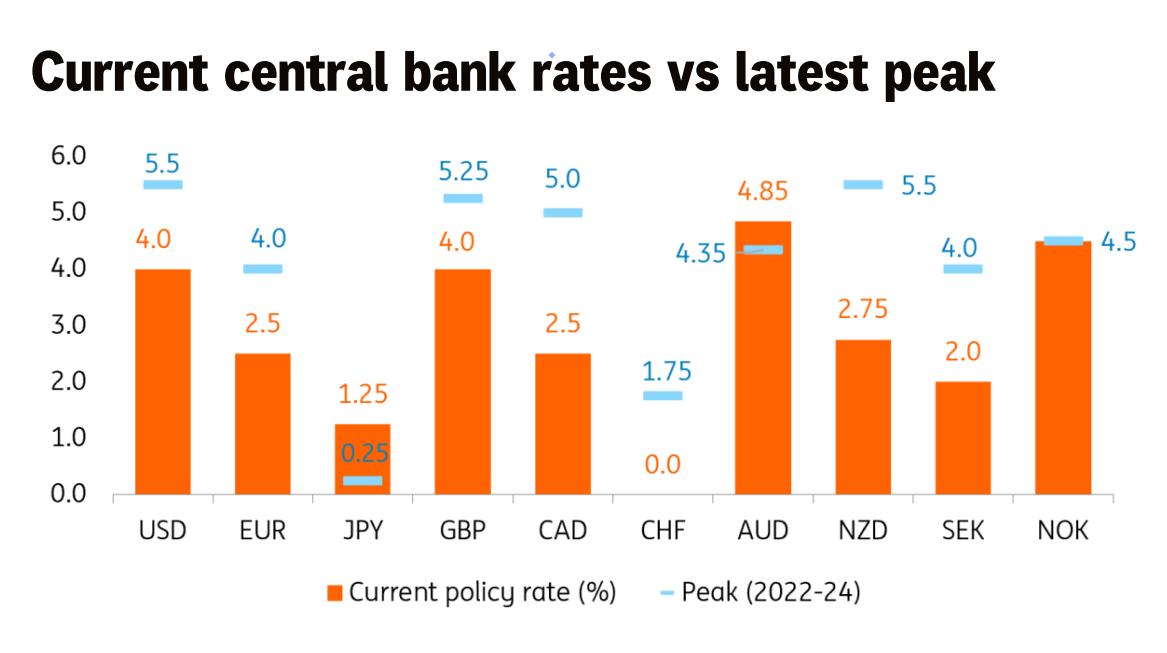
Beneath the surface of low volatility, 2027 harbors numerous tail risks. A receding AI boom, a new round of inflationary shocks, fiscal vulnerabilities, elections, and escalating geopolitical conflicts could all trigger sharp fluctuations in foreign exchange rates; while financial repression and a stampede in carry trades further amplify asymmetric risks. AI Bubble Burst: The Foreign Exchange Market May Experience Abnormal Trends The strong performance of the US AI sector has recently been tested. A more significant pullback could become a key factor influencing exchange rate movements next year. We believe the impact of a large sell-off in US tech stocks on the foreign exchange market depends on three factors: whether the risk spreads to the US and other major global risk assets, whether it seriously threatens financial stability, and its impact on the inflationary environment. Crucially, the short-term reaction and medium-term trend of exchange rates can be drastically different. According to our calculations, the safe-haven attribute of the US dollar remains relatively strong, having recovered from the "sell-off of dollar assets" phase of 2025. However, in 2026, in a market where several rounds of AI panic impact tech stocks but do not spread widely to the broader market, the US dollar is likely to weaken. We believe that if the decline is confined to the US tech sector, the US dollar will continue to face mild pressure next year, while low-interest safe-haven currencies—the Japanese yen, Swiss franc, and euro—will benefit relatively. However, if a tech stock crash triggers a market-wide sell-off, the market logic will change: initially, the dollar will benefit from stronger safe-haven buying; as the impact deepens and the Fed's policy response takes effect, the dollar will subsequently enter a phase of more significant depreciation. The greater the threat to financial stability, the stronger the Fed's incentive to inject liquidity and avoid a repeat of the credit crunch of the global financial crisis, ultimately suppressing the dollar. In the medium term, the yen, Swiss franc, and euro are expected to outperform; the Australian dollar, New Zealand dollar, and non-European emerging market currencies will face greater pressure, consistent with the performance of previous AI market corrections (see chart below). However, inflation is a crucial variable. Typical safe-haven shocks typically suppress inflation through increased unemployment, a contraction of the wealth effect, and tighter credit conditions. But if inflation remains high, the Fed will slow its pace of interest rate cuts, partly to maintain the safe-haven function of the US Treasury market. In this scenario, the period of dollar strength will be prolonged, and the resilience of European currencies will be weaker than in a scenario with moderate inflation. Attached chart: Risk exposure to AI-driven market crashes for some currency pairs 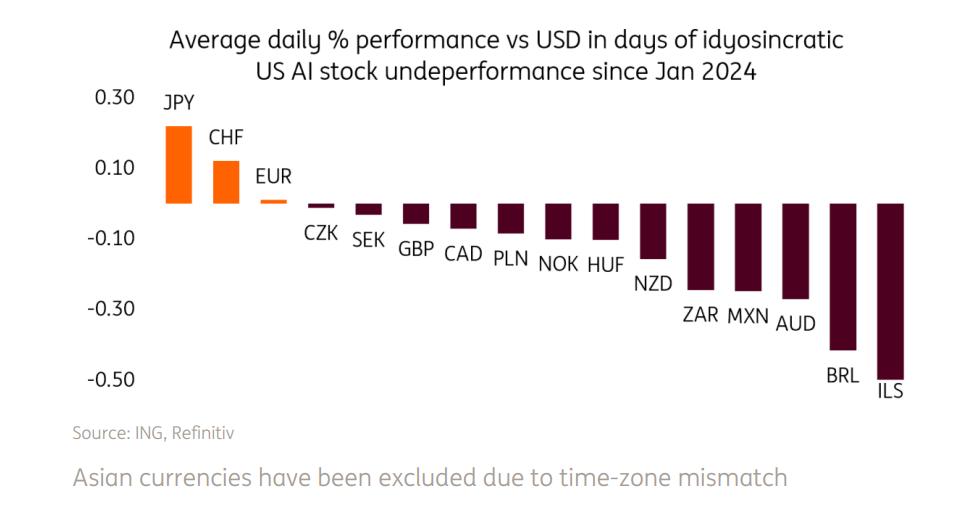 Inflation Could Repeat the 2022 Shock Our baseline scenario assumes a manageable second wave of the energy shock, with major European central banks expected to begin cutting interest rates by the end of 2027. However, four major risks could overturn this baseline assessment: The second wave of inflationary transmission may only be delayed; a prolonged crisis coupled with rising natural gas prices could erode corporate profit buffers, gradually transmitting to food and service inflation; a tight labor market could amplify the shock through wage increases; a renewed escalation of tensions in the Middle East could push up energy prices; and finally, large-scale fiscal stimulus could offset economic downturns, but at the cost of increased medium- to long-term inflationary pressures. If this scenario unfolds, we expect the US dollar to strengthen across the board. Historically, when the Fed tightens and pushes up global yields, low-interest currencies have often been the hardest hit, but we believe this historical paradigm cannot be simply applied to 2027. The differences in policy responses among central banks will be the decisive factor: central banks that have previously raised interest rates less aggressively will have more policy ammunition to support their currencies. The Norwegian krone and Swedish krona, with their weak liquidity and high beta, are particularly vulnerable in our view. Australia's domestic fundamentals have weaknesses, limiting the Reserve Bank of Australia's room for further interest rate hikes; the Australian dollar may be the main loser. In contrast, as long as the ECB and the Bank of Japan can respond quickly to a rebound in inflation, the euro and yen will be more resilient than in 2022. (See attached chart: Comparison of current policy interest rates and peak rates of this interest rate hike cycle in various countries.)
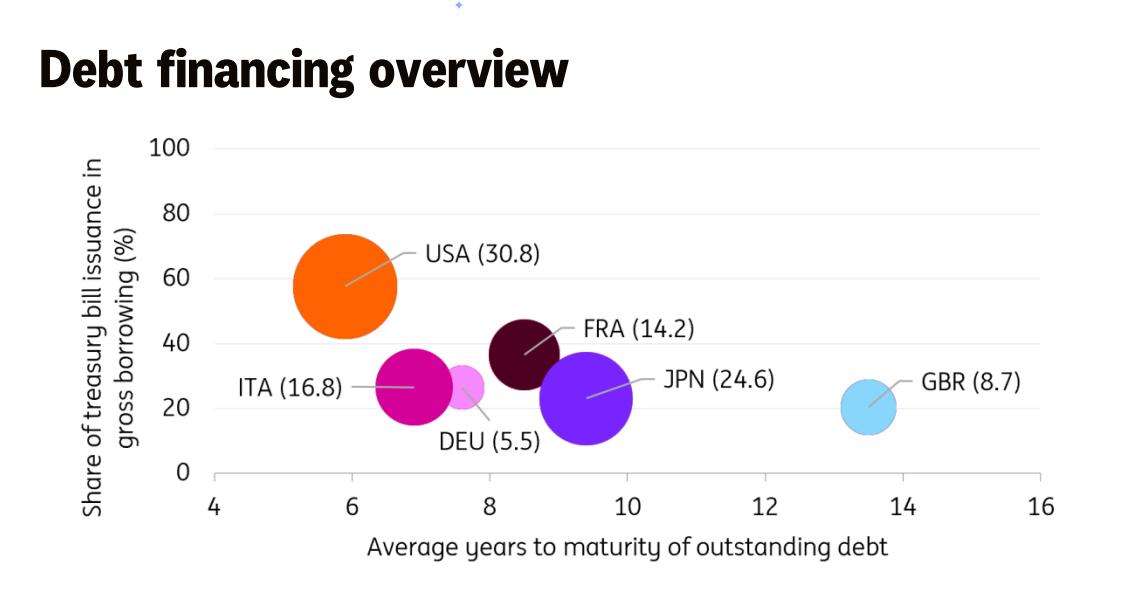
 Fiscal Risk: Seemingly Controllable, Yet Poised for Outbreak The sell-off of French government bonds has been unfolding over the past few months, with the core issue being market concerns about the credibility of the fiscal budget. Once investors doubt the government's inability or unwillingness to correct the deteriorating fiscal path, they will demand higher bond yields; in extreme cases, as in the 2010 Greek crisis, the market may directly refuse to subscribe to French government bonds. France is not Greece. Our baseline scenario suggests that moderate fiscal consolidation can keep French bond yield spreads within a reasonable range by 2027. Even if the French political arena fails to reassure the market, the ECB's Transmission Protection Instrument (TPI) can prevent widespread risk contagion. The hidden danger on the US side lies in the fact that nearly 60% of new US Treasury issuance is in the form of short-term Treasury bills, resulting in a massive refinancing scale. What would happen if inflation surged, forcing the US Treasury to continuously raise refinancing rates? Or what if White House policies again break the correlation between the dollar and US Treasury bonds as safe havens—like in March-April 2025? We saw then that the collapse of this correlation could trigger an extreme sell-off of the dollar. Meanwhile, overseas investors' foreign exchange hedging ratio for dollar assets has declined again, indicating that the current environment is similar to the risk structure at the beginning of 2025. (See attached chart: Debt Financing Overview)
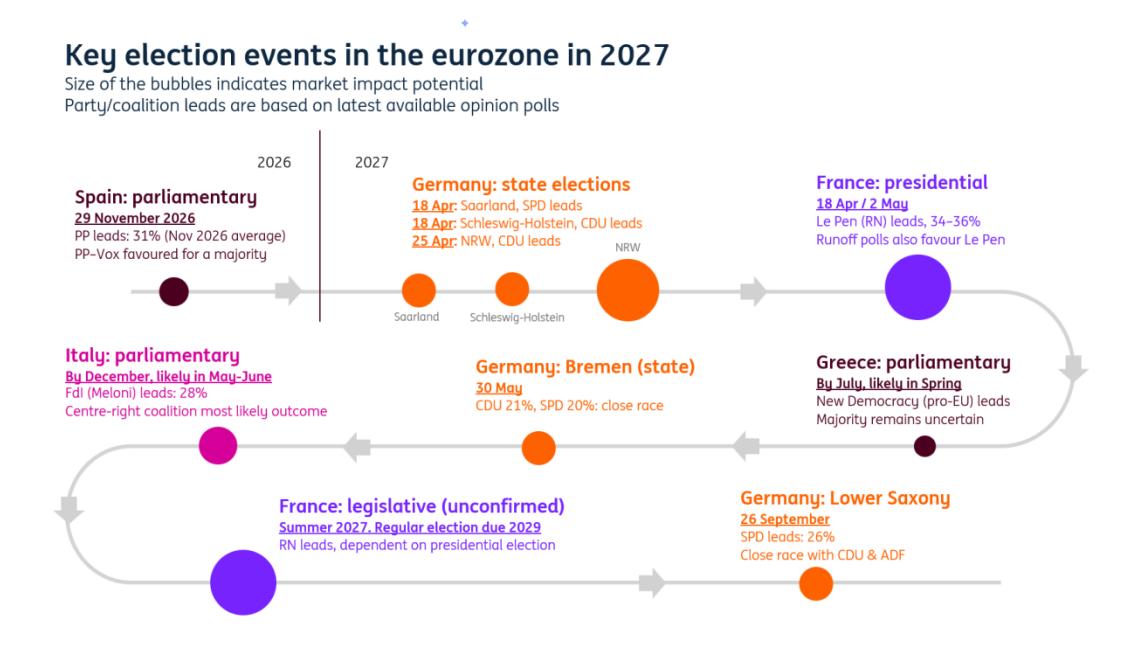
 Closely monitor the EU election schedule! The Eurozone faces a high concentration of political risks in 2027, with the market primarily focused on fiscal implications and the risk of EU political fragmentation. A negative outcome for the euro would significantly benefit the Swiss franc, leveraging its status as a safe-haven currency in Europe. The French election, simultaneously linking fiscal and EU-wide risks, carries the highest weight. The biggest downside risk for the euro stems from a surprise victory for Jean-Luc Mélenchon in the April-May presidential election, or a hung parliament without an absolute majority in the summer elections. A secondary risk is a Marine Le Pen victory; if prior signals indicate a more confrontational stance towards the EU than the market anticipates, it could also suppress market sentiment. Several German state elections will also be closely monitored, observing whether government stability deteriorates further and whether support for the Eurosceptic Alternative for Germany (AfD) continues to rise. The market will focus on their impact on Germany's reform agenda and subsequent economic growth prospects. The Italian election ranks third on our list of political risks. While legally scheduled for December at the latest, the possibility of early voting in May-June is increasing. Prime Minister Gorgia Meloni remains a favorite for re-election and is expected to gain broader coalition support. The resilience of Italian assets is highly dependent on Meloni's fiscal discipline; we believe that if the center-left camp unexpectedly wins, Italian government bonds and the euro will face significant downward pressure. (See attached chart: A packed election schedule for 2027)
 The "currency devaluation trade" is making a comeback. 2025 is a year dominated by dollar devaluation trades: market concerns about the Federal Reserve's independence put pressure on the dollar against the Swiss franc, while gold and Bitcoin strengthened in tandem. This trading logic briefly resurfaced in August this year when Scott Bessant expanded the scale of long-term US Treasury repurchase agreements, causing panic in the bond market and a sharp drop in the dollar against the Swiss franc. If US Treasury yields rise rapidly next year, the theme of "financial repression" will return to the forefront. The US Treasury may incentivize banks to increase their holdings of US Treasury bonds through regulatory measures or pressure the Federal Reserve to intervene in the bond market, thereby suppressing US Treasury yields. Once the market believes that the Treasury is deliberately suppressing yields, preventing interest rates from fully compensating for inflation and fiscal risks, the dollar will face a sharp sell-off. (See attached chart: The dollar is an efficient safe-haven currency, but the situation is not static.)
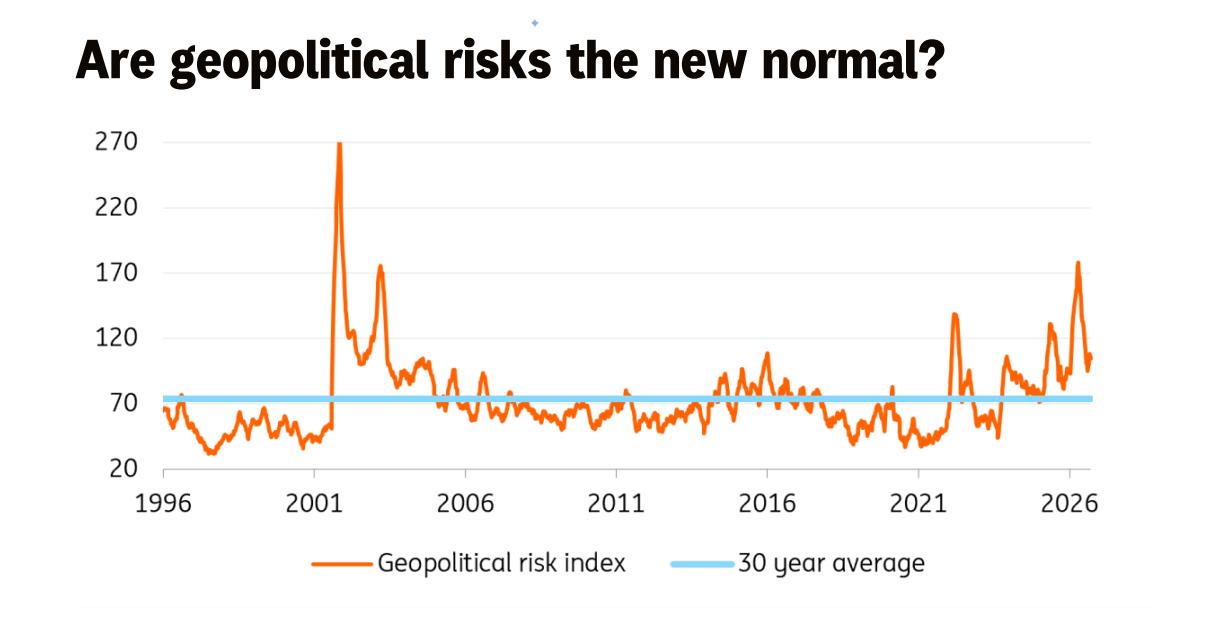 Is carry trade coming to an end? The popular carry trade target currencies in 2026 are the Turkish lira and the Nigerian naira. Regarding Turkey, the presidential and parliamentary elections are not scheduled until May 2028 at the latest, posing a risk: the Turkish central bank may abandon its policy of controlled lira depreciation, which would be a huge shock to the market. Nigeria's fundamental pressures have eased slightly after fuel subsidies and energy sector reforms. As for the Japanese yen, we believe that even if the Bank of Japan raises interest rates slightly more aggressively than expected, it is unlikely to trigger a large-scale short squeeze on the yen. Moreover, speculative funds are currently net long on the yen, completely different from the huge short positions held before the sharp yen correction in the summer of 2024. The real trigger for a carry trade stampede is most likely a financial shock. If the AI rally recedes and exposes imbalances and risks in areas such as private equity lending, triggering financial stress, volatility will rise sharply; based on Value at Risk (VaR) risk control rules, the market will deleverage indiscriminately. Since the Silicon Valley banking crisis in 2023, we have not seen a widespread financial stress event for a long time. Large-scale unwinding of carry trades is beneficial to the Japanese yen and Swiss franc, but detrimental to high-yield risk currencies. Geopolitical risks: More than one front needs vigilance Three major tail-end geopolitical risks warrant attention next year. If they erupt, the US dollar will strengthen significantly. 1. Spillover from the Russia-Ukraine conflict, potentially leading to a significant escalation of cyber and hybrid attacks against European countries: European currencies will be hit hardest, with Central and Eastern European currencies and Nordic currencies being the most sensitive due to their geographical proximity. The Swiss franc and Japanese yen will rise in tandem with the US dollar. 2. Expansion of the Middle East conflict, involving more regional powers and external forces: This will primarily impact the foreign exchange market through oil price fluctuations. Currencies of net oil importers will be particularly pressured, especially those whose central banks lack additional room for interest rate hikes to offset inflationary pressures. The US dollar will be the clear winner, while other low-interest currencies will be dragged down by energy inflation. 3. A sharp escalation of geopolitical tensions in East Asia: Asian currencies will be under pressure, with the Australian dollar and New Zealand dollar, as highly liquid linked currencies, also vulnerable. European currencies will be relatively resilient in the initial stages of the impact. Regional risks also include US-China trade and technology frictions.
Inflation Could Repeat the 2022 Shock Our baseline scenario assumes a manageable second wave of the energy shock, with major European central banks expected to begin cutting interest rates by the end of 2027. However, four major risks could overturn this baseline assessment: The second wave of inflationary transmission may only be delayed; a prolonged crisis coupled with rising natural gas prices could erode corporate profit buffers, gradually transmitting to food and service inflation; a tight labor market could amplify the shock through wage increases; a renewed escalation of tensions in the Middle East could push up energy prices; and finally, large-scale fiscal stimulus could offset economic downturns, but at the cost of increased medium- to long-term inflationary pressures. If this scenario unfolds, we expect the US dollar to strengthen across the board. Historically, when the Fed tightens and pushes up global yields, low-interest currencies have often been the hardest hit, but we believe this historical paradigm cannot be simply applied to 2027. The differences in policy responses among central banks will be the decisive factor: central banks that have previously raised interest rates less aggressively will have more policy ammunition to support their currencies. The Norwegian krone and Swedish krona, with their weak liquidity and high beta, are particularly vulnerable in our view. Australia's domestic fundamentals have weaknesses, limiting the Reserve Bank of Australia's room for further interest rate hikes; the Australian dollar may be the main loser. In contrast, as long as the ECB and the Bank of Japan can respond quickly to a rebound in inflation, the euro and yen will be more resilient than in 2022. (See attached chart: Comparison of current policy interest rates and peak rates of this interest rate hike cycle in various countries.) Fiscal Risk: Seemingly Controllable, Yet Poised for Outbreak The sell-off of French government bonds has been unfolding over the past few months, with the core issue being market concerns about the credibility of the fiscal budget. Once investors doubt the government's inability or unwillingness to correct the deteriorating fiscal path, they will demand higher bond yields; in extreme cases, as in the 2010 Greek crisis, the market may directly refuse to subscribe to French government bonds. France is not Greece. Our baseline scenario suggests that moderate fiscal consolidation can keep French bond yield spreads within a reasonable range by 2027. Even if the French political arena fails to reassure the market, the ECB's Transmission Protection Instrument (TPI) can prevent widespread risk contagion. The hidden danger on the US side lies in the fact that nearly 60% of new US Treasury issuance is in the form of short-term Treasury bills, resulting in a massive refinancing scale. What would happen if inflation surged, forcing the US Treasury to continuously raise refinancing rates? Or what if White House policies again break the correlation between the dollar and US Treasury bonds as safe havens—like in March-April 2025? We saw then that the collapse of this correlation could trigger an extreme sell-off of the dollar. Meanwhile, overseas investors' foreign exchange hedging ratio for dollar assets has declined again, indicating that the current environment is similar to the risk structure at the beginning of 2025. (See attached chart: Debt Financing Overview) Closely monitor the EU election schedule! The Eurozone faces a high concentration of political risks in 2027, with the market primarily focused on fiscal implications and the risk of EU political fragmentation. A negative outcome for the euro would significantly benefit the Swiss franc, leveraging its status as a safe-haven currency in Europe. The French election, simultaneously linking fiscal and EU-wide risks, carries the highest weight. The biggest downside risk for the euro stems from a surprise victory for Jean-Luc Mélenchon in the April-May presidential election, or a hung parliament without an absolute majority in the summer elections. A secondary risk is a Marine Le Pen victory; if prior signals indicate a more confrontational stance towards the EU than the market anticipates, it could also suppress market sentiment. Several German state elections will also be closely monitored, observing whether government stability deteriorates further and whether support for the Eurosceptic Alternative for Germany (AfD) continues to rise. The market will focus on their impact on Germany's reform agenda and subsequent economic growth prospects. The Italian election ranks third on our list of political risks. While legally scheduled for December at the latest, the possibility of early voting in May-June is increasing. Prime Minister Gorgia Meloni remains a favorite for re-election and is expected to gain broader coalition support. The resilience of Italian assets is highly dependent on Meloni's fiscal discipline; we believe that if the center-left camp unexpectedly wins, Italian government bonds and the euro will face significant downward pressure. (See attached chart: A packed election schedule for 2027) The "currency devaluation trade" is making a comeback. 2025 is a year dominated by dollar devaluation trades: market concerns about the Federal Reserve's independence put pressure on the dollar against the Swiss franc, while gold and Bitcoin strengthened in tandem. This trading logic briefly resurfaced in August this year when Scott Bessant expanded the scale of long-term US Treasury repurchase agreements, causing panic in the bond market and a sharp drop in the dollar against the Swiss franc. If US Treasury yields rise rapidly next year, the theme of "financial repression" will return to the forefront. The US Treasury may incentivize banks to increase their holdings of US Treasury bonds through regulatory measures or pressure the Federal Reserve to intervene in the bond market, thereby suppressing US Treasury yields. Once the market believes that the Treasury is deliberately suppressing yields, preventing interest rates from fully compensating for inflation and fiscal risks, the dollar will face a sharp sell-off. (See attached chart: The dollar is an efficient safe-haven currency, but the situation is not static.) Is carry trade coming to an end? The popular carry trade target currencies in 2026 are the Turkish lira and the Nigerian naira. Regarding Turkey, the presidential and parliamentary elections are not scheduled until May 2028 at the latest, posing a risk: the Turkish central bank may abandon its policy of controlled lira depreciation, which would be a huge shock to the market. Nigeria's fundamental pressures have eased slightly after fuel subsidies and energy sector reforms. As for the Japanese yen, we believe that even if the Bank of Japan raises interest rates slightly more aggressively than expected, it is unlikely to trigger a large-scale short squeeze on the yen. Moreover, speculative funds are currently net long on the yen, completely different from the huge short positions held before the sharp yen correction in the summer of 2024. The real trigger for a carry trade stampede is most likely a financial shock. If the AI rally recedes and exposes imbalances and risks in areas such as private equity lending, triggering financial stress, volatility will rise sharply; based on Value at Risk (VaR) risk control rules, the market will deleverage indiscriminately. Since the Silicon Valley banking crisis in 2023, we have not seen a widespread financial stress event for a long time. Large-scale unwinding of carry trades is beneficial to the Japanese yen and Swiss franc, but detrimental to high-yield risk currencies. Geopolitical risks: More than one front needs vigilance Three major tail-end geopolitical risks warrant attention next year. If they erupt, the US dollar will strengthen significantly. 1. Spillover from the Russia-Ukraine conflict, potentially leading to a significant escalation of cyber and hybrid attacks against European countries: European currencies will be hit hardest, with Central and Eastern European currencies and Nordic currencies being the most sensitive due to their geographical proximity. The Swiss franc and Japanese yen will rise in tandem with the US dollar. 2. Expansion of the Middle East conflict, involving more regional powers and external forces: This will primarily impact the foreign exchange market through oil price fluctuations. Currencies of net oil importers will be particularly pressured, especially those whose central banks lack additional room for interest rate hikes to offset inflationary pressures. The US dollar will be the clear winner, while other low-interest currencies will be dragged down by energy inflation. 3. A sharp escalation of geopolitical tensions in East Asia: Asian currencies will be under pressure, with the Australian dollar and New Zealand dollar, as highly liquid linked currencies, also vulnerable. European currencies will be relatively resilient in the initial stages of the impact. Regional risks also include US-China trade and technology frictions.
- Risk Warning and Disclaimer
- The market involves risk, and trading may not be suitable for all investors. This article is for reference only and does not constitute personal investment advice, nor does it take into account certain users’ specific investment objectives, financial situation, or other needs. Any investment decisions made based on this information are at your own risk.