The fading risk premium does not equate to the disappearance of risk; is the weak oil price trend likely to continue? The key lies in these five variables.
2026-11-14 09:00:29
Oil prices rose on Friday, with WTI crude up 0.2% to settle at $88.92 a barrel and Brent crude up 0.39% to settle at $96.12 a barrel. However, both benchmarks fell on the weekly chart, with WTI crude down 1.57% and Brent crude down 1.91%. Market sentiment has clearly shifted from fears of supply disruptions to concerns about oversupply.  The core of this shift lies in the fact that just a few months ago, the biggest concern in the market was a supply shortage. Now, the IEA predicts a widening global crude oil supply glut, and continued US pressure on Iran has further diminished the risk premium from the Middle East situation. Price Futures Group analyst Flynn points out that the market's main theme has shifted from "shortage" to "glut." However, oil prices are not falling in a one-sided manner: attacks on Saudi infrastructure by Iranian-backed Houthi rebels in Yemen and attacks on tankers carrying Gulf crude oil initially offset some of the negative factors. Lipow Oil Associates president Lipow believes the market is being pulled by two forces: increased supply in the Middle East and the unchanged US stance on negotiations with Iran, with Iran still refusing entry to inspectors. Demand is also under pressure. SS WealthStreet founder Sachidwa stated that increased US crude oil and fuel inventories reflect signs of slowing demand. The US Energy Information Administration said on Thursday that US crude oil and fuel inventories rose last week, driven by weak demand for refined products and a surge in crude oil imports. Therefore, the continuous decline in oil prices is not driven by a single geopolitical event, but rather by the combined effects of supply recovery, rising inventories, weakening demand, and diminishing risk premiums. IEA Shifts to Supply Surplus in Q4 The International Energy Agency's (IEA) monthly report on Friday was one of the most important turning points for the oil market this week. The IEA stated that despite ongoing attacks on the shipping industry, Middle Eastern oil exports are recovering faster than global oil demand, thus the global oil market will return to a supply surplus in the fourth quarter of this year. The IEA projects that oil supply will average 105 million barrels per day in the fourth quarter, exceeding forecast demand by 1.7 million barrels per day; previously, the IEA had predicted a supply deficit in the fourth quarter. The IEA report stated that the oil market is showing initial signs of rebalancing, with global oil supply exceeding demand for the first time since the outbreak of the Iran-Iraq War. A key fact behind the report is that Gulf oil-producing countries are using workarounds to restore exports that were disrupted since the outbreak of the war in late February. Meanwhile, OPEC+ said on Wednesday that its crude oil production in October was 41.23 million barrels per day, an increase of approximately 2.04 million barrels per day from September, reaching 97% of pre-war February production. This means that the supply recovery is not only reflected in the IEA's forecasts but also in OPEC+'s actual production data. For oil prices, the IEA's shift from a "gap" to a "surplus" forecast has significant pricing implications: it weakens the geopolitical premium previously paid by the market for the Strait of Hormuz disruption and shifts the trading logic more towards a supply-demand balance sheet rather than a single unexpected event. Even if shipping attacks continue, as long as exports recover and production rebounds, the upside potential for oil prices will be limited by the surplus expectation. OPEC+ production recovery and inventory pressure : Data released by OPEC+ on Wednesday showed that crude oil production in October was 41.23 million barrels per day, an increase of approximately 2.04 million barrels per day from September, reaching 97% of the pre-war February production. This indicates that Middle Eastern supplies, previously disrupted by the Iranian war, are rapidly recovering, and Gulf oil-producing countries have resumed exports through alternative methods, significantly reducing global supply tensions. For the market, OPEC+ production recovering to near pre-war levels is important evidence that the surplus expectation has moved from prediction to reality. US inventory data, on the other hand, reinforced the bearish sentiment from the demand side. The US Energy Information Administration stated on Thursday that US crude oil and fuel inventories rose last week, driven by weak demand for refined products and a surge in crude oil imports. SS WealthStreet founder Sachidewa believes that the increase in US crude oil and fuel inventories reflects signs of slowing demand and puts pressure on oil prices. In other words, the current market is not facing a "supply shortage," but rather inventory pressure resulting from the combined effects of supply recovery and weak demand. Looking deeper, the recovery in OPEC+ production will compress geopolitical risk premiums, while rising US inventories will suppress near-month contracts and refining profit expectations. The combined effect makes oil prices more sensitive to negative news and less sensitive to geopolitical conflicts. Unless there is a prolonged blockade of the Strait of Hormuz or significant damage to key Saudi facilities, supply recovery remains the more dominant variable in the current oil market. Middle East Risk Premium Subsides, but Shipping Risks Remain Despite the decline in oil prices, Middle East risks have not completely disappeared. Reports indicate that shipping risks in the Strait of Hormuz have not been eliminated. The Iranian military stated on Thursday that four oil tankers were attacked by explosions in the waterway after ignoring warnings, but this claim has not yet been verified. On the same day, the Houthi rebels claimed to have attacked a pumping station on Saudi Arabia's east-west oil pipeline, an oil facility in Yanbu, and a Saudi Aramco building in Riyadh. These incidents illustrate that attacks on shipping and infrastructure could still temporarily push up oil prices. Furthermore, the US military on Friday denied Iranian claims of an attack on a US early warning radar in Bahrain, stating that the US military shot down two one-way attack drones launched by the Iranian Islamic Revolutionary Guard Corps towards Bahrain without causing any damage. According to Iranian state media, Iran previously claimed the attack was retaliation for a alleged airstrike on a communications tower in its Hormozgan province. The military and security confrontation between the US and Iran continues, but the market is currently more focused on supply recovery and expectations of oversupply, thus significantly compressing risk premiums. It is important to distinguish that the decline in risk premiums does not equate to the disappearance of geopolitical risks. The reason oil prices did not rebound sharply due to the attacks is that IEA and OPEC+ data indicate that supply is recovering, and the market believes that Middle Eastern exports can be maintained through alternative methods. However, the risk premium could quickly return if the Strait of Hormuz experiences a sustained blockade, tanker insurance costs surge, or Saudi export facilities are substantially damaged. US Economic Pressure on Iran and the Bessenter Security Measures US pressure on Iran continues to escalate. US Treasury Secretary Bessenter stated on Friday that he would not back down despite death threats from Iran. Bessenter recently moved from his Washington, D.C. residence to a US military base. In an interview with CNBC, he said that US military personnel in the Gulf region and President Trump have received numerous death threats, prompting him to move at the instruction of the Secret Service. Iran denies planning attacks on US officials and others within the US, but Bessenter described Iran's current behavior as "like a dangerous trapped beast." The report also stated that a senior intelligence official in the Trump administration warned in a memo that Iranian plots against US personnel and citizens have entered an advanced stage. Since August, Bessenter has spearheaded US sanctions and economic pressure on Iran, an operation dubbed "Operation Economic Exile," aimed at forcing Tehran to cease attacks on shipping and reopen the Strait of Hormuz. This economic pressure campaign coincided with the US Navy's blockade of Iranian ports, including sanctions against Middle Eastern bank branches and other financial services companies that facilitate Iranian transactions. In depth, US sanctions and blockades against Iran will continue to create geopolitical uncertainty, but the market currently does not see them as a dominant factor sufficient to reverse the oversupply glut. The details of Bessant's move to the military base reflect the continued high security risks of the US-Iran confrontation and remind the market that geopolitical tail risks have not disappeared. Jones Act Exemption Extended Again A White House official said on Friday that US President Trump has extended an exemption for another 90 days, allowing foreign-flagged ships to transport oil and other commodities between US ports. Industry sources said the Trump administration extended this exemption under the more than 100-year-old Jones Act. This is the longest-lasting exemption in the history of the Jones Act. The Jones Act stipulates that cargo transported between US ports must be carried by vessels built in the US, owned by US companies, and operated by US crew. The US government issued a comprehensive exemption in March, just one month after the US launched its war against Iran, in an effort to lower oil and fuel prices. In August, the government extended the exemption period, but stipulated that future applications would be reviewed on a case-by-case basis—a requirement retained in the latest extension. The purpose of the exemption is to reduce gasoline, diesel, and fertilizer prices, which have risen due to the Iraq War, by improving shipping flexibility, alleviating transportation bottlenecks, and addressing these issues. The White House stated that since the exemption was implemented in March, an additional 90 million barrels of petroleum products have been transported between U.S. ports, mostly refined products, including 27 million barrels of gasoline, 26 million barrels of crude oil, and 6 million barrels of renewable fuels. Historically, exemptions under the Jones Act have been strictly limited due to strong support from the U.S. shipbuilding industry, which wields significant lobbying influence nationwide. In a broader context, while extending the exemption does not directly alter international crude oil supply and demand, it can improve domestic maritime logistics in the U.S., reduce regional energy transportation costs, and have a marginal negative impact on refined oil prices and regional price differentials. Emergency Oil Reserves Released at an Accelerated Pace The International Energy Agency (IEA) also stated on Friday that its member countries will release approximately 71 million barrels of emergency oil and petroleum product reserves by the end of February 2027, roughly double the pace of releases in September and October. This release will include approximately 15 million barrels of diesel, planned for market release by the end of February, almost entirely from government reserves in France and Germany; the January release was 4 to 5 million barrels, with a slower pace expected in February. The IEA manages the strategic petroleum reserves of industrialized nations to address severe oil supply shocks. This action is part of a record-breaking reserve release program first announced in March after the Iran war disrupted Middle East supplies and drove up oil prices. Europe is expected to release a total of 33 million barrels of emergency oil reserves, primarily from Germany and France; the US strategic petroleum reserve will release approximately 37 million barrels. Government reserves will account for at least 85% of the total planned release. In March, the IEA announced it would release up to 400 million barrels of strategic reserves to fill supply gaps caused by the Iran war disrupting the oil market. The IEA stated that member countries have since released 349 million barrels of emergency reserves. The report indicates that if the current plan is implemented as scheduled, the total amount of emergency reserves released by IEA member countries will reach approximately 420 million barrels, exceeding the 400 million barrels pledged in March. In a deeper context, reserve releases directly increase deliverable supply, especially diesel releases, which alleviate tightness in European refined product prices; however, with rising expectations of oversupply, accelerated releases will further reinforce the signal of ample supply, suppressing the potential for oil price rebounds. Market Landscape Shift and Future Outlook Based on this week's information, the main theme in the oil market has shifted from "geopolitical supply disruptions" to "oversupply rebalancing." Negative factors include: the IEA's forecast of a 1.7 million barrel per day oversupply in the fourth quarter; OPEC+ production recovering to 97% of pre-war levels in October; increased US crude oil and fuel inventories indicating slowing demand; accelerated reserve releases by IEA member countries, with a total release potentially reaching approximately 420 million barrels; and the US extending the Jones Act exemption to improve domestic maritime logistics. These factors collectively suppressed oil prices, causing Brent and US crude oil to fall for the second consecutive week. However, the market still needs to pay attention to tail-end geopolitical risks: tanker explosions in the Strait of Hormuz, Houthi attacks on Saudi oil pipelines and facilities, the failure of a US-Iran agreement and Iran's refusal to conduct inspections, the US Navy's blockade of Iranian ports and "economic exile" sanctions—all of these could temporarily push up risk premiums. Current price reactions indicate that the market is more confident in the forces of supply recovery and rising inventories, but has not completely ignored shipping risks. Therefore, the focus of future observation should be on: whether the IEA's reserve releases are implemented as scheduled, whether OPEC+ production can maintain pre-war levels, whether US inventories and refined product demand continue to weaken, whether the Strait of Hormuz attacks escalate, and whether there are any changes in US-Iran negotiations and inspection issues. If the oversupply data continues to materialize, the weak oil price trend is unlikely to change; if shipping or Saudi facilities suffer substantial damage, the risk premium may quickly return to normal.
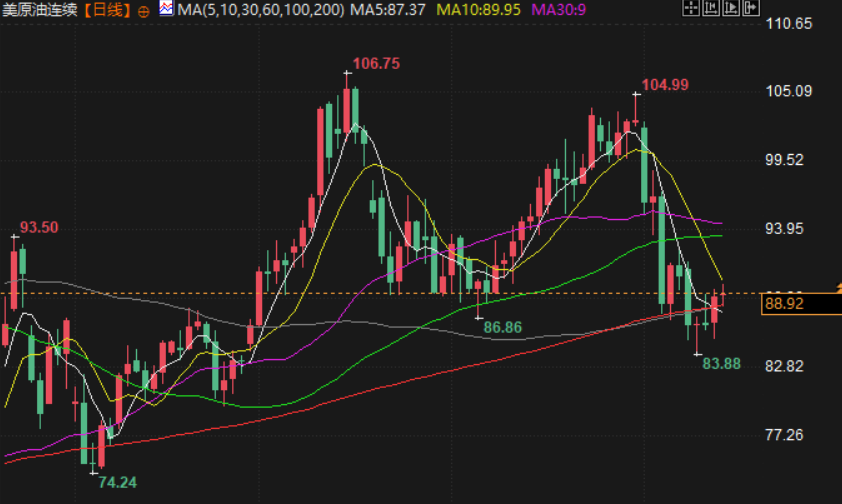
The core of this shift lies in the fact that just a few months ago, the biggest concern in the market was a supply shortage. Now, the IEA predicts a widening global crude oil supply glut, and continued US pressure on Iran has further diminished the risk premium from the Middle East situation. Price Futures Group analyst Flynn points out that the market's main theme has shifted from "shortage" to "glut." However, oil prices are not falling in a one-sided manner: attacks on Saudi infrastructure by Iranian-backed Houthi rebels in Yemen and attacks on tankers carrying Gulf crude oil initially offset some of the negative factors. Lipow Oil Associates president Lipow believes the market is being pulled by two forces: increased supply in the Middle East and the unchanged US stance on negotiations with Iran, with Iran still refusing entry to inspectors. Demand is also under pressure. SS WealthStreet founder Sachidwa stated that increased US crude oil and fuel inventories reflect signs of slowing demand. The US Energy Information Administration said on Thursday that US crude oil and fuel inventories rose last week, driven by weak demand for refined products and a surge in crude oil imports. Therefore, the continuous decline in oil prices is not driven by a single geopolitical event, but rather by the combined effects of supply recovery, rising inventories, weakening demand, and diminishing risk premiums. IEA Shifts to Supply Surplus in Q4 The International Energy Agency's (IEA) monthly report on Friday was one of the most important turning points for the oil market this week. The IEA stated that despite ongoing attacks on the shipping industry, Middle Eastern oil exports are recovering faster than global oil demand, thus the global oil market will return to a supply surplus in the fourth quarter of this year. The IEA projects that oil supply will average 105 million barrels per day in the fourth quarter, exceeding forecast demand by 1.7 million barrels per day; previously, the IEA had predicted a supply deficit in the fourth quarter. The IEA report stated that the oil market is showing initial signs of rebalancing, with global oil supply exceeding demand for the first time since the outbreak of the Iran-Iraq War. A key fact behind the report is that Gulf oil-producing countries are using workarounds to restore exports that were disrupted since the outbreak of the war in late February. Meanwhile, OPEC+ said on Wednesday that its crude oil production in October was 41.23 million barrels per day, an increase of approximately 2.04 million barrels per day from September, reaching 97% of pre-war February production. This means that the supply recovery is not only reflected in the IEA's forecasts but also in OPEC+'s actual production data. For oil prices, the IEA's shift from a "gap" to a "surplus" forecast has significant pricing implications: it weakens the geopolitical premium previously paid by the market for the Strait of Hormuz disruption and shifts the trading logic more towards a supply-demand balance sheet rather than a single unexpected event. Even if shipping attacks continue, as long as exports recover and production rebounds, the upside potential for oil prices will be limited by the surplus expectation. OPEC+ production recovery and inventory pressure : Data released by OPEC+ on Wednesday showed that crude oil production in October was 41.23 million barrels per day, an increase of approximately 2.04 million barrels per day from September, reaching 97% of the pre-war February production. This indicates that Middle Eastern supplies, previously disrupted by the Iranian war, are rapidly recovering, and Gulf oil-producing countries have resumed exports through alternative methods, significantly reducing global supply tensions. For the market, OPEC+ production recovering to near pre-war levels is important evidence that the surplus expectation has moved from prediction to reality. US inventory data, on the other hand, reinforced the bearish sentiment from the demand side. The US Energy Information Administration stated on Thursday that US crude oil and fuel inventories rose last week, driven by weak demand for refined products and a surge in crude oil imports. SS WealthStreet founder Sachidewa believes that the increase in US crude oil and fuel inventories reflects signs of slowing demand and puts pressure on oil prices. In other words, the current market is not facing a "supply shortage," but rather inventory pressure resulting from the combined effects of supply recovery and weak demand. Looking deeper, the recovery in OPEC+ production will compress geopolitical risk premiums, while rising US inventories will suppress near-month contracts and refining profit expectations. The combined effect makes oil prices more sensitive to negative news and less sensitive to geopolitical conflicts. Unless there is a prolonged blockade of the Strait of Hormuz or significant damage to key Saudi facilities, supply recovery remains the more dominant variable in the current oil market. Middle East Risk Premium Subsides, but Shipping Risks Remain Despite the decline in oil prices, Middle East risks have not completely disappeared. Reports indicate that shipping risks in the Strait of Hormuz have not been eliminated. The Iranian military stated on Thursday that four oil tankers were attacked by explosions in the waterway after ignoring warnings, but this claim has not yet been verified. On the same day, the Houthi rebels claimed to have attacked a pumping station on Saudi Arabia's east-west oil pipeline, an oil facility in Yanbu, and a Saudi Aramco building in Riyadh. These incidents illustrate that attacks on shipping and infrastructure could still temporarily push up oil prices. Furthermore, the US military on Friday denied Iranian claims of an attack on a US early warning radar in Bahrain, stating that the US military shot down two one-way attack drones launched by the Iranian Islamic Revolutionary Guard Corps towards Bahrain without causing any damage. According to Iranian state media, Iran previously claimed the attack was retaliation for a alleged airstrike on a communications tower in its Hormozgan province. The military and security confrontation between the US and Iran continues, but the market is currently more focused on supply recovery and expectations of oversupply, thus significantly compressing risk premiums. It is important to distinguish that the decline in risk premiums does not equate to the disappearance of geopolitical risks. The reason oil prices did not rebound sharply due to the attacks is that IEA and OPEC+ data indicate that supply is recovering, and the market believes that Middle Eastern exports can be maintained through alternative methods. However, the risk premium could quickly return if the Strait of Hormuz experiences a sustained blockade, tanker insurance costs surge, or Saudi export facilities are substantially damaged. US Economic Pressure on Iran and the Bessenter Security Measures US pressure on Iran continues to escalate. US Treasury Secretary Bessenter stated on Friday that he would not back down despite death threats from Iran. Bessenter recently moved from his Washington, D.C. residence to a US military base. In an interview with CNBC, he said that US military personnel in the Gulf region and President Trump have received numerous death threats, prompting him to move at the instruction of the Secret Service. Iran denies planning attacks on US officials and others within the US, but Bessenter described Iran's current behavior as "like a dangerous trapped beast." The report also stated that a senior intelligence official in the Trump administration warned in a memo that Iranian plots against US personnel and citizens have entered an advanced stage. Since August, Bessenter has spearheaded US sanctions and economic pressure on Iran, an operation dubbed "Operation Economic Exile," aimed at forcing Tehran to cease attacks on shipping and reopen the Strait of Hormuz. This economic pressure campaign coincided with the US Navy's blockade of Iranian ports, including sanctions against Middle Eastern bank branches and other financial services companies that facilitate Iranian transactions. In depth, US sanctions and blockades against Iran will continue to create geopolitical uncertainty, but the market currently does not see them as a dominant factor sufficient to reverse the oversupply glut. The details of Bessant's move to the military base reflect the continued high security risks of the US-Iran confrontation and remind the market that geopolitical tail risks have not disappeared. Jones Act Exemption Extended Again A White House official said on Friday that US President Trump has extended an exemption for another 90 days, allowing foreign-flagged ships to transport oil and other commodities between US ports. Industry sources said the Trump administration extended this exemption under the more than 100-year-old Jones Act. This is the longest-lasting exemption in the history of the Jones Act. The Jones Act stipulates that cargo transported between US ports must be carried by vessels built in the US, owned by US companies, and operated by US crew. The US government issued a comprehensive exemption in March, just one month after the US launched its war against Iran, in an effort to lower oil and fuel prices. In August, the government extended the exemption period, but stipulated that future applications would be reviewed on a case-by-case basis—a requirement retained in the latest extension. The purpose of the exemption is to reduce gasoline, diesel, and fertilizer prices, which have risen due to the Iraq War, by improving shipping flexibility, alleviating transportation bottlenecks, and addressing these issues. The White House stated that since the exemption was implemented in March, an additional 90 million barrels of petroleum products have been transported between U.S. ports, mostly refined products, including 27 million barrels of gasoline, 26 million barrels of crude oil, and 6 million barrels of renewable fuels. Historically, exemptions under the Jones Act have been strictly limited due to strong support from the U.S. shipbuilding industry, which wields significant lobbying influence nationwide. In a broader context, while extending the exemption does not directly alter international crude oil supply and demand, it can improve domestic maritime logistics in the U.S., reduce regional energy transportation costs, and have a marginal negative impact on refined oil prices and regional price differentials. Emergency Oil Reserves Released at an Accelerated Pace The International Energy Agency (IEA) also stated on Friday that its member countries will release approximately 71 million barrels of emergency oil and petroleum product reserves by the end of February 2027, roughly double the pace of releases in September and October. This release will include approximately 15 million barrels of diesel, planned for market release by the end of February, almost entirely from government reserves in France and Germany; the January release was 4 to 5 million barrels, with a slower pace expected in February. The IEA manages the strategic petroleum reserves of industrialized nations to address severe oil supply shocks. This action is part of a record-breaking reserve release program first announced in March after the Iran war disrupted Middle East supplies and drove up oil prices. Europe is expected to release a total of 33 million barrels of emergency oil reserves, primarily from Germany and France; the US strategic petroleum reserve will release approximately 37 million barrels. Government reserves will account for at least 85% of the total planned release. In March, the IEA announced it would release up to 400 million barrels of strategic reserves to fill supply gaps caused by the Iran war disrupting the oil market. The IEA stated that member countries have since released 349 million barrels of emergency reserves. The report indicates that if the current plan is implemented as scheduled, the total amount of emergency reserves released by IEA member countries will reach approximately 420 million barrels, exceeding the 400 million barrels pledged in March. In a deeper context, reserve releases directly increase deliverable supply, especially diesel releases, which alleviate tightness in European refined product prices; however, with rising expectations of oversupply, accelerated releases will further reinforce the signal of ample supply, suppressing the potential for oil price rebounds. Market Landscape Shift and Future Outlook Based on this week's information, the main theme in the oil market has shifted from "geopolitical supply disruptions" to "oversupply rebalancing." Negative factors include: the IEA's forecast of a 1.7 million barrel per day oversupply in the fourth quarter; OPEC+ production recovering to 97% of pre-war levels in October; increased US crude oil and fuel inventories indicating slowing demand; accelerated reserve releases by IEA member countries, with a total release potentially reaching approximately 420 million barrels; and the US extending the Jones Act exemption to improve domestic maritime logistics. These factors collectively suppressed oil prices, causing Brent and US crude oil to fall for the second consecutive week. However, the market still needs to pay attention to tail-end geopolitical risks: tanker explosions in the Strait of Hormuz, Houthi attacks on Saudi oil pipelines and facilities, the failure of a US-Iran agreement and Iran's refusal to conduct inspections, the US Navy's blockade of Iranian ports and "economic exile" sanctions—all of these could temporarily push up risk premiums. Current price reactions indicate that the market is more confident in the forces of supply recovery and rising inventories, but has not completely ignored shipping risks. Therefore, the focus of future observation should be on: whether the IEA's reserve releases are implemented as scheduled, whether OPEC+ production can maintain pre-war levels, whether US inventories and refined product demand continue to weaken, whether the Strait of Hormuz attacks escalate, and whether there are any changes in US-Iran negotiations and inspection issues. If the oversupply data continues to materialize, the weak oil price trend is unlikely to change; if shipping or Saudi facilities suffer substantial damage, the risk premium may quickly return to normal.
- Risk Warning and Disclaimer
- The market involves risk, and trading may not be suitable for all investors. This article is for reference only and does not constitute personal investment advice, nor does it take into account certain users’ specific investment objectives, financial situation, or other needs. Any investment decisions made based on this information are at your own risk.