Annual Outlook: Will Crude Oil in 2026 Experience a Slow Decline or a Roller Coaster?
2025-12-11 15:47:48
Looking back at 2025, the commodity market was indeed a tale of two extremes. On one hand, crude oil continued to be pressured by oversupply and weak demand, while on the other hand, silver and platinum rose all the way up to multi-year highs, supported by structural shortages and industrial demand, even outperforming gold at one point. The overall pattern was one of weak energy and strong precious metals.
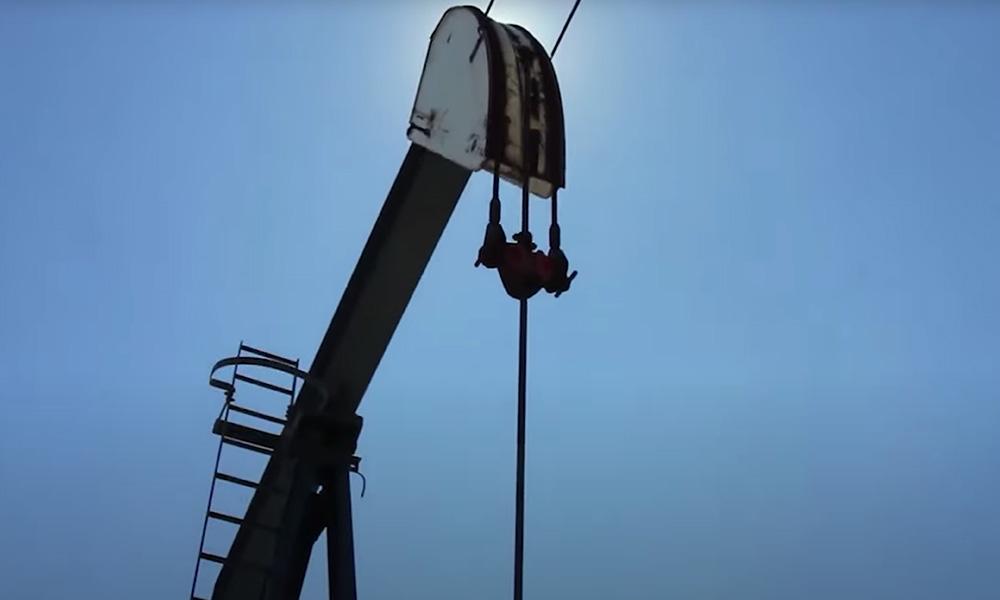
On the crude oil front, the pressure mainly comes from the supply side. From April to November, the oil-producing alliance gradually released its previously agreed-upon production cut quota of approximately 2.9 million barrels per day, aiming to regain market share and simultaneously restrain the expansion of US shale oil. Behind this lies both a power struggle from Washington and the practical needs of member countries' own finances and domestic politics. However, implementation has not been perfect; poor compliance from countries like Iraq and Nigeria has weakened the binding force of the production cut framework, causing market confidence in quota commitments to decline.
Demand was equally weak. The International Energy Agency predicts that global crude oil demand will only grow by about 700,000 barrels per day in 2025, significantly lower than the OPEC's previous optimistic forecast of about 1.3 million barrels per day. Tariff frictions and trade uncertainties dragged down global economic activity, and the recovery in refined oil consumption fell short of expectations. In terms of prices, US crude oil fell to a four-year low in the second quarter before gradually stabilizing around mid-year. During this period, limited regional conflicts and US sanctions against some Russian energy companies created a temporary risk premium, but this only provided a floor and was insufficient to reverse the bearish trend.
From late November to early December, oil prices remained low. At that time, US crude oil fluctuated around $58.6 per barrel, with key support around $56 to $57 per barrel. The market generally believed that a breach of this level could open up further downside potential. Against this backdrop, the OPEC+ alliance, at its meeting at the end of November, chose to maintain its existing 2026 production target, suspend further production increases, and signaled that it could resume production cuts if necessary, adopting a wait-and-see approach with caution. The Russia-Ukraine negotiations were unlikely to lead to a substantial lifting of sanctions in the short term, and although the supply side had not fully eased, the expectation of oversupply still prevailed.
Deeper than prices lies a reassessment of production capacity and the quota system. Starting in 2026, the oil-producing alliance plans to conduct annual capacity assessments of its members, and intends to incorporate the assessment results into quota allocations from 2027 onwards. Analysts believe this arrangement aims to make national production caps closer to actual production capacity, thereby increasing the credibility and enforceability of the quota agreement.
This also means that some countries are "paving the way for future negotiations." Some Middle Eastern oil-producing countries have already invested heavily in expanding their production capacity, hoping to achieve higher targets under the new rules; while some African oil-producing countries are facing declining production capacity due to natural reductions and insufficient investment. If quotas are strictly determined according to theoretical production capacity, it will directly affect sensitive issues such as fiscal revenue and employment.
For traders, if this new mechanism is successfully implemented, future medium- to long-term supply expectations will be more transparent, and the central level of crude oil prices is expected to form within a clearer regulatory framework. However, during the transition phase, negotiation and bargaining, disagreements among member countries, and the possibility of sudden withdrawals could all act as catalysts for price volatility, leading to more volatile short-term market sentiment.
Looking ahead to 2026, analysts generally believe that the fundamentals for crude oil will remain bearish, with downward pressure on the price center. The International Energy Agency predicts that the global crude oil market may experience a surplus of more than 4 million barrels per day in 2026. Increased supply from non-oil-producing countries, particularly from the United States, Brazil, Canada, and Guyana, will continue to suppress oil prices. Even if the growth rate of US shale oil production slows down, it will be difficult to change the overall pattern of "more supply and weaker demand."
On the demand side, given the mildly weak global economy and relatively tight monetary environment, significant growth in demand is unlikely. A strong US dollar will also diminish the attractiveness of dollar-denominated commodities. If key technical support levels are breached, US crude oil may well seek a bottom in the $50 or even $45 per barrel range.
Historically, looking back at 2025, oil prices mostly fluctuated between $56 and $71 per barrel, briefly approaching $55 before rebounding quickly. The International Energy Agency warned that by the eve of 2026, the market could have accumulated a supply surplus of over 3 million barrels per day, while the U.S. Energy Information Administration projected slight demand growth and a slight slowdown in non-alliance supply growth. If prices fall below the key level of $55 per barrel and break down through the downward channel of the past three years, the probability of a drop to the $50 per barrel range will significantly increase.
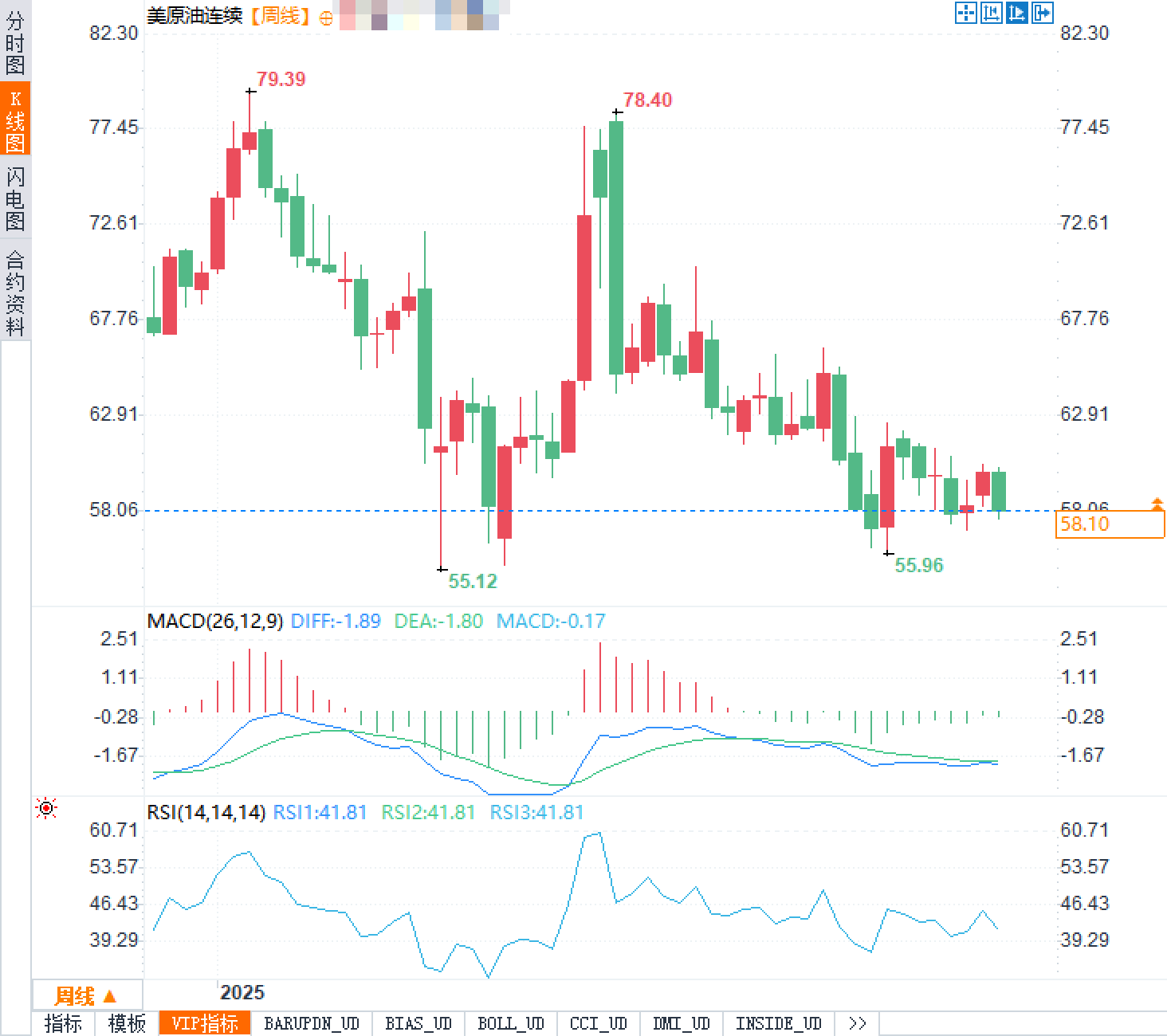
Conversely, if prices can regain the 200-week moving average around $79 per barrel and the psychological level of $80 per barrel, a short-term rebound is possible, triggering short covering and a return of institutional investors. For traders, these price levels are not only technical chart reference points, but also watershed moments marking a shift in market sentiment from "pessimistic pricing" to "recovery play."
Even with a bearish fundamental outlook, the crude oil market is not a simple one-way street. Any new geopolitical disturbances—such as renewed tensions in the Middle East or supply disruptions in other key oil-producing countries—could quickly tighten supply, providing unexpected support for oil prices. A more binding production cut agreement among oil-producing nations after a significant price drop, or an unexpected natural decline in US shale oil production, could also push oil prices to bottom out and stabilize earlier.
On the crude oil front, the pressure mainly comes from the supply side. From April to November, the oil-producing alliance gradually released its previously agreed-upon production cut quota of approximately 2.9 million barrels per day, aiming to regain market share and simultaneously restrain the expansion of US shale oil. Behind this lies both a power struggle from Washington and the practical needs of member countries' own finances and domestic politics. However, implementation has not been perfect; poor compliance from countries like Iraq and Nigeria has weakened the binding force of the production cut framework, causing market confidence in quota commitments to decline.
Demand was equally weak. The International Energy Agency predicts that global crude oil demand will only grow by about 700,000 barrels per day in 2025, significantly lower than the OPEC's previous optimistic forecast of about 1.3 million barrels per day. Tariff frictions and trade uncertainties dragged down global economic activity, and the recovery in refined oil consumption fell short of expectations. In terms of prices, US crude oil fell to a four-year low in the second quarter before gradually stabilizing around mid-year. During this period, limited regional conflicts and US sanctions against some Russian energy companies created a temporary risk premium, but this only provided a floor and was insufficient to reverse the bearish trend.
From late November to early December, oil prices remained low. At that time, US crude oil fluctuated around $58.6 per barrel, with key support around $56 to $57 per barrel. The market generally believed that a breach of this level could open up further downside potential. Against this backdrop, the OPEC+ alliance, at its meeting at the end of November, chose to maintain its existing 2026 production target, suspend further production increases, and signaled that it could resume production cuts if necessary, adopting a wait-and-see approach with caution. The Russia-Ukraine negotiations were unlikely to lead to a substantial lifting of sanctions in the short term, and although the supply side had not fully eased, the expectation of oversupply still prevailed.
Capacity competition and quota restructuring: New challenges within the alliance
Deeper than prices lies a reassessment of production capacity and the quota system. Starting in 2026, the oil-producing alliance plans to conduct annual capacity assessments of its members, and intends to incorporate the assessment results into quota allocations from 2027 onwards. Analysts believe this arrangement aims to make national production caps closer to actual production capacity, thereby increasing the credibility and enforceability of the quota agreement.
This also means that some countries are "paving the way for future negotiations." Some Middle Eastern oil-producing countries have already invested heavily in expanding their production capacity, hoping to achieve higher targets under the new rules; while some African oil-producing countries are facing declining production capacity due to natural reductions and insufficient investment. If quotas are strictly determined according to theoretical production capacity, it will directly affect sensitive issues such as fiscal revenue and employment.
For traders, if this new mechanism is successfully implemented, future medium- to long-term supply expectations will be more transparent, and the central level of crude oil prices is expected to form within a clearer regulatory framework. However, during the transition phase, negotiation and bargaining, disagreements among member countries, and the possibility of sudden withdrawals could all act as catalysts for price volatility, leading to more volatile short-term market sentiment.
2026: Fundamentals are bearish, key price levels will become "leading indicators"
Looking ahead to 2026, analysts generally believe that the fundamentals for crude oil will remain bearish, with downward pressure on the price center. The International Energy Agency predicts that the global crude oil market may experience a surplus of more than 4 million barrels per day in 2026. Increased supply from non-oil-producing countries, particularly from the United States, Brazil, Canada, and Guyana, will continue to suppress oil prices. Even if the growth rate of US shale oil production slows down, it will be difficult to change the overall pattern of "more supply and weaker demand."
On the demand side, given the mildly weak global economy and relatively tight monetary environment, significant growth in demand is unlikely. A strong US dollar will also diminish the attractiveness of dollar-denominated commodities. If key technical support levels are breached, US crude oil may well seek a bottom in the $50 or even $45 per barrel range.
Historically, looking back at 2025, oil prices mostly fluctuated between $56 and $71 per barrel, briefly approaching $55 before rebounding quickly. The International Energy Agency warned that by the eve of 2026, the market could have accumulated a supply surplus of over 3 million barrels per day, while the U.S. Energy Information Administration projected slight demand growth and a slight slowdown in non-alliance supply growth. If prices fall below the key level of $55 per barrel and break down through the downward channel of the past three years, the probability of a drop to the $50 per barrel range will significantly increase.
Conversely, if prices can regain the 200-week moving average around $79 per barrel and the psychological level of $80 per barrel, a short-term rebound is possible, triggering short covering and a return of institutional investors. For traders, these price levels are not only technical chart reference points, but also watershed moments marking a shift in market sentiment from "pessimistic pricing" to "recovery play."
Even with a bearish fundamental outlook, the crude oil market is not a simple one-way street. Any new geopolitical disturbances—such as renewed tensions in the Middle East or supply disruptions in other key oil-producing countries—could quickly tighten supply, providing unexpected support for oil prices. A more binding production cut agreement among oil-producing nations after a significant price drop, or an unexpected natural decline in US shale oil production, could also push oil prices to bottom out and stabilize earlier.
- Risk Warning and Disclaimer
- The market involves risk, and trading may not be suitable for all investors. This article is for reference only and does not constitute personal investment advice, nor does it take into account certain users’ specific investment objectives, financial situation, or other needs. Any investment decisions made based on this information are at your own risk.