The market is entering a critical window period; a preview of this week's interest rate meetings of the three major central banks.
2025-12-16 17:50:03
This week marks a crucial window for the market, with the Bank of England, the European Central Bank, and the Bank of Japan all set to announce their monetary policy decisions. Against the backdrop of concerns about economic growth, persistent inflation stickiness, and the high probability of a rate hike by the Bank of Japan, the policy guidance from these central banks may trigger significant volatility in the foreign exchange market and reshape market expectations for 2026.
At the beginning of this week, investors will first digest the delayed US employment and inflation data—both key indicators for determining the Federal Reserve's interest rate path in 2026. Following this, market focus will shift to the three major central bank policy meetings this weekend. The decisions of the Bank of England, the European Central Bank, and the Bank of Japan are all likely to have a significant impact on the foreign exchange market. Below are the key points traders should pay attention to from each central bank meeting:
Bank of England – Thursday, December 18
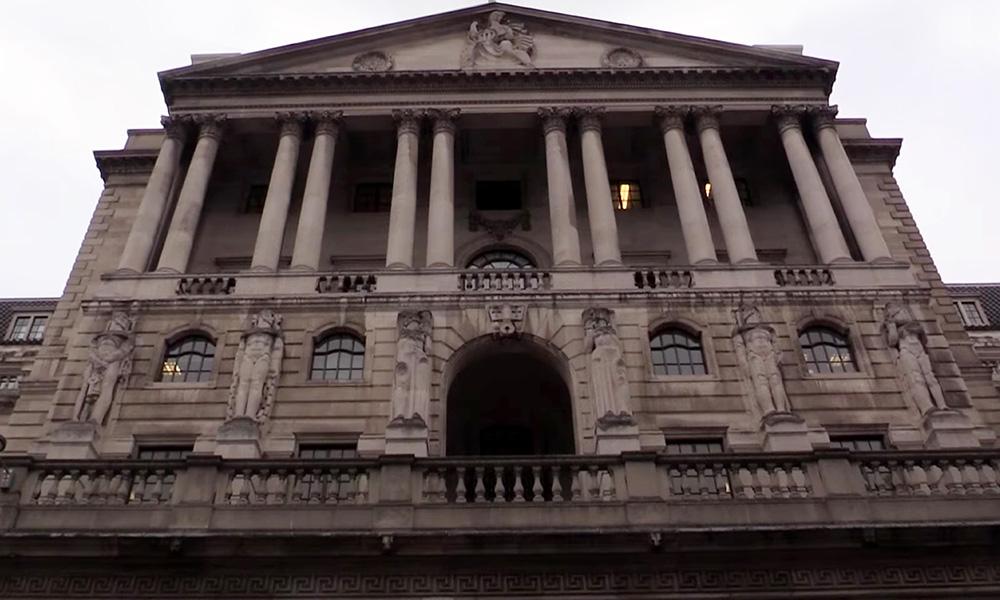
The Bank of England is facing a difficult decision, with the market already pricing in a 25-basis-point cut in the benchmark interest rate, from the current 4% to 3.75%. The nine-member Monetary Policy Committee (MPC) is deeply divided, mirroring the narrow 5-4 decision in November to keep rates unchanged.
The core motivation for the debate over the resolution
The UK economy has stalled, with GDP contracting by 0.1% month-on-month in both September and October, a stark contrast to market expectations of a slight expansion. In the past seven months, the UK economy has only achieved positive growth in one month, and overall output has been essentially flat since the beginning of the second quarter of 2025. Key sectors such as services, manufacturing, and construction have all shown weakness.
The job market is showing clear signs of cooling, and rising unemployment has eased short-term inflationary pressures. Many businesses say they are delaying decisions while awaiting the fall budget, a phenomenon JPMorgan strategists call a "dampening effect" on economic activity. KPMG analysts expect this weakness to continue into the fourth quarter.
Price pressures have eased faster than expected. Bank of England Governor Andrew Bailey stated in November that he would support interest rate cuts if inflation continues to decline, and he also agreed with the market consensus that two rate cuts may be implemented in 2026, bringing the benchmark interest rate down to 3.5%.
Key swing vote
Market attention is focused on President Bailey. His vote in November led to the 5-4 decision to raise interest rates. However, given his recent dovish comments and continued deteriorating economic data, investors generally expect him to potentially switch sides and support a rate cut.
Key factors influencing the balance of the decision in 2026
Growth momentum: Further weakening of GDP would strengthen the case for increased interest rate cuts; while any signs of economic recovery could support the central bank's wait-and-see stance.
Inflation stickiness: If inflation in the service sector unexpectedly remains high, it may lead some committee members to maintain a hawkish stance.
The extent of the deterioration in the job market: If interest rates remain at a restrictive level, rising unemployment will exacerbate the risk of an economic recession.
Impact of the fiscal budget: The lagged effects of uncertainty surrounding the fall fiscal budget on business investment.
Traders should closely monitor changes in the forward guidance in the meeting minutes. If the Bank of England signals that the rate-cutting cycle that began in 2024 is nearing its end, the pound is likely to strengthen; conversely, if it states that further rate cuts are not ruled out if economic growth is weak, the pound may come under pressure.
The degree of divergence in the vote is crucial: a narrow 5-4 margin would indicate continued policy disagreement and potentially increased market volatility; a larger margin would suggest a clear consensus within the central bank. Traders should also pay attention to whether the Bank of England adjusts its 2026 economic growth and inflation forecasts, as these will directly impact market expectations regarding the path of interest rates throughout the year.
European Central Bank – Thursday, December 18
The market expects the European Central Bank (ECB) to keep its main refinancing rate at 2.15% and its deposit facility rate at 2% on December 18. This would mark the fourth consecutive policy meeting where the ECB has held rates steady, following a 25 basis point cut in June. Previously, ECB Governing Council member Isabel Schnabel made hawkish comments, leading some market participants to even bet on a possible rate hike next week—a stark contrast to the widespread market expectation of further rate cuts a few weeks ago.
The European Central Bank's Current Policy Stance
Recent Eurozone economic data has unexpectedly improved, with third-quarter GDP growing by 0.3% quarter-on-quarter, significantly exceeding the European Central Bank's September forecast. Despite previous market concerns that US tariffs, a stronger euro, and competition from the Chinese market would severely impact Eurozone exports, the economy has demonstrated strong resilience.
European Central Bank President Christine Lagarde recently signaled that "policy is in an appropriate range," suggesting that the current monetary policy stance is suitable. The Eurozone economy is growing close to its potential level and has not slowed as sharply as expected.
However, the economic outlook is not entirely positive.
Inflation remains sticky than expected, particularly in the services sector. Eurostat data shows that the eurozone's annualized inflation rate is expected to rise to 2.2% in November, up from 2.1% in October. Wage growth exceeded expectations, and Schnabel warned that "inflation risks are skewed to the upside." She pointed out that demographic pressures on the labor force, rising inflation expectations, and a shift towards expansionary fiscal policy have combined to exacerbate the upside risks to inflation.
At the same time, the Eurozone economy still faces fundamental headwinds: US tariff policies continue to threaten exports; uncertainty dampens business investment; and economic growth in 2026 is highly dependent on the effectiveness of Germany's fiscal stimulus policies.
Key Takeaways from the December Interest Rate Meeting
While the market has already priced in expectations of unchanged interest rates, the latest economic forecasts to be released by ECB staff could introduce uncertainty – this forecast will be the first to include data from 2028. This forward-looking report is expected to show inflation returning to the 2% target level, and policymakers may use this to emphasize that high inflation in the short term is only temporary.
Key factors influencing the balance of the decision in 2026
The scale and effectiveness of Germany's fiscal stimulus plan will be key to whether the Eurozone economy can continue to grow.
Euro exchange rate trend: The euro has appreciated by 13% this year. If it strengthens further, it may suppress inflation and economic growth.
Energy and import prices: Lower energy costs and the import of low-priced goods from China may cause inflation to fall more than expected.
US Trade Policy: Scope and Timeline of the New US Administration's Tariff Policy.
Traders should pay close attention to three key messages from Thursday's meeting: First, carefully study the updated economic growth and inflation forecasts. Upward revisions to these forecasts would support market speculation about a rate hike next year. Second, watch for changes in Lagarde's statements regarding "policy being in an appropriate range." If her remarks reveal concerns about upside risks to inflation, it could accelerate the euro's appreciation. Third, be aware of internal disagreements within the Governing Council. Schnabel's hawkish warnings and some members' concerns about weak economic fundamentals suggest potential policy disagreements within the central bank.
A few weeks ago, the market generally believed that an interest rate cut was a foregone conclusion, but the current strong economic resilience and sticky inflation have opened up the possibility of maintaining the policy unchanged for a long time or even raising interest rates when economic conditions improve further.
Bank of Japan – December 19 (Friday)
The market widely expects the Bank of Japan to raise its policy rate from 0.5% to 0.75% this Friday, a move that would be another important step for the bank to exit its ultra-loose monetary policy and normalize its historic policy stance.
The core motivation for raising interest rates
Bank of Japan Governor Kazuo Ueda explicitly stated that the bank would "assess the pros and cons of raising interest rates" at this meeting, a statement that strongly signals a potential rate hike. Economic fundamentals also support a rate hike: the December Tankan survey showed that the confidence index of large manufacturing companies rose to a four-year high, improving for the third consecutive quarter and reaching its highest level since December 2021.
Inflationary pressures remain high, with Japan's core consumer price index (excluding fresh food) expected to remain at 3.0% year-on-year in November, unchanged from October, and well above the Bank of Japan's 2% inflation target.
For Bank of Japan policymakers, the most important supporting factor is the unabated momentum of wage growth. A special report released by the central bank on Monday showed that despite many companies facing profit pressures from tariff policies, they still intend to raise wages in 2025. The Bank of Japan's 29 regional branches expect wage growth in fiscal year 2026 to be roughly the same as this fiscal year, while two other branches expect wage growth to expand further.
The influence of the yen factor
The continued depreciation of the yen since October has further reduced the difficulty of making an interest rate hike decision. An interest rate hike is expected to push the yen higher, which also aligns with the demands of the Sanae Takaichi government—currently, public discontent over high import costs is steadily rising.
Constraints on interest rate hikes
Despite compelling reasons for raising interest rates, numerous uncertainties remain. While the aforementioned Tankan survey showed improved business confidence, it also indicated that businesses expect their operating conditions to weaken in the coming months. Market concerns are focused on two main areas: the tariff policies of the new US administration and weak domestic consumption in Japan. This forward-looking pessimism suggests that the Bank of Japan's room for interest rate hikes is limited. Trade data released this Wednesday will be closely watched, with the market attempting to glean early signs of the impact of tariff policies on Japan's export-oriented economy.
Key factors influencing the balance of the decision in 2026
Spring Labor Negotiations: The results of the annual spring labor negotiations ("Spring Battles") held in March and April will be a key indicator.
Consumer resilience: Weak household consumption may limit the length of the interest rate hike cycle.
Tariff shock: The extent of trade disruption caused by U.S. policies.
Yen's trend: If the yen depreciates further, it may force the central bank to tighten monetary policy further.
Inflation persistence: Is price pressure a temporary phenomenon or has it become a long-term trend?
The market has largely priced in Friday's rate hike; the real trading opportunities lie in the central bank's forward guidance.
Traders should pay close attention to Kazuo Ueda's statements at the post-meeting press conference. Key points to watch include: How many more rate hikes does the Bank of Japan expect? What is the reasonable range for the neutral interest rate (the level of interest rate that neither stimulates nor inhibits the economy)? How will the central bank balance the risks of tariff policy with the persistence of inflation?
For investors planning trades into 2026, the key question is: Can the Bank of Japan continue its policy normalization amid trade headwinds and weak consumption? Or will it pause tightening after one or two more rate hikes due to a weakening economy? This meeting will provide crucial clues to answering this question.
At the beginning of this week, investors will first digest the delayed US employment and inflation data—both key indicators for determining the Federal Reserve's interest rate path in 2026. Following this, market focus will shift to the three major central bank policy meetings this weekend. The decisions of the Bank of England, the European Central Bank, and the Bank of Japan are all likely to have a significant impact on the foreign exchange market. Below are the key points traders should pay attention to from each central bank meeting:
Bank of England – Thursday, December 18
The Bank of England is facing a difficult decision, with the market already pricing in a 25-basis-point cut in the benchmark interest rate, from the current 4% to 3.75%. The nine-member Monetary Policy Committee (MPC) is deeply divided, mirroring the narrow 5-4 decision in November to keep rates unchanged.
The core motivation for the debate over the resolution
The UK economy has stalled, with GDP contracting by 0.1% month-on-month in both September and October, a stark contrast to market expectations of a slight expansion. In the past seven months, the UK economy has only achieved positive growth in one month, and overall output has been essentially flat since the beginning of the second quarter of 2025. Key sectors such as services, manufacturing, and construction have all shown weakness.
The job market is showing clear signs of cooling, and rising unemployment has eased short-term inflationary pressures. Many businesses say they are delaying decisions while awaiting the fall budget, a phenomenon JPMorgan strategists call a "dampening effect" on economic activity. KPMG analysts expect this weakness to continue into the fourth quarter.
Price pressures have eased faster than expected. Bank of England Governor Andrew Bailey stated in November that he would support interest rate cuts if inflation continues to decline, and he also agreed with the market consensus that two rate cuts may be implemented in 2026, bringing the benchmark interest rate down to 3.5%.
Key swing vote
Market attention is focused on President Bailey. His vote in November led to the 5-4 decision to raise interest rates. However, given his recent dovish comments and continued deteriorating economic data, investors generally expect him to potentially switch sides and support a rate cut.
Key factors influencing the balance of the decision in 2026
Growth momentum: Further weakening of GDP would strengthen the case for increased interest rate cuts; while any signs of economic recovery could support the central bank's wait-and-see stance.
Inflation stickiness: If inflation in the service sector unexpectedly remains high, it may lead some committee members to maintain a hawkish stance.
The extent of the deterioration in the job market: If interest rates remain at a restrictive level, rising unemployment will exacerbate the risk of an economic recession.
Impact of the fiscal budget: The lagged effects of uncertainty surrounding the fall fiscal budget on business investment.
Traders should closely monitor changes in the forward guidance in the meeting minutes. If the Bank of England signals that the rate-cutting cycle that began in 2024 is nearing its end, the pound is likely to strengthen; conversely, if it states that further rate cuts are not ruled out if economic growth is weak, the pound may come under pressure.
The degree of divergence in the vote is crucial: a narrow 5-4 margin would indicate continued policy disagreement and potentially increased market volatility; a larger margin would suggest a clear consensus within the central bank. Traders should also pay attention to whether the Bank of England adjusts its 2026 economic growth and inflation forecasts, as these will directly impact market expectations regarding the path of interest rates throughout the year.
European Central Bank – Thursday, December 18
The market expects the European Central Bank (ECB) to keep its main refinancing rate at 2.15% and its deposit facility rate at 2% on December 18. This would mark the fourth consecutive policy meeting where the ECB has held rates steady, following a 25 basis point cut in June. Previously, ECB Governing Council member Isabel Schnabel made hawkish comments, leading some market participants to even bet on a possible rate hike next week—a stark contrast to the widespread market expectation of further rate cuts a few weeks ago.
The European Central Bank's Current Policy Stance
Recent Eurozone economic data has unexpectedly improved, with third-quarter GDP growing by 0.3% quarter-on-quarter, significantly exceeding the European Central Bank's September forecast. Despite previous market concerns that US tariffs, a stronger euro, and competition from the Chinese market would severely impact Eurozone exports, the economy has demonstrated strong resilience.
European Central Bank President Christine Lagarde recently signaled that "policy is in an appropriate range," suggesting that the current monetary policy stance is suitable. The Eurozone economy is growing close to its potential level and has not slowed as sharply as expected.
However, the economic outlook is not entirely positive.
Inflation remains sticky than expected, particularly in the services sector. Eurostat data shows that the eurozone's annualized inflation rate is expected to rise to 2.2% in November, up from 2.1% in October. Wage growth exceeded expectations, and Schnabel warned that "inflation risks are skewed to the upside." She pointed out that demographic pressures on the labor force, rising inflation expectations, and a shift towards expansionary fiscal policy have combined to exacerbate the upside risks to inflation.
At the same time, the Eurozone economy still faces fundamental headwinds: US tariff policies continue to threaten exports; uncertainty dampens business investment; and economic growth in 2026 is highly dependent on the effectiveness of Germany's fiscal stimulus policies.
Key Takeaways from the December Interest Rate Meeting
While the market has already priced in expectations of unchanged interest rates, the latest economic forecasts to be released by ECB staff could introduce uncertainty – this forecast will be the first to include data from 2028. This forward-looking report is expected to show inflation returning to the 2% target level, and policymakers may use this to emphasize that high inflation in the short term is only temporary.
Key factors influencing the balance of the decision in 2026
The scale and effectiveness of Germany's fiscal stimulus plan will be key to whether the Eurozone economy can continue to grow.
Euro exchange rate trend: The euro has appreciated by 13% this year. If it strengthens further, it may suppress inflation and economic growth.
Energy and import prices: Lower energy costs and the import of low-priced goods from China may cause inflation to fall more than expected.
US Trade Policy: Scope and Timeline of the New US Administration's Tariff Policy.
Traders should pay close attention to three key messages from Thursday's meeting: First, carefully study the updated economic growth and inflation forecasts. Upward revisions to these forecasts would support market speculation about a rate hike next year. Second, watch for changes in Lagarde's statements regarding "policy being in an appropriate range." If her remarks reveal concerns about upside risks to inflation, it could accelerate the euro's appreciation. Third, be aware of internal disagreements within the Governing Council. Schnabel's hawkish warnings and some members' concerns about weak economic fundamentals suggest potential policy disagreements within the central bank.
A few weeks ago, the market generally believed that an interest rate cut was a foregone conclusion, but the current strong economic resilience and sticky inflation have opened up the possibility of maintaining the policy unchanged for a long time or even raising interest rates when economic conditions improve further.
Bank of Japan – December 19 (Friday)
The market widely expects the Bank of Japan to raise its policy rate from 0.5% to 0.75% this Friday, a move that would be another important step for the bank to exit its ultra-loose monetary policy and normalize its historic policy stance.
The core motivation for raising interest rates
Bank of Japan Governor Kazuo Ueda explicitly stated that the bank would "assess the pros and cons of raising interest rates" at this meeting, a statement that strongly signals a potential rate hike. Economic fundamentals also support a rate hike: the December Tankan survey showed that the confidence index of large manufacturing companies rose to a four-year high, improving for the third consecutive quarter and reaching its highest level since December 2021.
Inflationary pressures remain high, with Japan's core consumer price index (excluding fresh food) expected to remain at 3.0% year-on-year in November, unchanged from October, and well above the Bank of Japan's 2% inflation target.
For Bank of Japan policymakers, the most important supporting factor is the unabated momentum of wage growth. A special report released by the central bank on Monday showed that despite many companies facing profit pressures from tariff policies, they still intend to raise wages in 2025. The Bank of Japan's 29 regional branches expect wage growth in fiscal year 2026 to be roughly the same as this fiscal year, while two other branches expect wage growth to expand further.
The influence of the yen factor
The continued depreciation of the yen since October has further reduced the difficulty of making an interest rate hike decision. An interest rate hike is expected to push the yen higher, which also aligns with the demands of the Sanae Takaichi government—currently, public discontent over high import costs is steadily rising.
Constraints on interest rate hikes
Despite compelling reasons for raising interest rates, numerous uncertainties remain. While the aforementioned Tankan survey showed improved business confidence, it also indicated that businesses expect their operating conditions to weaken in the coming months. Market concerns are focused on two main areas: the tariff policies of the new US administration and weak domestic consumption in Japan. This forward-looking pessimism suggests that the Bank of Japan's room for interest rate hikes is limited. Trade data released this Wednesday will be closely watched, with the market attempting to glean early signs of the impact of tariff policies on Japan's export-oriented economy.
Key factors influencing the balance of the decision in 2026
Spring Labor Negotiations: The results of the annual spring labor negotiations ("Spring Battles") held in March and April will be a key indicator.
Consumer resilience: Weak household consumption may limit the length of the interest rate hike cycle.
Tariff shock: The extent of trade disruption caused by U.S. policies.
Yen's trend: If the yen depreciates further, it may force the central bank to tighten monetary policy further.
Inflation persistence: Is price pressure a temporary phenomenon or has it become a long-term trend?
The market has largely priced in Friday's rate hike; the real trading opportunities lie in the central bank's forward guidance.
Traders should pay close attention to Kazuo Ueda's statements at the post-meeting press conference. Key points to watch include: How many more rate hikes does the Bank of Japan expect? What is the reasonable range for the neutral interest rate (the level of interest rate that neither stimulates nor inhibits the economy)? How will the central bank balance the risks of tariff policy with the persistence of inflation?
For investors planning trades into 2026, the key question is: Can the Bank of Japan continue its policy normalization amid trade headwinds and weak consumption? Or will it pause tightening after one or two more rate hikes due to a weakening economy? This meeting will provide crucial clues to answering this question.
- Risk Warning and Disclaimer
- The market involves risk, and trading may not be suitable for all investors. This article is for reference only and does not constitute personal investment advice, nor does it take into account certain users’ specific investment objectives, financial situation, or other needs. Any investment decisions made based on this information are at your own risk.