Economists on the Bank of England's "Shadow Committee" engage in heated debate: Why is a 25 basis point rate cut still the "most likely option"?
2025-12-18 10:12:28
The shadow monetary policy committee members have called for the Bank of England to cut interest rates by 25 basis points at its meeting ending at 20:00 on Thursday (December 18). The shadow monetary policy committee members of City AM conducted a mock vote with three opposing views.
City AM is a free daily newspaper published in and around the City of London, primarily covering business, economic, and financial market news. It provides timely coverage of the Bank of England's monetary policy decisions, inflation data, and economic analysis. The newspaper regularly convenes a "shadow monetary policy committee" of economists to simulate the decisions of the Bank of England's Monetary Policy Committee and publish public forecasts and recommendations on interest rate adjustments.
Faced with the dual challenges of high inflation and a persistently weak job market, most experts on the nine-member Shadow Monetary Policy Committee believe that loose monetary policy will help the UK economy achieve a soft landing with the target inflation rate of 2%.
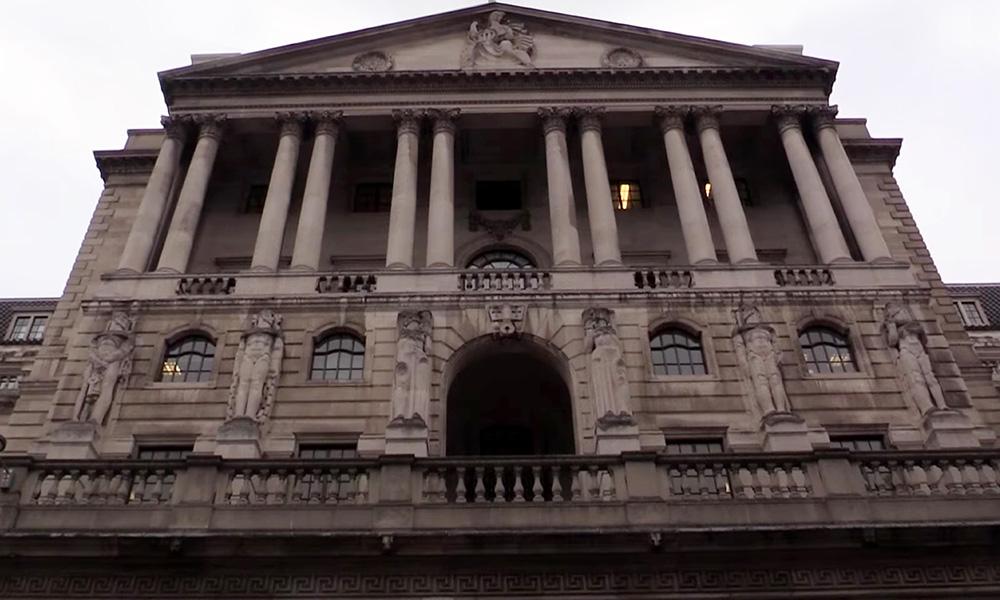
Economists voted independently of their respective organizations, saying that signs of further weakness in the job market were enough to prompt them to vote for a rate cut to 3.75%.
If the Bank of England heeds the advice of the Shadow Monetary Policy Committee, this would bring borrowing costs down to their lowest level in nearly three years, but still well above the levels of the 2010s.
Six members of the Shadow Monetary Policy Committee voted to cut interest rates by 25 basis points. Ben Ramanauskas of the Policy Exchange went further, supporting a 50 basis point cut, while former Bank of England policymaker Jonathan Haskell broke with the consensus, arguing that rates should remain unchanged.
Vicki Price, former head of the UK Economic Services, said recent data did not show "clear evidence of excessive demand" in the economy to prevent interest rate cuts, while Ruth Gregory, deputy chief UK economist at Capital Economics, believes that declining inflation expectations, stagnant retail sales, and a shrinking job market will create conditions for further interest rate cuts.
Ramanauskas suggested that the Bank of England should take more aggressive measures to reverse the worrying trend in the labor market that could suppress inflation, while Haskell said that rapid wage growth is the primary issue affecting price stability.
Some rate-setters, including Deputy Governor Clare Lombardy, have suggested that the upcoming rate cut may be one of the last few times the Bank of England will choose to lower borrowing costs. Capital Economics predicts that rates could fall to a low of 3%, while the market has already priced in rates at around 3.5% by the end of next year.
The following are the opinions and rationale given by various economists during simulated voting.
Voting: Rate cut of 25 basis points
Although inflation remains well above the target range, indicators are shifting in the “right” direction to support further interest rate cuts.
The labor market is showing clear signs of easing: the number of unemployed has surpassed 1.8 million, exceeding not only pandemic-era levels but also reaching a new high since 2015. Private sector wage growth, measured on a three-month basis, has now fallen below 4%.
"Inflation expectations have also declined, and forward-looking economic activity indicators—particularly investment and staffing intentions—suggest that demand will weaken further, which creates more room for interest rate cuts to act as a buffer for the economy."
Voting: Lower by 50 basis points
The labor market will continue to cool due to measures under the Employment Rights Act and the increase in the minimum wage—a market already significantly impacted by last year's rise in employers' National Insurance contributions. Unemployment will rise, with young people bearing the brunt of the impact.
"Growth remains weak and below the Bank of England's previous forecasts. This trend is expected to continue as the tax increases announced in last month's budget have created a harmful mix, further dampening investor, consumer, and business confidence."
"All of these will dampen demand, meaning inflation may fall back to the target level, or even fall below it."
"The Monetary Policy Committee now needs to take bold action. This is to bring it back to a pattern of gradual interest rate cuts and help the economy achieve a soft landing."
Voting: 25 basis point rate cut
"I believe the economic rationale for the rate cut was fully demonstrated in November, and subsequent economic data has been consistently weak."
The labor market has remained loose this year, with unemployment rising and wage growth consistently falling short of the Bank of England's expectations. The peak of inflation has passed, and initial signs indicate that inflation expectations are beginning to decline. The UK economy is showing signs of weakness, and recent sluggish spending and investment will only exacerbate this situation.
“Even if interest rates are cut now, the policy will remain tight, and it will take a year for the real economy to feel the effects. If we wait until the inflation rate returns to 2% (which we expect to achieve in the second quarter of next year) before taking action, it may be too late.”
Voting to keep interest rates unchanged
“I remain concerned about inflationary pressures in the labor market and prefer to wait until the downward trend in wage growth is clearly established before taking action.”
Voting to keep interest rates unchanged
"The Monetary Policy Committee's role is to address persistently high inflation, not to bail out a government that lacks its own growth strategy."
Postponing the next meeting (the first week of February) could enhance the credibility of the Monetary Policy Committee in combating inflation and provide more time to assess the economic outlook for 2026.
"If new evidence allows, the Monetary Policy Committee could resume its practice of gradually cutting interest rates in its quarterly monetary policy reports. The two rate cuts in early February and late April would have brought the official rate down to 3.5%. Hopefully, that's the minimum they need to achieve."
Voting: 25 basis point rate cut
Recent budget-related policy uncertainty has dampened demand, causing economic momentum to stagnate. Meanwhile, inflation has begun to fall sharply from its peak.
The fundamental drivers of inflation, including monetary and credit growth and wage growth, are all consistent with the trend of inflation continuing to fall to the target of 2% by the end of 2026.
Monetary policy could be further eased to a more neutral level—while accompanied by strong policy guidance that monetary policy will take decisive action if persistently weak economic momentum increases the risk of medium-term inflation falling below the 2% target.
Voting: 25 basis point rate cut
"A weakening labor market, coupled with a recent slowdown in inflation, has tipped the scales toward interest rate cuts."
Voting: 25 basis point rate cut
“Since the policy meeting in November, almost every major data release—including the labor market, consumer price index (CPI) inflation, gross domestic product (GDP), retail sales, and purchasing managers’ index (PMI)—has indicated that deflationary pressures are building.”
"Undeniably, we believe food inflation has not yet peaked. However, household inflation expectations have cooled. The inflation peak in 2025 was mainly driven by price jumps in goods that were partly government-priced or linked to previous inflation rates. These price jumps are unlikely to be repeated in April 2026."
"The easing of the labor market over the past year will continue to exert downward pressure on inflation in the services sector."
Voting: 25 basis point rate cut
There are few signs of excess demand in the economy that would prevent interest rate cuts, and continued (albeit weakened) quantitative tightening continues to exert a monetary restraining effect. The weakened quantitative tightening policy is still imposing monetary constraints.
Impact on the pound : A rate cut that meets expectations may cause the pound to stabilize after a brief dip; any decision that deviates from expectations (no rate hike or a larger rate cut) will trigger greater volatility. The key going forward lies in the signals the Bank of England sends regarding whether this is the beginning of a series of rate cuts.
At 10:12 Beijing time, the British pound was trading at 1.3366/67 against the US dollar.
City AM is a free daily newspaper published in and around the City of London, primarily covering business, economic, and financial market news. It provides timely coverage of the Bank of England's monetary policy decisions, inflation data, and economic analysis. The newspaper regularly convenes a "shadow monetary policy committee" of economists to simulate the decisions of the Bank of England's Monetary Policy Committee and publish public forecasts and recommendations on interest rate adjustments.
Faced with the dual challenges of high inflation and a persistently weak job market, most experts on the nine-member Shadow Monetary Policy Committee believe that loose monetary policy will help the UK economy achieve a soft landing with the target inflation rate of 2%.
Economists voted independently of their respective organizations, saying that signs of further weakness in the job market were enough to prompt them to vote for a rate cut to 3.75%.
If the Bank of England heeds the advice of the Shadow Monetary Policy Committee, this would bring borrowing costs down to their lowest level in nearly three years, but still well above the levels of the 2010s.
Six members of the Shadow Monetary Policy Committee voted to cut interest rates by 25 basis points. Ben Ramanauskas of the Policy Exchange went further, supporting a 50 basis point cut, while former Bank of England policymaker Jonathan Haskell broke with the consensus, arguing that rates should remain unchanged.
Vicki Price, former head of the UK Economic Services, said recent data did not show "clear evidence of excessive demand" in the economy to prevent interest rate cuts, while Ruth Gregory, deputy chief UK economist at Capital Economics, believes that declining inflation expectations, stagnant retail sales, and a shrinking job market will create conditions for further interest rate cuts.
Ramanauskas suggested that the Bank of England should take more aggressive measures to reverse the worrying trend in the labor market that could suppress inflation, while Haskell said that rapid wage growth is the primary issue affecting price stability.
Some rate-setters, including Deputy Governor Clare Lombardy, have suggested that the upcoming rate cut may be one of the last few times the Bank of England will choose to lower borrowing costs. Capital Economics predicts that rates could fall to a low of 3%, while the market has already priced in rates at around 3.5% by the end of next year.
The following are the opinions and rationale given by various economists during simulated voting.
Anna Leach – Institute of Directors, Chief Economist
Voting: Rate cut of 25 basis points
Although inflation remains well above the target range, indicators are shifting in the “right” direction to support further interest rate cuts.
The labor market is showing clear signs of easing: the number of unemployed has surpassed 1.8 million, exceeding not only pandemic-era levels but also reaching a new high since 2015. Private sector wage growth, measured on a three-month basis, has now fallen below 4%.
"Inflation expectations have also declined, and forward-looking economic activity indicators—particularly investment and staffing intentions—suggest that demand will weaken further, which creates more room for interest rate cuts to act as a buffer for the economy."
Ben Ramanauskas – Senior Economics Fellow, Policy Exchange Think Tank
Voting: Lower by 50 basis points
The labor market will continue to cool due to measures under the Employment Rights Act and the increase in the minimum wage—a market already significantly impacted by last year's rise in employers' National Insurance contributions. Unemployment will rise, with young people bearing the brunt of the impact.
"Growth remains weak and below the Bank of England's previous forecasts. This trend is expected to continue as the tax increases announced in last month's budget have created a harmful mix, further dampening investor, consumer, and business confidence."
"All of these will dampen demand, meaning inflation may fall back to the target level, or even fall below it."
"The Monetary Policy Committee now needs to take bold action. This is to bring it back to a pattern of gradual interest rate cuts and help the economy achieve a soft landing."
Jack Meaning – Chief Economist, Barclays UK
Voting: 25 basis point rate cut
"I believe the economic rationale for the rate cut was fully demonstrated in November, and subsequent economic data has been consistently weak."
The labor market has remained loose this year, with unemployment rising and wage growth consistently falling short of the Bank of England's expectations. The peak of inflation has passed, and initial signs indicate that inflation expectations are beginning to decline. The UK economy is showing signs of weakness, and recent sluggish spending and investment will only exacerbate this situation.
“Even if interest rates are cut now, the policy will remain tight, and it will take a year for the real economy to feel the effects. If we wait until the inflation rate returns to 2% (which we expect to achieve in the second quarter of next year) before taking action, it may be too late.”
Jonathan Haskell – Professor of Economics at Imperial College London Business School and former member of the Monetary Policy Committee
Voting to keep interest rates unchanged
“I remain concerned about inflationary pressures in the labor market and prefer to wait until the downward trend in wage growth is clearly established before taking action.”
Julian Jessop – Independent Economist
Voting to keep interest rates unchanged
"The Monetary Policy Committee's role is to address persistently high inflation, not to bail out a government that lacks its own growth strategy."
Postponing the next meeting (the first week of February) could enhance the credibility of the Monetary Policy Committee in combating inflation and provide more time to assess the economic outlook for 2026.
"If new evidence allows, the Monetary Policy Committee could resume its practice of gradually cutting interest rates in its quarterly monetary policy reports. The two rate cuts in early February and late April would have brought the official rate down to 3.5%. Hopefully, that's the minimum they need to achieve."
Callum Pickering – Peel Hunt Chief Economist
Voting: 25 basis point rate cut
Recent budget-related policy uncertainty has dampened demand, causing economic momentum to stagnate. Meanwhile, inflation has begun to fall sharply from its peak.
The fundamental drivers of inflation, including monetary and credit growth and wage growth, are all consistent with the trend of inflation continuing to fall to the target of 2% by the end of 2026.
Monetary policy could be further eased to a more neutral level—while accompanied by strong policy guidance that monetary policy will take decisive action if persistently weak economic momentum increases the risk of medium-term inflation falling below the 2% target.
Catherine Nice – Chief Economist for Europe, PGIM Fixed Income
Voting: 25 basis point rate cut
"A weakening labor market, coupled with a recent slowdown in inflation, has tipped the scales toward interest rate cuts."
Ruth Gregory – Deputy Chief Economist, UK, Capital Economics
Voting: 25 basis point rate cut
“Since the policy meeting in November, almost every major data release—including the labor market, consumer price index (CPI) inflation, gross domestic product (GDP), retail sales, and purchasing managers’ index (PMI)—has indicated that deflationary pressures are building.”
"Undeniably, we believe food inflation has not yet peaked. However, household inflation expectations have cooled. The inflation peak in 2025 was mainly driven by price jumps in goods that were partly government-priced or linked to previous inflation rates. These price jumps are unlikely to be repeated in April 2026."
"The easing of the labor market over the past year will continue to exert downward pressure on inflation in the services sector."
Vicky Price – Chief Economic Advisor, Center for Economics and Business Research
Voting: 25 basis point rate cut
There are few signs of excess demand in the economy that would prevent interest rate cuts, and continued (albeit weakened) quantitative tightening continues to exert a monetary restraining effect. The weakened quantitative tightening policy is still imposing monetary constraints.
Impact on the pound : A rate cut that meets expectations may cause the pound to stabilize after a brief dip; any decision that deviates from expectations (no rate hike or a larger rate cut) will trigger greater volatility. The key going forward lies in the signals the Bank of England sends regarding whether this is the beginning of a series of rate cuts.
At 10:12 Beijing time, the British pound was trading at 1.3366/67 against the US dollar.
- Risk Warning and Disclaimer
- The market involves risk, and trading may not be suitable for all investors. This article is for reference only and does not constitute personal investment advice, nor does it take into account certain users’ specific investment objectives, financial situation, or other needs. Any investment decisions made based on this information are at your own risk.