Global markets are focused on the safe-haven scenario of "buying gold, selling euros, and hoarding dollars," but why did it fail this time?
2026-01-19 20:20:59
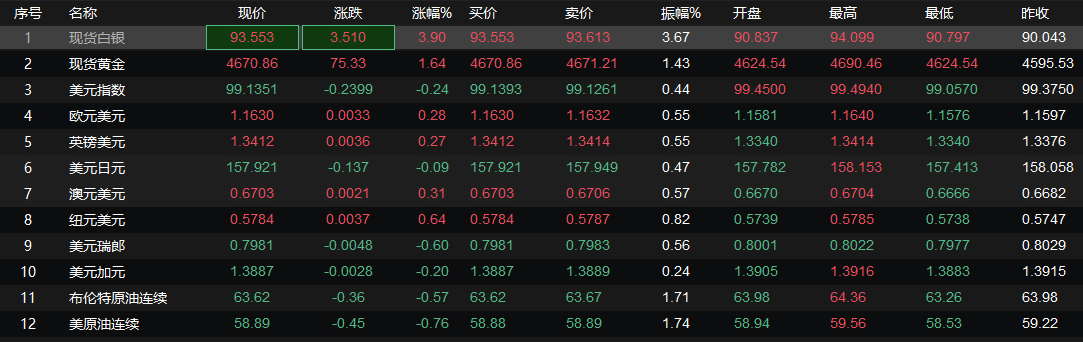
On Monday (January 19), global financial markets began the new week in a tense atmosphere. Market focus shifted from last week's economic data to sudden geopolitical and trade tensions. The US, in an effort to pressure Denmark to sell Greenland, issued new tariff threats against several European countries, a move that has thrown a boulder into an already delicate transatlantic relationship, creating ripples. Affected by this, European stock markets opened sharply lower across the board, with the pan-European Stoxx 600 index falling more than 1.3% in early trading, with Nordic stock indices experiencing particularly significant declines. Risk aversion quickly intensified, with funds withdrawing from risk assets and flowing into traditional safe havens. The US dollar index came under pressure and traded around 99.1657; while spot gold surged by more than 1%, breaking through the $4660/ounce mark. Crude oil prices weakened slightly amid demand concerns. Currently, the market is urgently assessing the possible path and potential impact of this trade turmoil.
Currently, international oil prices are showing a slight downward trend. Brent crude oil futures are trading at $63.67 per barrel, and WTI crude oil futures are trading at $58.95 per barrel, both down approximately 0.3% on the day. This trend clearly reflects the interplay of bullish and bearish forces in the market: on the one hand, new trade tensions, especially the threat of tariffs against Europe, have raised concerns about global economic growth and oil demand. If trade frictions escalate, they will directly impact business confidence and industrial activity, thereby suppressing energy consumption. On the other hand, persistent geopolitical risks, such as the situation in Russia and Ukraine, provide potential support to the supply side, limiting the downside potential for oil prices.
From a market structure perspective, increased uncertainty facing the European economy may weaken the region's oil demand outlook, putting pressure on the European market, which is based on Brent crude. Two developments need close monitoring: first, the follow-up developments in tariff rhetoric—whether specific details are released or relevant countries take strong countermeasures—which will determine whether risk sentiment worsens or eases; second, the trend of the US dollar index. If the dollar strengthens due to safe-haven capital inflows or rising expectations of a Fed rate hike, it will put additional pressure on dollar-denominated oil prices.
Key points to note: In addition to macroeconomic news, pay attention to the immediate reaction of oil prices near key technical levels (such as $59.50 and $58.50) and changes in trading volume to judge subtle shifts in market sentiment.
Spot gold became the most eye-catching asset in the market today, surging 1.47% intraday and firmly standing above $4,663 per ounce. This undoubtedly reflects the sharp rise in market risk aversion. The US president's tariff remarks not only reignited market concerns about the global trade situation but also sparked discussions about whether the Federal Reserve's monetary policy path might change as a result. Some analysts point out that if tariffs lead to increased US import costs, thereby pushing up domestic inflation, it may force the Federal Reserve to halt or reduce its consideration of interest rate cuts in the short term. However, before the situation becomes clearer, this uncertainty itself, coupled with concerns about European economic growth and corporate profits, has jointly driven large-scale safe-haven buying.
The strong surge in gold prices broke through the recent consolidation range, significantly strengthening the technical trend. Funds flowed out of the stock market, and reports of European credit default swap (CDS) costs rising to a one-month high confirmed rising market concerns about credit risk, further solidifying gold's appeal as a risk-free asset. The correlation between the US dollar and gold needs attention. Normally, a stronger dollar suppresses gold prices, but under strong safe-haven demand, both can rise simultaneously. The current combination of a slightly weaker dollar and a surge in gold clearly indicates that the dominant force is safe-haven demand rather than exchange rate factors.
Key points to watch: Pay close attention to the strength of any pullback in gold prices after the initial surge. A shallow pullback that stabilizes above $4650 indicates strong buying pressure; conversely, a rapid reversal of most gains suggests short-term speculation. Also, monitor changes in US Treasury yields, as real interest rates are a core indicator of the opportunity cost of holding gold.
The US dollar index fell 0.22% on the day, trading at 99.1657. The dollar's weakness partly reflects market concerns that tariff policies could backfire on the US itself. Analysts from well-known institutions point out that the US's massive twin deficits are its economic Achilles' heel, and against the backdrop of global trade tensions, the US does not fully control all its financial resources. Meanwhile, analysts from Mitsubishi UFJ believe that related actions may encourage investors to further reduce their exposure to the dollar, triggering a return to "sell US" trades. Unless there is a "significant escalation" of US-EU trade tensions, the dollar's volatility is likely to be relatively mild.
The euro found some breathing room against the dollar, rising 0.26% on the day to trade at 1.1627. This rebound was more of a technical correction following a weakening dollar and a severe sell-off than a sudden strengthening of its fundamentals. In fact, the tariff threat is directly aimed at Europe, with potentially significant impacts on export-oriented economies like Germany. Some economists estimate that a substantial and indiscriminate increase in tariffs could damage the German economy by as much as one percentage point of GDP. Therefore, any recent euro rally is likely to face significant pressure.
The dollar edged down 0.06% against the yen, trading around 157.945. This relatively stable movement reveals a subtle shift in the yen's role as a traditional safe-haven currency. The yen typically strengthens when global risk aversion intensifies, but this time the gains were limited. This may be because: on the one hand, the market is still assessing the direct impact of the tariff threat; on the other hand, as a resource-importing country, Japan's currency is also constrained by concerns about a global trade contraction. The yen's movement is currently in a state of equilibrium, supported by safe-haven inflows on one side and by concerns about its export-oriented economic structure on the other.
Key points to watch: For the euro, attention should be paid to whether the decline in European stock markets narrows or widens, and comments from ECB officials regarding the trade situation. For the yen, close attention should be paid to the direction of changes in US Treasury yields, and potential verbal intervention signals from Japanese authorities regarding excessive exchange rate volatility.
The bond market also witnessed the flow of risk aversion. Funds poured into safe-haven assets such as government bonds, pushing down yields on bonds in major economies. The cost of insured debt (CDS) for European corporate bonds rose to a one-month high, clearly reflecting investors' repricing of credit risk. This movement in the bond market, along with the stock market decline and the rise in gold prices, forms a complete safe-haven chain. Going forward, the market's direction will heavily depend on the evolution of the following aspects:
First and foremost, the evolution of trade tensions is crucial. Will the tariff threat soften after a week, as has happened in some previous cases, or will it quickly materialize and trigger substantial countermeasures from Europe? This will be key to determining whether market sentiment shifts from "risk aversion" to "panic" or "de-escalation." Secondly, the resilience of the European economy needs close monitoring. While some analysts believe the European market's exposure to higher tariffs is not excessive, and that recent diversification and stock market performance should withstand short-term corrections, the key lies in the actual extent of damage to corporate profits and consumer confidence. Finally, central bank policy signals will be critical. Will the Federal Reserve adjust its interest rate path expectations due to potential imported inflationary pressures? How will the European Central Bank weigh growth risks against inflation? These questions will reshape the pricing logic of various assets.
Overall, the market is currently driven by a risk-averse narrative. Risk assets may continue to face pressure until the situation becomes clearer, while assets such as gold and government bonds are expected to remain strong. However, markets tend to price in known risks quickly, and any signs of easing tensions could trigger a sharp short-covering rally.
Crude Oil Market: A Tug-of-War Between Geopolitical Risks and Demand Concerns
Currently, international oil prices are showing a slight downward trend. Brent crude oil futures are trading at $63.67 per barrel, and WTI crude oil futures are trading at $58.95 per barrel, both down approximately 0.3% on the day. This trend clearly reflects the interplay of bullish and bearish forces in the market: on the one hand, new trade tensions, especially the threat of tariffs against Europe, have raised concerns about global economic growth and oil demand. If trade frictions escalate, they will directly impact business confidence and industrial activity, thereby suppressing energy consumption. On the other hand, persistent geopolitical risks, such as the situation in Russia and Ukraine, provide potential support to the supply side, limiting the downside potential for oil prices.
From a market structure perspective, increased uncertainty facing the European economy may weaken the region's oil demand outlook, putting pressure on the European market, which is based on Brent crude. Two developments need close monitoring: first, the follow-up developments in tariff rhetoric—whether specific details are released or relevant countries take strong countermeasures—which will determine whether risk sentiment worsens or eases; second, the trend of the US dollar index. If the dollar strengthens due to safe-haven capital inflows or rising expectations of a Fed rate hike, it will put additional pressure on dollar-denominated oil prices.
Key points to note: In addition to macroeconomic news, pay attention to the immediate reaction of oil prices near key technical levels (such as $59.50 and $58.50) and changes in trading volume to judge subtle shifts in market sentiment.
Precious Metals Market: Gold Shines as a Safe Haven
Spot gold became the most eye-catching asset in the market today, surging 1.47% intraday and firmly standing above $4,663 per ounce. This undoubtedly reflects the sharp rise in market risk aversion. The US president's tariff remarks not only reignited market concerns about the global trade situation but also sparked discussions about whether the Federal Reserve's monetary policy path might change as a result. Some analysts point out that if tariffs lead to increased US import costs, thereby pushing up domestic inflation, it may force the Federal Reserve to halt or reduce its consideration of interest rate cuts in the short term. However, before the situation becomes clearer, this uncertainty itself, coupled with concerns about European economic growth and corporate profits, has jointly driven large-scale safe-haven buying.
The strong surge in gold prices broke through the recent consolidation range, significantly strengthening the technical trend. Funds flowed out of the stock market, and reports of European credit default swap (CDS) costs rising to a one-month high confirmed rising market concerns about credit risk, further solidifying gold's appeal as a risk-free asset. The correlation between the US dollar and gold needs attention. Normally, a stronger dollar suppresses gold prices, but under strong safe-haven demand, both can rise simultaneously. The current combination of a slightly weaker dollar and a surge in gold clearly indicates that the dominant force is safe-haven demand rather than exchange rate factors.
Key points to watch: Pay close attention to the strength of any pullback in gold prices after the initial surge. A shallow pullback that stabilizes above $4650 indicates strong buying pressure; conversely, a rapid reversal of most gains suggests short-term speculation. Also, monitor changes in US Treasury yields, as real interest rates are a core indicator of the opportunity cost of holding gold.
Foreign exchange market: The US dollar is under pressure, while the euro and yen reflect divergent sentiment.
The US dollar index fell 0.22% on the day, trading at 99.1657. The dollar's weakness partly reflects market concerns that tariff policies could backfire on the US itself. Analysts from well-known institutions point out that the US's massive twin deficits are its economic Achilles' heel, and against the backdrop of global trade tensions, the US does not fully control all its financial resources. Meanwhile, analysts from Mitsubishi UFJ believe that related actions may encourage investors to further reduce their exposure to the dollar, triggering a return to "sell US" trades. Unless there is a "significant escalation" of US-EU trade tensions, the dollar's volatility is likely to be relatively mild.
The euro found some breathing room against the dollar, rising 0.26% on the day to trade at 1.1627. This rebound was more of a technical correction following a weakening dollar and a severe sell-off than a sudden strengthening of its fundamentals. In fact, the tariff threat is directly aimed at Europe, with potentially significant impacts on export-oriented economies like Germany. Some economists estimate that a substantial and indiscriminate increase in tariffs could damage the German economy by as much as one percentage point of GDP. Therefore, any recent euro rally is likely to face significant pressure.
The dollar edged down 0.06% against the yen, trading around 157.945. This relatively stable movement reveals a subtle shift in the yen's role as a traditional safe-haven currency. The yen typically strengthens when global risk aversion intensifies, but this time the gains were limited. This may be because: on the one hand, the market is still assessing the direct impact of the tariff threat; on the other hand, as a resource-importing country, Japan's currency is also constrained by concerns about a global trade contraction. The yen's movement is currently in a state of equilibrium, supported by safe-haven inflows on one side and by concerns about its export-oriented economic structure on the other.
Key points to watch: For the euro, attention should be paid to whether the decline in European stock markets narrows or widens, and comments from ECB officials regarding the trade situation. For the yen, close attention should be paid to the direction of changes in US Treasury yields, and potential verbal intervention signals from Japanese authorities regarding excessive exchange rate volatility.
Bond Market and Future Outlook: The Logic of Risk Aversion Deepens, Attention Should Be Paid to Policy Responses
The bond market also witnessed the flow of risk aversion. Funds poured into safe-haven assets such as government bonds, pushing down yields on bonds in major economies. The cost of insured debt (CDS) for European corporate bonds rose to a one-month high, clearly reflecting investors' repricing of credit risk. This movement in the bond market, along with the stock market decline and the rise in gold prices, forms a complete safe-haven chain. Going forward, the market's direction will heavily depend on the evolution of the following aspects:
First and foremost, the evolution of trade tensions is crucial. Will the tariff threat soften after a week, as has happened in some previous cases, or will it quickly materialize and trigger substantial countermeasures from Europe? This will be key to determining whether market sentiment shifts from "risk aversion" to "panic" or "de-escalation." Secondly, the resilience of the European economy needs close monitoring. While some analysts believe the European market's exposure to higher tariffs is not excessive, and that recent diversification and stock market performance should withstand short-term corrections, the key lies in the actual extent of damage to corporate profits and consumer confidence. Finally, central bank policy signals will be critical. Will the Federal Reserve adjust its interest rate path expectations due to potential imported inflationary pressures? How will the European Central Bank weigh growth risks against inflation? These questions will reshape the pricing logic of various assets.
Overall, the market is currently driven by a risk-averse narrative. Risk assets may continue to face pressure until the situation becomes clearer, while assets such as gold and government bonds are expected to remain strong. However, markets tend to price in known risks quickly, and any signs of easing tensions could trigger a sharp short-covering rally.
- Risk Warning and Disclaimer
- The market involves risk, and trading may not be suitable for all investors. This article is for reference only and does not constitute personal investment advice, nor does it take into account certain users’ specific investment objectives, financial situation, or other needs. Any investment decisions made based on this information are at your own risk.