Japan needs stimulus, the market needs confidence: When these two forces don't align, the yen is the first to suffer.
2026-01-22 17:06:38
On Thursday (January 22), the yen continued to weaken, with the USD/JPY exchange rate approaching a key psychological level. On the surface, this is a result of the huge interest rate differential between the US and Japan—US interest rates are high, while Japan maintains ultra-low interest rates, naturally leading to capital flowing to higher-yielding dollar assets. However, deeper analysis reveals that the situation is not so simple. Besides the traditional interest rate differential logic, domestic political and fiscal developments in Japan are becoming new driving forces.
The market is particularly on edge after news broke that incumbent Prime Minister Takaichi is considering calling an early election. While elections are a political process, they send a strong policy signal: if the ruling party wins more seats, fiscal expansion plans may be accelerated. This means the government will significantly increase spending, and a new round of stimulus measures cannot be ruled out. The problem is that Japan already has one of the highest government debt ratios in the world, and further expanding the deficit will undoubtedly exacerbate market concerns about fiscal sustainability.
Traders are beginning to reassess the risk premium of the yen. Simply put, when a country borrows more and more without correspondingly increasing its economic growth or tax revenue, the market begins to doubt its ability to repay its debts in the future. This doubt doesn't immediately manifest in economic data, but it is reflected in exchange rate movements in advance. The weakness of the yen is, to some extent, a manifestation of this "deteriorating expectation."
The market's focus has shifted from simple interest rate differentials to deeper issues of fiscal health. Analysts point out that if fiscal expansion fails to lead to increased productivity or income, and instead only increases government bond issuance, the market will sooner or later question Japan's fiscal discipline. Once this sentiment takes hold, international capital may reduce its allocation to yen-denominated assets, seeking safer havens instead.
This erosion of confidence typically affects exchange rates through two pathways. First, rising long-term interest rates and term premiums increase the cost and reduce the attractiveness of holding Japanese bonds. Second, compromised overall macroeconomic stability reduces foreign traders' willingness to hold assets in the Japanese currency. Even with current moderate inflation and a stable economy in Japan, the exchange rate could react in advance should narratives of "fiscal runaway" spread in the market.
It's worth noting that these changes are often gradual, but can accelerate suddenly at certain points. For example, when the exchange rate rapidly approaches 160, market expectations for policy intervention surge. At this point, the trading logic no longer focuses solely on the strength of fundamentals, but rather on a game of "who will act first"—whether the central bank continues to let things run their course, or the Ministry of Finance decisively intervenes to rescue the market.
While the market closely monitors exchange rate figures, a subtle yet highly signaling operation quietly emerges – “quote inquiry.” Based on past experience, whenever the USD/JPY exchange rate approaches a sensitive range, the Bank of Japan or the Ministry of Finance will inquire about market quotes through major banks to understand liquidity conditions and transaction costs at extreme price levels. Although this behavior is not direct intervention, it is widely regarded as a “whistleblowing warning.”
Historical data shows that such actions often foreshadow real intervention. For example, shortly after a "price inquiry" appeared in mid-July 2024, Tokyo used its foreign exchange reserves to buy yen; a similar situation occurred on September 14, 2022, with substantive intervention implemented a week later. Therefore, once rumors of a "price inquiry" emerge, traders quickly adjust their strategies, with some speculative positions being closed in advance to avoid being "trapped."
This explains why many institutions believe the USD/JPY exchange rate will likely remain trapped in the 155-160 range in the short term. It's not that fundamentals prevent a breakout, but rather that policy risks are too high. The closer the exchange rate gets to this range, the greater the likelihood of government intervention, and the weaker the market's motivation to chase higher prices. Consequently, the exchange rate is gradually evolving from a one-sided trend into a highly volatile, sideways pattern.
Besides directly buying yen in the foreign exchange market, Japan has another potential response – a shift in monetary policy. In other words, narrowing the interest rate differential with the US would fundamentally support the exchange rate. Compared to temporary intervention, raising interest rates is more sustainable and can truly change the direction of capital flows.
However, this path comes at a high cost. Rapid interest rate hikes would increase government financing costs, exacerbate the fiscal burden, and could also dampen already fragile domestic demand. More troubling is that Japan's financial system has long been accustomed to a low-interest-rate environment, and any drastic adjustment could trigger market turmoil. Therefore, whether to adopt this approach depends on the speed of the yen's depreciation and its impact on import prices, inflation expectations, and public confidence.
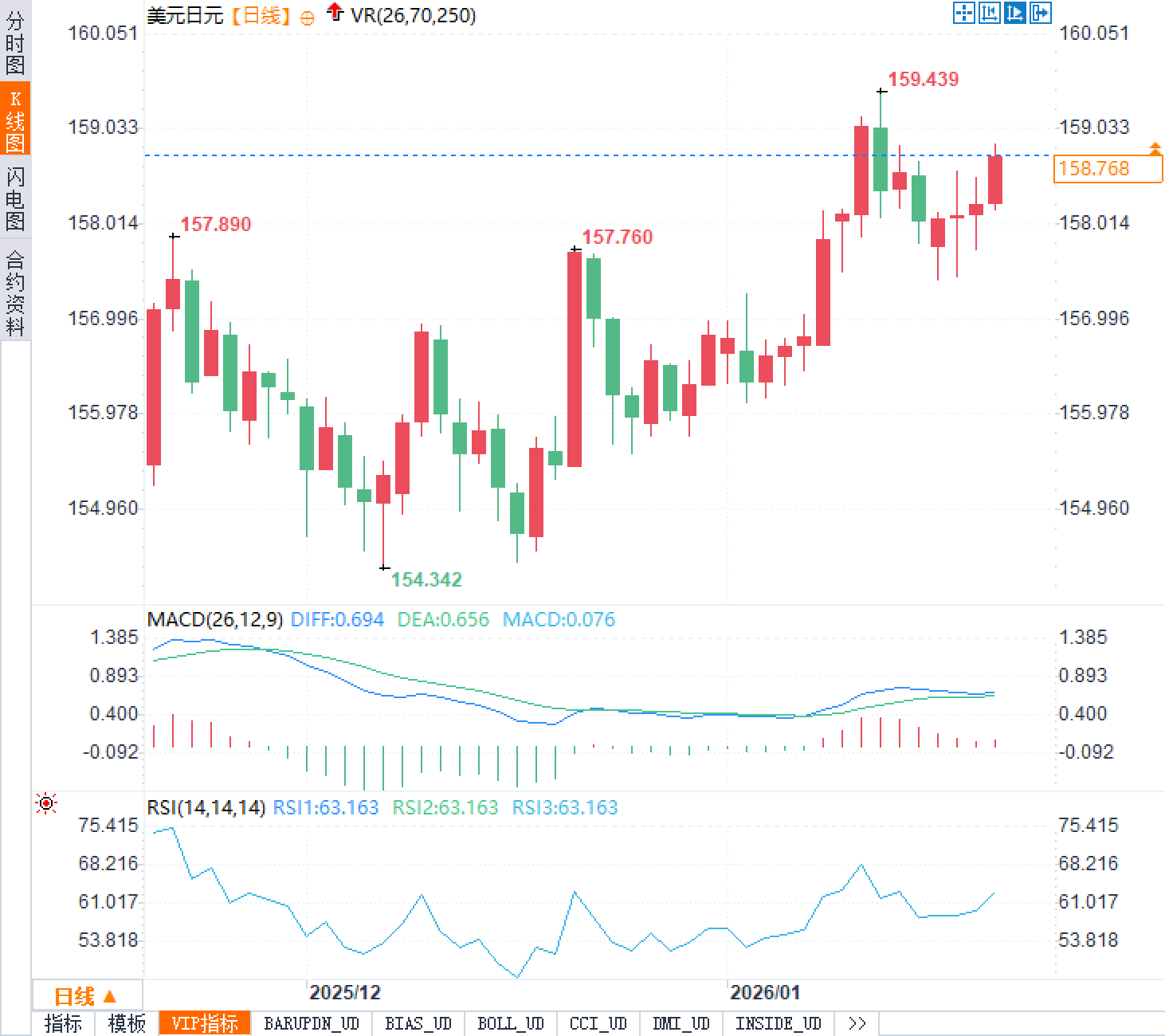
Overall, the overall trend of a weak yen has not reversed, with political maneuvering and fiscal expansion providing further fuel for depreciation. However, when the exchange rate is in the sensitive zone of 155-160, the shadow of policy intervention looms large.
The market is particularly on edge after news broke that incumbent Prime Minister Takaichi is considering calling an early election. While elections are a political process, they send a strong policy signal: if the ruling party wins more seats, fiscal expansion plans may be accelerated. This means the government will significantly increase spending, and a new round of stimulus measures cannot be ruled out. The problem is that Japan already has one of the highest government debt ratios in the world, and further expanding the deficit will undoubtedly exacerbate market concerns about fiscal sustainability.
Traders are beginning to reassess the risk premium of the yen. Simply put, when a country borrows more and more without correspondingly increasing its economic growth or tax revenue, the market begins to doubt its ability to repay its debts in the future. This doubt doesn't immediately manifest in economic data, but it is reflected in exchange rate movements in advance. The weakness of the yen is, to some extent, a manifestation of this "deteriorating expectation."
Fiscal expansion fuels market concerns; confidence is more important than data.
The market's focus has shifted from simple interest rate differentials to deeper issues of fiscal health. Analysts point out that if fiscal expansion fails to lead to increased productivity or income, and instead only increases government bond issuance, the market will sooner or later question Japan's fiscal discipline. Once this sentiment takes hold, international capital may reduce its allocation to yen-denominated assets, seeking safer havens instead.
This erosion of confidence typically affects exchange rates through two pathways. First, rising long-term interest rates and term premiums increase the cost and reduce the attractiveness of holding Japanese bonds. Second, compromised overall macroeconomic stability reduces foreign traders' willingness to hold assets in the Japanese currency. Even with current moderate inflation and a stable economy in Japan, the exchange rate could react in advance should narratives of "fiscal runaway" spread in the market.
It's worth noting that these changes are often gradual, but can accelerate suddenly at certain points. For example, when the exchange rate rapidly approaches 160, market expectations for policy intervention surge. At this point, the trading logic no longer focuses solely on the strength of fundamentals, but rather on a game of "who will act first"—whether the central bank continues to let things run their course, or the Ministry of Finance decisively intervenes to rescue the market.
Is a storm brewing beneath the surface of price inquiries, with intervention imminent?
While the market closely monitors exchange rate figures, a subtle yet highly signaling operation quietly emerges – “quote inquiry.” Based on past experience, whenever the USD/JPY exchange rate approaches a sensitive range, the Bank of Japan or the Ministry of Finance will inquire about market quotes through major banks to understand liquidity conditions and transaction costs at extreme price levels. Although this behavior is not direct intervention, it is widely regarded as a “whistleblowing warning.”
Historical data shows that such actions often foreshadow real intervention. For example, shortly after a "price inquiry" appeared in mid-July 2024, Tokyo used its foreign exchange reserves to buy yen; a similar situation occurred on September 14, 2022, with substantive intervention implemented a week later. Therefore, once rumors of a "price inquiry" emerge, traders quickly adjust their strategies, with some speculative positions being closed in advance to avoid being "trapped."
This explains why many institutions believe the USD/JPY exchange rate will likely remain trapped in the 155-160 range in the short term. It's not that fundamentals prevent a breakout, but rather that policy risks are too high. The closer the exchange rate gets to this range, the greater the likelihood of government intervention, and the weaker the market's motivation to chase higher prices. Consequently, the exchange rate is gradually evolving from a one-sided trend into a highly volatile, sideways pattern.
Interest rate hike or intervention? Japan faces a dilemma.
Besides directly buying yen in the foreign exchange market, Japan has another potential response – a shift in monetary policy. In other words, narrowing the interest rate differential with the US would fundamentally support the exchange rate. Compared to temporary intervention, raising interest rates is more sustainable and can truly change the direction of capital flows.
However, this path comes at a high cost. Rapid interest rate hikes would increase government financing costs, exacerbate the fiscal burden, and could also dampen already fragile domestic demand. More troubling is that Japan's financial system has long been accustomed to a low-interest-rate environment, and any drastic adjustment could trigger market turmoil. Therefore, whether to adopt this approach depends on the speed of the yen's depreciation and its impact on import prices, inflation expectations, and public confidence.
Overall, the overall trend of a weak yen has not reversed, with political maneuvering and fiscal expansion providing further fuel for depreciation. However, when the exchange rate is in the sensitive zone of 155-160, the shadow of policy intervention looms large.
- Risk Warning and Disclaimer
- The market involves risk, and trading may not be suitable for all investors. This article is for reference only and does not constitute personal investment advice, nor does it take into account certain users’ specific investment objectives, financial situation, or other needs. Any investment decisions made based on this information are at your own risk.