With Trump's Davos meeting fizzling out, will the euro remain trapped at the 1.17 level?
2026-01-22 17:39:06
On Thursday (January 22), the euro traded around 1.1700 against the US dollar during the European session. Earlier this week, the exchange rate briefly surged to around 1.1770, but quickly retreated, indicating significant selling pressure and a lack of bullish confidence. This rally was driven more by risk sentiment than by fundamentals; therefore, once market sentiment stabilized, the exchange rate naturally returned to a range-bound pattern.
This week's influencing factors stemmed from geopolitical factors. US President Trump's remarks at the World Economic Forum in Davos were more moderate than before, particularly regarding his attitude towards European allies, where he refrained from using harsh language. His handling of the Greenland issue was also more restrained, and he mentioned the possibility of cooperation within the NATO framework. Although no specific policy details were disclosed, the market generally interpreted this as a signal of a temporary easing of transatlantic tensions.
This shift directly led to a decline in market risk aversion, with funds beginning to withdraw from traditional safe-haven assets. The US dollar thus received some support and began to recover from its previous decline. Meanwhile, the euro, which had strengthened due to increased safe-haven demand, gave up its gains and returned to consolidation around 1.1700.
However, analysts believe that a temporary improvement in sentiment does not equate to a resolution of the fundamental contradictions. Friction between Europe and the US persists in areas such as trade, defense, and diplomacy. If new contentious events erupt in the future, risk appetite may reverse again, thus affecting exchange rate trends. The current strength of the euro relies more on the easing of the external environment than on fundamental improvements in the internal economy or policies; therefore, its sustainability is questionable.
The market's focus will now refocus on economic data itself, particularly how inflation and growth will influence central bank policy decisions. In the US, the upcoming October and November PCE price indices will be key indicators. The market widely expects November PCE inflation to remain significantly above the Fed's 2% target, reflecting persistently sticky inflation that is unlikely to decline rapidly in the short term.
Meanwhile, the U.S. Bureau of Economic Analysis will also release the final GDP figure for the third quarter, with the market currently expecting an annualized growth rate of 4.3%, higher than the 3.8% in the previous quarter. This means that the U.S. economy has not only not slowed down, but has shown stronger resilience at the beginning of the fourth quarter. With the combination of "high inflation + strong growth," the likelihood of the Federal Reserve maintaining interest rates has greatly increased, and market expectations for rate cuts will be further postponed.
In this context, the US dollar naturally has the conditions for phased support, while the upside potential of the euro against the dollar is limited. Conversely, if US data is unexpectedly weak, such as lower-than-expected PCE or downward revision of GDP, it could weaken the dollar's position and provide an opportunity for the euro to rebound.
In Europe, the latest minutes of the European Central Bank's monetary policy meeting and the monthly report from the German Federal Bank may reveal new clues about the pace of inflation decline and economic resilience. If the European stance is dovish, acknowledging easing inflationary pressures and weak economic growth, while US data continues to exceed expectations, then interest rate differential expectations will further tilt towards the dollar, putting greater pressure on the euro.
Conversely, if the European Central Bank remains vigilant about inflation and signals that it is not in a hurry to ease monetary policy, while US data falls short of expectations, the euro is expected to regain its upward momentum and challenge 1.1767 or even higher in the short term.
From a technical perspective, the EUR/USD daily chart shows that while the upward trend that started at 1.1490 remains intact, it entered a pullback phase after encountering resistance at 1.1807. The recent low of 1.1576 has shown some support, and after a rebound, it tested the psychological level of 1.1700 again, but failed to hold firmly, indicating that the bulls have not yet fully taken control.
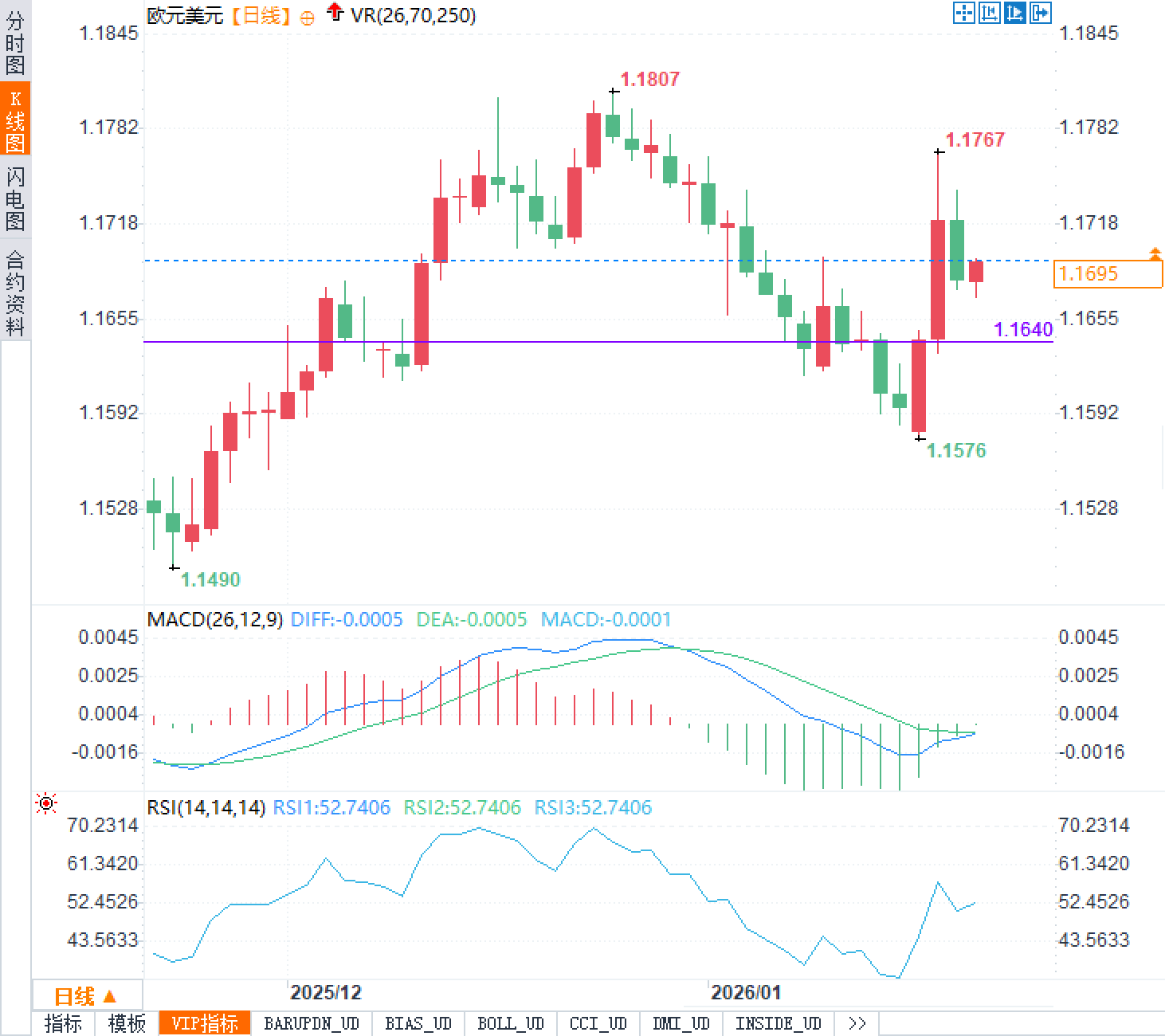
The key level for current price movement is around 1.1640. If this level holds, the short-term downside risk is manageable; however, a decisive break below this level could trigger a new round of pullback, retesting the lower edge of the trading range. Resistance is concentrated around 1.1767; only a breakout with significant volume and a sustained hold above this level could potentially restart the push towards the 1.1800 mark.
In summary, the euro/dollar exchange rate is currently in a transitional period, with sentiment subsiding and pricing returning to fundamentals. If US PCE data remains high and the final GDP figure confirms a 4.3% growth momentum, market expectations for the Federal Reserve to maintain high interest rates will solidify further, supporting the dollar. Conversely, if the data shows signs of cooling, the foundation for the dollar's rebound will waver, and the euro may have the opportunity to return to an upward trend, initiating a new round of recovery.
Political turmoil subsides, and a retreat in safe-haven demand helps stabilize the US dollar.
This week's influencing factors stemmed from geopolitical factors. US President Trump's remarks at the World Economic Forum in Davos were more moderate than before, particularly regarding his attitude towards European allies, where he refrained from using harsh language. His handling of the Greenland issue was also more restrained, and he mentioned the possibility of cooperation within the NATO framework. Although no specific policy details were disclosed, the market generally interpreted this as a signal of a temporary easing of transatlantic tensions.
This shift directly led to a decline in market risk aversion, with funds beginning to withdraw from traditional safe-haven assets. The US dollar thus received some support and began to recover from its previous decline. Meanwhile, the euro, which had strengthened due to increased safe-haven demand, gave up its gains and returned to consolidation around 1.1700.
However, analysts believe that a temporary improvement in sentiment does not equate to a resolution of the fundamental contradictions. Friction between Europe and the US persists in areas such as trade, defense, and diplomacy. If new contentious events erupt in the future, risk appetite may reverse again, thus affecting exchange rate trends. The current strength of the euro relies more on the easing of the external environment than on fundamental improvements in the internal economy or policies; therefore, its sustainability is questionable.
The data war has begun, and the economic prospects of the US and Europe will be the deciding factor.
The market's focus will now refocus on economic data itself, particularly how inflation and growth will influence central bank policy decisions. In the US, the upcoming October and November PCE price indices will be key indicators. The market widely expects November PCE inflation to remain significantly above the Fed's 2% target, reflecting persistently sticky inflation that is unlikely to decline rapidly in the short term.
Meanwhile, the U.S. Bureau of Economic Analysis will also release the final GDP figure for the third quarter, with the market currently expecting an annualized growth rate of 4.3%, higher than the 3.8% in the previous quarter. This means that the U.S. economy has not only not slowed down, but has shown stronger resilience at the beginning of the fourth quarter. With the combination of "high inflation + strong growth," the likelihood of the Federal Reserve maintaining interest rates has greatly increased, and market expectations for rate cuts will be further postponed.
In this context, the US dollar naturally has the conditions for phased support, while the upside potential of the euro against the dollar is limited. Conversely, if US data is unexpectedly weak, such as lower-than-expected PCE or downward revision of GDP, it could weaken the dollar's position and provide an opportunity for the euro to rebound.
In Europe, the latest minutes of the European Central Bank's monetary policy meeting and the monthly report from the German Federal Bank may reveal new clues about the pace of inflation decline and economic resilience. If the European stance is dovish, acknowledging easing inflationary pressures and weak economic growth, while US data continues to exceed expectations, then interest rate differential expectations will further tilt towards the dollar, putting greater pressure on the euro.
Conversely, if the European Central Bank remains vigilant about inflation and signals that it is not in a hurry to ease monetary policy, while US data falls short of expectations, the euro is expected to regain its upward momentum and challenge 1.1767 or even higher in the short term.
Technical analysis has entered a tug-of-war; key levels will determine the direction.
From a technical perspective, the EUR/USD daily chart shows that while the upward trend that started at 1.1490 remains intact, it entered a pullback phase after encountering resistance at 1.1807. The recent low of 1.1576 has shown some support, and after a rebound, it tested the psychological level of 1.1700 again, but failed to hold firmly, indicating that the bulls have not yet fully taken control.
The key level for current price movement is around 1.1640. If this level holds, the short-term downside risk is manageable; however, a decisive break below this level could trigger a new round of pullback, retesting the lower edge of the trading range. Resistance is concentrated around 1.1767; only a breakout with significant volume and a sustained hold above this level could potentially restart the push towards the 1.1800 mark.
In summary, the euro/dollar exchange rate is currently in a transitional period, with sentiment subsiding and pricing returning to fundamentals. If US PCE data remains high and the final GDP figure confirms a 4.3% growth momentum, market expectations for the Federal Reserve to maintain high interest rates will solidify further, supporting the dollar. Conversely, if the data shows signs of cooling, the foundation for the dollar's rebound will waver, and the euro may have the opportunity to return to an upward trend, initiating a new round of recovery.
- Risk Warning and Disclaimer
- The market involves risk, and trading may not be suitable for all investors. This article is for reference only and does not constitute personal investment advice, nor does it take into account certain users’ specific investment objectives, financial situation, or other needs. Any investment decisions made based on this information are at your own risk.