Goldman Sachs Secret Report: The best thing to hold now is not the US dollar, but this.
2026-01-23 20:20:29
In today's rapidly changing global landscape, traders' definition of "safety" is subtly shifting. In the past, people only looked at which interest rates were high and growth was fast, but now they are more concerned about: what if something goes wrong? Will my money be safe? Against this backdrop, the Swiss franc has once again taken center stage. Goldman Sachs recently pointed out that the Swiss franc is not only a traditional safe-haven currency, but also an "all-rounder" in dealing with multiple risks. It can withstand market panic caused by geopolitical conflicts, maintain stable purchasing power when inflation is rising, and even remain resilient when other countries are facing a crisis of confidence due to fiscal problems.
Analysts believe this advantage is not accidental. Switzerland has long adhered to strict fiscal discipline, with a government debt ratio far lower than most developed countries, a healthy balance sheet, and high institutional transparency. This means that when global markets worry about a country's debt spiraling out of control or its policies being politically manipulated, capital naturally seeks a place with "credible institutions"—and the Swiss franc is precisely such an option. Capital is not just buying a currency, but also paying for institutional stability and policy independence.
More importantly, the Swiss franc's uniqueness lies in its "inflation-resistant resilience." Typically, safe-haven currencies strengthen during crises, but tend to lose appeal once global inflation rises due to declining real interest rates. However, the Swiss franc is different. Historical data shows that even in high-inflation environments, market confidence in the franc remains strong, creating a positive feedback loop of "safe haven + value preservation." This makes it not just a temporary safe haven during emergencies, but more like a long-term risk buffer.
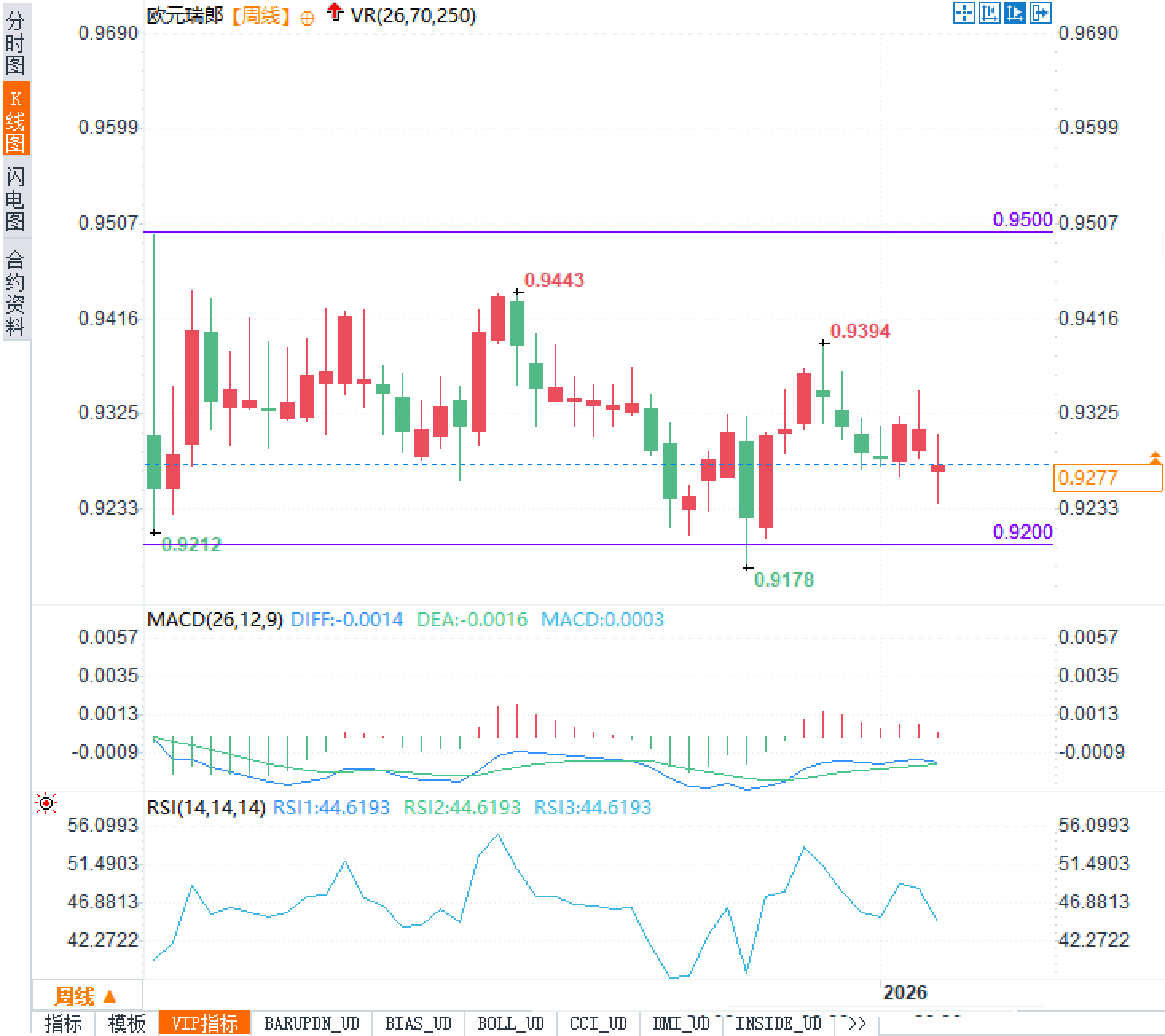
Although the Swiss franc is considered an "insurance asset," this doesn't mean it can appreciate indefinitely. In fact, the Swiss National Bank's (SNB) stance is crucial. Goldman Sachs has explicitly stated that when the euro-Swiss franc exchange rate approaches 0.9200, the SNB is highly likely to intervene to prevent further appreciation of its currency. This is not speculation, but a reasonable inference based on past behavior. An excessively strong Swiss franc would depress import prices, weaken businesses' pricing power, and exacerbate domestic deflationary pressures—precisely the scenario the SNB least wants to see.
If the economy slides into deflation, the scope for monetary policy will be severely limited, and negative interest rates or even quantitative easing may be brought back to the agenda. This would be a heavy political and economic cost for central banks, so they prefer to take precautions rather than react passively. This also explains why, despite being sought after, the Swiss franc has struggled to experience a sustained upward trend. Market demand for safe-haven assets drives its rise, but the central bank's bottom-line mentality creates natural resistance, ultimately causing the exchange rate to fluctuate within a certain range.
Interestingly, this "wanting to rise but not allowing it to rise" situation has actually enhanced the Swiss franc's medium-term appeal. Traders know that as long as risk increases, funds will flow into the Swiss franc; but they also understand that the authorities will not allow it to appreciate indefinitely. Thus, the market develops a stable expectation: the Swiss franc will neither collapse nor surge wildly, but will play the role of a "ballast" in turbulence. This certainty itself is a form of value.
Looking ahead to the next few months, Goldman Sachs believes the euro/Swiss franc exchange rate will likely remain range-bound until the end of the year, potentially gradually recovering to around 0.95. This means that from now until the end of the year, the exchange rate will likely fluctuate between 0.9200 and 0.95. Whenever risk sentiment deteriorates, the euro/Swiss franc exchange rate may test the 0.9200 level; however, once it approaches that level, the potential intervention of the Swiss National Bank will likely curb further declines, creating a "ceiling and floor" pattern.
This trend reflects a complex macroeconomic game. On the one hand, global uncertainty remains high—geopolitical frictions continue, fiscal risks are accumulating in some countries, and central bank independence is being challenged, all of which support the safe-haven demand for the Swiss franc. On the other hand, Switzerland itself does not want its currency to be too strong and drag down its economy, so policymakers remain highly vigilant about appreciation. With these two forces vying for power, the Swiss franc's performance is destined to be neither dramatic nor volatile, but rather sufficiently stable.
For traders, this means that instead of betting on a significant appreciation of the Swiss franc, it's better to view it as a "defensive asset" in a portfolio. Its value lies not in how much exchange rate difference it generates, but in its ability to effectively hedge against sharp fluctuations in other assets when black swan events occur. In other words, holding the Swiss franc is not about "making money," but about "losing less money"—a cost-controlled risk management strategy.
Ultimately, the core logic behind Goldman Sachs' recommendation of the Swiss franc as a more advantageous basket of options lies not merely in its strength, but in its relative stability under various adverse scenarios. Whether facing rebounding inflation, fiscal crises, or situations where central banks are forced to sacrifice their independence, the Swiss franc provides a relatively reliable hedging effect. Especially today, with increasingly diversified policy objectives and blurred boundaries between fiscal and monetary policies in some major economies, the Swiss National Bank's fiscal discipline is particularly valuable.
Furthermore, the Swiss franc's value is also reflected in the market's consensus on its "policy floor." 0.9200 is not a precise mathematical formula, but rather a point where psychology and policy converge. It represents the limit of central bank tolerance and serves as an important reference for traders' risk management. Near this level, market behavior becomes more cautious, thereby reducing the probability of extreme volatility.
In summary, the Swiss franc's appeal lies not in its explosive growth, but in its endurance. Unlike some currencies that experience dramatic ups and downs, it remains steadfast during storms. Analysts believe that in a macroeconomic environment lacking clear trends and rife with risks, this type of currency is precisely the most worthwhile to include in portfolio allocation—not because it can propel you to the peak, but because it can catch you when you fall.
Analysts believe this advantage is not accidental. Switzerland has long adhered to strict fiscal discipline, with a government debt ratio far lower than most developed countries, a healthy balance sheet, and high institutional transparency. This means that when global markets worry about a country's debt spiraling out of control or its policies being politically manipulated, capital naturally seeks a place with "credible institutions"—and the Swiss franc is precisely such an option. Capital is not just buying a currency, but also paying for institutional stability and policy independence.
More importantly, the Swiss franc's uniqueness lies in its "inflation-resistant resilience." Typically, safe-haven currencies strengthen during crises, but tend to lose appeal once global inflation rises due to declining real interest rates. However, the Swiss franc is different. Historical data shows that even in high-inflation environments, market confidence in the franc remains strong, creating a positive feedback loop of "safe haven + value preservation." This makes it not just a temporary safe haven during emergencies, but more like a long-term risk buffer.
The real battle lies in the tug-of-war between the central bank and the market.
Although the Swiss franc is considered an "insurance asset," this doesn't mean it can appreciate indefinitely. In fact, the Swiss National Bank's (SNB) stance is crucial. Goldman Sachs has explicitly stated that when the euro-Swiss franc exchange rate approaches 0.9200, the SNB is highly likely to intervene to prevent further appreciation of its currency. This is not speculation, but a reasonable inference based on past behavior. An excessively strong Swiss franc would depress import prices, weaken businesses' pricing power, and exacerbate domestic deflationary pressures—precisely the scenario the SNB least wants to see.
If the economy slides into deflation, the scope for monetary policy will be severely limited, and negative interest rates or even quantitative easing may be brought back to the agenda. This would be a heavy political and economic cost for central banks, so they prefer to take precautions rather than react passively. This also explains why, despite being sought after, the Swiss franc has struggled to experience a sustained upward trend. Market demand for safe-haven assets drives its rise, but the central bank's bottom-line mentality creates natural resistance, ultimately causing the exchange rate to fluctuate within a certain range.
Interestingly, this "wanting to rise but not allowing it to rise" situation has actually enhanced the Swiss franc's medium-term appeal. Traders know that as long as risk increases, funds will flow into the Swiss franc; but they also understand that the authorities will not allow it to appreciate indefinitely. Thus, the market develops a stable expectation: the Swiss franc will neither collapse nor surge wildly, but will play the role of a "ballast" in turbulence. This certainty itself is a form of value.
What's the outlook for the future? Range-bound fluctuations are likely to be the main trend.
Looking ahead to the next few months, Goldman Sachs believes the euro/Swiss franc exchange rate will likely remain range-bound until the end of the year, potentially gradually recovering to around 0.95. This means that from now until the end of the year, the exchange rate will likely fluctuate between 0.9200 and 0.95. Whenever risk sentiment deteriorates, the euro/Swiss franc exchange rate may test the 0.9200 level; however, once it approaches that level, the potential intervention of the Swiss National Bank will likely curb further declines, creating a "ceiling and floor" pattern.
This trend reflects a complex macroeconomic game. On the one hand, global uncertainty remains high—geopolitical frictions continue, fiscal risks are accumulating in some countries, and central bank independence is being challenged, all of which support the safe-haven demand for the Swiss franc. On the other hand, Switzerland itself does not want its currency to be too strong and drag down its economy, so policymakers remain highly vigilant about appreciation. With these two forces vying for power, the Swiss franc's performance is destined to be neither dramatic nor volatile, but rather sufficiently stable.
For traders, this means that instead of betting on a significant appreciation of the Swiss franc, it's better to view it as a "defensive asset" in a portfolio. Its value lies not in how much exchange rate difference it generates, but in its ability to effectively hedge against sharp fluctuations in other assets when black swan events occur. In other words, holding the Swiss franc is not about "making money," but about "losing less money"—a cost-controlled risk management strategy.
Why is the Swiss Franc a more suitable choice right now?
Ultimately, the core logic behind Goldman Sachs' recommendation of the Swiss franc as a more advantageous basket of options lies not merely in its strength, but in its relative stability under various adverse scenarios. Whether facing rebounding inflation, fiscal crises, or situations where central banks are forced to sacrifice their independence, the Swiss franc provides a relatively reliable hedging effect. Especially today, with increasingly diversified policy objectives and blurred boundaries between fiscal and monetary policies in some major economies, the Swiss National Bank's fiscal discipline is particularly valuable.
Furthermore, the Swiss franc's value is also reflected in the market's consensus on its "policy floor." 0.9200 is not a precise mathematical formula, but rather a point where psychology and policy converge. It represents the limit of central bank tolerance and serves as an important reference for traders' risk management. Near this level, market behavior becomes more cautious, thereby reducing the probability of extreme volatility.
In summary, the Swiss franc's appeal lies not in its explosive growth, but in its endurance. Unlike some currencies that experience dramatic ups and downs, it remains steadfast during storms. Analysts believe that in a macroeconomic environment lacking clear trends and rife with risks, this type of currency is precisely the most worthwhile to include in portfolio allocation—not because it can propel you to the peak, but because it can catch you when you fall.
- Risk Warning and Disclaimer
- The market involves risk, and trading may not be suitable for all investors. This article is for reference only and does not constitute personal investment advice, nor does it take into account certain users’ specific investment objectives, financial situation, or other needs. Any investment decisions made based on this information are at your own risk.