Is Wall Street addicted? The new Fed chief's withdrawal therapy
2026-02-02 17:16:38
Previously, the core game in the market revolved around whether the nominee would drastically cut interest rates as Trump requested. Now, the size of the Federal Reserve's $6.6 trillion balance sheet and its role in the financial market have become the focus of attention.
Warsh's nomination has also fueled market expectations for the Federal Reserve's balance sheet reduction, reigniting discussions about the aftereffects of the Fed's quantitative easing.
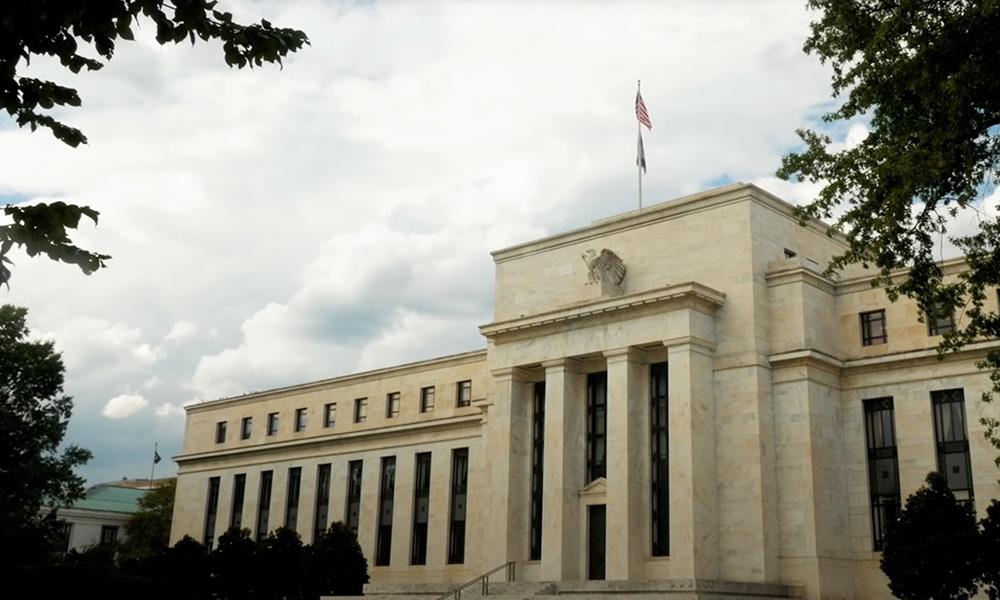
As an economist known to the market for his fierce criticism of the Federal Reserve and his distinctive views on monetary policy, Warsh has long opposed the expansion of the Fed's balance sheet.
Why did Warsh advocate for quantitative tightening? Before 2008, the Federal Reserve had a lot of zero-interest cash on hand. At that time, the Federal Reserve did not pay interest on the reserves it collected from banks. In other words, the Federal Reserve would lend a lot of cash to the Treasury every year. However, the Federal Reserve's cost of obtaining funds such as reserves was extremely low. As a result, the Federal Reserve was profitable every year and could pay profits to the Treasury.
However, the situation changed after the 2008 financial crisis. With the government's quantitative easing (QE), i.e., the US printing money and letting it flow into the real economy, the funds eventually flowed back into the banking system. Because there was too much money in the banks, the US faced negative interest rates and severe inflation. When there is too much money, interest rates tend to fall and are not under the control of the Federal Reserve. The Federal Reserve began to implement a policy of paying interest on excess reserves. The Federal Reserve asked Congress to pass a law to start paying interest on reserves (IORB). In today's high-interest-rate environment, this means that Wall Street banks can earn 4-5% interest simply by lending money to the Federal Reserve.
The Federal Reserve's debt has reached $6.6 trillion, while the average yield on its debt holdings is around 3.2%. However, the interest rate on banks (IORB) is as high as 4-5%. The Fed was originally making money from Wall Street to subsidize the Treasury, but now it has to pay money to Wall Street instead. Walsh previously advocated for changing this situation.
For years, he has repeatedly criticized his former colleagues for allowing the Federal Reserve's assets to expand rapidly. This stance has led the market to speculate that if he is successfully appointed, he will quickly push forward the Fed's balance sheet reduction operation, that is, after the Treasury bonds mature, the Fed will not use the funds from the maturing bonds to continue to buy Treasury bonds, thus withdrawing some of the liquidity from the banks.
The expectation that the Federal Reserve would be a less significant buyer of US Treasury bonds directly drove up the yields on long-term US Treasury bonds last Friday, while the US dollar strengthened in tandem, and gold and silver suffered heavy losses.
Zach Griffiths, head of investment-grade bonds and macro strategy at Credit Watch, bluntly stated that Warsh has always been a staunch critic of the Federal Reserve's balance sheet expansion, a view that aligns closely with that of U.S. Treasury Secretary Scott Bessant. He believes that Warsh's appointment will inevitably push the Federal Reserve to completely reverse the trend of balance sheet expansion and implement a series of related reforms.
Warsh's monetary policy philosophy underwent a significant transformation following his tenure.
During his tenure at the Federal Reserve from 2006 to 2011, he was initially a supporter of the Fed's quantitative easing policy, but as time went on, his criticism of this aggressive bond-buying policy grew stronger, and he eventually resigned due to his opposition to the Fed's continued bond purchases.
In his view, the Federal Reserve's continuous bond-buying operations from the global financial crisis to the COVID-19 pandemic have gone too far. The long-term artificial suppression of market lending rates has not only fueled speculative and risk-taking behavior on Wall Street, but also driven the US political establishment to continuously increase leverage and expand debt, ultimately forming what he calls a "monetary-dominated" pattern—the financial market has become deeply dependent on the policy support of the central bank.
In response to this problem, Warsh also proposed a clear solution: he believes that the injection of liquidity into the market should be reduced to allow the Federal Reserve's balance sheet to shrink naturally, while the Treasury Secretary should take the lead in managing the fiscal accounts, thereby achieving a substantial reduction in interest rates.
In addition, he cited the 1951 Treasury-Federal Reserve Agreement that established the independence of the central bank, proposing the need for a new agreement to redefine the relationship between the Treasury Secretary and the Federal Reserve, allowing both parties to clearly and prudently explain to the market the target size of the Federal Reserve's balance sheet.
However, if Warsh pushes for quantitative tightening, he will face multiple practical contradictions and operational difficulties, the most pressing of which is that it will conflict with the policy objectives of the US government.
The Federal Reserve's balance sheet reduction will not only directly impact long-term interest rates, but will also affect the core interbank lending market of leading global financial institutions, which contradicts the US government's goal of reducing long-term financing costs.
Currently, total borrowing demand in the United States continues to rise, and the national debt has long exceeded $30 trillion. In January of this year, Trump also ordered the government-controlled Fannie Mae and Freddie Mac to purchase $200 billion in mortgage-backed securities in order to suppress homeownership costs for buyers.
Greg Peters, co-CIO of Fixed Income at PIMCO and a member of the U.S. Treasury’s Borrowing Advisory Committee, said that if Walsh’s public statements are true and he opposes using balance sheet expansion as a means to lower yields, then the Treasury Department will have to take over the work of stabilizing the market and controlling financing costs, which will undoubtedly further increase the market management pressure on the U.S. Treasury Department.
Of course, Warsh also put forward another policy logic to support his proposal to reduce his balance sheet: tightening the financial environment by reducing the balance sheet can actually create room for the Federal Reserve to further lower its benchmark interest rate.
This logic was also corroborated by Stephen Milan, a Federal Reserve governor appointed by Trump. Milan stated that, theoretically, if the Fed adheres to the core principle of minimizing economic intervention in its balance sheet reduction, the market impact of the reduction can be offset by adjusting short-term interest rates. If the balance sheet reduction ultimately leads to an increase in long-term interest rates, the negative impact of tightening financial conditions can be offset by lowering short-term interest rates.
Putting aside policy contradictions, the Federal Reserve's actual balance sheet reduction operation also faces the real test of market liquidity sensitivity, and reducing the scale of the Fed's market intervention is by no means an easy task.
First, if Warsh is successfully appointed, the size of the Federal Reserve's balance sheet will be several orders of magnitude larger than when he last took office. The significant increase in the base makes every step of the balance sheet reduction operation highly anticipated by the market.
More importantly, the money market is highly sensitive to changes in liquidity within the financial system; even slight fluctuations can trigger a violent market reaction.
In 2019, the Federal Reserve had to intervene in the market urgently due to funding pressures caused by soaring short-term lending rates.
By the end of 2025, increased government financing coupled with the Federal Reserve's balance sheet reduction operations had withdrawn a large amount of funds from the money market, triggering a small but significant liquidity crunch.
Following this liquidity shock, the Federal Reserve immediately halted its balance sheet reduction and instead injected reserves into the financial system by purchasing short-term U.S. Treasury bonds with remaining maturities of less than one year. Starting in December of last year, it began purchasing short-term Treasury bills at a rate of approximately $40 billion per month to alleviate liquidity pressures on short-term interest rates.
Market institutions have shown strong support for Warsh's proposal to reduce the balance sheet. Peter Bukoval, chief investment officer of Single Point Wealth Management, believes that any move that can reduce the scale of the Federal Reserve's market intervention is a positive signal for the market. Although the current size of the Federal Reserve's balance sheet is still at a historical high, the general direction of reducing the balance sheet is in line with the long-term development needs of the market.
However, the market is currently maintaining its existing trading logic, and there has been no large-scale policy betting yet.
Gennady Goldberg, head of U.S. interest rate strategy at TD Securities, said that the entire financial market will remain cautiously tense until Warsh clarifies his specific policy stance. Traders are highly vigilant about any policy changes by the Federal Reserve, and Warsh's subsequent statements will be a key signal guiding market trends.
Our previous VIP article pointed out that changes in the frontrunner for the Federal Reserve could lead to significant discrepancies in expectations.
This is mainly reflected in the rapid increase in real yields, which raises the opportunity cost of holding long-term assets such as gold and US tech stocks. At the same time, the expectation of balance sheet reduction has also increased market concerns about liquidity, causing a rapid correction in precious metals and tech stocks that have risen too much recently.
The specific logic is that Warsh wanted the Federal Reserve to stop paying huge interest rates to Wall Street, so he proposed quantitative tightening and adjusting the maturity structure of the Fed's debt holdings, buying short-term bonds and selling to repay debt, and not renewing Treasury bonds. This led to a weakening of liquidity expectations and an increase in long-term US Treasury yields. Meanwhile, Rick Reid advocated for lowering the long-term cost of Treasury yields, even at the cost of inflation and using YCC. This caused a decline in long-term US Treasury yields and a rapid decline in US real interest rates, even to the point of negative values, due to rising inflation.
The two men's proposals have vastly different impacts on liquidity and real yields in the United States.
However, given the previous interbank liquidity crunch in the United States, liquidity will certainly be taken into account during the policy implementation process. Although the overall monetary environment remains one of interest rate cuts, the ultimate benefit will be the United States' debt repayment ability, which in turn benefits the dollar and the Federal Reserve's revenue.
This is a substantial blow to the narrative of selling the dollar. Recently, there has been a phenomenon where US Treasury yields have fallen (as a safe haven) but the dollar has not fallen. Furthermore, if the dollar index strengthens again, it will attract funds back to the United States.
Warsh's nomination has also fueled market expectations for the Federal Reserve's balance sheet reduction, reigniting discussions about the aftereffects of the Fed's quantitative easing.
The market has already reacted immediately to the firm opposition to expanding the balance sheet.
As an economist known to the market for his fierce criticism of the Federal Reserve and his distinctive views on monetary policy, Warsh has long opposed the expansion of the Fed's balance sheet.
Why did Warsh advocate for quantitative tightening? Before 2008, the Federal Reserve had a lot of zero-interest cash on hand. At that time, the Federal Reserve did not pay interest on the reserves it collected from banks. In other words, the Federal Reserve would lend a lot of cash to the Treasury every year. However, the Federal Reserve's cost of obtaining funds such as reserves was extremely low. As a result, the Federal Reserve was profitable every year and could pay profits to the Treasury.
However, the situation changed after the 2008 financial crisis. With the government's quantitative easing (QE), i.e., the US printing money and letting it flow into the real economy, the funds eventually flowed back into the banking system. Because there was too much money in the banks, the US faced negative interest rates and severe inflation. When there is too much money, interest rates tend to fall and are not under the control of the Federal Reserve. The Federal Reserve began to implement a policy of paying interest on excess reserves. The Federal Reserve asked Congress to pass a law to start paying interest on reserves (IORB). In today's high-interest-rate environment, this means that Wall Street banks can earn 4-5% interest simply by lending money to the Federal Reserve.
The Federal Reserve's debt has reached $6.6 trillion, while the average yield on its debt holdings is around 3.2%. However, the interest rate on banks (IORB) is as high as 4-5%. The Fed was originally making money from Wall Street to subsidize the Treasury, but now it has to pay money to Wall Street instead. Walsh previously advocated for changing this situation.
For years, he has repeatedly criticized his former colleagues for allowing the Federal Reserve's assets to expand rapidly. This stance has led the market to speculate that if he is successfully appointed, he will quickly push forward the Fed's balance sheet reduction operation, that is, after the Treasury bonds mature, the Fed will not use the funds from the maturing bonds to continue to buy Treasury bonds, thus withdrawing some of the liquidity from the banks.
The expectation that the Federal Reserve would be a less significant buyer of US Treasury bonds directly drove up the yields on long-term US Treasury bonds last Friday, while the US dollar strengthened in tandem, and gold and silver suffered heavy losses.
Zach Griffiths, head of investment-grade bonds and macro strategy at Credit Watch, bluntly stated that Warsh has always been a staunch critic of the Federal Reserve's balance sheet expansion, a view that aligns closely with that of U.S. Treasury Secretary Scott Bessant. He believes that Warsh's appointment will inevitably push the Federal Reserve to completely reverse the trend of balance sheet expansion and implement a series of related reforms.
Origins of the Idea: From QE Supporter to Opponent, Proposing a Clear Reform Approach
Warsh's monetary policy philosophy underwent a significant transformation following his tenure.
During his tenure at the Federal Reserve from 2006 to 2011, he was initially a supporter of the Fed's quantitative easing policy, but as time went on, his criticism of this aggressive bond-buying policy grew stronger, and he eventually resigned due to his opposition to the Fed's continued bond purchases.
In his view, the Federal Reserve's continuous bond-buying operations from the global financial crisis to the COVID-19 pandemic have gone too far. The long-term artificial suppression of market lending rates has not only fueled speculative and risk-taking behavior on Wall Street, but also driven the US political establishment to continuously increase leverage and expand debt, ultimately forming what he calls a "monetary-dominated" pattern—the financial market has become deeply dependent on the policy support of the central bank.
In response to this problem, Warsh also proposed a clear solution: he believes that the injection of liquidity into the market should be reduced to allow the Federal Reserve's balance sheet to shrink naturally, while the Treasury Secretary should take the lead in managing the fiscal accounts, thereby achieving a substantial reduction in interest rates.
In addition, he cited the 1951 Treasury-Federal Reserve Agreement that established the independence of the central bank, proposing the need for a new agreement to redefine the relationship between the Treasury Secretary and the Federal Reserve, allowing both parties to clearly and prudently explain to the market the target size of the Federal Reserve's balance sheet.
Real-world constraint one: The Ministry of Finance is under pressure as balance sheet reduction clashes with government policy objectives.
However, if Warsh pushes for quantitative tightening, he will face multiple practical contradictions and operational difficulties, the most pressing of which is that it will conflict with the policy objectives of the US government.
The Federal Reserve's balance sheet reduction will not only directly impact long-term interest rates, but will also affect the core interbank lending market of leading global financial institutions, which contradicts the US government's goal of reducing long-term financing costs.
Currently, total borrowing demand in the United States continues to rise, and the national debt has long exceeded $30 trillion. In January of this year, Trump also ordered the government-controlled Fannie Mae and Freddie Mac to purchase $200 billion in mortgage-backed securities in order to suppress homeownership costs for buyers.
Greg Peters, co-CIO of Fixed Income at PIMCO and a member of the U.S. Treasury’s Borrowing Advisory Committee, said that if Walsh’s public statements are true and he opposes using balance sheet expansion as a means to lower yields, then the Treasury Department will have to take over the work of stabilizing the market and controlling financing costs, which will undoubtedly further increase the market management pressure on the U.S. Treasury Department.
Another logic behind balance sheet reduction: tightening the financial environment to create room for maneuver in interest rate cuts.
Of course, Warsh also put forward another policy logic to support his proposal to reduce his balance sheet: tightening the financial environment by reducing the balance sheet can actually create room for the Federal Reserve to further lower its benchmark interest rate.
This logic was also corroborated by Stephen Milan, a Federal Reserve governor appointed by Trump. Milan stated that, theoretically, if the Fed adheres to the core principle of minimizing economic intervention in its balance sheet reduction, the market impact of the reduction can be offset by adjusting short-term interest rates. If the balance sheet reduction ultimately leads to an increase in long-term interest rates, the negative impact of tightening financial conditions can be offset by lowering short-term interest rates.
The liquidity market is highly sensitive, highlighting the practical difficulties of balance sheet reduction.
Putting aside policy contradictions, the Federal Reserve's actual balance sheet reduction operation also faces the real test of market liquidity sensitivity, and reducing the scale of the Fed's market intervention is by no means an easy task.
First, if Warsh is successfully appointed, the size of the Federal Reserve's balance sheet will be several orders of magnitude larger than when he last took office. The significant increase in the base makes every step of the balance sheet reduction operation highly anticipated by the market.
More importantly, the money market is highly sensitive to changes in liquidity within the financial system; even slight fluctuations can trigger a violent market reaction.
In 2019, the Federal Reserve had to intervene in the market urgently due to funding pressures caused by soaring short-term lending rates.
By the end of 2025, increased government financing coupled with the Federal Reserve's balance sheet reduction operations had withdrawn a large amount of funds from the money market, triggering a small but significant liquidity crunch.
Following this liquidity shock, the Federal Reserve immediately halted its balance sheet reduction and instead injected reserves into the financial system by purchasing short-term U.S. Treasury bonds with remaining maturities of less than one year. Starting in December of last year, it began purchasing short-term Treasury bills at a rate of approximately $40 billion per month to alleviate liquidity pressures on short-term interest rates.
Institutional Viewpoint:
Market institutions have shown strong support for Warsh's proposal to reduce the balance sheet. Peter Bukoval, chief investment officer of Single Point Wealth Management, believes that any move that can reduce the scale of the Federal Reserve's market intervention is a positive signal for the market. Although the current size of the Federal Reserve's balance sheet is still at a historical high, the general direction of reducing the balance sheet is in line with the long-term development needs of the market.
However, the market is currently maintaining its existing trading logic, and there has been no large-scale policy betting yet.
Gennady Goldberg, head of U.S. interest rate strategy at TD Securities, said that the entire financial market will remain cautiously tense until Warsh clarifies his specific policy stance. Traders are highly vigilant about any policy changes by the Federal Reserve, and Warsh's subsequent statements will be a key signal guiding market trends.
Summarize:
Our previous VIP article pointed out that changes in the frontrunner for the Federal Reserve could lead to significant discrepancies in expectations.
This is mainly reflected in the rapid increase in real yields, which raises the opportunity cost of holding long-term assets such as gold and US tech stocks. At the same time, the expectation of balance sheet reduction has also increased market concerns about liquidity, causing a rapid correction in precious metals and tech stocks that have risen too much recently.
The specific logic is that Warsh wanted the Federal Reserve to stop paying huge interest rates to Wall Street, so he proposed quantitative tightening and adjusting the maturity structure of the Fed's debt holdings, buying short-term bonds and selling to repay debt, and not renewing Treasury bonds. This led to a weakening of liquidity expectations and an increase in long-term US Treasury yields. Meanwhile, Rick Reid advocated for lowering the long-term cost of Treasury yields, even at the cost of inflation and using YCC. This caused a decline in long-term US Treasury yields and a rapid decline in US real interest rates, even to the point of negative values, due to rising inflation.
The two men's proposals have vastly different impacts on liquidity and real yields in the United States.
However, given the previous interbank liquidity crunch in the United States, liquidity will certainly be taken into account during the policy implementation process. Although the overall monetary environment remains one of interest rate cuts, the ultimate benefit will be the United States' debt repayment ability, which in turn benefits the dollar and the Federal Reserve's revenue.
This is a substantial blow to the narrative of selling the dollar. Recently, there has been a phenomenon where US Treasury yields have fallen (as a safe haven) but the dollar has not fallen. Furthermore, if the dollar index strengthens again, it will attract funds back to the United States.
- Risk Warning and Disclaimer
- The market involves risk, and trading may not be suitable for all investors. This article is for reference only and does not constitute personal investment advice, nor does it take into account certain users’ specific investment objectives, financial situation, or other needs. Any investment decisions made based on this information are at your own risk.