ECB Decision Preview: Interest Rates Unchanged, Intentions Unpredictable
2026-02-05 17:14:44
On Thursday, February 5th, the European Central Bank (ECB) will announce its latest interest rate decision at 21:15 tonight. The market widely expects no rate adjustments. However, this does not mean the meeting is unimportant. On the contrary, for the Eurozone at present, maintaining the status quo is itself a strategy. Analysts believe that what policymakers most want to do at this moment is not to create news or guide the market, but to firmly control market speculation and prevent short-term sentiment from interfering with long-term pricing. If the statement is calmly worded and there are no unexpected shifts, it indicates successful communication: because it avoids violent fluctuations in the financial markets due to over-interpretation.

Behind this apparent "lackluster" performance lie two hard constraints. On the one hand, the Eurozone economy remains resilient and has not yet shown any obvious signs of slowing down. As long as the economy continues to operate steadily, the central bank has no reason to immediately shift to easing. On the other hand, inflationary pressures remain stubborn, especially since the second half of last year, with prices falling far less than expected. Pulled together by these two forces, the European Central Bank has virtually no room to maneuver. If it were to prematurely signal an interest rate cut at this juncture, it could be interpreted by the market as a loosening of the inflation target, thereby pushing up long-term inflation expectations and causing a rebound in long-term interest rates, ultimately resulting in more harm than good.
On the surface, the year-on-year reading of core inflation is slowly approaching 2%, which is a positive sign. It indicates that the tightening policies of the past few years are indeed having an effect, commodity price and some cost pressures have eased, and the overall downward trend in inflation continues. However, what the European Central Bank is truly concerned about is not just the number approaching its target, but whether this decline is widespread, sustainable, and convincing. The most critical weakness lies precisely in service sector inflation.
Service prices are closely linked to wage growth, labor market tightness, and corporate pricing behavior, exhibiting strong inertia. Even if commodity prices decline, as long as service sector inflation remains above 3%, the central bank can hardly declare victory. Currently, this remains high, meaning underlying price pressures have not been fully relieved. Therefore, while core inflation approaching 2% is a necessary development, it is insufficient to constitute a sufficient condition for a policy shift until a more substantial downturn occurs in the service sector. In other words, the central bank can only "see the light at the end of the tunnel," but cannot yet "declare victory."
This explains why policymakers must remain cautious. They cannot deny the improving inflation trend, lest it damage confidence; nor can they celebrate prematurely, lest it trigger market misjudgment. Thus, "data reliance" has become the safest excuse and the most likely keyword to appear tonight.
When the central bank repeatedly emphasizes its reliance on data, it is actually conveying three messages. First, there is no pre-set script for future policy paths; it neither promises nor rules out interest rate cuts, and everything depends on subsequent economic performance. Second, decisions will not be swayed by single-month data, but rather by whether the decline in inflation is sustained and stable, avoiding misjudgments due to short-term fluctuations. Third, and most importantly, by repeatedly stating this, the central bank aims to cool down the market and prevent speculative funds from prematurely betting on a particular direction, leading to premature easing or tightening of financial conditions.
This strategy is essentially a form of risk control. In the current environment, the ECB neither needs to bail out the market (because growth is still acceptable) nor can it celebrate a victory (because inflation is unstable). The best option is to remain on the sidelines, maintaining a restrictive policy stance using ambiguous but logically consistent language. This way, while the market lacks clear guidance, it also cannot easily break out of the existing framework, thus avoiding a sharp revaluation of asset prices.
What's truly sensitive isn't whether interest rates change, but rather the subtle shifts in wording within the statement. For example, downplaying concerns about persistent inflation or highlighting progress towards 2% core inflation could be interpreted as paving the way for future easing, pushing down government bond yields, especially short-term rates. Conversely, continuing to emphasize that services inflation is above 3% and reiterating vigilance regarding price risks could delay market expectations of a rate cut, putting upward pressure on short-term yields and potentially supporting the euro exchange rate.
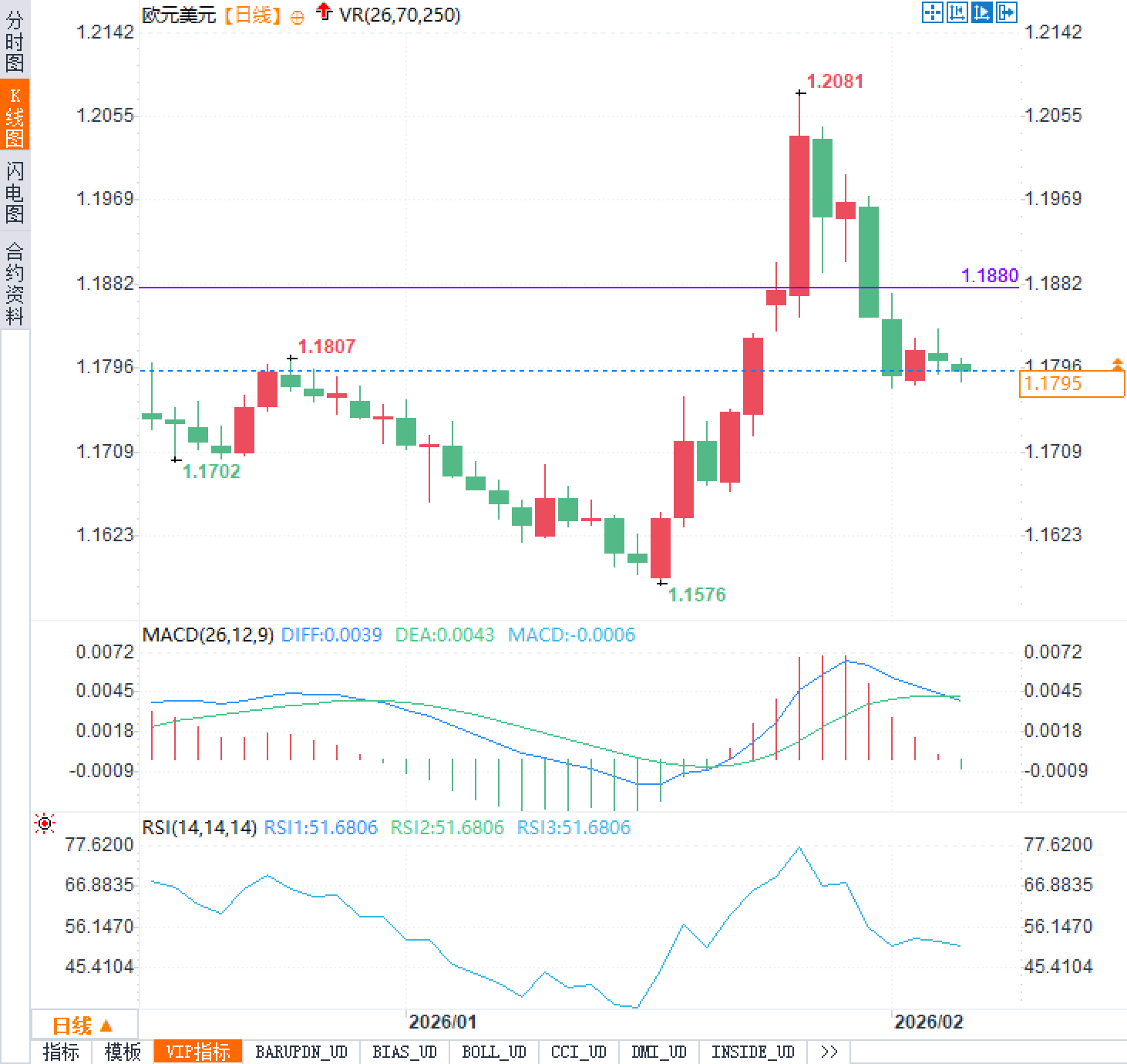
Ultimately, tonight's meeting was more of a rehearsal for "expectation management" than a turning point in policy direction. The European Central Bank will most likely choose to express its views restrainedly, leaving the real decision-making power to future data. This approach may seem conservative, but from the perspective of financial market logic, it is the lowest-cost and lowest-risk arrangement.
Analysis indicates that before inflation has definitively returned to 2% and service sector prices have escaped the 3% high, any premature action could trigger a chain reaction. Maintaining the status quo is both a reluctant choice and a wise one. It keeps the market alert without causing chaos; it acknowledges progress without abandoning vigilance.
The focus going forward should be on two dimensions: first, changes in the inflation structure, particularly whether service sector inflation can show a clearer decline; and second, whether the sustainability of economic resilience is beginning to waver. Only when both conditions are met simultaneously can the European Central Bank shift from "cautious observation" to "decisive action." Until then, the market needs to adapt to a new normal: fewer short-term surprises and a data-driven approach.
Behind this apparent "lackluster" performance lie two hard constraints. On the one hand, the Eurozone economy remains resilient and has not yet shown any obvious signs of slowing down. As long as the economy continues to operate steadily, the central bank has no reason to immediately shift to easing. On the other hand, inflationary pressures remain stubborn, especially since the second half of last year, with prices falling far less than expected. Pulled together by these two forces, the European Central Bank has virtually no room to maneuver. If it were to prematurely signal an interest rate cut at this juncture, it could be interpreted by the market as a loosening of the inflation target, thereby pushing up long-term inflation expectations and causing a rebound in long-term interest rates, ultimately resulting in more harm than good.
Inflation data appears to be improving, but the key test remains in the service sector.
On the surface, the year-on-year reading of core inflation is slowly approaching 2%, which is a positive sign. It indicates that the tightening policies of the past few years are indeed having an effect, commodity price and some cost pressures have eased, and the overall downward trend in inflation continues. However, what the European Central Bank is truly concerned about is not just the number approaching its target, but whether this decline is widespread, sustainable, and convincing. The most critical weakness lies precisely in service sector inflation.
Service prices are closely linked to wage growth, labor market tightness, and corporate pricing behavior, exhibiting strong inertia. Even if commodity prices decline, as long as service sector inflation remains above 3%, the central bank can hardly declare victory. Currently, this remains high, meaning underlying price pressures have not been fully relieved. Therefore, while core inflation approaching 2% is a necessary development, it is insufficient to constitute a sufficient condition for a policy shift until a more substantial downturn occurs in the service sector. In other words, the central bank can only "see the light at the end of the tunnel," but cannot yet "declare victory."
This explains why policymakers must remain cautious. They cannot deny the improving inflation trend, lest it damage confidence; nor can they celebrate prematurely, lest it trigger market misjudgment. Thus, "data reliance" has become the safest excuse and the most likely keyword to appear tonight.
"Data dependency" is not an excuse, but a defensive strategy.
When the central bank repeatedly emphasizes its reliance on data, it is actually conveying three messages. First, there is no pre-set script for future policy paths; it neither promises nor rules out interest rate cuts, and everything depends on subsequent economic performance. Second, decisions will not be swayed by single-month data, but rather by whether the decline in inflation is sustained and stable, avoiding misjudgments due to short-term fluctuations. Third, and most importantly, by repeatedly stating this, the central bank aims to cool down the market and prevent speculative funds from prematurely betting on a particular direction, leading to premature easing or tightening of financial conditions.
This strategy is essentially a form of risk control. In the current environment, the ECB neither needs to bail out the market (because growth is still acceptable) nor can it celebrate a victory (because inflation is unstable). The best option is to remain on the sidelines, maintaining a restrictive policy stance using ambiguous but logically consistent language. This way, while the market lacks clear guidance, it also cannot easily break out of the existing framework, thus avoiding a sharp revaluation of asset prices.
What's truly sensitive isn't whether interest rates change, but rather the subtle shifts in wording within the statement. For example, downplaying concerns about persistent inflation or highlighting progress towards 2% core inflation could be interpreted as paving the way for future easing, pushing down government bond yields, especially short-term rates. Conversely, continuing to emphasize that services inflation is above 3% and reiterating vigilance regarding price risks could delay market expectations of a rate cut, putting upward pressure on short-term yields and potentially supporting the euro exchange rate.
Less surprises, more waiting: this is the most reasonable script at present.
Ultimately, tonight's meeting was more of a rehearsal for "expectation management" than a turning point in policy direction. The European Central Bank will most likely choose to express its views restrainedly, leaving the real decision-making power to future data. This approach may seem conservative, but from the perspective of financial market logic, it is the lowest-cost and lowest-risk arrangement.
Analysis indicates that before inflation has definitively returned to 2% and service sector prices have escaped the 3% high, any premature action could trigger a chain reaction. Maintaining the status quo is both a reluctant choice and a wise one. It keeps the market alert without causing chaos; it acknowledges progress without abandoning vigilance.
The focus going forward should be on two dimensions: first, changes in the inflation structure, particularly whether service sector inflation can show a clearer decline; and second, whether the sustainability of economic resilience is beginning to waver. Only when both conditions are met simultaneously can the European Central Bank shift from "cautious observation" to "decisive action." Until then, the market needs to adapt to a new normal: fewer short-term surprises and a data-driven approach.
- Risk Warning and Disclaimer
- The market involves risk, and trading may not be suitable for all investors. This article is for reference only and does not constitute personal investment advice, nor does it take into account certain users’ specific investment objectives, financial situation, or other needs. Any investment decisions made based on this information are at your own risk.