ING: Bank of England's decision increases the probability of a March rate cut
2026-02-06 01:13:09
The Bank of England's divergent decision lowered the threshold for a rate cut next month. Provided economic data continues its recent trend—weaker employment, slower wage growth, and easing inflationary pressures—a further rate cut in June is expected, following the one in March.
The February decision boosted expectations for a March rate cut.
The Bank of England voted to keep interest rates unchanged at 3.75%, but the decision was far more divided than the market expected. Four of the nine members of the Monetary Policy Committee voted to continue cutting rates at this meeting.
This decision significantly increased the likelihood of a rate cut in March, a result slightly exceeding market expectations. Since the central bank cut rates in December and signaled a possible slowdown in the pace of rate cuts, macroeconomic data has not shown significant changes. The committee members who supported the rate cut this month were not driven by data, but rather persuaded by the new analysis in the Monetary Policy Report released concurrently with the decision.
The report indicates that wage growth aligned with the 2% inflation target would be around 3.25%. Current UK private sector wage growth is 3.6%, just slightly above this level, and is expected to fall back to 3% within months. A recent survey of Bank of England agents across the country shows wage growth expectations of 3.4% in 2026, also largely in line with the inflation target estimate.
The report also cited evidence that there has been no substantial structural change in wage-setting practices among British companies. This conclusion refutes the long-held view of some hawkish members of the Bank of England (particularly Hugh Peel).
The key to the March decision will depend on Governor Bailey's vote. A similar situation occurred in the decision last November and December. Bailey's personal comments in the meeting minutes did not reveal much of his preference. Analysts predict that if the data continues the recent trend—rising unemployment, declining employment, and slowing wage growth—he will switch his stance to support a rate cut in March. Currently, he clearly agrees more with the views of the committee members who support an earlier rate cut.
Analysts predict that the UK's overall inflation rate will fall to 1.8% in April and remain around 2% in the spring and summer, slightly lower than the Bank of England's forecast. Although the decline in inflation is expected to be concentrated in April, economic data released before the March meeting is also expected to send positive signals. This could persuade some hawkish members (especially Catherine Mann, whose stance is gradually shifting towards supporting further rate cuts) to vote for further easing. If overall inflation falls, market concerns about high inflation expectations will also ease.
Analysts' baseline forecast remains unchanged: one rate cut each in March and June, bringing the rate down to 3.25%.
The pound weakened under pressure from a dovish decision and added political pressure.
The dovish signals from the Bank of England today further weakened the pound, which was already under pressure from domestic politics. Short-term interest rates in the UK fell to a new low in this downward cycle, with the six-month forward 1-month overnight index swap (OIS) rate at just 3.32%, the lowest level since the summer of 2022.
The European Central Bank has begun a rate-cutting cycle totaling 200 basis points, while the Bank of England has only cut rates by 150 basis points so far. The expectation that the Bank of England will catch up will continue to support the euro against the pound. Analysts maintain their judgment that the euro will rise to 0.88 against the pound in the coming months, dragged down by both declining short-term yields in the UK and domestic politics.
On the political front, the pressure on British Prime Minister Keir Starmer to step down continues to rise. If Angela Reyner succeeds him as Prime Minister and Wes Streatine becomes Chancellor of the Exchequer, the market will initially interpret this combination as a leftward shift in British politics, thereby pushing up the fiscal risk premium for the pound. Analysts acknowledge that a further 50 basis point rate cut by the Bank of England could provide some buffer for the gilt-edged bond market during this period of political turmoil, but expect political uncertainty to dominate market movements. With the European economy expected to rebound and the euro continuing to strengthen, analysts predict the euro will rise to 0.90 against the pound by the end of the year.
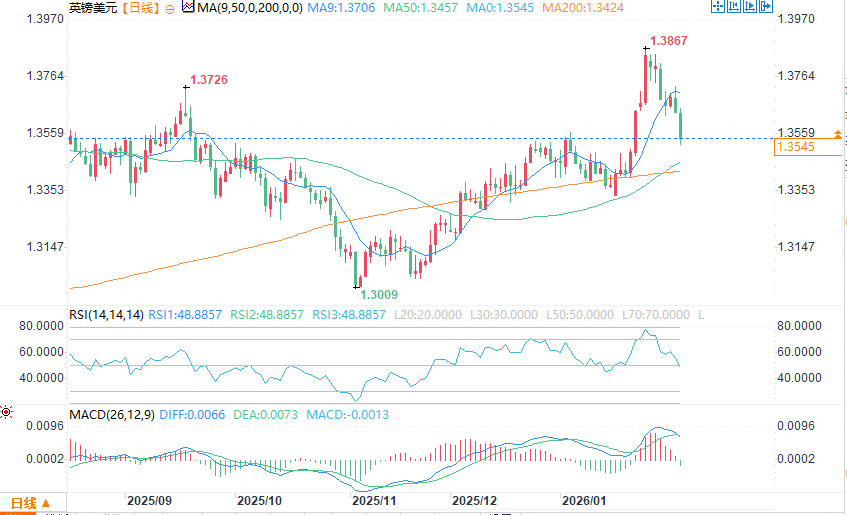
(GBP/USD daily chart source: FX678)
The February decision boosted expectations for a March rate cut.
The Bank of England voted to keep interest rates unchanged at 3.75%, but the decision was far more divided than the market expected. Four of the nine members of the Monetary Policy Committee voted to continue cutting rates at this meeting.
This decision significantly increased the likelihood of a rate cut in March, a result slightly exceeding market expectations. Since the central bank cut rates in December and signaled a possible slowdown in the pace of rate cuts, macroeconomic data has not shown significant changes. The committee members who supported the rate cut this month were not driven by data, but rather persuaded by the new analysis in the Monetary Policy Report released concurrently with the decision.
The report indicates that wage growth aligned with the 2% inflation target would be around 3.25%. Current UK private sector wage growth is 3.6%, just slightly above this level, and is expected to fall back to 3% within months. A recent survey of Bank of England agents across the country shows wage growth expectations of 3.4% in 2026, also largely in line with the inflation target estimate.
The report also cited evidence that there has been no substantial structural change in wage-setting practices among British companies. This conclusion refutes the long-held view of some hawkish members of the Bank of England (particularly Hugh Peel).
The key to the March decision will depend on Governor Bailey's vote. A similar situation occurred in the decision last November and December. Bailey's personal comments in the meeting minutes did not reveal much of his preference. Analysts predict that if the data continues the recent trend—rising unemployment, declining employment, and slowing wage growth—he will switch his stance to support a rate cut in March. Currently, he clearly agrees more with the views of the committee members who support an earlier rate cut.
Analysts predict that the UK's overall inflation rate will fall to 1.8% in April and remain around 2% in the spring and summer, slightly lower than the Bank of England's forecast. Although the decline in inflation is expected to be concentrated in April, economic data released before the March meeting is also expected to send positive signals. This could persuade some hawkish members (especially Catherine Mann, whose stance is gradually shifting towards supporting further rate cuts) to vote for further easing. If overall inflation falls, market concerns about high inflation expectations will also ease.
Analysts' baseline forecast remains unchanged: one rate cut each in March and June, bringing the rate down to 3.25%.
The pound weakened under pressure from a dovish decision and added political pressure.
The dovish signals from the Bank of England today further weakened the pound, which was already under pressure from domestic politics. Short-term interest rates in the UK fell to a new low in this downward cycle, with the six-month forward 1-month overnight index swap (OIS) rate at just 3.32%, the lowest level since the summer of 2022.
The European Central Bank has begun a rate-cutting cycle totaling 200 basis points, while the Bank of England has only cut rates by 150 basis points so far. The expectation that the Bank of England will catch up will continue to support the euro against the pound. Analysts maintain their judgment that the euro will rise to 0.88 against the pound in the coming months, dragged down by both declining short-term yields in the UK and domestic politics.
On the political front, the pressure on British Prime Minister Keir Starmer to step down continues to rise. If Angela Reyner succeeds him as Prime Minister and Wes Streatine becomes Chancellor of the Exchequer, the market will initially interpret this combination as a leftward shift in British politics, thereby pushing up the fiscal risk premium for the pound. Analysts acknowledge that a further 50 basis point rate cut by the Bank of England could provide some buffer for the gilt-edged bond market during this period of political turmoil, but expect political uncertainty to dominate market movements. With the European economy expected to rebound and the euro continuing to strengthen, analysts predict the euro will rise to 0.90 against the pound by the end of the year.
(GBP/USD daily chart source: FX678)
- Risk Warning and Disclaimer
- The market involves risk, and trading may not be suitable for all investors. This article is for reference only and does not constitute personal investment advice, nor does it take into account certain users’ specific investment objectives, financial situation, or other needs. Any investment decisions made based on this information are at your own risk.